





Spinal decompression in Terrebonne
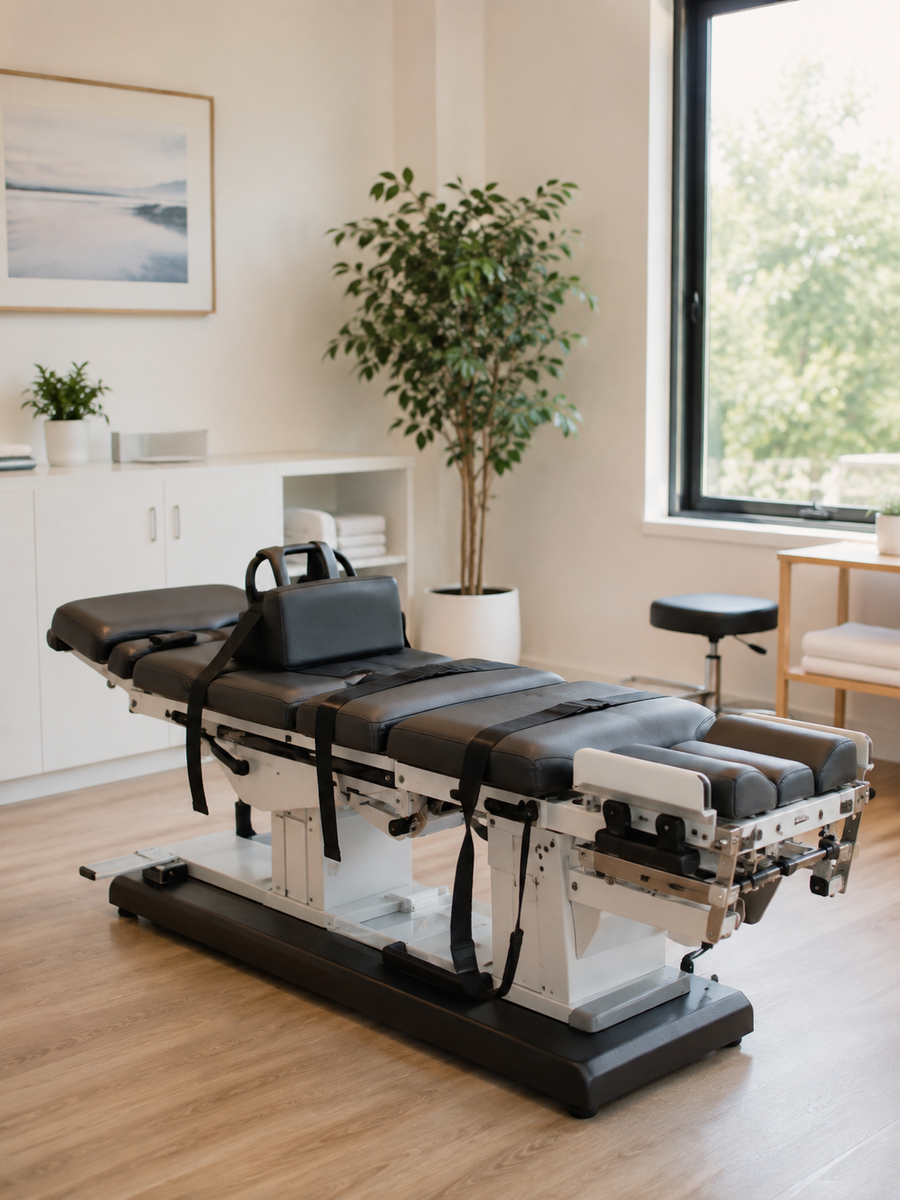
In Terrebonne, motorized spinal decompression may be discussed for selected patients with disc-related pain, sciatica, cervico-brachial pain or foraminal irritation that fits a structured clinical assessment.
This local page presents the relevant decision framework: how a first assessment may be organized, which profiles may sometimes fit a trial, which limits should be explained and why measurable follow-up matters more than the technology itself.

Spinal decompression in Terrebonne: how should you reason through it?
The logic of a motorized trial rests on concordance between symptoms, examination findings, tolerance and functional goals. An imaging label should never drive care by itself.
A useful local page helps readers understand what can reasonably be expected from an assessment, how a trial may be structured and when it is wiser to revise the strategy.
Clinical profile
Link onset, symptom distribution, aggravating activities and relieving factors.
Neurology
Document strength, sensation, reflexes, balance or a radicular pattern when relevant.
Participation
Measure walking, driving, sleep, work and priority activities.
Plan review
Set a clear point to review parameters and the overall strategy.
Clinical assessment, tolerance and safety
The first meeting clarifies symptom evolution, the region involved, whether pain radiates, which activities are limited, sleep quality, prior treatments and relevant history. The examination documents function, mobility, provoked pain, strength, sensation and useful neurological findings.
Imaging is not mandatory. It becomes more important when the picture is atypical, when a deficit is present, when the mechanism is unclear or when the findings may change the strategy. The goal is to answer a useful clinical question, not simply to accumulate tests.
| Clinical situation | Possible next step | Why |
|---|---|---|
| Stable sciatica or radicular pain | Prudent trial if concordance is good | Measure distal pain, walking tolerance and sleep quality over time. |
| Persistent pain despite other care | Review the working diagnosis | Avoid automatically replacing one protocol with another without reconsidering the case. |
| Important neurological signs or suspected instability | Referral and appropriate investigations | The priority may become medical, surgical or diagnostic. |

Build a local trial that is actually useful
In Terrebonne, as elsewhere, a credible trial should define baseline goals, specify the overall parameters, provide after-session guidance and, above all, establish when reassessment will occur. Good local organization reduces the risk of multiplying visits without a clear direction.
The plan may be combined with education, activity advice, exercise, temporary adaptations or other conservative care. Meaningful functional improvement matters more than a single subjective impression after one session.
What should be documented before and during care
A credible trial turns observations into measurable goals and explicit criteria for progression.
- Onset, duration, level, side and radiation of symptoms.
- Aggravating and relieving factors and tolerance to positions.
- Strength, sensation, reflexes, gait, balance or dexterity depending on the region.
- Concordance between symptoms, function and imaging when imaging is available.
- Functional goals: sleep, walking, work, driving or daily activities.
- Stop rules, escalation triggers and urgent referral thresholds.
Why follow-up matters more than a theoretical protocol
Two people with the same imaging label may evolve very differently. Follow-up should therefore document pain, function, activity tolerance, distal symptoms and neurological findings rather than relying only on a standardized protocol.
When progress is insufficient, when the condition fluctuates unfavorably or when worsening occurs, the working diagnosis and the strategy should be reconsidered. The purpose of a treatment trial is precisely to test whether it is truly helping.
What is the working diagnosis?
Ask what supports it and what other causes still need to be considered.
What outcome will be measured?
Pain alone is not enough; function and neurological status also matter.
When will the plan be reviewed?
Set a date and criteria to continue, adjust or stop.
What are the escalation thresholds?
Clarify which changes require imaging, a medical opinion or urgent care.
Common mistakes to avoid
- Treating an image finding without confirming clinical concordance.
- Promising a universal or automatic result.
- Continuing a protocol without measurable criteria.
- Ignoring important differential diagnoses or warning signs.
- Confusing short-term relief with durable functional recovery.
- Delaying an urgent referral just to complete a treatment trial.
Questions to ask before starting
What is the working diagnosis?
Ask what supports it and what other causes still need to be considered.
What outcome will be measured?
Pain alone is not enough; function and neurological status also matter.
When will the plan be reviewed?
Set a date and criteria to continue, adjust or stop.
What are the escalation thresholds?
Clarify which changes require imaging, a medical opinion or urgent care.

Related guides in the decompression cluster
Spinal decompression in Montreal
Compare the other local page and the Mont-Royal resource.
Foraminal stenosis
Understand when foraminal irritation may fit the clinical reasoning.
Disclosed clinical resource
Readers who wish to verify a local clinic offering may consult this separate resource. Transactional information should be confirmed directly with the clinic.
TAGMED Clinic — Terrebonne
Information about assessment and selected non-surgical services, including spinal decompression, in Terrebonne. Address: 3450 chemin Gascon, Suite 200, Terrebonne, Quebec, J6X 4J1.
Frequently asked questions
Is decompression in Terrebonne appropriate for every case of sciatica?
No. Some cases are better served by medical assessment, active rehabilitation or another approach depending on the clinical profile.
Can treatment start without recent imaging?
Sometimes yes, sometimes no. The decision depends on the clinical picture, history, neurological findings and whether imaging would change management.
What if pain increases after a session?
Meaningful aggravation should be reported and may lead to adjusting parameters, pausing treatment or revisiting the diagnosis.
Are results guaranteed?
No. A responsible page presents decompression as a selected option, not a guaranteed result.
How long does it take to know whether it helps?
That depends on the goals chosen and the timeline set for reassessment. Follow-up should be planned in advance.
Can decompression be combined with exercise?
Yes, in many cases. A broader plan may include education, activity modification, exercise and other conservative measures.
Is decompression appropriate after surgery?
Not automatically. Post-surgical context, implants, current symptoms and medical recommendations all matter.
Which signs require urgent referral?
Progressive weakness, bladder or bowel changes, saddle anesthesia, fever with spinal pain or major trauma require prompt assessment.
Where is the disclosed clinic resource in Terrebonne?
TAGMED Clinic Terrebonne is located at 3450 chemin Gascon, Suite 200, Terrebonne, Quebec, J6X 4J1.
Does The Spine Page book appointments?
No. Transactional details should be confirmed directly with the disclosed clinic.
Key clinical sources
- World Health Organization – non-surgical management of chronic primary low back pain
- NICE – Low back pain and sciatica in over 16s
- Cochrane – Traction for low-back pain
- American College of Radiology – Low Back Pain
Last editorial review: August 2026. General educational information only.
Dr. Sylvain Desforges, B.Sc., D.O., N.D., osteopath – The Spine Page
Continue your research on decompression in Terrebonne
Compare this local page with the general guide, the spinal-conditions section and conservative options to keep a coherent overall picture.
Dr. Sylvain Desforges, B.Sc., D.O., N.D., osteopath