




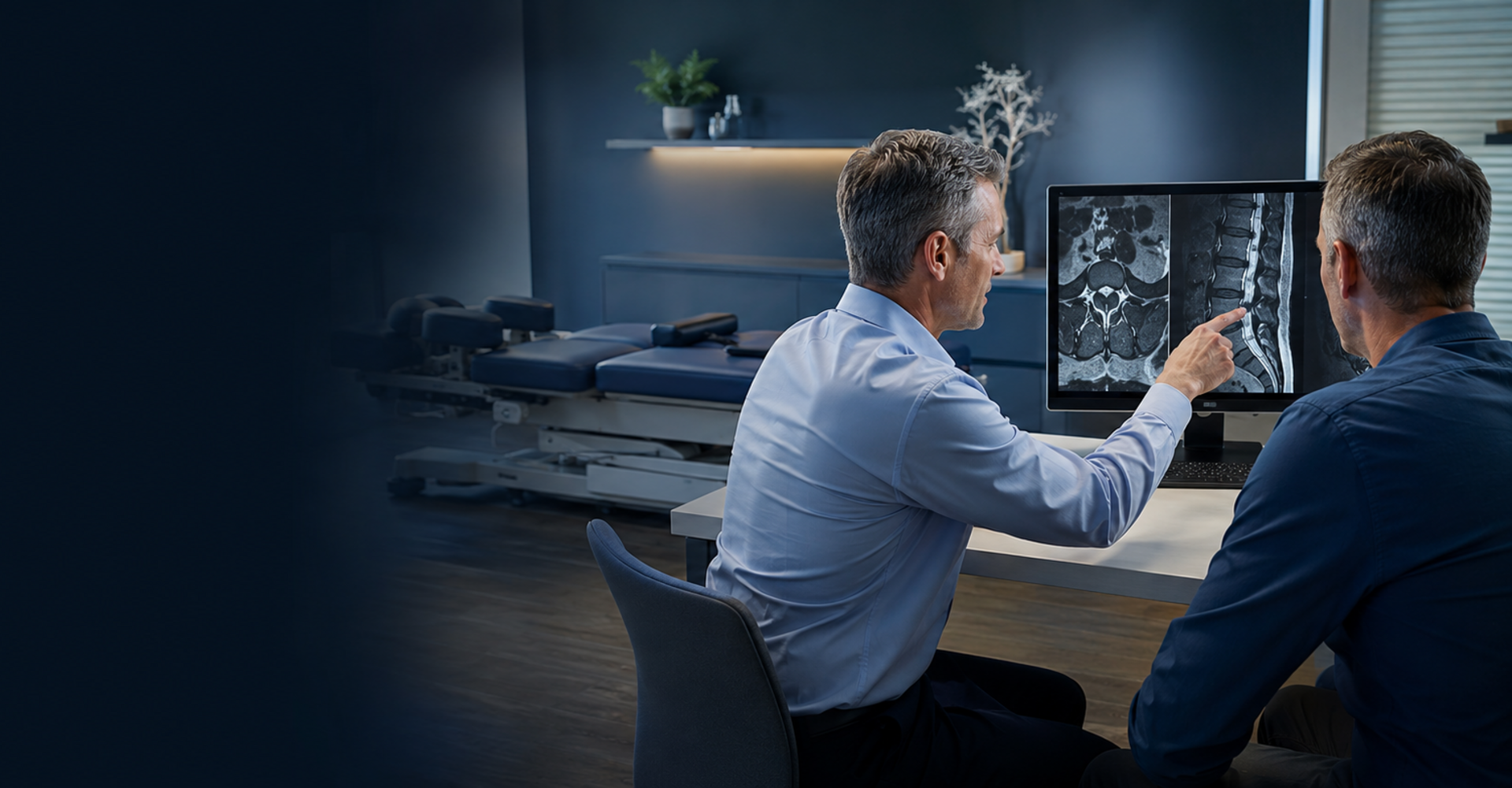
Spinal decompression in Montreal
Motorized spinal decompression may be discussed as a non-surgical option for selected patients with disc-related pain, radicular pain or foraminal irritation that matches the clinical examination.
This local page explains how a prudent process may be organized near Montreal: what the technology is trying to do, which profiles are sometimes considered, what the important limits are and why reassessment remains essential.

Spinal decompression in Montreal: what is the decision framework?
The role of a local page is not to promise a result, but to explain how a person may be assessed, selected or not selected, and then followed in a measurable way.
The useful question is not simply “do I have a disc herniation?” but rather “do my symptoms, function and examination suggest a profile in which a motorized trial makes sense?”.
Clinical profile
Link onset, symptom distribution, aggravating activities and relieving factors.
Neurology
Document strength, sensation, reflexes, balance or a radicular pattern when relevant.
Participation
Measure walking, driving, sleep, work and priority activities.
Plan review
Set a clear point to review parameters and the overall strategy.
Clinical, functional and neurological assessment
The history clarifies the region involved, the radiation of pain, the influence of posture, the degree of neural irritation, prior treatments and relevant medical or surgical history. The examination compares mobility, tolerance, strength, sensation, reflexes and neural tension tests when appropriate.
Imaging is not automatic. It is most helpful when it can change management, when a neurological deficit exists or when another diagnostic hypothesis needs clarification. An image alone does not establish the exact cause or the likely response to treatment.
| Clinical situation | Possible next step | Why |
|---|---|---|
| Stable and concordant symptoms | Prudent trial with baseline measures | Check whether function and distal pain improve meaningfully. |
| Persistent or atypical pain | Targeted diagnostic review | Look for another cause or a different therapeutic priority. |
| Neurological deficit or warning sign | Referral and proportionate investigations | The priority may become medical or urgent rather than mechanical. |

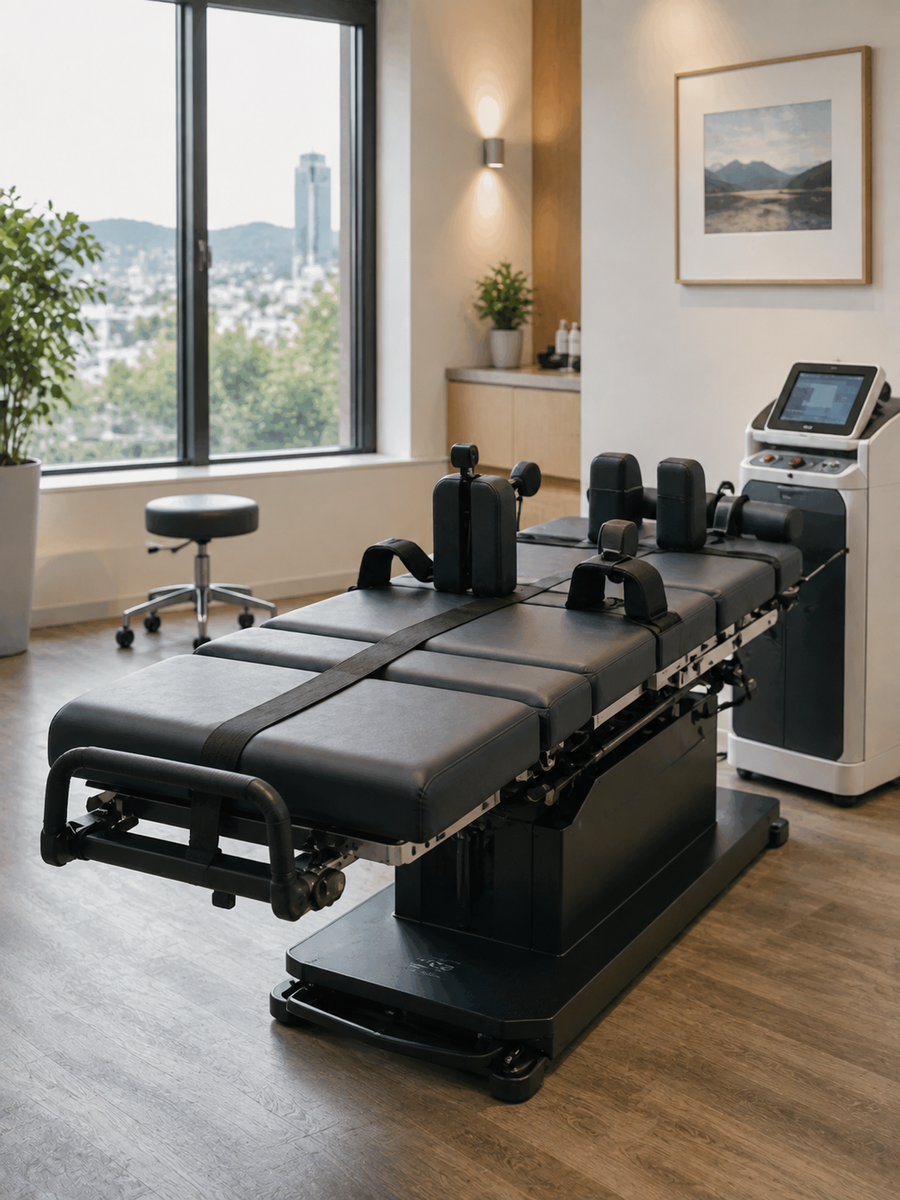
Build a measurable and revisable plan
Before any session, the plan should define what will be measured: radicular pain, sleep quality, walking tolerance, sitting tolerance, work capacity, sensation or strength. A serious trial is not just a fixed number of visits; it also includes stop rules.
If pain clearly worsens, travels farther down a limb, if weakness appears or if improvement remains insufficient after a reasonable interval, the strategy must be reviewed. A protocol should never continue simply because it was planned in advance.
What should be documented before and during care
A credible trial turns observations into measurable goals and explicit criteria for progression.
- Onset, duration, level, side and radiation of symptoms.
- Aggravating and relieving factors and tolerance to positions.
- Strength, sensation, reflexes, gait, balance or dexterity depending on the region.
- Concordance between symptoms, function and imaging when imaging is available.
- Functional goals: sleep, walking, work, driving or daily activities.
- Stop rules, escalation triggers and urgent referral thresholds.
Track function instead of treating an isolated number
Follow-up combines pain, symptom distribution, strength, sensation, sleep, exercise tolerance and participation in daily activities. Short-term relief alone does not prove that a mechanism has been corrected or that a durable result will follow.
Conversely, weakness, spreading numbness, worsening gait or reduced function remain important even if pain intensity fluctuates. Those elements should be built into reassessment.
What is the working diagnosis?
Ask what supports it and what other causes still need to be considered.
What outcome will be measured?
Pain alone is not enough; function and neurological status also matter.
When will the plan be reviewed?
Set a date and criteria to continue, adjust or stop.
What are the escalation thresholds?
Clarify which changes require imaging, a medical opinion or urgent care.
Common mistakes to avoid
- Treating an image finding without confirming clinical concordance.
- Promising a universal or automatic result.
- Continuing a protocol without measurable criteria.
- Ignoring important differential diagnoses or warning signs.
- Confusing short-term relief with durable functional recovery.
- Delaying an urgent referral just to complete a treatment trial.
Questions to ask before starting
What is the working diagnosis?
Ask what supports it and what other causes still need to be considered.
What outcome will be measured?
Pain alone is not enough; function and neurological status also matter.
When will the plan be reviewed?
Set a date and criteria to continue, adjust or stop.
What are the escalation thresholds?
Clarify which changes require imaging, a medical opinion or urgent care.

Related guides in the decompression cluster
Spinal decompression in Terrebonne
Compare the other local service page and the selection logic.
Sciatica: general guide
Return to the radicular clinical picture and its differential diagnoses.
Disc herniation
Look more closely at how imaging, pain and neurological findings fit together.
Disclosed clinical resource
Readers who want to verify a local service offering may consult this separate and disclosed resource. Transactional information should be confirmed directly with the clinic.
TAGMED Clinic — Mont-Royal / Montreal
Information about assessment and selected non-surgical services, including spinal decompression, near Montreal. Address: 1140 Beaumont Avenue, Mont-Royal, Quebec, H3P 3E5.
Frequently asked questions
Is spinal decompression the same as traction?
It relies on traction or distraction forces. A motorized system may offer more control, but technical differences alone do not prove better outcomes.
Do I need an MRI before starting?
Not automatically. Imaging is mainly useful when it may change management or help clarify a different hypothesis.
Does a disc herniation automatically make me a candidate?
No. Clinical concordance between symptoms, examination findings, the affected level and treatment tolerance matters more than the image label alone.
Can decompression replace surgery?
It does not replace surgery when surgery is urgent or clearly indicated. In selected stable cases it may be discussed among conservative options.
How many sessions are needed?
Protocols vary. A credible plan should explain what will be measured and when the strategy will be reassessed.
Should treatment be painful?
No. Meaningful aggravation, more distal pain or new neurological symptoms should be reported promptly.
What should be measured to judge the outcome?
Pain alone is not enough. Walking tolerance, sleep, activities, work and neurological status also matter.
When should the strategy be changed or stopped?
If symptoms worsen, weakness appears, tolerance remains poor or meaningful progress is absent within the planned timeframe.
Where is this service offered near Montreal?
The disclosed clinical resource is TAGMED Clinic in Mont-Royal, at 1140 Beaumont Avenue.
Does The Spine Page provide this treatment directly?
No. The Spine Page is an educational publication distinct from the clinics and does not deliver care directly.
Key clinical sources
- World Health Organization – non-surgical management of chronic primary low back pain
- NICE – Low back pain and sciatica in over 16s
- Cochrane – Traction for low-back pain
- American College of Radiology – Low Back Pain
Last editorial review: August 2026. General educational information only.
Dr. Sylvain Desforges, B.Sc., D.O., N.D., osteopath – The Spine Page
Continue your research on decompression in Montreal
Compare this local page with the general guide, the broader spinal-conditions section and other non-surgical options to keep a coherent overall picture.
Dr. Sylvain Desforges, B.Sc., D.O., N.D., osteopath