




Spine conditions: symptoms, warning signs and treatment pathways
A practical overview of disc problems, sciatica, spinal stenosis, neck pain and persistent back pain—organized around symptoms, function and clinical decision-making.
Use symptoms, function and progression—not a label alone
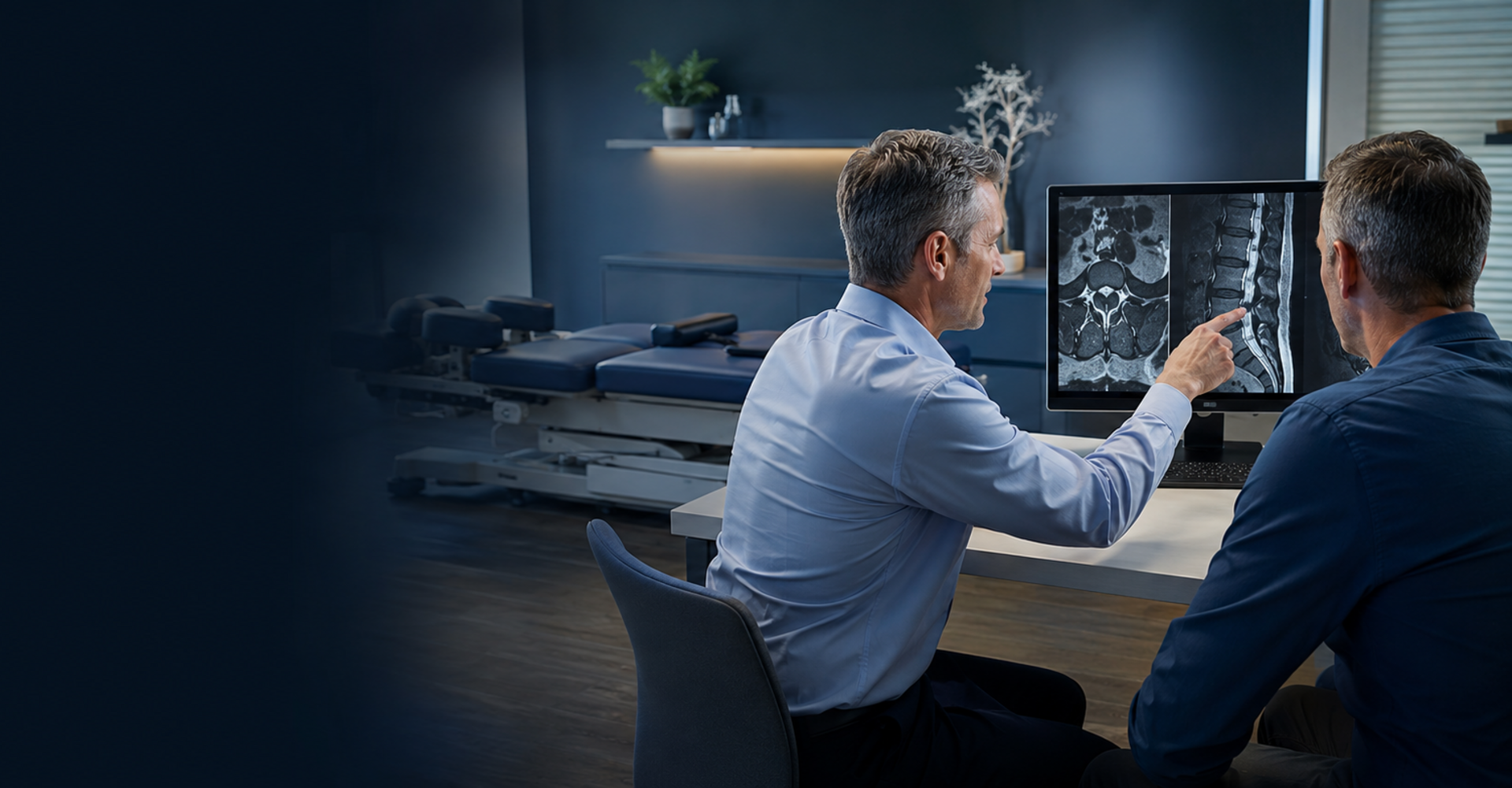
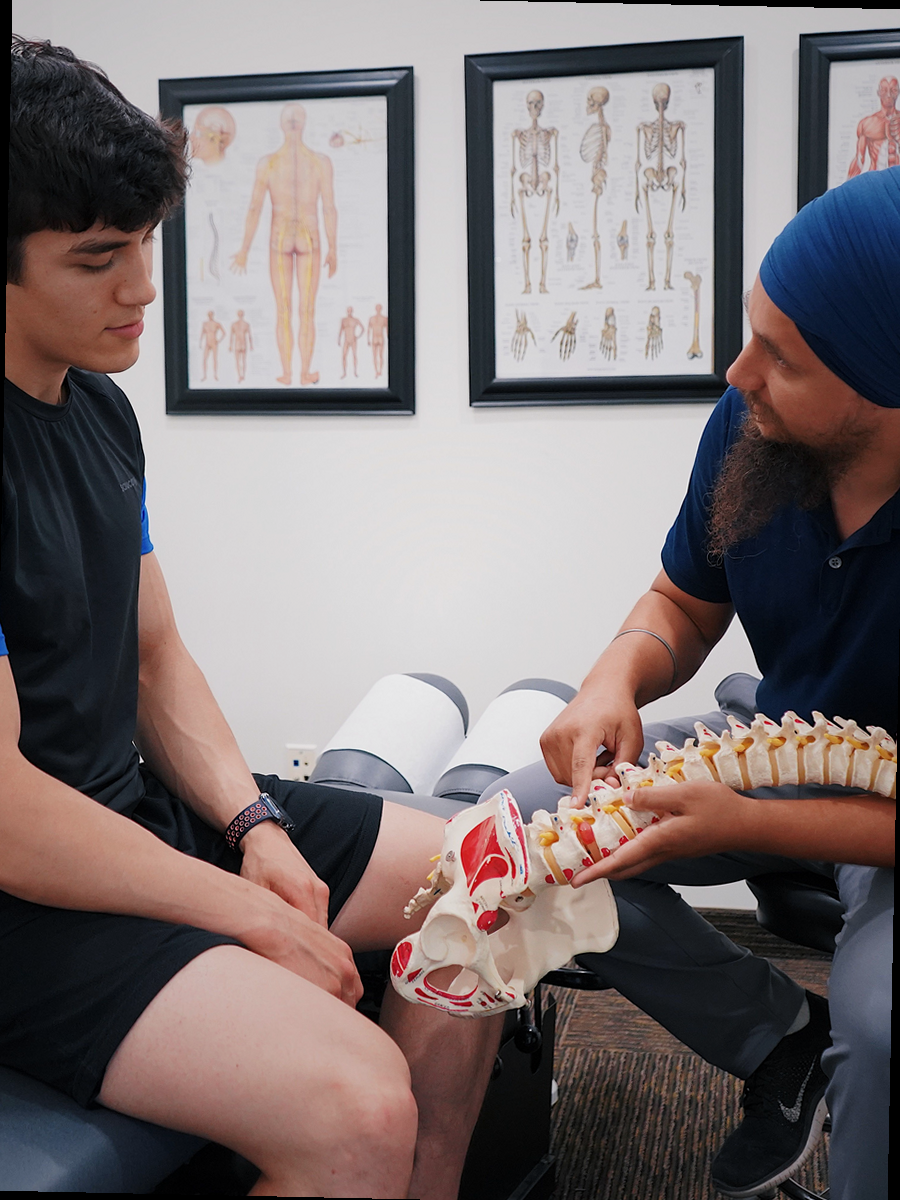
Spine-related symptoms can come from discs, nerve roots, facet joints, muscles, ligaments, the spinal canal or structures outside the spine. Imaging findings are common and do not automatically identify the source of pain. A useful assessment considers where symptoms begin, whether they travel, what changes them, and whether strength, sensation, balance or walking are affected.
Herniated disc
Understand disc bulging, herniation, nerve-root irritation and the difference between an imaging finding and a symptomatic lesion.
Sciatica
Learn how pain may travel from the lower back into the leg, which neurological findings matter and when urgent assessment is needed.
Spinal stenosis
Explore central and foraminal narrowing, neurogenic claudication, functional limitations and treatment pathways.
Spinal decompression
Review how motorized decompression is described, how candidates are selected and how claims should be evaluated.
Neck pain and cervical radiculopathy
Distinguish local neck pain from pain, numbness or weakness that travels into the shoulder, arm or hand.
Persistent low back pain
Understand why long-lasting pain may involve physical, psychological, occupational and social factors.
How the condition guides treatment
A recent uncomplicated episode of low back pain is not managed in the same way as a disc herniation with weakness, spinal stenosis with walking intolerance or a suspected fracture. The condition, symptom trajectory, neurological examination, goals and risks all influence whether self-management, rehabilitation, manual care, medication, injection, decompression technology or surgery is reasonable.
Frequently asked questions
Can an MRI identify the exact cause of pain?
Not always. Imaging should be interpreted together with symptoms, function and examination findings.
Is every disc bulge a herniated disc?
No. Disc terminology describes morphology, but clinical significance depends on nerve involvement and the symptom pattern.
Does leg pain always mean sciatica?
No. Hip, vascular, muscular and other problems may also cause leg pain.
Can spinal stenosis occur without severe back pain?
Yes. Walking-related leg heaviness, numbness or weakness may be more prominent than back pain.
When is weakness a warning sign?
New, significant or progressive weakness requires prompt assessment.
Are age-related changes always painful?
No. Degenerative findings are common in people without symptoms.
Can symptoms change with posture?
Yes. Sitting, standing, bending or walking may increase or reduce symptoms depending on the condition.
Should I stop all activity during a flare-up?
Prolonged rest is generally discouraged, but activity should be adapted and neurological worsening should be reassessed.
Which professional should evaluate spinal symptoms?
The appropriate professional depends on severity, neurological findings, trauma, systemic symptoms and access to care.
Does The Spine Page diagnose conditions?
No. The Spine Page is an educational blog and does not replace individualized assessment.
Primary sources and clinical guidance
- World Health Organization — Guideline for non-surgical management of chronic primary low back pain
- NICE — Low back pain and sciatica in over 16s
- American College of Physicians — Noninvasive treatments for low back pain
Last editorial review : July 2026. This page provides general educational information and does not replace diagnosis or individualized care.
Explore treatment options with better context
Use the treatment hub to compare conservative care, technology-assisted approaches, injections and surgery.
The Spine Page — www.thespinepage.com