




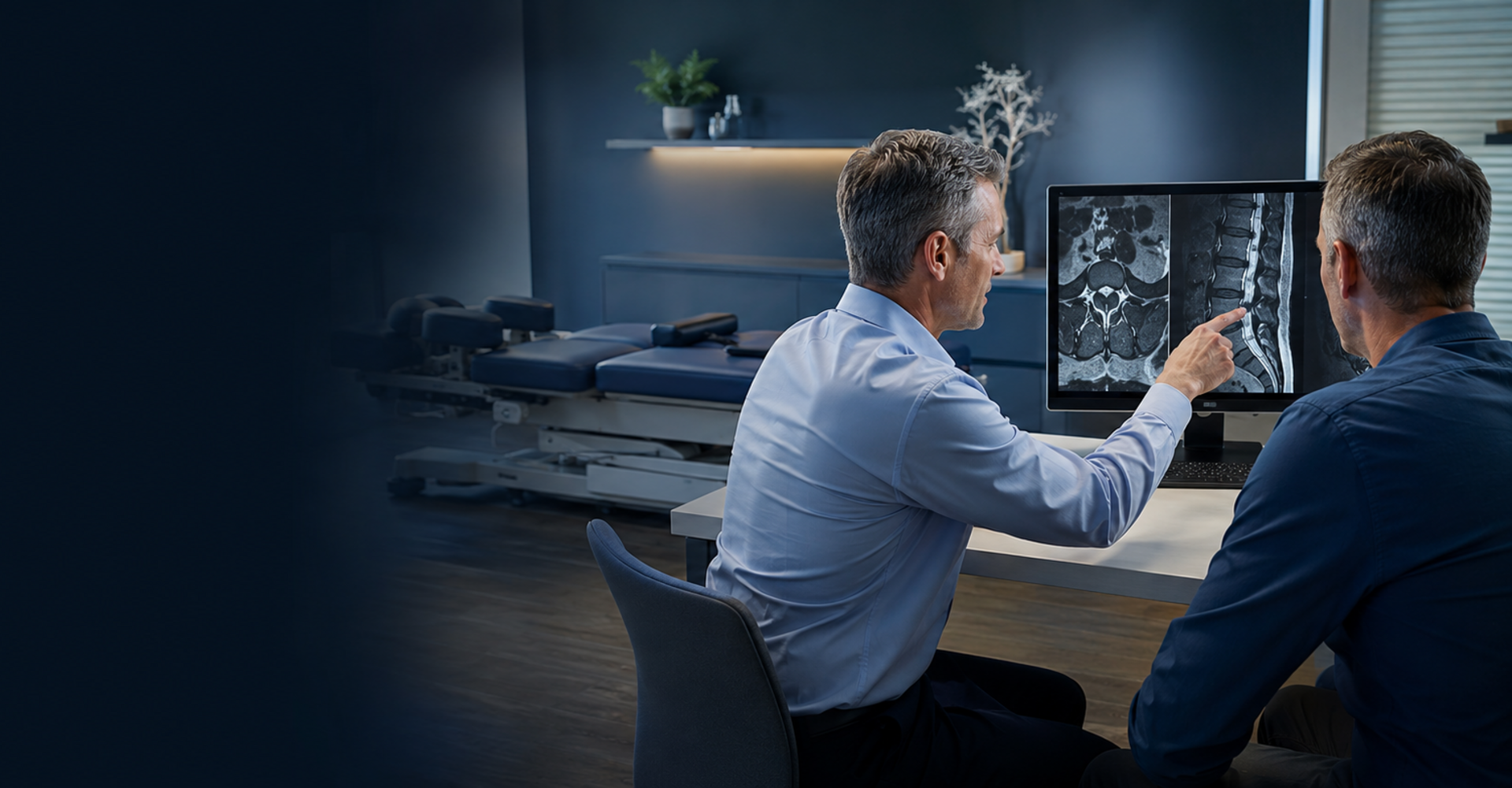
Spinal stenosis: symptoms, walking limitations and treatment choices
Understand central and foraminal stenosis, neurogenic claudication, neurological signs and the role of conservative care, procedures and surgery.
Central and foraminal narrowing
Spinal stenosis refers to reduced space in the spinal canal or around a nerve root. Lumbar central stenosis may produce neurogenic claudication—leg pain, heaviness, numbness or weakness brought on by standing or walking. Foraminal stenosis may produce a more focal radicular pattern.
Walking intolerance
Symptoms may increase with standing or walking and improve with sitting or bending forward.
Nerve-root symptoms
Foraminal narrowing may cause pain, numbness or weakness in a specific distribution.
Imaging correlation
The degree of narrowing on imaging does not always match symptom severity.
Assessment
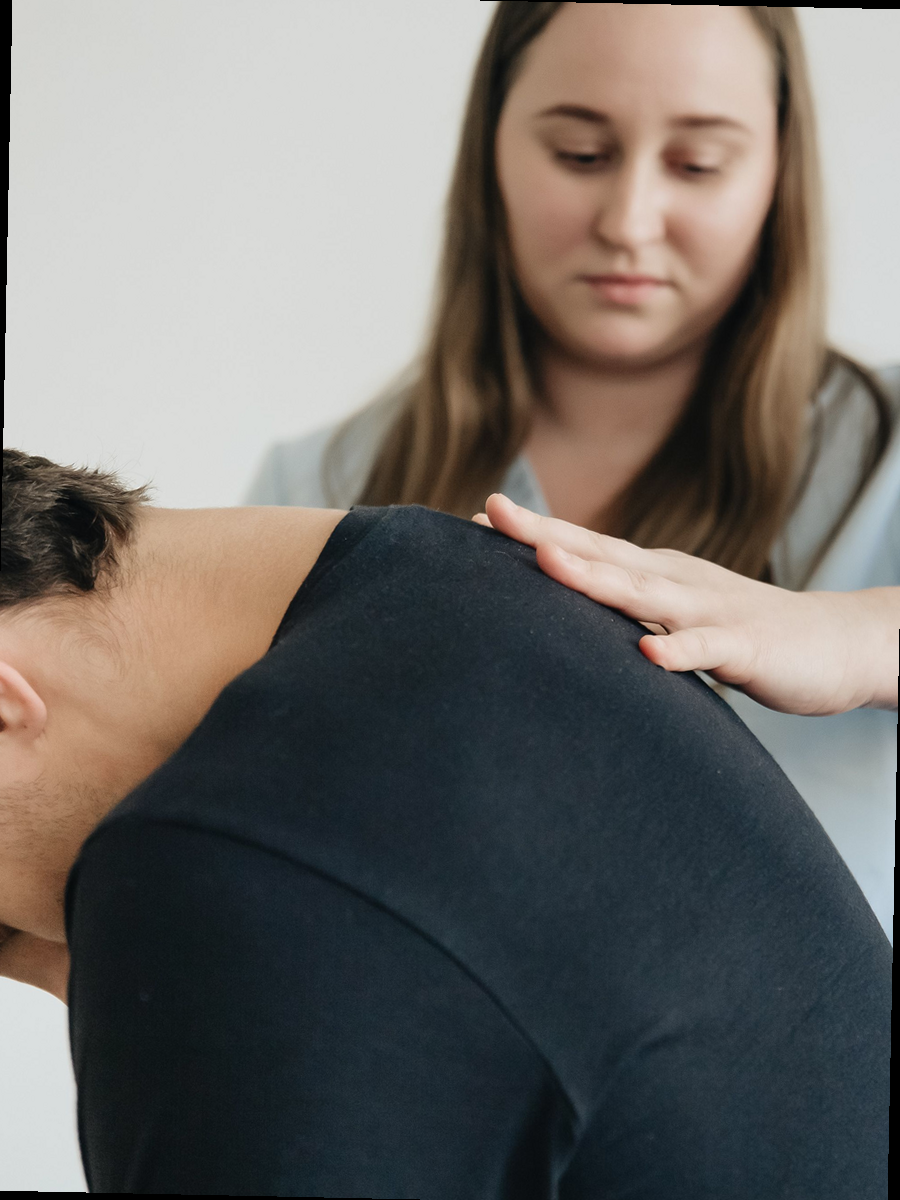
The evaluation distinguishes neurogenic claudication from vascular, hip and other causes of walking limitation. It reviews walking distance, posture, strength, sensation, reflexes and balance. Imaging is useful when it will change management or when a targeted intervention is being considered.
Non-surgical management
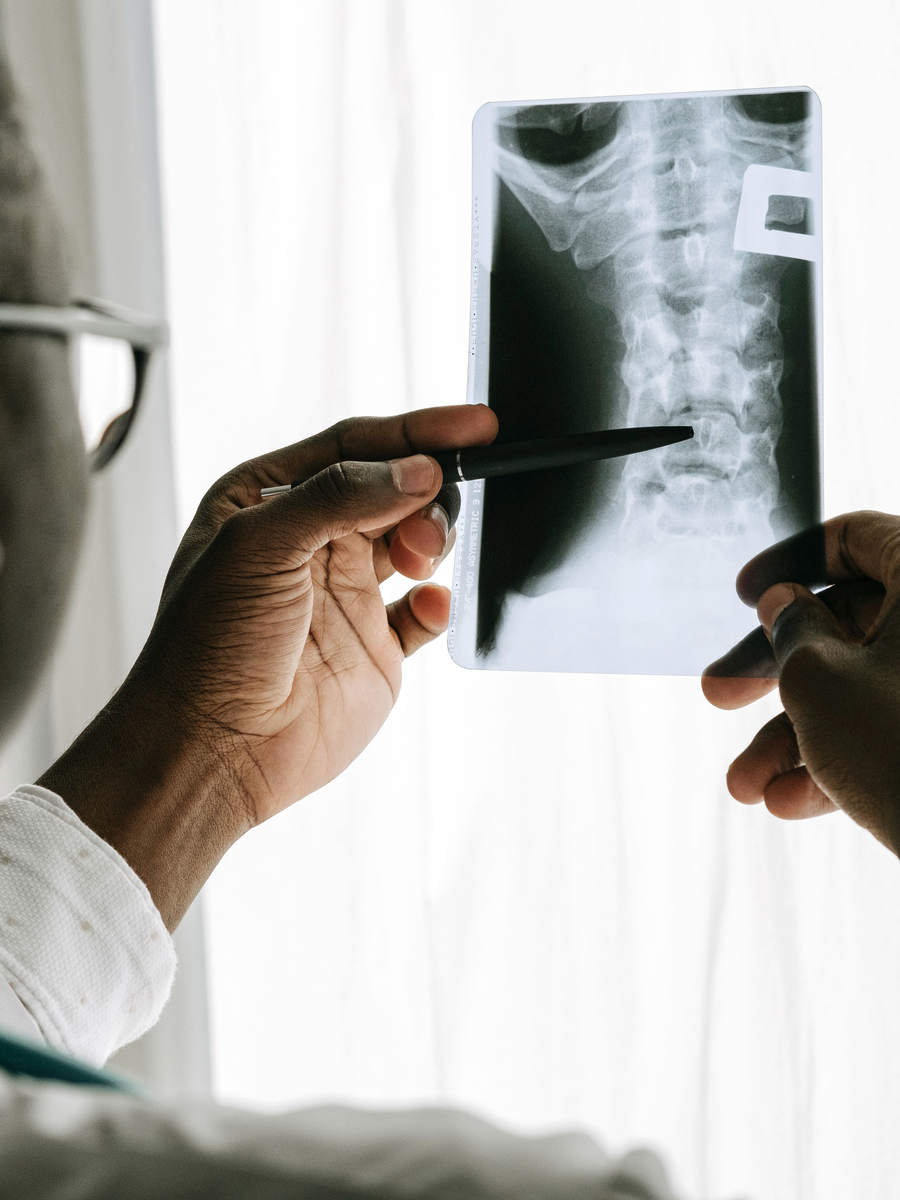
Care may include education, activity pacing, exercise, strength and endurance work, medication when appropriate and selected physical treatments. The objective is to improve function and walking tolerance while monitoring neurological status.
Procedures and surgery
Injections may be discussed in selected cases. Surgery may be considered when severe functional limitation persists, deficits progress or imaging correlates with a surgically treatable level. Decisions should weigh expected benefit, comorbidities and rehabilitation needs.
Frequently asked questions
Is spinal stenosis always painful?
No. Imaging narrowing may be present without symptoms.
Why does bending forward sometimes help?
Flexion may temporarily increase available space in some lumbar stenosis presentations.
Is stenosis the same as a herniated disc?
No. A disc herniation may contribute, but stenosis often involves multiple degenerative structures.
Can stenosis cause balance problems?
It can, but balance problems have many causes and require assessment.
Is MRI necessary?
It is useful when the result may influence targeted treatment or surgery.
Can exercise worsen stenosis?
Exercise should be adapted. Progressive weakness or neurological worsening requires reassessment.
Can decompression therapy help?
Evidence and suitability depend on the type of stenosis, symptoms and contraindications.
Are injections curative?
They may provide temporary relief in selected cases but do not reverse structural narrowing.
When is surgery considered?
For persistent severe limitation, progressive deficits or a well-correlated treatable lesion.
When is stenosis urgent?
New bladder or bowel dysfunction, saddle numbness or major progressive weakness requires urgent care.
Primary sources and clinical guidance
- World Health Organization — Guideline for non-surgical management of chronic primary low back pain
- NICE — Low back pain and sciatica in over 16s
- American College of Physicians — Noninvasive treatments for low back pain
Last editorial review : July 2026. This page provides general educational information and does not replace diagnosis or individualized care.
Compare care pathways
Review treatment categories or explore motorized decompression with appropriate caution.
The Spine Page — www.thespinepage.com
Topic index: Spinal and foraminal stenosis
Explore this topic cluster by search intent. Each link leads to a distinct guide directly related to the subject.