

Spinal cord dysfunction in the neck that may cause hand clumsiness, gait problems or widespread neurological findings.
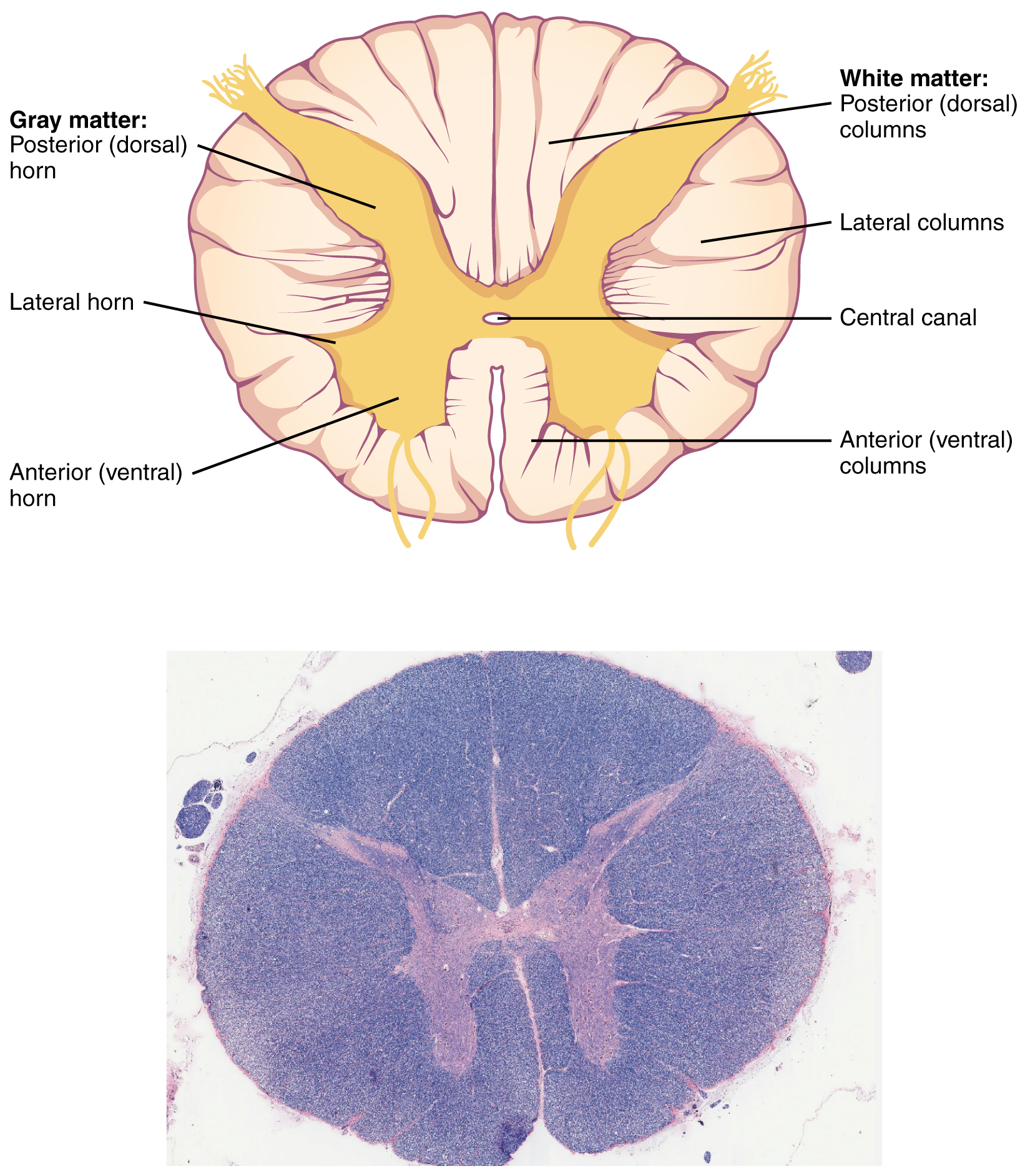
OpenStax — CC BY 4.0. Image source.

Understanding the mechanism
Cervical myelopathy is spinal cord dysfunction at the neck level. In its degenerative form, discs, bone spurs and thickened ligaments reduce the space available for the cord. A naturally narrow canal may increase susceptibility. This is different from an isolated cervical radiculopathy, which affects a nerve root and often primarily involves one upper limb.
Symptoms and warning signs
Early changes can be subtle: fastening buttons, writing, handling small objects or walking on uneven ground becomes harder. The legs can feel stiff even though the lesion is in the neck. Increasing weakness, unexplained falls or recent bladder changes need prompt assessment; sudden major deterioration warrants emergency care. Waiting for severe neck pain can delay recognition.
Diagnosis and investigations
Examination looks at walking, dexterity and signs of impaired spinal cord pathways. Cervical MRI assesses the canal and cord, and its findings are compared with the full clinical presentation. A narrow canal without symptoms is not synonymous with clinical myelopathy. Peripheral neuropathy, nutritional deficiencies and other neurological conditions can resemble parts of the presentation and may require investigation.
Treatment and outlook
Specialist assessment determines whether monitoring, supervised rehabilitation or surgery is appropriate. Severity and progression matter more than a single phrase in the radiology report. An operation may be intended to prevent additional deterioration; longstanding impairments may not fully resolve. When observation is chosen, the plan needs explicit follow-up arrangements and instructions for symptoms that require earlier review.
The role of TAGMED care
TAGMED can contribute to recognizing concerning signs and arranging referral, but cervical traction cannot replace specialist evaluation. Forceful cervical manipulation and provocative exercises are inappropriate when cord dysfunction is suspected. Once the diagnosis and precautions are clarified, support for mobility, balance and daily function should be coordinated with the treating medical team and adjusted to neurological changes.
Practical follow-up
Difficulties fastening buttons, writing or walking steadily can be described to the clinician, but repeated self-testing that risks a fall is unnecessary. The team can select safe measures to compare function between appointments and clarify when earlier review is needed.
Frequently asked questions
Why can the legs be affected?
Nerve pathways supplying the legs travel through the cervical spinal cord.
Is this simply neck arthritis?
Arthritis may narrow the canal; myelopathy refers to neurological dysfunction when it develops.
Are numb hands enough for the diagnosis?
No. Carpal tunnel syndrome is another possibility, and the complete examination matters.
Does less pain mean the problem is improving?
Not if walking, strength or hand dexterity continues to deteriorate.
Which outcomes should be monitored?
Walking safety, fine hand tasks and neurological findings during planned follow-up.
Conceptual diagram: the steps depend on clinical findings and do not provide an individual diagnosis.
Medical references
- American Academy of Orthopaedic Surgeons. Cervical Spondylotic Myelopathy.
- Johns Hopkins Medicine. Cervical Myelopathy.
References document the topic; their inclusion does not imply endorsement of TAGMED services by those organizations.
Educational information from The Spine Page. This entry does not replace an individual assessment. Documentary version: October 12, 2026. Sylvain Desforges, B.Sc., D.O., N.D., osteopath and naturopath.
TAGMED clinic contact details
These contact details do not replace emergency care. For severe or rapidly progressive symptoms, go to an emergency department; call 911 when needed.
Clinique TAGMED — Terrebonne
1150, rue Lévis, Suite 200
Terrebonne (Québec) J6W 5S6
450‑704‑4447
Clinique TAGMED — Montréal
1140, avenue Beaumont
Mont-Royal (Québec) H3P 3E5
1‑877‑672‑9060