

Spinal cord dysfunction that may affect gait, hand dexterity or reflexes and requires medical evaluation.
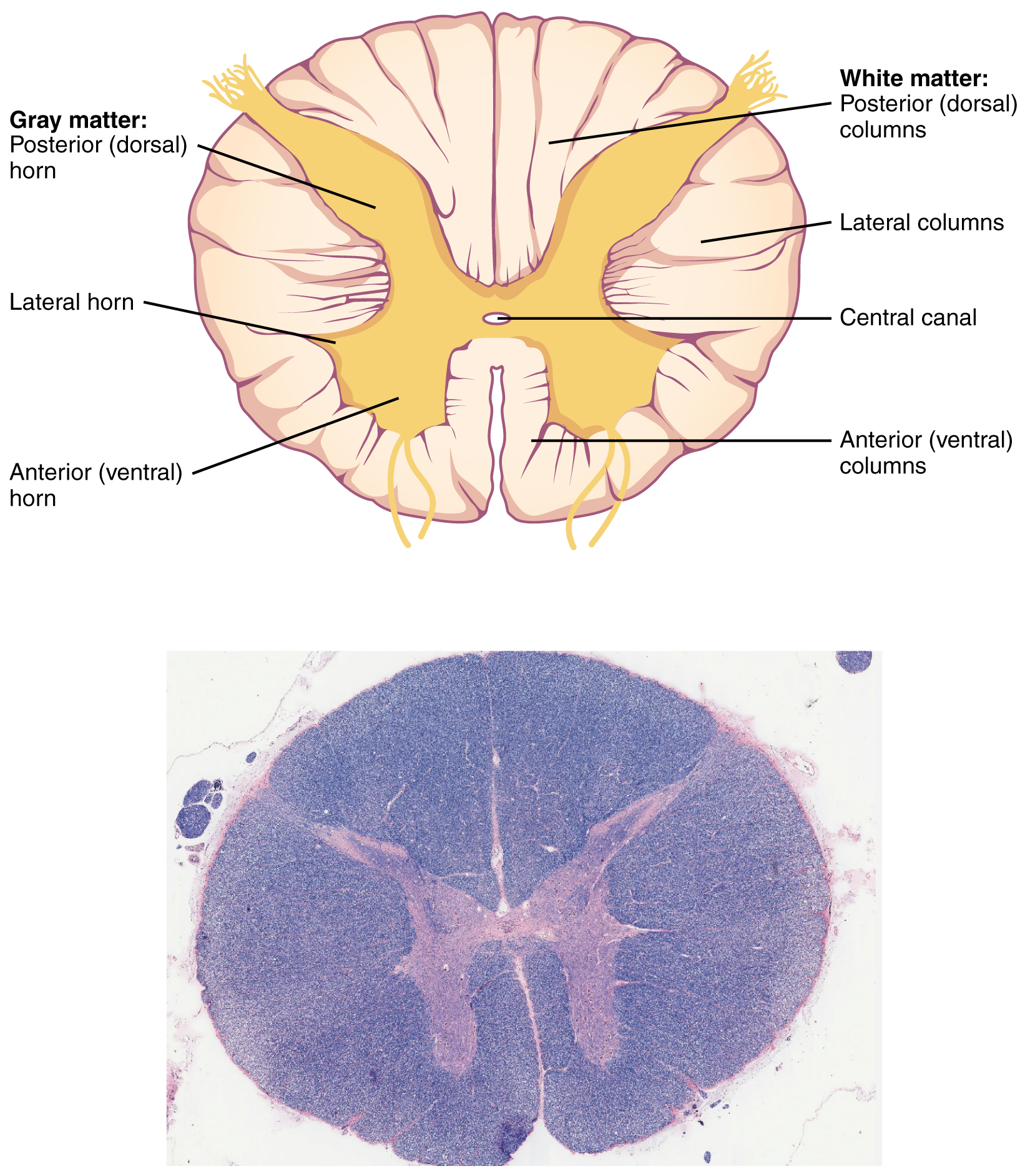
OpenStax — CC BY 4.0. Image source.

Understanding the mechanism
Myelopathy means dysfunction of the spinal cord. It can result from compression, inflammation, vascular injury or other neurological diseases, so the term is broader than neck pain or a pinched nerve. Because the cord carries signals between the brain and many body regions, a lesion can cause difficulties well below the level at which it occurs.
Symptoms and warning signs
Possible clues include stiff or unsteady walking, falls, reduced hand dexterity and unusual sensations in several limbs. Examination may reveal overactive reflexes. Rapid deterioration, substantial weakness or new bladder or bowel dysfunction requires urgent assessment. Severe pain is not necessary for significant spinal cord dysfunction; the pattern and progression of neurological symptoms are more informative than pain intensity alone.
Diagnosis and investigations
A neurological examination helps locate the problem and distinguish spinal cord disease from a nerve-root disorder, peripheral neuropathy or brain disease. MRI is usually important for identifying compression and changes within the cord. Blood tests or additional investigations may be needed when imaging does not explain the presentation. An imaging report must always be interpreted together with clinical findings.
Treatment and outlook
Treatment is determined by the cause. Degenerative compression may need a surgical opinion, while inflammatory or infectious conditions require specific medical treatment. Preventing further loss of function may be as important as recovering what has already been lost. Outlook depends on the mechanism, severity and duration; no conservative technique can guarantee regeneration of damaged spinal cord tissue.
The role of TAGMED care
When myelopathy is suspected, TAGMED care should prioritize medical referral before mechanical treatment. Motorized spinal decompression is not equivalent to surgically relieving cord pressure. Forceful manipulation, an empirical traction trial, laser and shockwave therapy are not treatments for the underlying cord disorder. Functional support can subsequently be coordinated within the restrictions and objectives defined by the specialist team.
Practical follow-up
After medical assessment, follow-up can document falls, walking problems and difficulty with fine tasks. Relatives sometimes notice useful changes to report. These observations complement specialist examination without replacing planned appointments or delaying emergency assessment when deterioration is sudden.
Frequently asked questions
Is myelopathy the same as myopathy?
No. Myelopathy concerns the spinal cord; myopathy primarily affects muscle.
Does the neck have to hurt?
No. Problems walking or using the hands can be the main complaint.
Does a normal MRI exclude every cause?
It reduces some possibilities, but further investigation may still be needed based on the examination.
Does surgery restore all function?
It can protect function and sometimes improve symptoms, but complete recovery is not assured.
Is it safe to wait during deterioration?
Progressive neurological symptoms need prompt or emergency reassessment, depending on their severity.
Conceptual diagram: the steps depend on clinical findings and do not provide an individual diagnosis.
Medical references
- Johns Hopkins Medicine. Myelopathy.
- American Academy of Orthopaedic Surgeons. Cervical Spondylotic Myelopathy.
- NICE. Spinal metastases and metastatic spinal cord compression (NG234).
References document the topic; their inclusion does not imply endorsement of TAGMED services by those organizations.
Educational information from The Spine Page. This entry does not replace an individual assessment. Documentary version: October 12, 2026. Sylvain Desforges, B.Sc., D.O., N.D., osteopath and naturopath.
TAGMED clinic contact details
These contact details do not replace emergency care. For severe or rapidly progressive symptoms, go to an emergency department; call 911 when needed.
Clinique TAGMED — Terrebonne
1150, rue Lévis, Suite 200
Terrebonne (Québec) J6W 5S6
450‑704‑4447
Clinique TAGMED — Montréal
1140, avenue Beaumont
Mont-Royal (Québec) H3P 3E5
1‑877‑672‑9060