

Disorder of one or more nerves outside the brain and spinal cord, potentially causing sensory changes, weakness or pain.
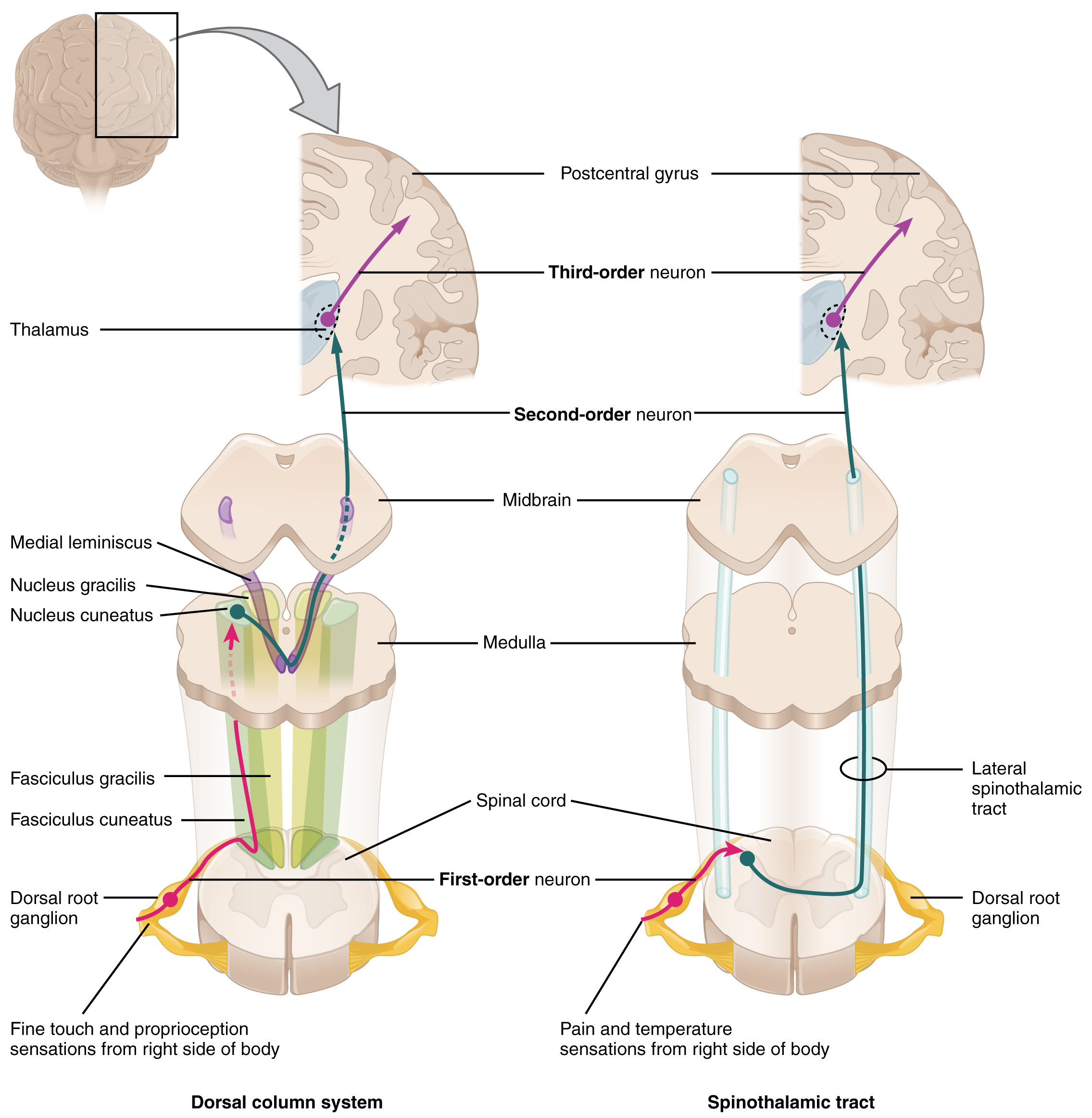
OpenStax College — CC BY 3.0. Image source.

Understanding the mechanism
Peripheral neuropathy affects nerves outside the brain and spinal cord. It can involve one nerve, several separate nerves or many nerves diffusely. Diabetes, nutritional deficiencies, medicines, inflammatory disorders and local compression are among the possible causes. This variety explains why similar burning or numb sensations do not all have the same origin or respond to the same treatment.
Symptoms and warning signs
A polyneuropathy may cause symmetrical foot numbness, later hand symptoms, impaired balance or weakness. Some forms predominantly affect small fibres and produce burning pain. Autonomic symptoms can also occur. Rapidly ascending weakness, breathing difficulty or problems swallowing require emergency assessment and must not be attributed to an ordinary lower-back problem or postponed until a routine therapy visit.
Diagnosis and investigations
Assessment explores the distribution, timing, exposures and associated health conditions. Neurological examination may be supplemented by blood glucose, vitamin B12 or other targeted tests. Nerve-conduction studies and EMG mainly assess particular types of fibres; normal results do not exclude every small-fibre neuropathy. Further tests are chosen by the medical clinician according to the pattern rather than ordered indiscriminately.
Treatment and outlook
When a cause is identified, addressing it is the priority. Management may include metabolic control, correcting a deficiency, supervised medication changes and pain treatment. Foot protection, balance and fall prevention are important when sensation is reduced. A suspected medicine should never be stopped without discussion with the prescriber, because both the suspected adverse effect and the original condition need consideration.
The role of TAGMED care
At TAGMED, functional support may be appropriate after the diagnostic assessment, particularly for activity and associated musculoskeletal discomfort. Spinal decompression does not treat a metabolic polyneuropathy. Reduced sensation requires extra care with thermal or mechanical modalities. Devices should not be described as universally regenerating nerves; meaningful functional goals and monitoring remain necessary, together with appropriate medical follow-up.
Practical follow-up
Daily safety deserves practical attention: when foot sensation is reduced, inspect the feet and report wounds or unnoticed burns. A professional can adapt advice to vision, balance and actual independence rather than assuming that every person can perform the same checks.
Frequently asked questions
Is diabetes always the cause?
No. Many causes are possible, and some remain unexplained after investigation.
Why are feet often affected first?
In length-dependent neuropathies, the longest nerve fibres tend to be affected earlier.
Is lumbar MRI enough?
No. A diffuse neuropathy requires a different assessment from a single compressed root.
Is walking safe with numb feet?
Activity needs appropriate footwear, foot inspection and adjustment for balance or fall risk.
Can nerves recover?
Recovery depends on the cause and injury; addressing reversible causes can allow improvement.
Conceptual diagram: the steps depend on clinical findings and do not provide an individual diagnosis.
Medical references
- Mayo Clinic. Peripheral neuropathy — Symptoms and causes.
- Johns Hopkins Medicine. Our Nerve Entrapment Approach.
References document the topic; their inclusion does not imply endorsement of TAGMED services by those organizations.
Educational information from The Spine Page. This entry does not replace an individual assessment. Documentary version: October 12, 2026. Sylvain Desforges, B.Sc., D.O., N.D., osteopath and naturopath.
TAGMED clinic contact details
For non-urgent consultations and information about available services.
Clinique TAGMED — Terrebonne
1150, rue Lévis, Suite 200
Terrebonne (Québec) J6W 5S6
450‑704‑4447
Clinique TAGMED — Montréal
1140, avenue Beaumont
Mont-Royal (Québec) H3P 3E5
1‑877‑672‑9060