


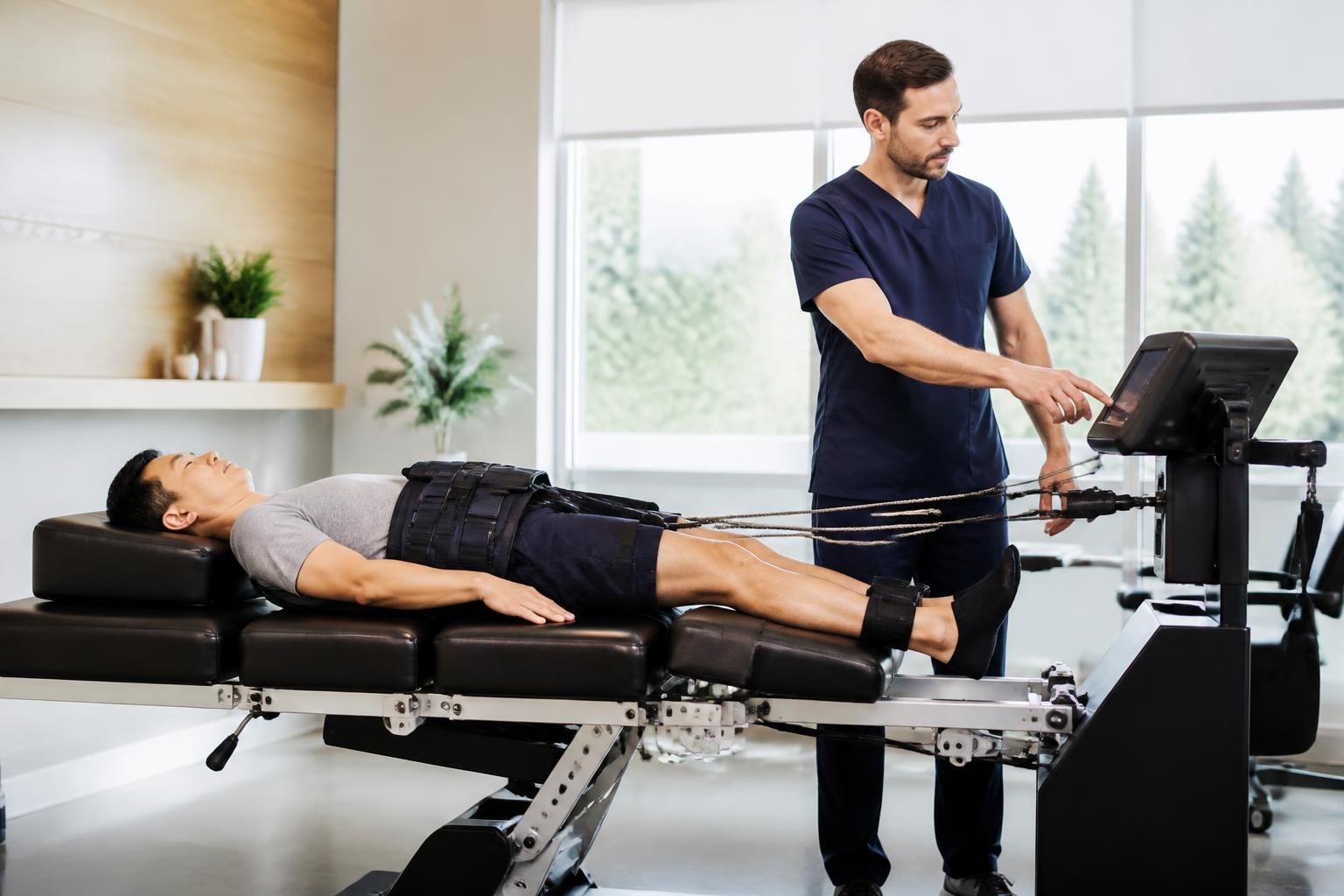
Sciatica, a common nerve pain, can significantly affect the daily lives of Pierrefonds-Roxboro residents. This condition, often linked to compression or irritation of the sciatic nerve, causes pain radiating from the lower back into the leg. Adopting appropriate conservative treatments is a valuable first approach before considering more invasive interventions.
Each case of sciatica is unique, and it is crucial to consider the possible source of the pain, the persistence of symptoms, and their impact on quality of life. In Montréal and the surrounding area, including Pierrefonds-Roxboro, several non-surgical options are available to manage sciatica, including physiotherapy, massage therapy, and rehabilitation through therapeutic exercises. Understanding these approaches helps optimize overall management and avoid unnecessary complications.


Key points to remember about sciatica and its conservative treatments in Pierrefonds-Roxboro
Low back pain radiating into the buttock, thigh, and as far as the calf, sometimes accompanied by numbness or tingling in the leg.
Herniated disc, foraminal stenosis, or nerve compression associated with prolonged posture or low back trauma.
The pain pattern alone is not enough to identify the involved nerve root or the exact cause without a medical assessment.
Persistent pain below the knee, worsening paresthesia, or muscle weakness warrant prompt assessment by a health-care professional.
Understanding sciatica: mechanisms and clinical distinctions in Pierrefonds-Roxboro
Sciatica is a specific form of radicular pain, often caused by irritation or compression of the lumbar nerve roots, generally L4, L5, or S1. This nerve, the largest in the body, extends from the lower back to the leg through the buttock. The pain may present as an aching sensation, burning, or numbness, and may sometimes be accompanied by muscle weakness or functional limitations.
It is essential to distinguish sciatica from other causes of low back pain or referred pain. For example, localized muscle pain or femoral neuralgia, which affects another nerve, may cause similar symptoms but follow different patterns. In addition, conditions such as piriformis syndrome can mimic sciatica without disc compression.
In Pierrefonds-Roxboro, local factors such as office work, public transit, or physical activities often influence the clinical presentation. Scoliosis, aging, or trauma may also contribute to conditions that can promote sciatica.
Several anatomical causes may be associated with sciatica:
- Herniated disc : displacement of the intervertebral disc compressing a nerve root.
- Disc protrusion : disc bulge without leakage of the nucleus, which may exert pressure.
- Foraminal stenosis : narrowing of the canal through which the nerve passes, causing chronic compression.
The sensory, motor, and reflex symptoms associated with each nerve root vary, making a comprehensive assessment based on clinical history, physical examination, and possibly medical imaging necessary. Therefore, pain travelling down the leg with numbness or weakness should be taken seriously, particularly if it persists or worsens.
For more information, it is helpful to consult specialized resources to better understand the possible causes of sciatica and the distinctions between radicular and muscular pain.
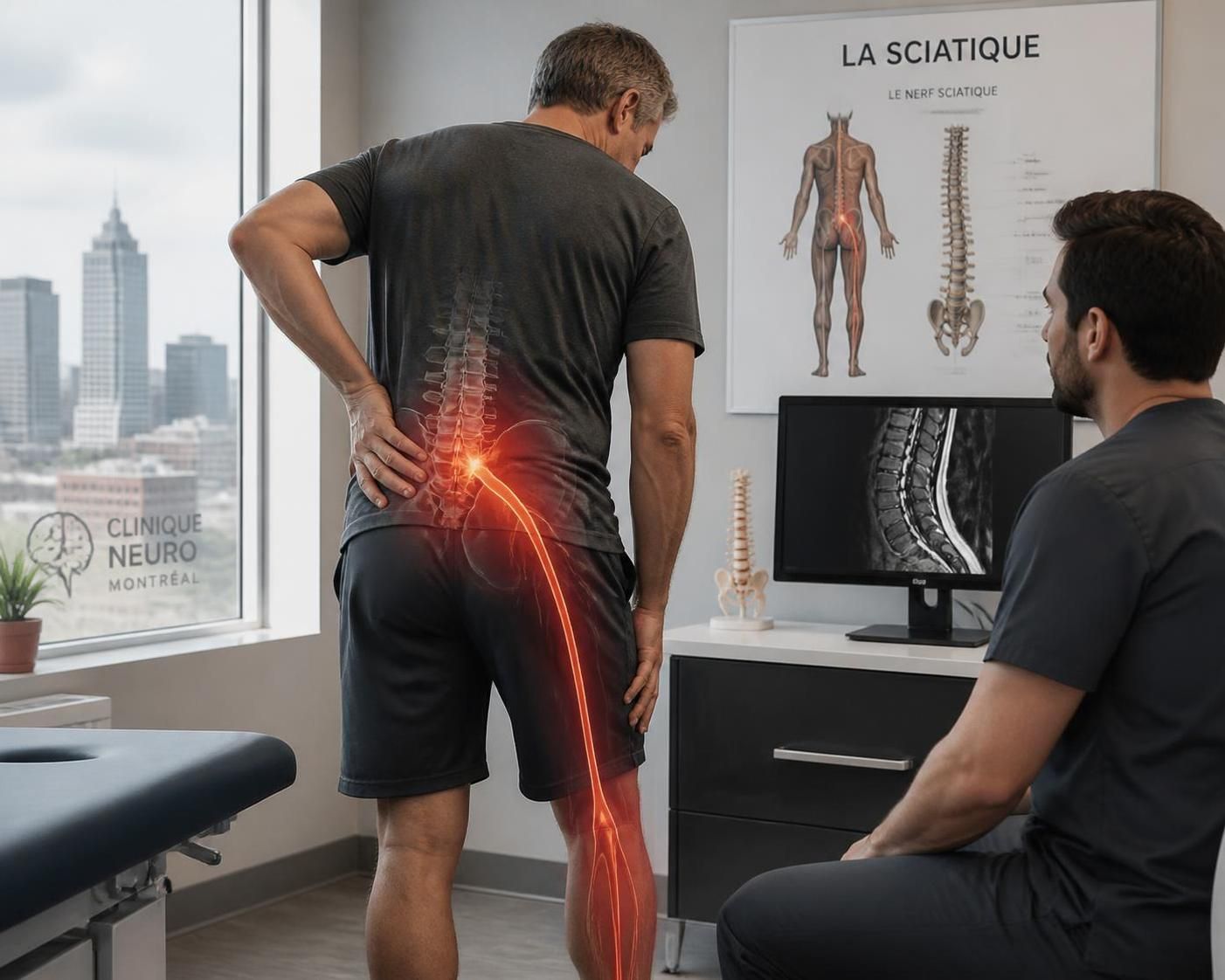
Factors that affect sciatic pain and their impact on management in Pierrefonds-Roxboro
Sciatica symptoms are not static and may be influenced by various daily situations. For example, prolonged sitting, common during remote work or hours spent commuting in Pierrefonds-Roxboro, can worsen pain. Similarly, certain movements, such as bending or twisting the trunk, can increase nerve compression and intensify pain.
Conversely, appropriate physical activity, including specific therapeutic exercises, can help improve mobility, strengthen stabilizing muscles, and reduce symptoms. For example, swimming or certain stretches targeting the lower back and gluteal muscles are often recommended.
Physiotherapy plays a major role in modulating sciatic pain. Through a personalized approach, it incorporates different techniques according to the patient’s tolerance. In addition, massage therapy, by relaxing contracted muscles, may sometimes relieve pressure on the sciatic nerve.
Occupational therapy is another relevant option, particularly for adjusting posture at work or during daily activities to avoid movements or positions that worsen symptoms.
However, vigilance is needed: if pain progresses to progressive numbness, increased muscle weakness, or urinary problems appear, an urgent medical consultation is imperative.
Here are a few examples of factors influencing pain:
- Prolonged sitting : increases pain by increasing disc pressure.
- Moderate walking : sometimes beneficial; improves circulation and mobilizes the spine.
- Excessive lumbar flexion : may worsen nerve compression.
- Prolonged bed rest : not recommended, as it contributes to stiffness and muscle weakness.
These recommendations are part of a conservative approach that takes your situation in Pierrefonds-Roxboro into account and adapts according to how your symptoms progress.
When should you consider consulting for sciatica in Pierrefonds-Roxboro?
It is recommended to consult a professional when sciatic pain does not decrease after a few weeks of conservative treatment or if it is accompanied by the following signs:
- Pain extending below the knee and limiting walking or movement.
- Numbness, tingling, or a sensation of muscle weakness in the leg.
- Changes in reflexes or skin sensation.
- Pain that disrupts sleep or daily activities.
Urgent medical consultation is necessary in the presence of these symptoms:
- Loss of bladder or bowel control (incontinence).
- Saddle anaesthesia (perineal numbness).
- Rapid or significant muscle weakness in the leg.
- Unexplained fever, warmth, or redness in the lower back suggesting infection.
- Following major trauma (accident, fall).
- Sudden onset or rapid worsening of pain in a person with cancer.
These criteria help distinguish sciatica that can be managed by a rehabilitation professional in Pierrefonds-Roxboro from situations requiring urgent medical care. To better understand these signs, it is advisable to consult resources dedicated to signs indicating when to seek care.
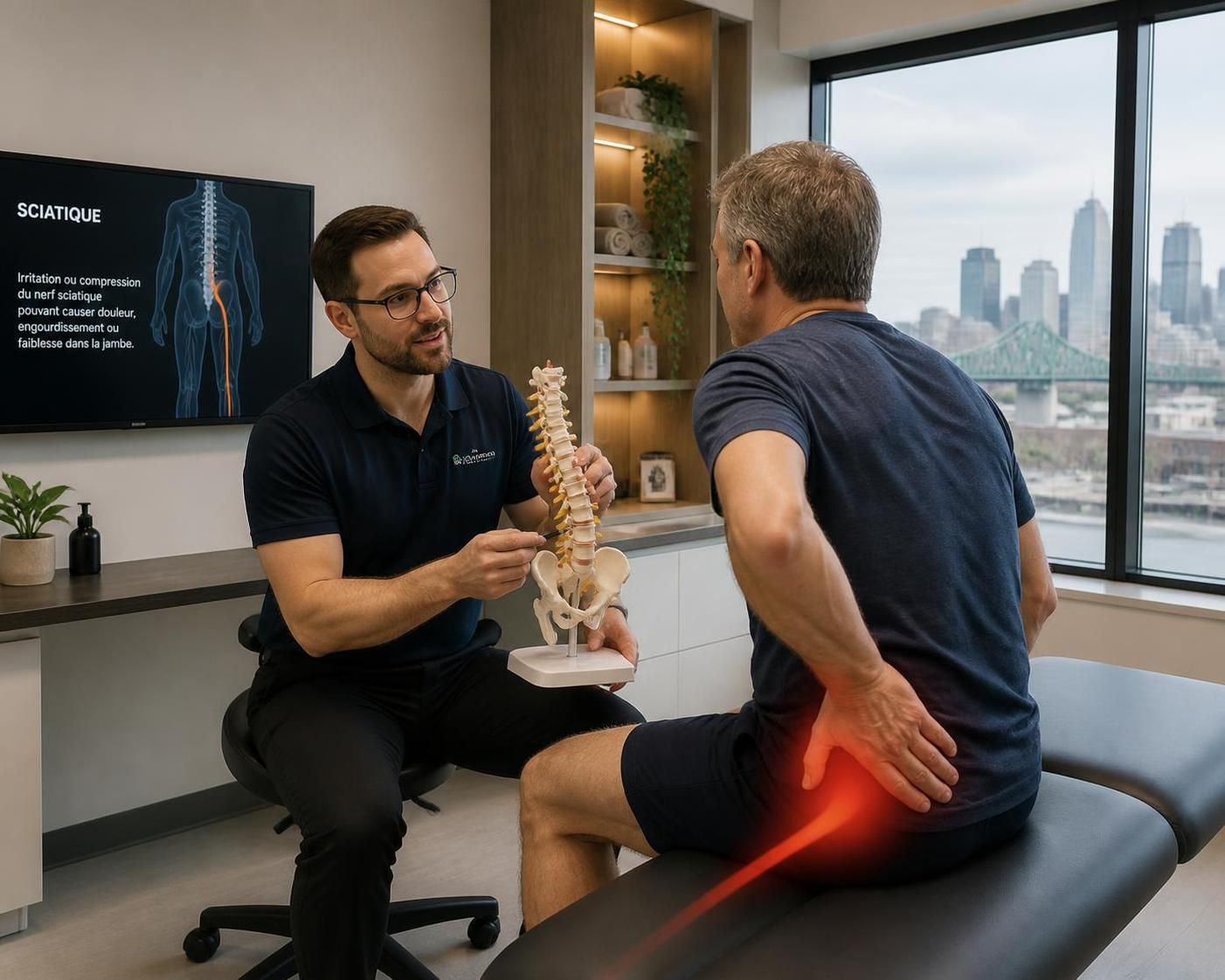
Conservative treatment options for sciatica in Pierrefonds-Roxboro
Conservative treatments are the first line of intervention for sciatica and include different strategies tailored to each patient. Management aims to relieve pain, improve function, prevent chronic symptoms, and support a gradual return to activities.
Commonly used approaches include:
- Therapeutic exercises : muscle strengthening, specific stretches, and improved mobility.
- Physiotherapy : personalized treatment including manual modalities, supervised exercises, and postural education.
- Massage therapy : muscle relaxation and improved local circulation, often complementary to physiotherapy.
- Anti-inflammatory medications : under medical supervision, they may reduce associated inflammation and pain.
- Occupational therapy : adjustments to lifestyle habits and posture to limit strain on the sciatic nerve.
- Motorized spinal decompression : a non-invasive option involving controlled spinal traction intended to reduce pressure on the nerve.
Spinal decompression, offered in particular at Clinique TAGMED in Mont-Royal, near Pierrefonds-Roxboro, is intended for selected patients following a comprehensive assessment. It is not suitable for all profiles, including in the presence of severe bone fragility or spinal instability.
It should be noted that, despite its potential benefits, spinal decompression does not replace urgent medical intervention or guarantee complete resolution of symptoms. Instead, it is part of a comprehensive approach combining several modalities.
| Conservative treatment | Objectives | Benefits | Limitations |
|---|---|---|---|
| Therapeutic exercises | Strengthen, stretch, and improve mobility | Improves function and reduces pain over the long term | May worsen pain if performed improperly |
| Physiotherapy | Personalized treatment and postural education | Comprehensive, tailored approach that improves quality of life | Results vary depending on the patient and duration |
| Massage therapy | Muscle relaxation and blood circulation | Temporary relief and an effective complementary treatment | Does not treat the underlying nerve cause |
| Anti-inflammatory medications | Reduce inflammation and pain | Quickly effective in some cases | Possible side effects; limited use |
| Spinal decompression | Reduce mechanical pressure on the nerve | Non-invasive technique suitable for some patients | Specific indications, variable results, assessment required |
Good coordination among health-care professionals in Montréal, including those at Clinique TAGMED in Mont-Royal, helps facilitate treatment adjustments and ongoing support.
What are the first steps to take for sciatic pain?
It is advisable to maintain moderate activity, avoid prolonged bed rest, and favour appropriate gentle exercises to relieve pressure on the nerve.
When should you seek urgent care for sciatica?
In the event of loss of bladder or bowel control, saddle anaesthesia, rapid muscle weakness, or persistent severe pain, immediate consultation is necessary.
Is spinal decompression suitable for all patients?
This technique is suitable only for certain profiles after a medical assessment, and results vary from person to person.
Can therapeutic exercises worsen pain?
When performed without guidance, some exercises may worsen pain; it is important to be followed by a health-care professional for an appropriate program.
Is massage therapy enough to treat sciatica?
Massage therapy complements other treatments but cannot, on its own, resolve nerve compression.
Are you experiencing pain radiating from the lower back into the leg in Pierrefonds-Roxboro? A personalized assessment can help better understand the likely cause, identify signs to watch for, and determine whether conservative management is appropriate.
Schedule a sciatica assessment in Montréal
Dr. Sylvain Desforges, B.Sc., D.O., N.D., osteopath
This content is educational and does not replace a personalized medical consultation.
