

Pressure on a nerve or nerve root that can affect its function depending on severity and duration.
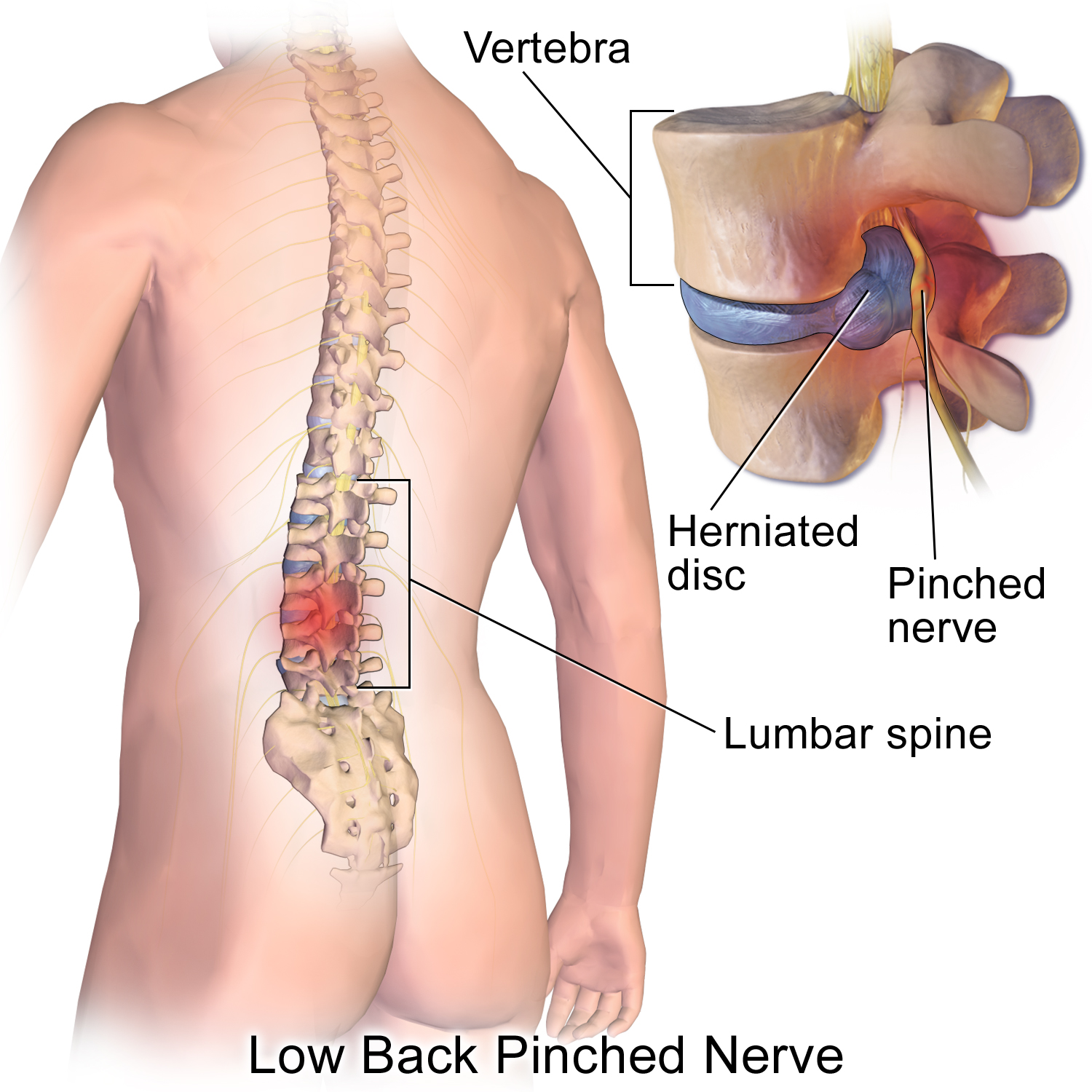
Blausen.com staff (2014), Medical gallery of Blausen Medical 2014, WikiJournal of Medicine 1(2), DOI: 10.15347/wjm/2014.010 — CC BY 3.0. Image source.

Understanding the mechanism
Nerve compression means pressure on a peripheral nerve or nerve root. It can alter local circulation and nerve conduction and, when prolonged, damage nerve fibres. The location matters: a nerve compressed at the wrist requires a different approach from a cervical root disorder. Inflammatory irritation may contribute alongside the mechanical pressure, so the mechanism is not always a simple physical pinch.
Symptoms and warning signs
Symptoms include tingling, numbness, pain and sometimes weakness in the nerve's distribution. Position, repeated movement or prolonged pressure can change them. Progressive weakness, muscle wasting or persistent sensory loss needs assessment. Widespread or symmetrical symptoms may suggest a systemic or neurological condition rather than one local compression. Sudden major neurological change needs a more urgent response.
Diagnosis and investigations
Diagnosis combines the symptom history, sensory mapping, muscle testing and examination of possible compression sites. Provocation tests are not definitive by themselves. Ultrasound, MRI or nerve-conduction studies may be selected according to the nerve involved and the question being asked. Compression must be distinguished from polyneuropathy, referred pain and vascular problems before an appropriate treatment plan can be chosen.
Treatment and outlook
Reducing mechanical pressure, modifying activities and sometimes using an orthosis are options for particular locations. Progressive rehabilitation supports functional recovery. Some cases need surgical release, especially when a deficit progresses or appropriate conservative care fails. The time course of recovery depends partly on how long the nerve has been affected and whether there is significant nerve-fibre injury.
The role of TAGMED care
TAGMED can evaluate spinal and musculoskeletal contributors without assuming that every episode of numbness comes from a vertebra. Spinal decompression cannot directly release a carpal tunnel. Any nerve-mobilization exercise should be carefully dosed and should not produce sustained worsening. Laser, shockwave and manual therapy require their own condition-specific indication instead of being applied automatically to all nerve symptoms.
Practical follow-up
Follow-up can compare the numb area, strength and tolerance of a provoking activity. Temporary disappearance of tingling does not prove complete recovery. Programme progression should remain consistent with examination findings and the practical demands of the person's daily tasks.
Frequently asked questions
Is the nerve literally trapped?
The phrase simplifies pressure and irritation mechanisms that vary in location and severity.
Can several sites be involved?
Yes, although multiple compression sites should be investigated rather than assumed.
Is tingling always mechanical?
No. Metabolic, medication-related and neurological causes may need consideration.
Should the nerve be stretched strongly?
No. Strong provocation may worsen symptoms; exercises need to be individualized.
When should the strategy change?
With declining strength, persistent sensory loss or failure to improve meaningful daily function.
Conceptual diagram: the steps depend on clinical findings and do not provide an individual diagnosis.
Medical references
- Johns Hopkins Medicine. Our Nerve Entrapment Approach.
- American Academy of Orthopaedic Surgeons. Cervical Radiculopathy (Pinched Nerve).
- MedlinePlus. Femoral nerve dysfunction.
- NICE. Low back pain and sciatica in over 16s: assessment and management (NG59).
References document the topic; their inclusion does not imply endorsement of TAGMED services by those organizations.
Educational information from The Spine Page. This entry does not replace an individual assessment. Documentary version: October 12, 2026. Sylvain Desforges, B.Sc., D.O., N.D., osteopath and naturopath.
TAGMED clinic contact details
For non-urgent consultations and information about available services.
Clinique TAGMED — Terrebonne
1150, rue Lévis, Suite 200
Terrebonne (Québec) J6W 5S6
450‑704‑4447
Clinique TAGMED — Montréal
1140, avenue Beaumont
Mont-Royal (Québec) H3P 3E5
1‑877‑672‑9060