


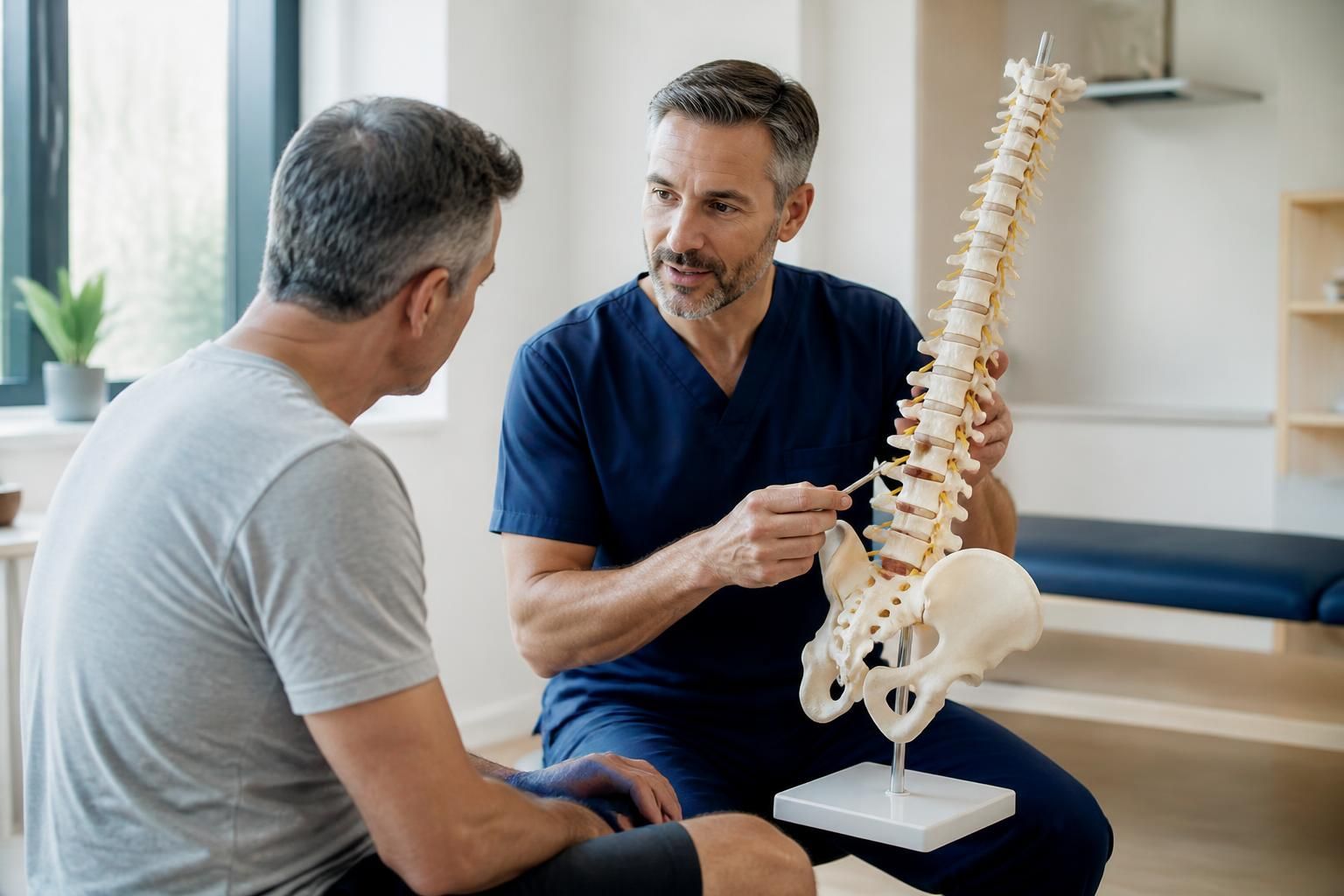




Sciatica, a radiating pain that affects a large proportion of Montréal residents, often raises specific questions about the role of osteopathy in its management. In Montréal-Nord, where the pace of urban life can increase postural and mechanical demands, this manual approach is presented as a therapeutic option that complements conventional care. It aims to address musculoskeletal imbalances, mobilize the spine, and relax muscles that may compress the sciatic nerve, particularly the piriformis.
However, it is essential to understand that osteopathy does not replace a precise medical diagnosis. Low back pain radiating into the leg can have multiple and complex causes, ranging from a disc herniation to foraminal stenosis. This reality requires a detailed assessment before manual therapy is incorporated and makes collaboration among different health professionals necessary. Montréal-Nord, with access to diverse medical services, provides a setting conducive to coordinated care tailored to individual needs.
In brief: key points on osteopathy and sciatica in Montréal-Nord
- Osteopathy may relieve sciatica by addressing muscular and joint-related causes of nerve compression.
- A thorough clinical assessment is essential to rule out serious conditions such as an advanced disc herniation before undertaking manual therapy.
- Piriformis syndrome, which is often overlooked, is a common cause of sciatic pain that osteopathy can target effectively.
- Osteopathic care complements other interventions such as rehabilitation, postural advice and, in some cases, motorized spinal decompression.
- In Montréal-Nord, access to multidisciplinary care makes it possible to combine osteopathy, complementary medicine and medical follow-up for better symptom management.
Understanding sciatica and the specific role of osteopathy in its management in Montréal-Nord
Sciatica is defined as pain, often sharp, that can extend from the lower back to the leg, following the course of the sciatic nerve. This pain may be accompanied by tingling, numbness or even muscle weakness, indicating irritation or compression of a nerve root. It is important to distinguish sciatica from simple low back pain, which is more concentrated in localized back pain without nerve radiation.
Among the Montréal-Nord population, urban lifestyles, such as prolonged sitting, commuting by public transit and sometimes unsuitable workspaces, can contribute to the onset or worsening of low back and sciatic disorders. Understanding sciatica as more than simple back pain is essential. Indeed, the most common underlying mechanism is pressure on a nerve root caused by a disc herniation, particularly at the L4/L5 or L5/S1 lumbar levels, but it may also result from muscular disorders such as piriformis syndrome.
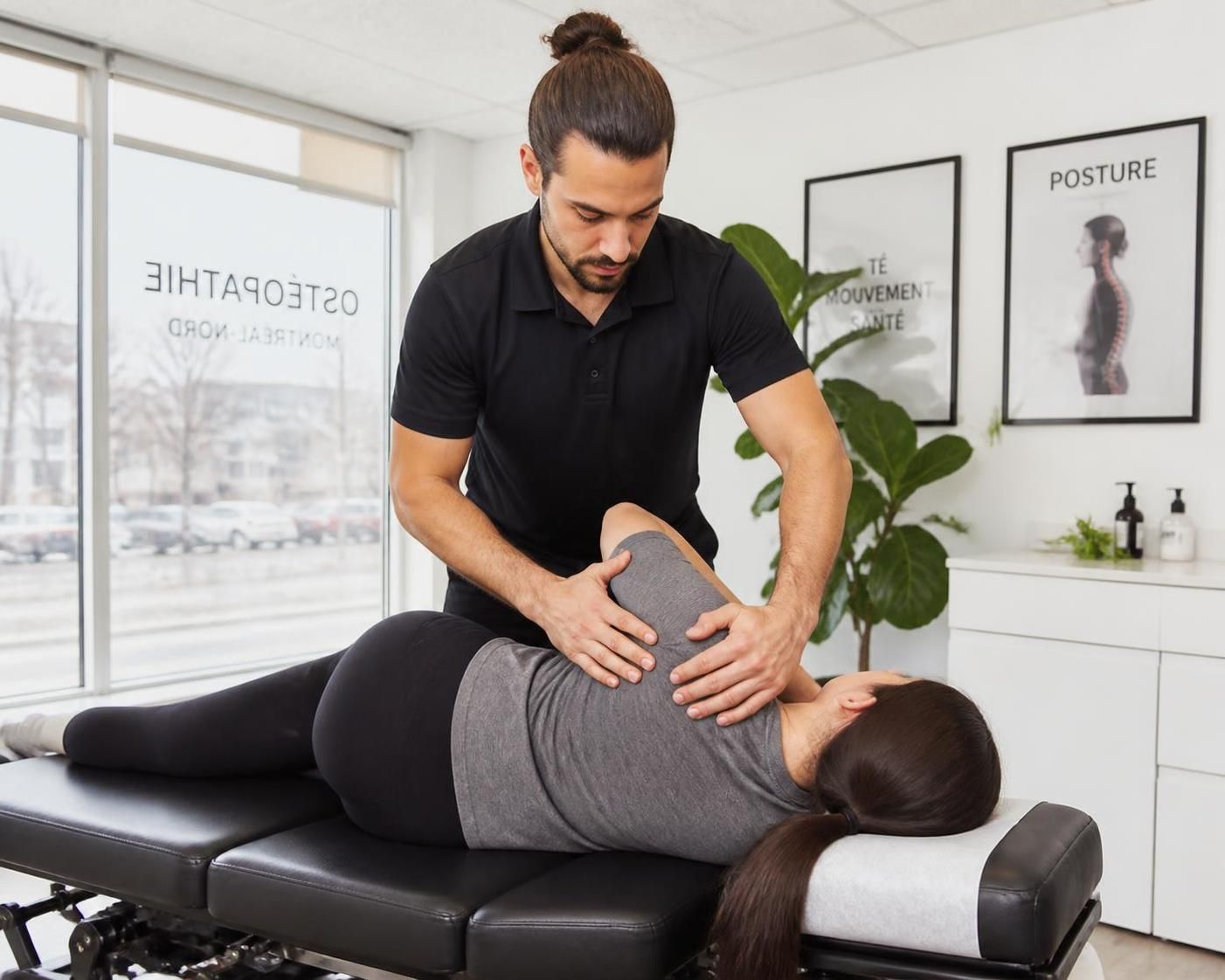
Osteopathy specifically helps identify these biomechanical factors. Through a manual approach, the osteopath performs a targeted functional assessment that may reveal muscular tension, joint restrictions or imbalances that often do not appear on imaging tests. This method makes it possible to tailor personalized treatment consisting of specific spinal manipulations, soft-tissue work and ergonomic advice, aimed at reducing compression of the sciatic nerve.
Beyond simply relieving pain, this approach helps restore mobility and prevent recurrences. In Montréal-Nord, osteopaths often work in synergy with other practitioners to provide integrated care that respects local considerations such as patients’ pace of life and occupational demands.
Differences between low back pain and true sciatic pain
The distinction between low back pain and sciatic pain is often a source of confusion. Isolated low back pain generally presents as pain localized in the lower back, sometimes radiating slightly but without associated nerve symptoms.
Sciatic pain, on the other hand, reflects irritation of the sciatic nerve. It follows a very specific course: it starts in the lower back or buttock, travels down the back or side of the thigh, then continues into the calf and sometimes as far as the foot. Neurological symptoms such as numbness or weakness suggest more significant nerve involvement, requiring a thorough assessment.
Osteopathic care targets this specific aspect by aiming to release structures that place pressure on the nerve, whether from a pinched nerve root, joint stiffness or unusual muscle tension.
Piriformis syndrome, a diagnosis often overlooked in Montréal-Nord
Piriformis syndrome is regularly underestimated in diagnoses of sciatic pain. This deep buttock muscle can go into spasm, especially in people who sit for long periods or frequently perform repetitive movements, which is common among many Montréal-Nord residents because of their urban environment.
When the piriformis compresses the sciatic nerve, the pain may mimic true sciatica even without visible disc pathology. Osteopathy is particularly suited to releasing this muscle through specific manual techniques combined with exercises, thereby offering relief that may be incomplete without this approach.
Factors influencing sciatic pain and their impact in a Montréal context
Several aspects of life in Montréal-Nord affect the severity and duration of symptoms associated with sciatica. Prolonged sitting, often unavoidable when working remotely or using public transit, worsens nerve compression by reducing spinal mobility and promoting muscle tension.
The way one sits, posture at the desk or in vehicles, as well as the quality of ergonomic furniture, all play an important role. The ability to include regular periods of walking or stretching also influences symptoms.
For some patients, moderate, targeted physical activity may ease pain, while for others, certain movements increase compression and discomfort. The osteopath therefore adapts advice and interventions according to these individual differences, emphasizing the importance of not applying fixed or universal protocols.
Finally, stress and fatigue, which are often present in Montréal’s urban settings, have an indirect impact on muscle tension and the perception of pain. These psychosomatic factors are considered in a comprehensive osteopathic approach, allowing for better long-term management.
Concrete examples of aggravating and relieving factors
- Aggravating factors: prolonged sitting without lumbar support, improper lifting of heavy loads, repeated trunk flexion, chronic stress.
- Relieving factors: regular breaks to walk or stretch the muscles, gentle mobility exercises, use of an ergonomic chair, relaxation techniques.
Adapting exercises in Montréal-Nord
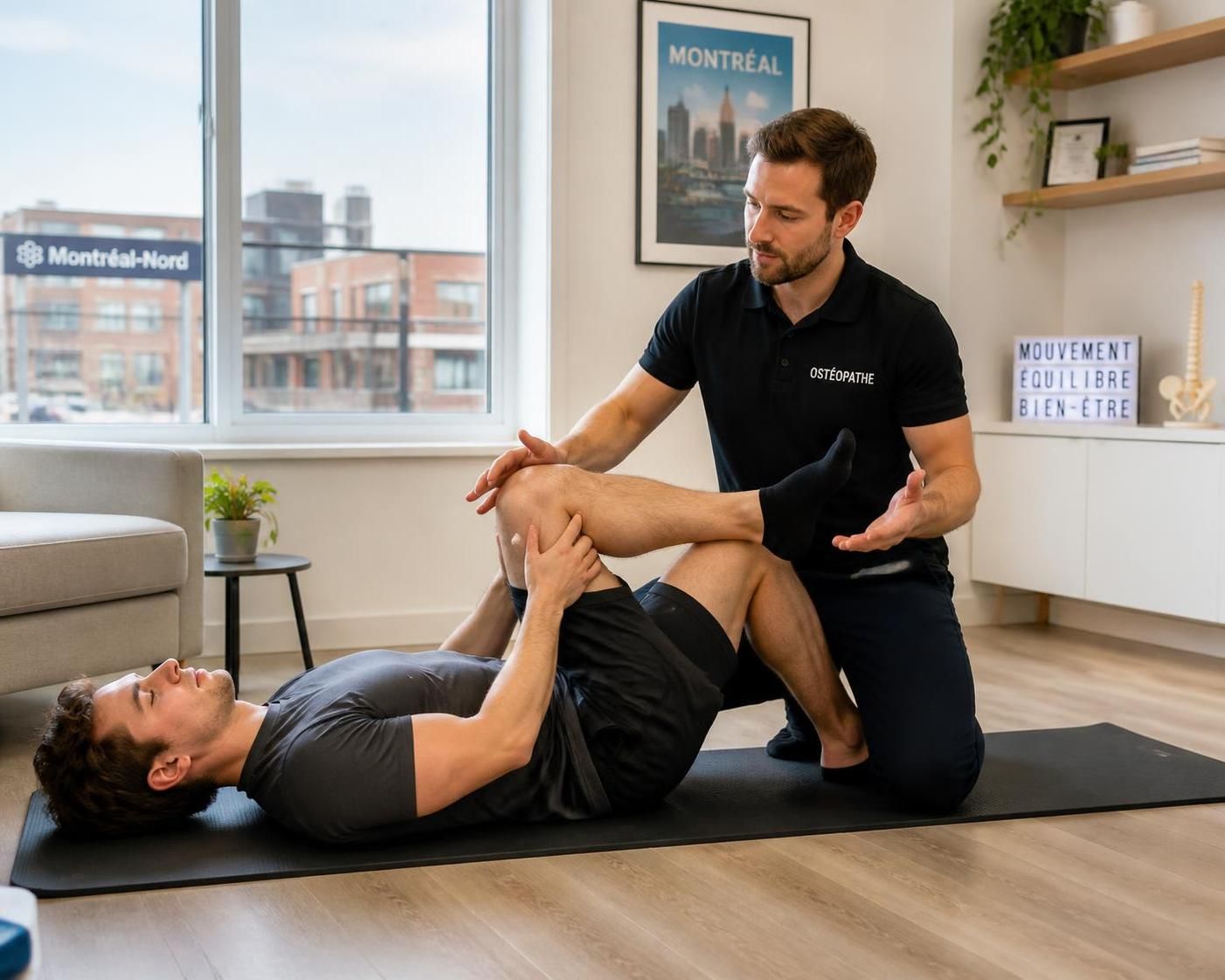
In the local context, where residents may have variable work and activity hours, exercises recommended by an osteopath are often simple and can be done at home. They include targeted piriformis stretches, core-strengthening exercises and advice on improving posture while working remotely. The key lies in individual adaptation and listening to the body’s signals to avoid any worsening.
Signs indicating when to consult an osteopathic or medical professional in Montréal-Nord
Although osteopathy may provide valuable relief, certain situations require an urgent or specialized medical assessment. It is essential to recognize symptoms that should prompt you to consult a professional promptly.
Consult an osteopathic or medical professional promptly if you have:
- Persistent or recurrent sciatic pain despite conservative care.
- Repeated pain extending below the knee with increasing numbness or tingling.
- Progressive muscle weakness or significant walking limitation.
- Changes in bladder or bowel function (medical emergency).
- Loss of sensation in the perineal area (saddle anaesthesia).
- Fever associated with pain or impaired general condition.
- A significant recent trauma causing the pain.
In Montréal-Nord, prompt access to multidisciplinary services makes it possible to direct patients to the appropriate professional based on the nature and severity of symptoms. This may include an osteopath, a medical specialist or a physiotherapist, thereby ensuring comprehensive and safe care.
Treatment options combining osteopathy and other complementary care in Montréal-Nord
The treatment of sciatica does not rely on a single intervention. In Montréal-Nord, coordinated, gradual care is the best approach to optimize outcomes while respecting the natural healing process.
Following a thorough assessment, a plan may include several modalities:
- Maintaining or gradually resuming physical activities while avoiding aggravating positions.
- Targeted manual osteopathic treatments combining spinal mobilizations, myofascial release and adapted exercises.
- Personalized postural advice adapted to the workplace or home environment in Montréal-Nord.
- Possible use of motorized spinal decompression, which provides controlled traction intended to temporarily reduce pressure on nerve roots in certain specific cases.
- Medications and injections prescribed by professionals based on severity and clinical progression.
- Specialist consultation or surgery when nerve compression causes a severe neurological deficit or rapid progression.
The osteopathic approach stands out for its personalized nature, which includes not only manual treatment but also patient education on actively managing their condition.
| Approach | Benefits | Limitations | Indications/Contraindications |
|---|---|---|---|
| Osteopathy | Targeted treatment of musculoskeletal imbalances, improving mobility and comfort. | Does not replace a medical examination or independently treat severe conditions. | Indicated for functional sciatica, piriformis syndrome and post-inflammatory conditions. Contraindicated in cases of major instability. |
| Motorized spinal decompression | Gradual, controlled traction that helps relieve mild to moderate nerve compression. | Results vary and require prior medical assessment. | Appropriate for mild to moderate disc herniation and foraminal stenosis. Not indicated in cases of fracture or tumour. |
| Medication | Rapid control of pain and inflammation. | Possible side effects; does not treat the causes. | Occasional use under medical supervision. |
| Surgery | Relief of severe and irreversible nerve compression. | Surgical risks, variable recovery. | Reserved for severe nerve compression and significant deficits. |
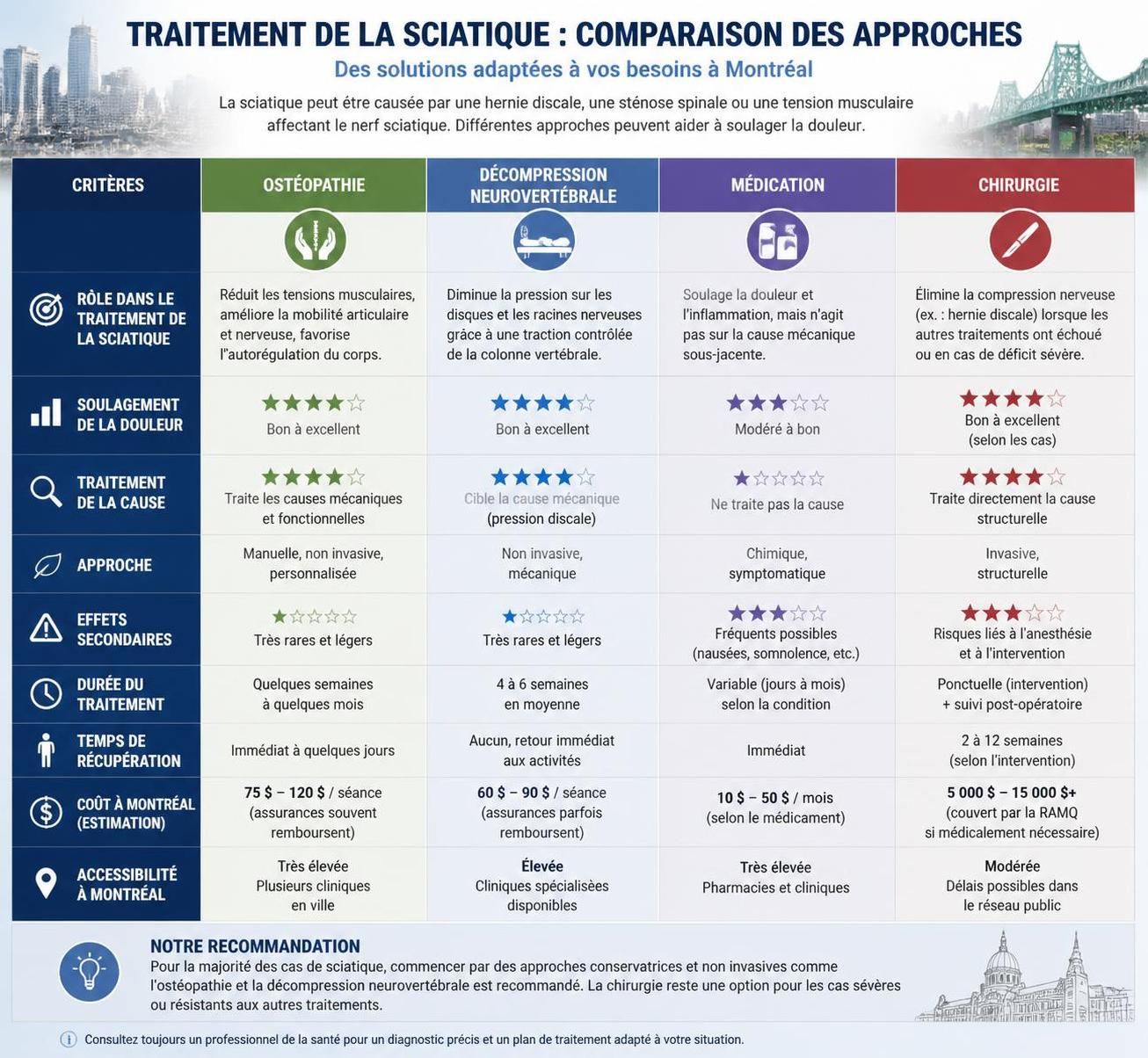
Motorized spinal decompression is a promising option for certain patients in Montréal-Nord, particularly those with a disc herniation or mild disc protrusion. This controlled, gradual spinal traction technique aims to reduce the mechanical pressure exerted on the intervertebral discs and nerve roots.
However, it does not replace specialized medical advice or surgery when surgery is required. Results depend on the patient’s profile and the stage of the disc lesion. A detailed osteopathic and medical assessment remains an essential prerequisite for determining suitability and adapting the therapeutic protocol.
In Montréal-Nord, some specialized centres such as TAGMED Clinic offer spinal decompression tailored to patients’ specific needs, using a multidisciplinary approach that incorporates manual care and personalized advice.
Preventive strategies recommended by osteopaths for Montréal-Nord residents
Osteopaths emphasize prevention as a key means of limiting the onset or recurrence of sciatica. This approach is based on modifying certain behaviours and adopting habits that support musculoskeletal health.
Advice provided includes:
- Adopting appropriate posture at work and while commuting, including setting up the workstation to avoid lower-back strain.
- Regularly incorporating strengthening and stretching exercises tailored to your body type and personal constraints.
- Avoiding prolonged static positions by planning active breaks and taking daily walks.
- Maintaining a healthy weight to reduce the load on the spine.
- Effectively managing stress through relaxation techniques, which indirectly affect muscle tension and pain.
These recommendations provide a complementary foundation for osteopathic care, contributing to lasting well-being. They are particularly suited to the Montréal context, and more specifically to Montréal-Nord, where urban life and habits can influence spinal biomechanics.
{“@context”:”https://schema.org”,”@type”:”FAQPage”,”mainEntity”:[{“@type”:”Question”,”name”:”Lu2019ostu00e9opathie est-elle compatible avec un traitement mu00e9dical classique de la sciatique ?”,”acceptedAnswer”:{“@type”:”Answer”,”text”:”Oui, lu2019ostu00e9opathie peut complu00e9ter un traitement mu00e9dical classique en amu00e9liorant la mobilitu00e9 et en ru00e9duisant les tensions, mais elle nu00e9cessite une u00e9valuation mu00e9dicale pru00e9alable.”}},{“@type”:”Question”,”name”:”u00c0 quel moment devrais-je consulter un ostu00e9opathe pour une douleur sciatique ?”,”acceptedAnswer”:{“@type”:”Answer”,”text”:”Il est indiquu00e9 de consulter un ostu00e9opathe lorsque la douleur sciatique persiste ou lorsque des symptu00f4mes musculaires et articulaires contribuent u00e0 la gu00eane, u00e0 condition du2019avoir exclu une pathologie grave.”}},{“@type”:”Question”,”name”:”La manipulation ostu00e9opathique est-elle sans risque pour la sciatique ?”,”acceptedAnswer”:{“@type”:”Answer”,”text”:”Bien que gu00e9nu00e9ralement su00fbre, elle doit u00eatre adaptu00e9e u00e0 chaque patient, avec des contre-indications possibles en cas de fracture, infection ou instabilitu00e9 vertu00e9brale.”}},{“@type”:”Question”,”name”:”Combien de su00e9ances du2019ostu00e9opathie sont nu00e9cessaires pour soulager la sciatique ?”,”acceptedAnswer”:{“@type”:”Answer”,”text”:”Le nombre de su00e9ances varie selon la cause et la su00e9vu00e9ritu00e9 des symptu00f4mes, avec souvent plusieurs visites nu00e9cessaires pour un effet durable.”}},{“@type”:”Question”,”name”:”La du00e9compression neurovertu00e9brale peut-elle remplacer la chirurgie ?”,”acceptedAnswer”:{“@type”:”Answer”,”text”:”Non, cette technique peut aider certains patients mais ne remplace pas une intervention chirurgicale lorsque celle-ci est mu00e9dicalement justifiu00e9e.”}}]}Is osteopathy compatible with conventional medical treatment for sciatica?
Yes, osteopathy can complement conventional medical treatment by improving mobility and reducing tension, but it requires a prior medical assessment.
When should I consult an osteopath for sciatic pain?
It is appropriate to consult an osteopath when sciatic pain persists or when muscular and joint symptoms contribute to discomfort, provided a serious condition has been ruled out.
Is osteopathic manipulation safe for sciatica?
Although generally safe, it must be tailored to each patient, with possible contraindications in cases of fracture, infection or spinal instability.
How many osteopathy sessions are needed to relieve sciatica?
The number of sessions varies depending on the cause and severity of symptoms, and several visits are often needed for a lasting effect.
Can spinal decompression replace surgery?
No, this technique may help certain patients but does not replace surgery when it is medically justified.
Are you experiencing pain radiating into your leg that may be consistent with sciatica? A comprehensive assessment can help identify the likely cause, define signs to monitor and assess the suitability of appropriate conservative care.
In Montréal-Nord, collaboration among osteopathy, complementary medicine and specialized medical services offers a safe and personalized framework for your well-being.
Request an assessment in Montréal-Nord
Dr. Sylvain Desforges, B.Sc., D.O., N.D., osteopath
This content is educational and does not replace a personalized consultation with a health professional.
