


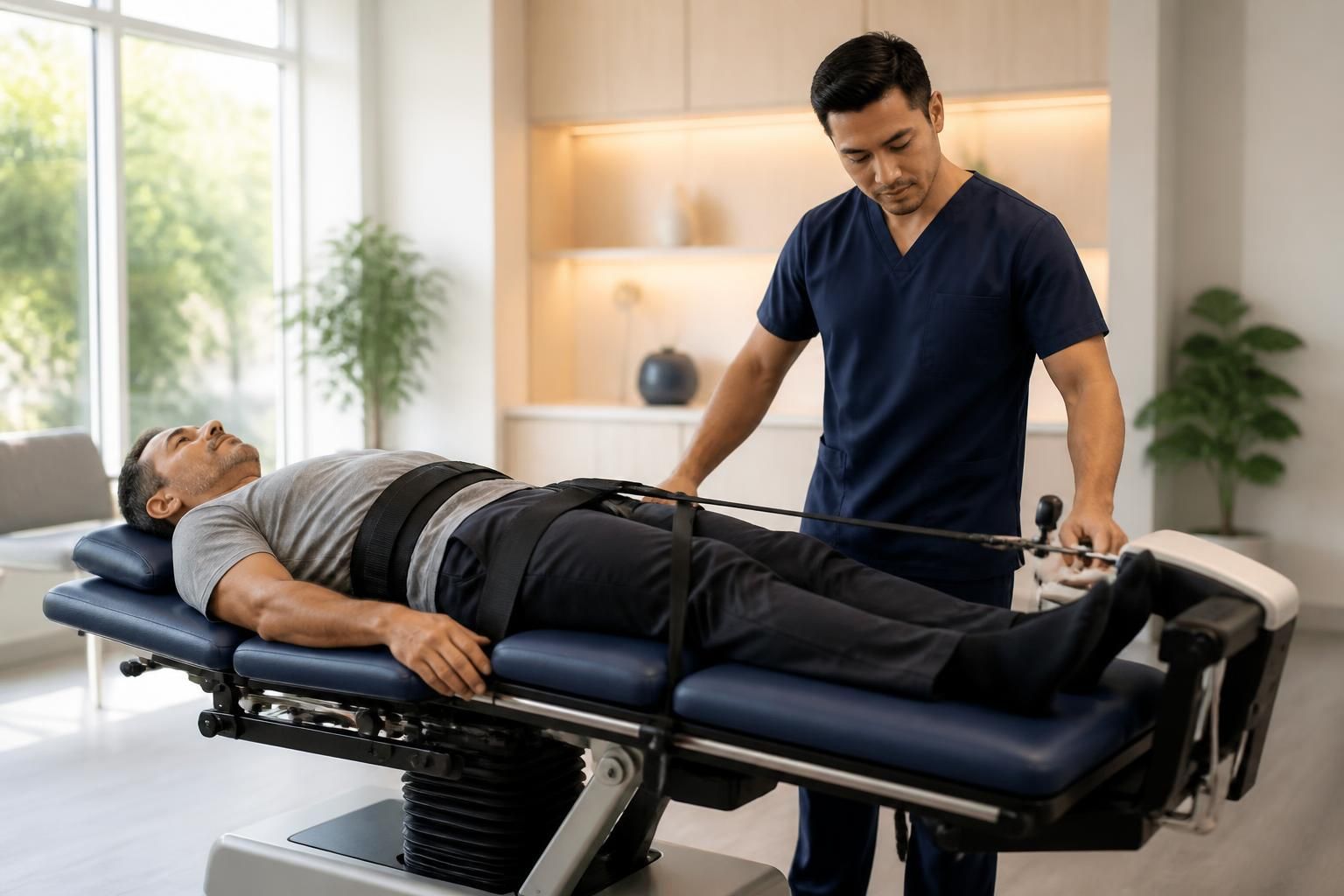
Neurovertebral decompression is a therapeutic option of growing interest to Ahuntsic-Cartierville residents experiencing spine-related pain, particularly pain associated with disc herniations or nerve root compression. This non-surgical, motorized and controlled technique aims to modulate the pressure exerted on the intervertebral discs and neural structures to support better pain management and gentle spinal rehabilitation.
Each case in Ahuntsic-Cartierville must be assessed according to its individual characteristics, taking into account the nature of symptoms — neck pain, low back pain, numbness or weakness —, underlying causes such as a disc herniation or foraminal stenosis, and clinical history. The effectiveness of neurovertebral decompression therefore depends closely on the patient’s profile and its suitability for this targeted approach, while respecting medical precautions related to neurovertebral well-being.



In brief: key points to understand neurovertebral decompression in Ahuntsic-Cartierville
- Neurovertebral decompression is a motorized, non-invasive technique that acts on the spine to reduce pressure on discs and nerves.
- It is particularly intended for people experiencing a disc herniation, foraminal stenosis or disc narrowing associated with radicular pain.
- Results in Ahuntsic-Cartierville vary greatly from one person to another depending on the diagnosis and severity of symptoms.
- This option requires a personalized clinical assessment to determine its suitability and rule out any medical emergency.
- It is part of a comprehensive approach that may include neurovertebral care, physiotherapy and ergonomic advice, particularly for remote work and everyday activities.
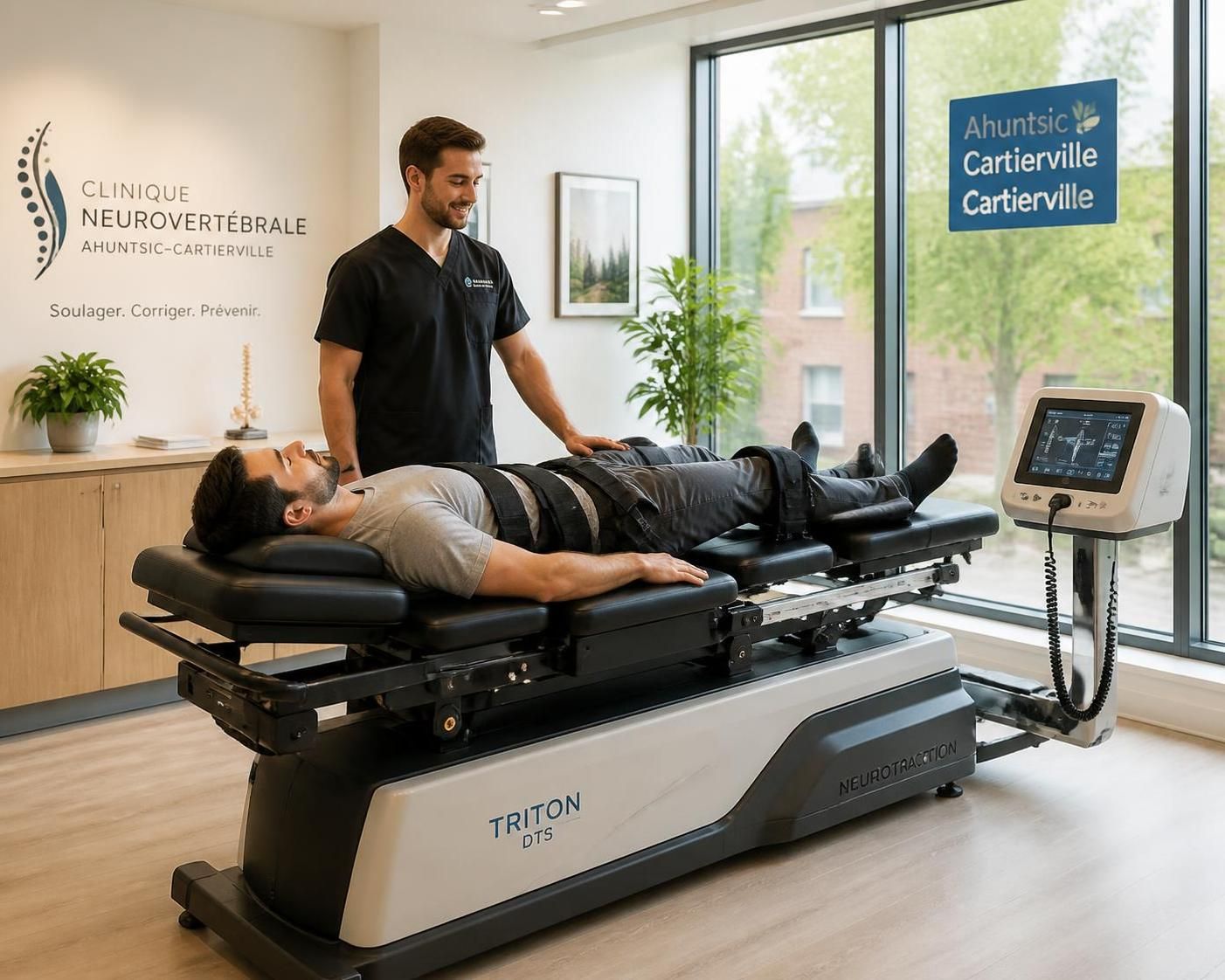
Understanding the essentials of neurovertebral decompression and its connection to spinal health in Ahuntsic-Cartierville
Neurovertebral decompression is a method that aims to apply targeted, controlled traction to the spine in order to reduce certain mechanical factors contributing to pain. This technique uses sophisticated motorized equipment that provides gradual force adapted to the patient’s tolerance. Its main purpose is to temporarily modify internal pressures on the intervertebral discs, which may be compressed in the context of disc herniations or protrusions, and relieve stress on the corresponding nerve roots.
In Ahuntsic-Cartierville, where urban life and remote work are common, neurovertebral decompression may be part of an appropriate response to increased pain related to prolonged sitting posture, mechanical stress on the lower back and degenerative conditions. However, this technique is not appropriate for every profile, particularly when symptoms suggest an emergency or severe compression requiring priority medical intervention.
This therapeutic approach differs from simple conventional traction through the precision of control over the forces applied and the ability to personalize each session. It is often integrated into a broader neurovertebral care plan that includes spinal rehabilitation exercises, postural advice tailored to life in Ahuntsic-Cartierville and other manual methods such as specific osteopathy.
Some patients experiencing low back, radicular or neck pain notice gradual improvements in mobility and reduced sensations of burning, numbness or tingling with this treatment. However, it is essential to follow a structured course of care under professional supervision, as the intensity, frequency and duration of sessions vary by case. No miracle treatment can be guaranteed, but neurovertebral decompression remains a serious option among the care available at clinics in Ahuntsic-Cartierville.
Clinical mechanisms behind neurovertebral decompression and its impact on radicular pain
Radicular pain, often felt as pain radiating into the leg, arm or even to the foot, is generally caused by irritation or compression of lumbar or cervical nerve roots. In an urban setting such as Ahuntsic-Cartierville, the prevalence of these symptoms makes a precise understanding of their origin and appropriate therapeutic options necessary.
For example, a disc herniation may exert pressure on a nerve root, causing sciatic pain. Other causes include disc protrusion or foraminal stenosis, in which the natural spaces through which nerves exit the spine become narrowed, causing painful pinching.
Neurovertebral decompression works by increasing the space between the vertebrae, which may help reduce pressure on these nerve roots. The process is motorized, allowing precise adjustment based on the patient’s tolerance and response, thereby avoiding any sudden movement or trauma. This spinal traction is also sometimes accompanied by favourable muscle recruitment, which helps improve spinal stability and function.
It should be noted, however, that symptoms such as pain radiating into the leg or numbness can also be caused by other conditions, such as piriformis syndrome or non-radicular low back pain. A comprehensive clinical assessment is therefore essential before considering neurovertebral decompression as a solution.
Recent clinical studies indicate that this technique, when properly targeted, may significantly reduce radicular pain and improve quality of life. However, variations in results underscore the importance of a personalized approach, particularly in a setting such as Ahuntsic-Cartierville, where patient profiles are diverse.
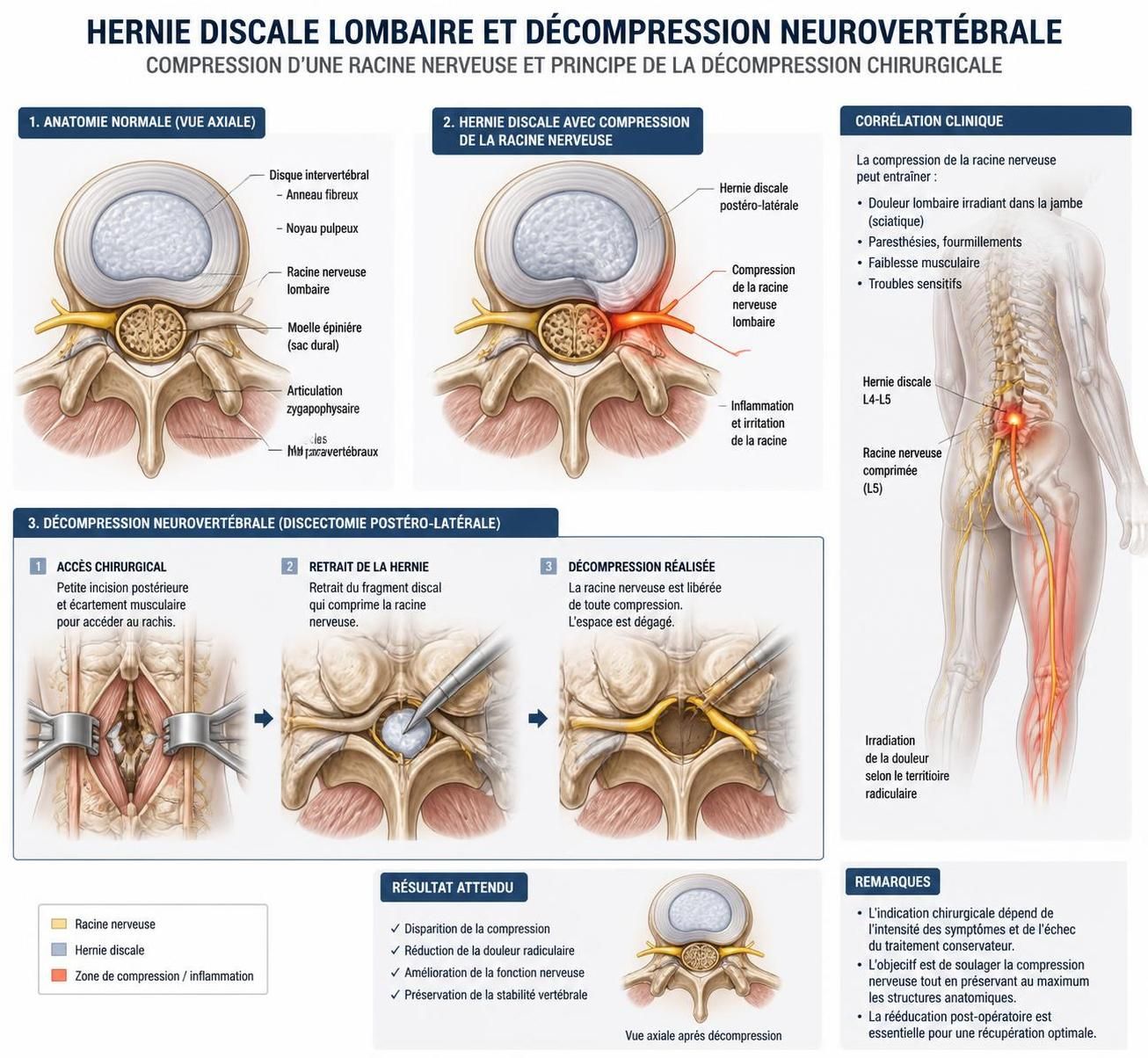
Factors that modify the response to neurovertebral decompression: lifestyle and local considerations in Ahuntsic-Cartierville
In an active borough such as Ahuntsic-Cartierville, several lifestyle factors can influence the effectiveness of neurovertebral decompression. Among these factors, posture at work, particularly during long days of remote work or sitting on public transit, may worsen spinal pain or, conversely, support improvement depending on the ergonomic setup selected.
Driving, which is common to or from Montréal and surrounding areas, also results in increased mechanical stress on the spine, particularly because of prolonged sitting. In addition, appropriate physical activity may help strengthen the muscles around the spine, thereby improving tolerance to the traction applied during neurovertebral decompression.
It is also common for some Ahuntsic-Cartierville patients to notice fluctuations in their symptoms depending on the time of day, sleep quality or stress level. These elements must be an integral part of care, as they guide treatment adjustments and personalized advice for managing everyday life.
To illustrate this diversity, here is a list of factors that may modify the impact of neurovertebral decompression:
- Prolonged sitting posture: often increases disc pinching that contributes to pain.
- Moderate physical activity: may support rehabilitation and spinal health.
- Sleep quality: influences muscle and nerve recovery.
- Mechanical stress related to transportation: a possible aggravating factor for radicular symptoms.
- Psychological state: plays a role in pain perception.
These variables explain why a treatment that is successful for one patient will not necessarily produce the same results for another. Care in Ahuntsic-Cartierville should therefore include ongoing assessment, adjustment of the decompression protocol and comprehensive support aimed at neurovertebral well-being.
Choosing neurovertebral decompression and other therapeutic options available in Ahuntsic-Cartierville
The selection of neurovertebral decompression as a treatment option must be based on a thorough medical assessment that considers clinical history, the nature and intensity of symptoms, as well as the results of additional examinations such as medical imaging. This process ensures that patients at clinics in Ahuntsic-Cartierville receive safe and appropriate care.
Neurovertebral decompression may be combined with other non-invasive modalities such as specific osteopathy, manual neurovertebral care and certain targeted exercises, which can strengthen the spine and improve overall function.
Here is a comparison table of the main back treatment options available in Ahuntsic-Cartierville:
| Therapeutic option | Main objective | Benefits | Limitations |
|---|---|---|---|
| Neurovertebral decompression | Reduce disc and nerve pressure | Personalized approach and gradual treatment | Not indicated for emergencies or severe compression |
| Specific osteopathy | Improve mobility and reduce muscle tension | Manual and gentle approach | Effects vary by patient |
| Physiotherapy | Rehabilitation and muscle strengthening | Strong foundation for long-term maintenance | Requires patient motivation and follow-through |
| Medication | Symptomatic pain management | Rapid action on pain | Does not address the mechanical cause |
| Surgery | Correct severe compressions | Definitive intervention in cases of significant injury | Surgical risks and recovery period |
It is important to discuss options appropriate to your condition in Ahuntsic-Cartierville with a health professional. Neurovertebral decompression is not a cure-all, but it may be integrated into a comprehensive treatment plan to support better pain management and improved neurovertebral well-being.
To learn more, consult detailed information on neurovertebral decompression and mobility or discover how a session works in the context of a disc herniation in Ahuntsic-Cartierville.
Frequently asked questions about neurovertebral decompression in Ahuntsic-Cartierville
What are the criteria for determining whether neurovertebral decompression is appropriate?
A comprehensive clinical assessment is necessary, including a physical examination and sometimes imaging, to determine whether symptoms correspond to indications compatible with neurovertebral decompression.
How many sessions are generally needed to see results?
The number of sessions varies, but most patients see improvements after several sessions spread over several weeks, depending on the severity of the condition.
What are the possible risks or side effects?
Side effects may include mild temporary pain or stiffness after the session; it is important to contact the professional if symptoms worsen.
What should be done when pain becomes more intense or spreads?
You should promptly consult a health professional to rule out worsening or a complication requiring urgent intervention.
Can neurovertebral decompression replace surgery?
This treatment may avoid or delay surgery for some patients, but it does not replace necessary surgery in cases of severe nerve compression or neurological deficit.
Are you experiencing persistent back pain or a sensation of numbness radiating into the leg? A professional assessment in Mont-Royal can help you understand the likely cause of your symptoms and determine whether a conservative approach such as neurovertebral decompression is appropriate for your situation.
Book an assessment appointment
Dr. Sylvain Desforges, B.Sc., D.O., N.D., osteopath
This resource is provided for educational purposes and does not replace a personalized consultation.
