





Sacroiliac joint pain: symptoms, clinical testing and treatment options
Sacroiliac joint pain usually presents near one buttock or the posterior pelvis and can imitate lumbar, hip or sciatic symptoms. Diagnosis relies on a pattern of findings rather than a single test.
The sacroiliac joints transfer load between the spine and lower limbs. Pain may follow trauma, pregnancy, inflammatory disease or altered pelvic loading. It is commonly unilateral and not exactly midline, but overlap with other conditions is substantial.
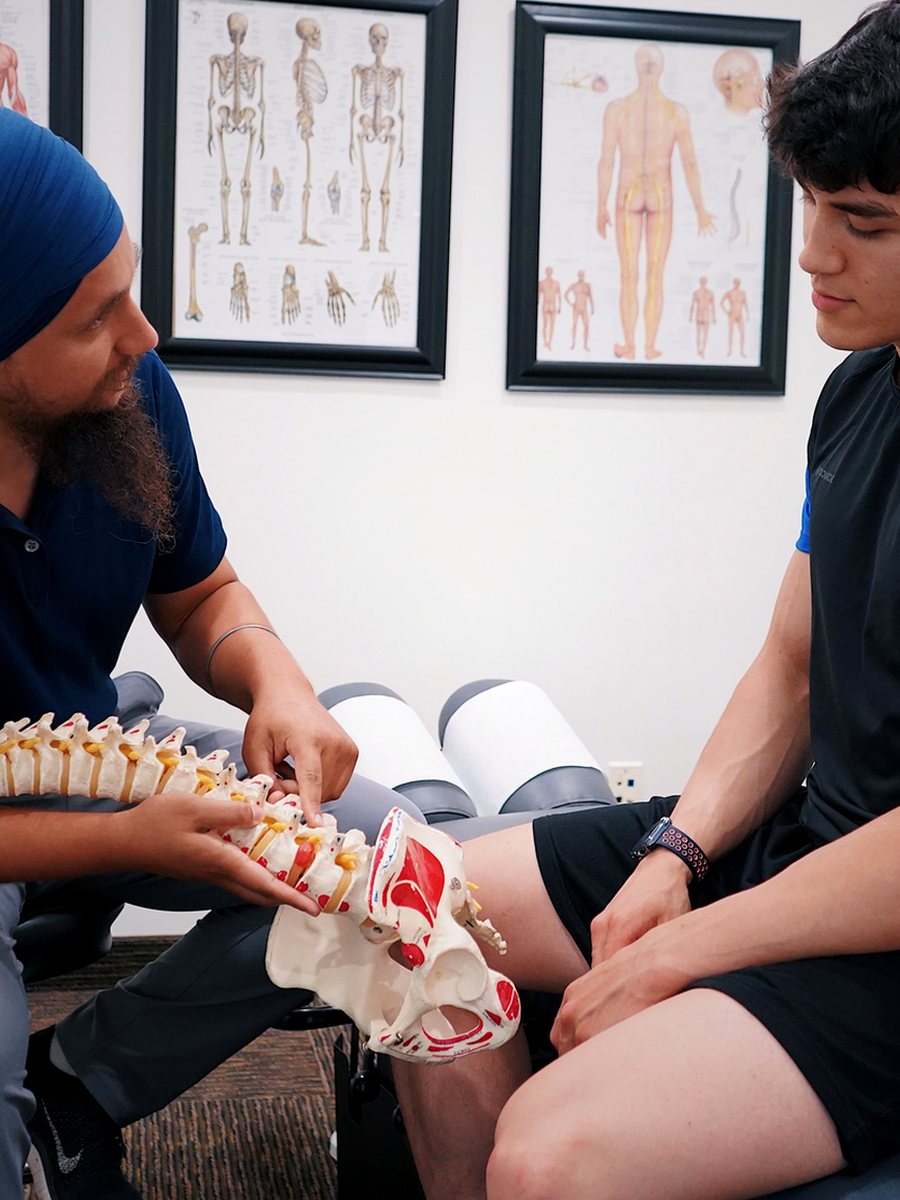
Assessment and differential diagnosis
A complete examination includes lumbar spine, hip, neurological and pelvic testing. A cluster of at least three positive provocation tests is more informative than one isolated maneuver. MRI, CT and bone scans do not reliably prove that the SI joint is the pain source, but they can help exclude competing disease.
| Clinical situation | Possible next step | Why it matters |
|---|---|---|
| Likely mechanical SI pain | Education, stabilization and graded exercise | First-line care is multimodal. |
| Persistent uncertain pain | Reassess lumbar, hip and inflammatory causes | Misclassification is common. |
| Refractory confirmed SI pain | Injection, radiofrequency or fusion may be discussed | Confirmation and patient selection matter. |


Treatment and management
First-line care may combine education, pelvic-girdle stabilization, focused stretching and manual therapy. Medication may be considered when appropriate. Resistant cases may lead to image-guided injection, radiofrequency treatment or SI joint fusion after diagnostic confirmation.
Questions for shared decision-making
Before choosing care, ask the provider to explain the working diagnosis, expected outcome, alternatives and review point.
What is the target?
Identify the structure, mechanism or functional problem being addressed.
What outcome matters?
Define measurable goals for pain, walking, sleep, work or daily activity.
What are the alternatives?
Compare active care, medication, procedures, technology and surgery when relevant.
When should the plan change?
Set criteria for stopping, modifying or escalating care.

Related guides
Piriformis syndrome vs sciatica
Facet joint syndrome
Specialized external resources
These links lead to independent specialized websites and do not change the educational role of The Spine Page.
Clinique TAGMED
Clinical information about motorized spinal decompression and disc-related conditions.
SOS Sciatique
Focused guides about sciatica, nerve-root symptoms and warning signs.
Frequently asked questions
Can SI pain feel like sciatica?
Yes, but true neurological deficits suggest a nerve-root or peripheral nerve problem.
Is one positive test enough?
No.
Can MRI confirm SI joint dysfunction?
Not reliably for mechanical SI pain.
What is an SI joint block?
An image-guided anesthetic injection used diagnostically.
Can pregnancy contribute?
Yes.
Is manipulation enough?
A combined rehabilitation approach is generally preferred.
Can a belt help?
It may help selected postpartum patients.
When are injections considered?
After conservative care and diagnostic review.
When is fusion considered?
For selected refractory confirmed cases.
Does The Spine Page diagnose SI pain?
No.
Sources consulted
- American Family Physician — Sacroiliac Joint Dysfunction: Diagnosis and Treatment
- NICE — Low back pain and sciatica recommendations
Last editorial review: July 2026. General educational information only.
Dr. Sylvain Desforges, B.Sc., D.O., N.D., osteopath — The Spine Page
Continue exploring spine health
Use the condition and treatment hubs to compare the next steps.
The Spine Page — The best treatments for your spinal problems — www.thespinepage.com
Topic index: Sacroiliac joint, sacrum and coccyx
Explore this topic cluster by search intent. Each link leads to a distinct guide directly related to the subject.