

Removal of disc material using an endoscope and instruments inserted through a small access route.
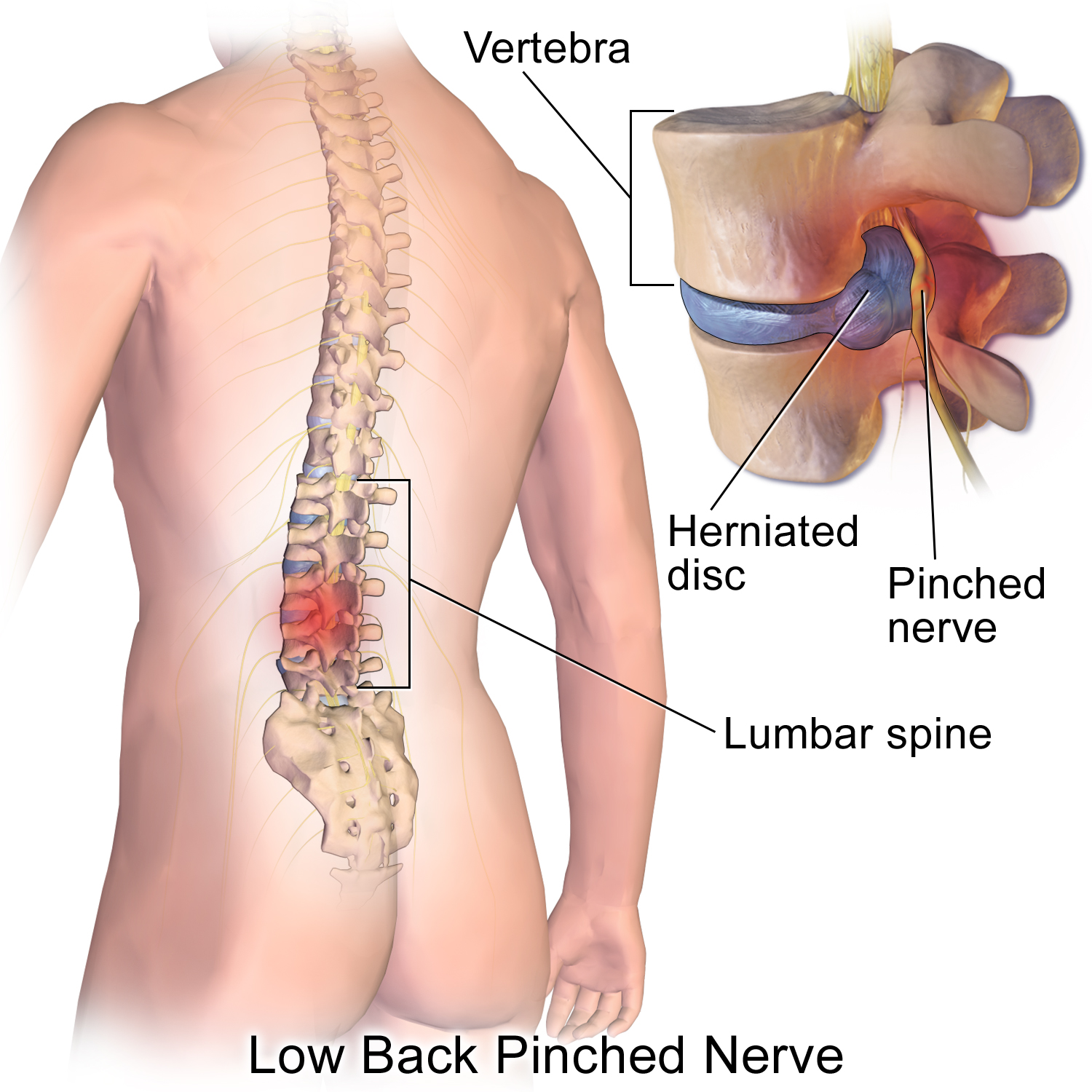
Blausen.com staff (2014), Medical gallery of Blausen Medical 2014, WikiJournal of Medicine 1(2), DOI: 10.15347/wjm/2014.010 — CC BY 3.0. Image source.

Understanding the approach
Endoscopic discectomy uses a camera and instruments through limited access to treat a selected disc herniation. The route may pass near the foramen or between the laminae depending on location. It remains surgery even when performed as an outpatient procedure.
Indications and assessment
The surgeon assesses fragment shape and position, bony anatomy, previous operations and experience with the technique. Not every herniation suits the same route. Agreement between pain, neurological findings and imaging matters more than the appeal of a small incision.
Benefits, limitations and precautions
In selected patients the approach may reduce tissue disruption. Comparisons with microdiscectomy nevertheless depend on indications and expertise. Nerve irritation, dural injury, infection, recurrence or the need to change techniques remain possible. The equipment used does not guarantee a successful result.
Place in the care pathway
TAGMED does not perform this operation. Conservative assessment may contribute to evaluation and referral without delaying urgent surgical review for progressive weakness. Rehabilitation after surgery should be agreed with the responsible surgical team.
Goals should be practical: walking farther, returning to a chosen activity or reducing symptoms that interfere with sleep. Improvement immediately after an intervention does not establish lasting benefit. Follow-up compares function with the starting point, records adverse effects and considers progress between appointments. An inadequate response should prompt a review of the clinical explanation or proposed approach, rather than an automatic extension of the same treatment.
Before starting, describe the outcome you want, treatments already tried and difficulties encountered. Ask how the response will be measured and when another option would be preferable. Available reports complement the discussion without replacing your current experience, priorities or preferences.
Frequently asked questions
Does endoscopic mean no incision?
No. Skin and deeper access are still necessary, even when small.
Is it always better than microdiscectomy?
No. The best route depends on anatomy and the surgeon’s experience.
Can I go home the same day?
Sometimes, depending on monitoring requirements and general health.
Can the herniation return?
Yes. An endoscopic approach does not eliminate recurrence risk.
What should I ask the surgeon?
Why this route fits your lesion and which alternatives are reasonable.
Conceptual diagram of clinical reasoning; not an anatomical drawing to scale.
Role of TAGMED care
This entry describes a medical or specialist option; it does not mean the intervention is performed at TAGMED. The clinic can discuss how its conservative services might fit into coordinated care, considering prescribed treatment, reports and specialist restrictions. Medication should not be stopped or changed on the basis of this page.
Medical references
- AAOS — OrthoInfo. Endoscopic Diskectomy.
- AAOS — OrthoInfo. Minimally Invasive Spine Surgery.
References document the topic; their inclusion does not imply endorsement of TAGMED services by those organizations.
Educational information from The Spine Page. This entry does not replace an individual assessment. Documentary version: October 12, 2026. Sylvain Desforges, B.Sc., D.O., N.D., osteopath and naturopath.
TAGMED clinic contact details
For non-urgent consultations and information about available services.
Clinique TAGMED — Terrebonne
1150, rue Lévis, Suite 200
Terrebonne (Québec) J6W 5S6
450‑704‑4447
Clinique TAGMED — Montréal
1140, avenue Beaumont
Mont-Royal (Québec) H3P 3E5
1‑877‑672‑9060