

Discectomy performed with magnified visualization and limited exposure to remove disc material causing compression.
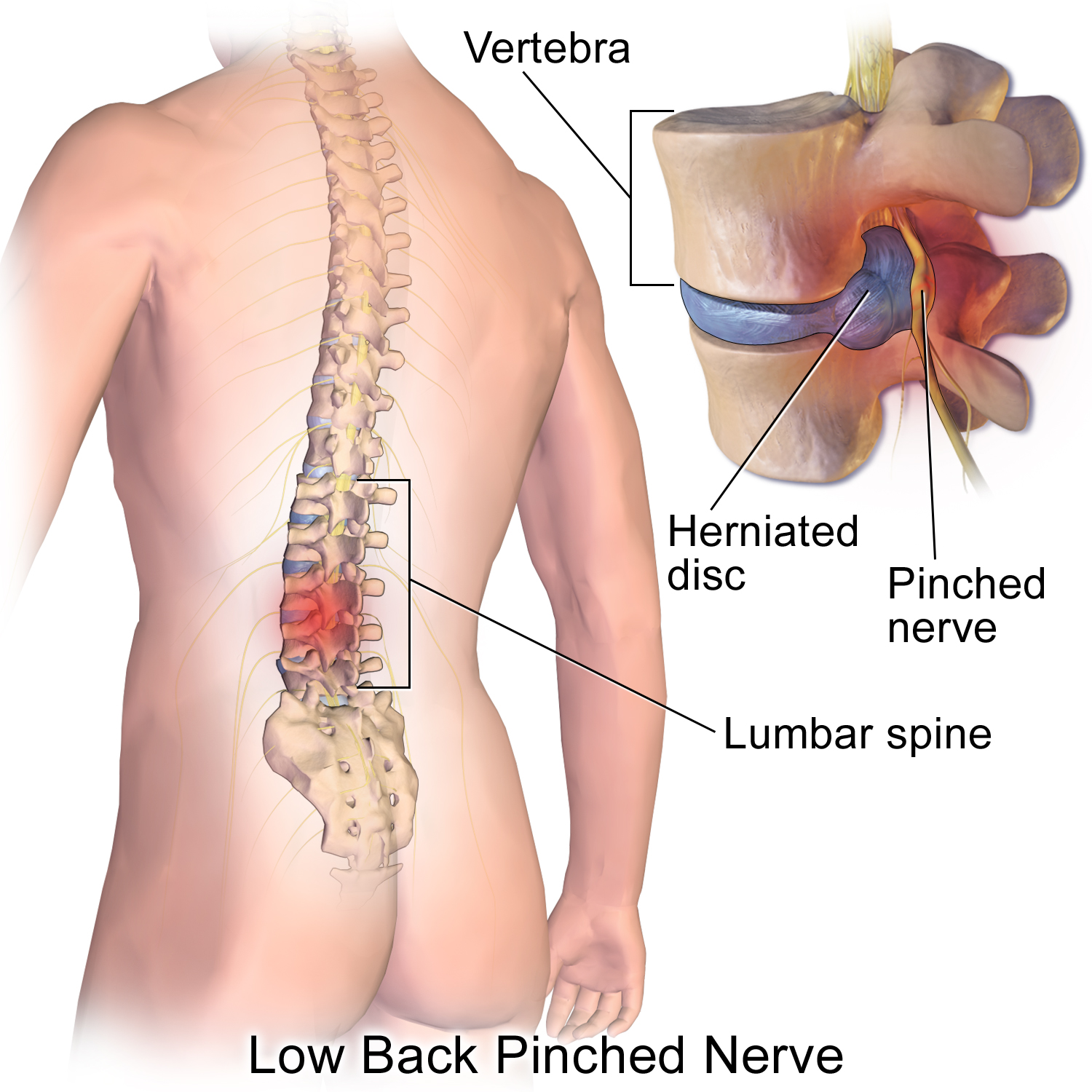
Blausen.com staff (2014), Medical gallery of Blausen Medical 2014, WikiJournal of Medicine 1(2), DOI: 10.15347/wjm/2014.010 — CC BY 3.0. Image source.

Understanding the approach
Microdiscectomy is disc surgery performed with magnified visualization, usually a microscope, through a limited access route. It aims to remove a compressive disc fragment while preserving nearby tissues where possible. The prefix micro describes the approach rather than an absence of risk.
Indications and assessment
It is mainly considered for a herniation associated with persistent radicular pain or selected neurological deficits. The surgeon checks the spinal level, side and agreement with examination findings. Multiple MRI abnormalities require identifying which finding is clinically relevant.
Benefits, limitations and precautions
A smaller incision may reduce some operative demands but guarantees neither immediate recovery nor superiority for every patient. Infection, cerebrospinal fluid leakage, nerve injury and recurrent herniation remain possible. The duration of a neurological deficit can influence recovery independently of the incision size.
Place in the care pathway
Microdiscectomy is not a TAGMED service. Any conservative or postoperative care should be coordinated with the surgeon. Return to activity depends on the procedure, symptoms and specific tasks rather than a calendar that is identical for everyone.
Goals should be practical: walking farther, returning to a chosen activity or reducing symptoms that interfere with sleep. Improvement immediately after an intervention does not establish lasting benefit. Follow-up compares function with the starting point, records adverse effects and considers progress between appointments. An inadequate response should prompt a review of the clinical explanation or proposed approach, rather than an automatic extension of the same treatment.
Before starting, describe the outcome you want, treatments already tried and difficulties encountered. Ask how the response will be measured and when another option would be preferable. Available reports complement the discussion without replacing your current experience, priorities or preferences.
Frequently asked questions
Does micro mean no anaesthesia?
No. The surgical team determines the appropriate anaesthetic approach.
Is this laser treatment?
No. A microscope improves visualization; it does not identify a laser therapy.
Is it useful for every back pain?
No. A compatible disc and neural target is needed.
Does the scar predict recovery?
No. A small incision does not describe all the work performed underneath.
Can motorized decompression restart immediately?
Not automatically. Any physical care must respect individualized postoperative restrictions.
Conceptual diagram of clinical reasoning; not an anatomical drawing to scale.
Role of TAGMED care
This entry describes a medical or specialist option; it does not mean the intervention is performed at TAGMED. The clinic can discuss how its conservative services might fit into coordinated care, considering prescribed treatment, reports and specialist restrictions. Medication should not be stopped or changed on the basis of this page.
Medical references
- AAOS — OrthoInfo. Minimally Invasive Spine Surgery.
- AAOS — OrthoInfo. Herniated Disk in the Lower Back.
References document the topic; their inclusion does not imply endorsement of TAGMED services by those organizations.
Educational information from The Spine Page. This entry does not replace an individual assessment. Documentary version: October 12, 2026. Sylvain Desforges, B.Sc., D.O., N.D., osteopath and naturopath.
TAGMED clinic contact details
For non-urgent consultations and information about available services.
Clinique TAGMED — Terrebonne
1150, rue Lévis, Suite 200
Terrebonne (Québec) J6W 5S6
450‑704‑4447
Clinique TAGMED — Montréal
1140, avenue Beaumont
Mont-Royal (Québec) H3P 3E5
1‑877‑672‑9060