


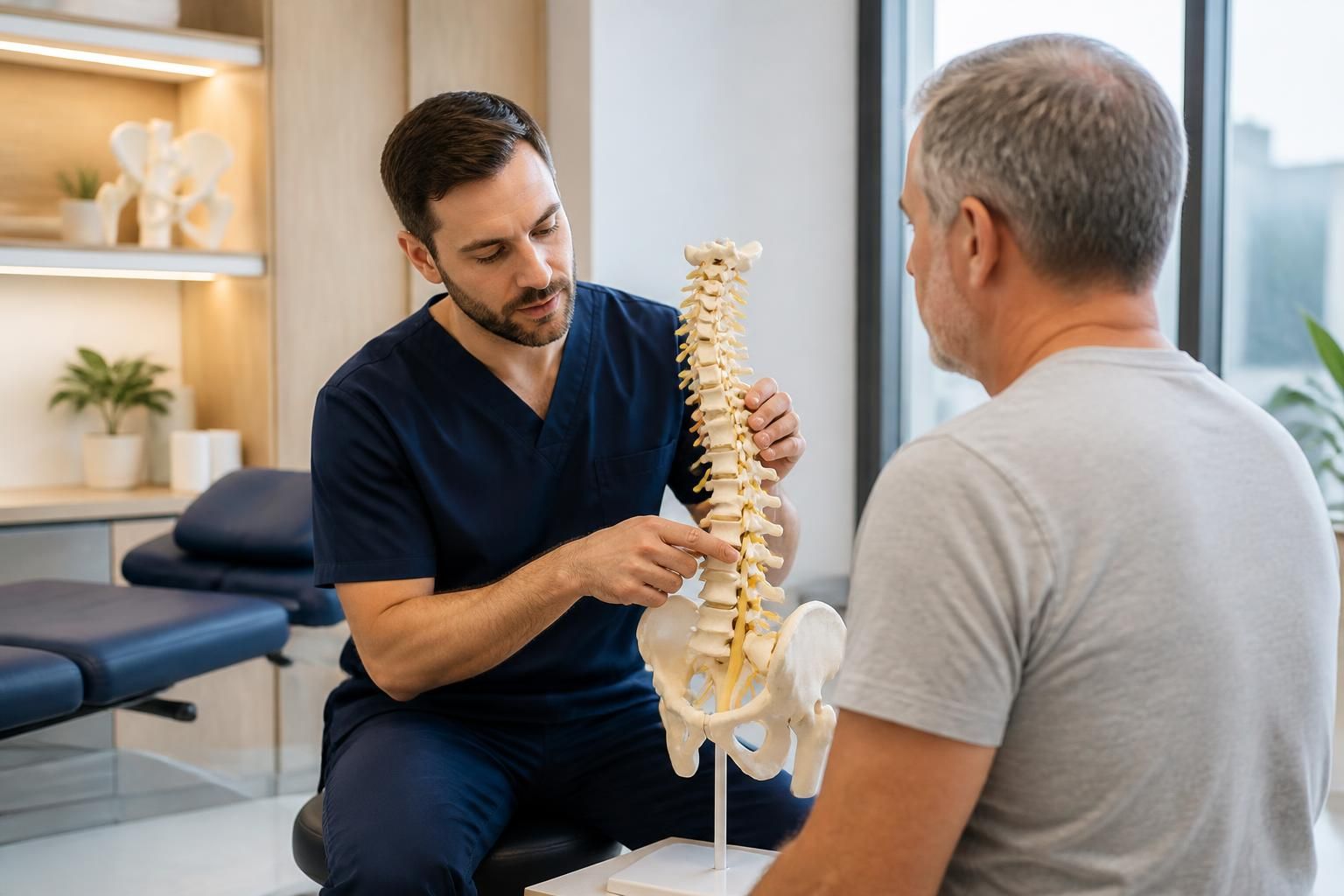
Low back pain radiating into the leg, often described as sciatica, is a common condition that can quickly affect your quality of life in Saint-Laurent. Understanding the possible causes and nature of this pain requires a precise clinical assessment that guides an appropriate diagnosis and effective treatment. Indeed, the variety of symptoms associated with this neuropathy calls for a methodical approach to distinguish radicular pain from other manifestations and identify the root of the problem.
In the Saint-Laurent area, where many residents combine remote work, driving and long periods of sitting, a physical examination remains key to detecting the severity and origin of sciatica. This approach, supported by complementary tools, guides personalized and safer therapeutic solutions, including targeted rehabilitation and motorized neurovertebral decompression offered in specialized clinics.





In brief: key points about the clinical assessment of sciatica in Saint-Laurent
- Clinical assessment is the essential first step in understanding low back pain and associated symptoms.
- Sciatica encompasses several causes including disc herniation, disc protrusion and foraminal stenosis, which require specific examinations.
- Complementary examinations such as MRI or electromyography are selected based on the physical examination findings and the complexity of the symptoms.
- Warning signs, including loss of urinary control or progressive weakness, require urgent consultation.
- Appropriate care in Saint-Laurent may include motorized neurovertebral decompression, a non-surgical option for certain selected patients.
Why the clinical examination is crucial in diagnosing sciatica in Saint-Laurent
Sciatica is often perceived as simple leg pain, but the clinical reality is more nuanced. Radicular pain accompanied by symptoms such as numbness, tingling or muscle weakness must be carefully distinguished from low back pain of muscular or joint origin. A thorough clinical assessment performed by an experienced health-care professional in Saint-Laurent is the first step toward a reliable diagnosis.
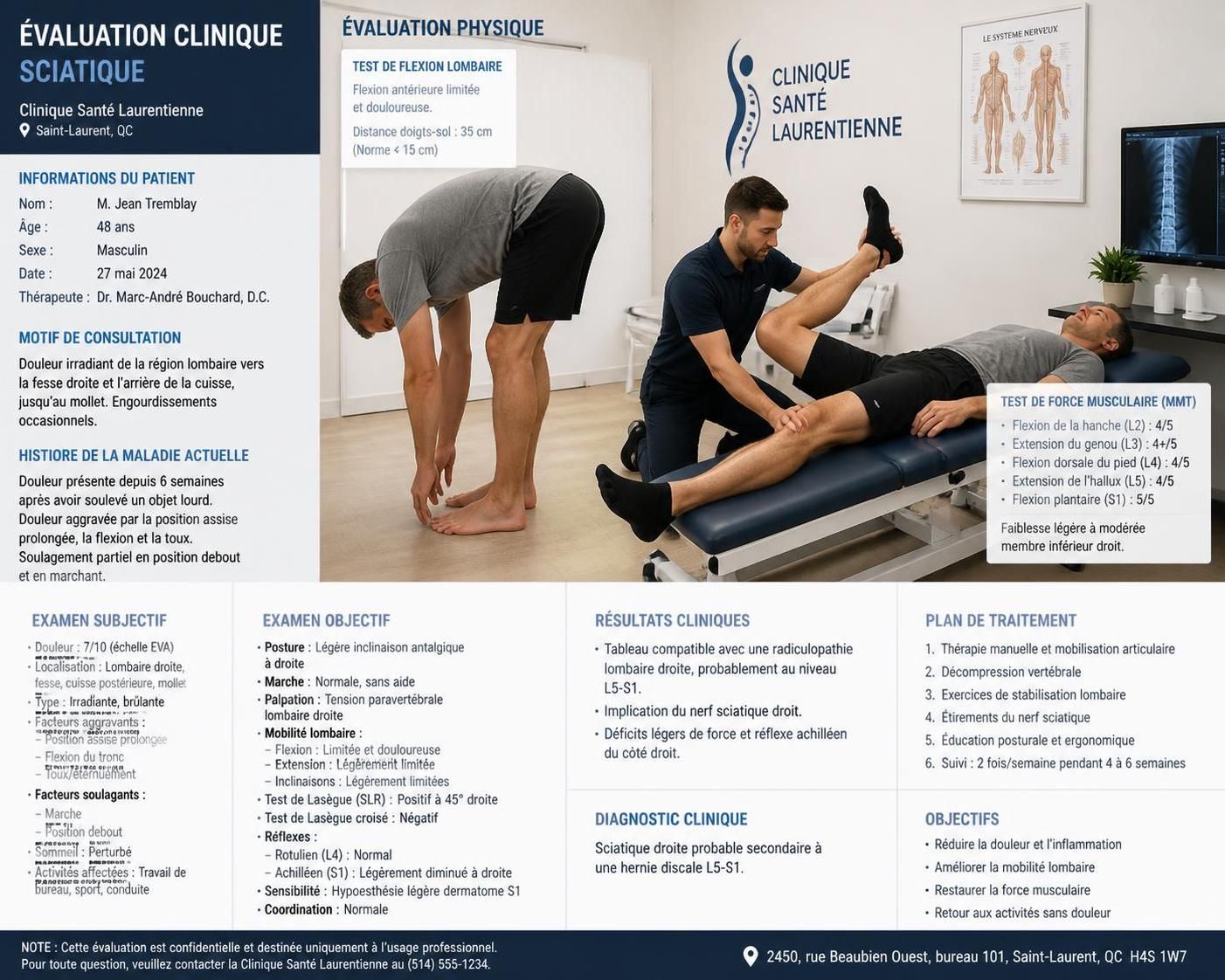
This step includes a detailed history regarding the location, intensity and nature of the pain, as well as factors that may worsen or relieve it. For example, pain that intensifies with lumbar flexion or exertion may suggest disc involvement, while pain triggered by coughing or sneezing may indicate nerve compression.
Physical tests such as the Lasègue test are essential for assessing sciatic nerve tension and detecting possible nerve irritation or compression. Analysis of deep tendon reflexes, assessment of lower-limb muscle strength and examination of skin sensation complete this assessment. These procedures also help rule out other causes, such as piriformis syndrome or femoral neuralgia.
It is also important to note that sciatica can result from various conditions, such as a disc herniation, disc protrusion or foraminal stenosis. Each presents a different clinical picture and requires specific management. This highlights the value of a precise diagnosis made possible through a thorough clinical assessment, supported by complementary examinations when needed.
Complementary examinations: when and why they are needed to confirm a diagnosis
After the physical examination, some cases of sciatica in Saint-Laurent require additional tests to refine the diagnosis. Lumbar Magnetic Resonance Imaging (MRI) is the reference standard because it can provide detailed visualization of soft tissues, including intervertebral discs and nerve roots. MRI can detect a disc herniation or stenosis that may be causing radicular pain.
In some cases, standard X-rays of the lumbar spine remain useful for observing bone structure, identifying osteoarthritis or a spinal deformity, and ruling out other causes such as a fracture. They provide an initial view of the intervertebral spaces and possible narrowing.
Electromyography (EMG) is a valuable complementary test for assessing nerve conduction and muscle activity. It helps determine the extent of nerve involvement, particularly in uncertain cases or when pain is accompanied by progressive muscle weakness.
A lumbar CT scan remains an alternative when MRI is unavailable or contraindicated. It provides good resolution of bony structures, which is essential when planning certain interventions.
Finally, certain laboratory tests, although less common in typical sciatica, may be ordered to rule out an inflammatory or infectious cause. These blood tests include erythrocyte sedimentation rate and C-reactive protein.
| Examination | Primary purpose | Advantages | Limitations |
|---|---|---|---|
| Lumbar MRI | Visualization of soft tissues and nerve roots | No radiation, precise 3D images | High cost, contraindicated with certain implants |
| Standard X-ray | Observation of bony structures | Quick, good for detecting osteoarthritis and fractures | Does not show soft tissues |
| Electromyography (EMG) | Assessment of nerve conduction | Detects nerve involvement and locates compression | Discomfort, requires an expert for interpretation |
| Lumbar CT scan | Visualization of bony structures | Quick, can be used with metal hardware | Exposure to X-rays |
A judicious selection of these examinations, guided by the clinical assessment, supports an appropriate diagnosis and avoids unnecessary overprescribing. To explore this topic further, it is helpful to consult the complete guide to sciatica diagnoses and treatments or the page dedicated to the clinical assessment of sciatica in Montréal.
Factors influencing symptoms and rehabilitation considerations in Saint-Laurent
Several factors affect how sciatic nerve pain presents and its intensity. In Saint-Laurent, a frequently sedentary lifestyle and remote work lead to long periods of sitting, which may worsen nerve compression. Prolonged sitting, particularly with inadequate back support, often intensifies symptoms or prolongs flare-ups.
Movement, although it can potentially cause pain, plays a crucial role in recovery. Gradually resuming activities adapted to individual tolerance helps reduce inflammation and maintain good spinal mobility. However, not all exercises are suitable for every patient. It is essential to stop the activity in the event of intense pain, the onset of weakness or increasing numbness in the leg.
During rehabilitation, personalized approaches incorporating specific exercises, physiotherapy and sometimes manual care are preferred. These interventions aim to improve functional prognosis by strengthening the paraspinal muscles and stabilizing the lumbar spine. Treatment effectiveness depends on adapting it to the patient’s profile and the nature of the underlying condition.
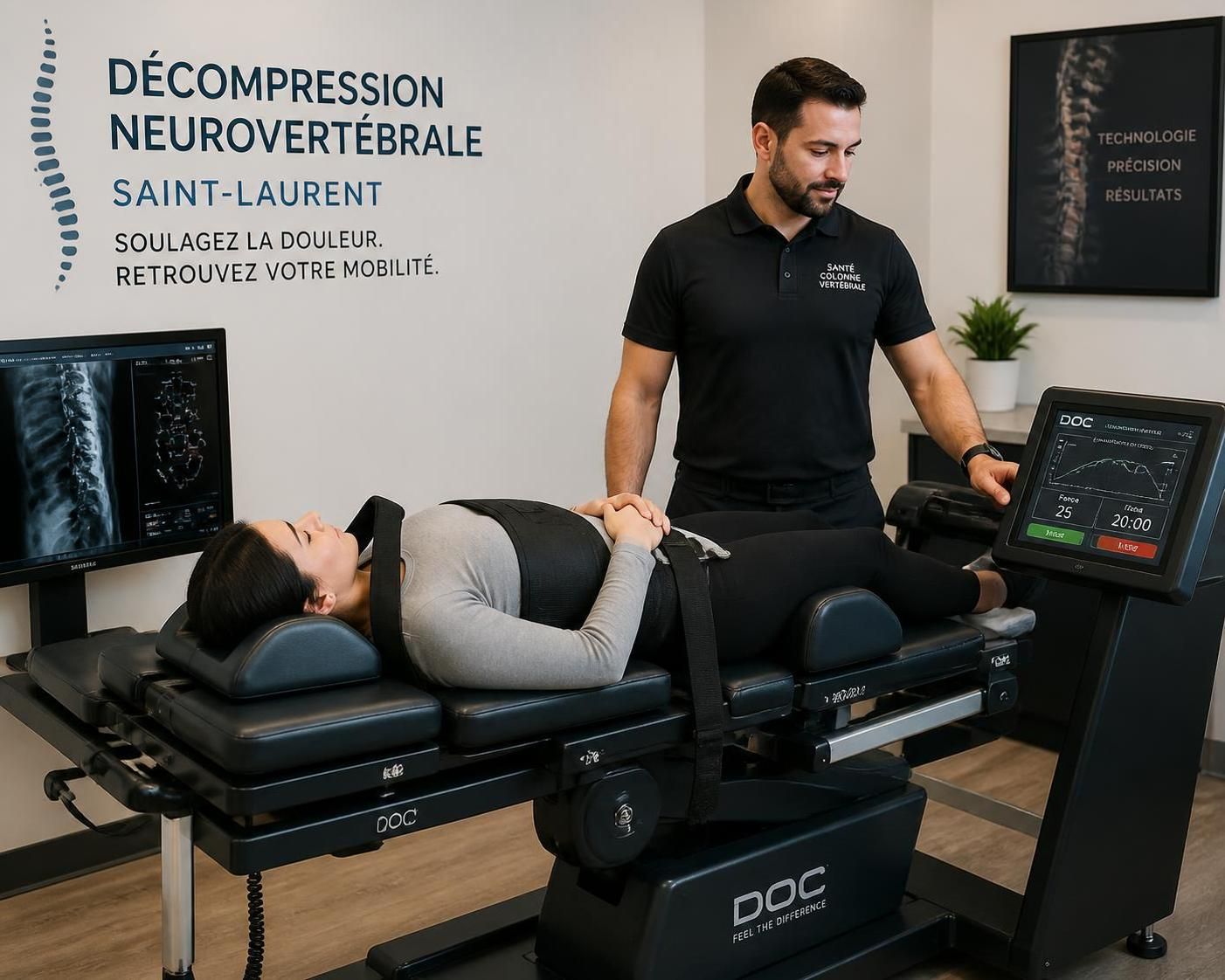
Motorized neurovertebral decompression, offered in particular at clinics near Mont-Royal in Montréal, is an interesting non-surgical option for certain patients. This technique involves applying gradual, controlled traction intended to reduce pressure on the intervertebral discs or nerve roots. It is a complementary method to conventional rehabilitation that requires rigorous candidate selection and a prior clinical assessment.
Recognizing signs that warrant prompt or urgent consultation in Saint-Laurent
Being vigilant for changing or concerning symptoms is essential. Some manifestations require a prompt clinical consultation or even urgent medical care. Signs requiring a thorough assessment include:
- persistent or recurring pain below the knee, especially if it limits walking or disrupts sleep;
- worsening or progressive numbness, tingling or weakness in the leg or foot;
- significant loss of sensation, especially around the area known as the “saddle” region;
- changes in urinary or bowel function (incontinence or retention);
- fever or general symptoms accompanying pain, which may suggest an infection;
- a recent fall or trauma to the back causing acute pain or an apparent spinal deformity.
A prompt consultation at a specialized centre in Saint-Laurent or Montréal is recommended if you notice worsening motor weakness, persistent pain below the knee, progressive numbness or urinary difficulties. In the presence of alarming symptoms such as saddle anaesthesia or loss of urinary control, urgent medical care is imperative.
This support not only helps avoid serious complications, but also guides appropriate treatment options based on a detailed analysis of symptoms and their progression.
When is it essential to seek care for pain consistent with sciatica?
It is advisable to seek care when low back pain radiates into the leg, especially if it lasts more than a few days or is accompanied by muscle weakness, significant numbness or urinary changes. A clinical assessment makes it possible to establish a precise diagnosis and guide management.
Is a clinical examination enough to diagnose sciatica?
The clinical examination is the foundation of diagnosis. It guides identification of the probable source of symptoms, but complementary examinations such as MRI or electromyography may sometimes be needed to confirm nerve involvement.
What factors worsen sciatica?
Prolonged positions in flexion, especially continuous sitting, intense physical exertion without precautions, and lack of movement can worsen symptoms related to nerve compression.
What does motorized neurovertebral decompression involve?
It is a non-surgical technique that applies gradual traction to the spine to reduce pressure on the discs and nerves. This method may be considered after a rigorous clinical assessment and is suitable for certain patient profiles.
What warning signs require urgent consultation?
Sudden loss of bladder or bowel control, significant and progressive motor weakness, saddle anaesthesia, or fever with back pain require prompt medical care.
If you experience pain radiating into your leg or symptoms related to the sciatic nerve, a professional clinical assessment in Saint-Laurent can clarify the probable cause and establish the prognosis. This process helps determine whether conservative treatment, rehabilitation or approaches such as motorized neurovertebral decompression are appropriate.
To obtain an appropriate consultation, do not hesitate to contact a specialized clinic near Montréal, including TAGMED Clinic, which combines expertise and modern technologies for personalized care.
Book an appointment for an assessment in Mont-Royal
Dr. Sylvain Desforges, B.Sc., D.O., N.D., osteopath
This content is for informational purposes and does not replace a personalized assessment by a qualified health-care professional.
