

Test of muscle electrical activity, often combined with nerve-conduction studies to investigate neuromuscular disorders.
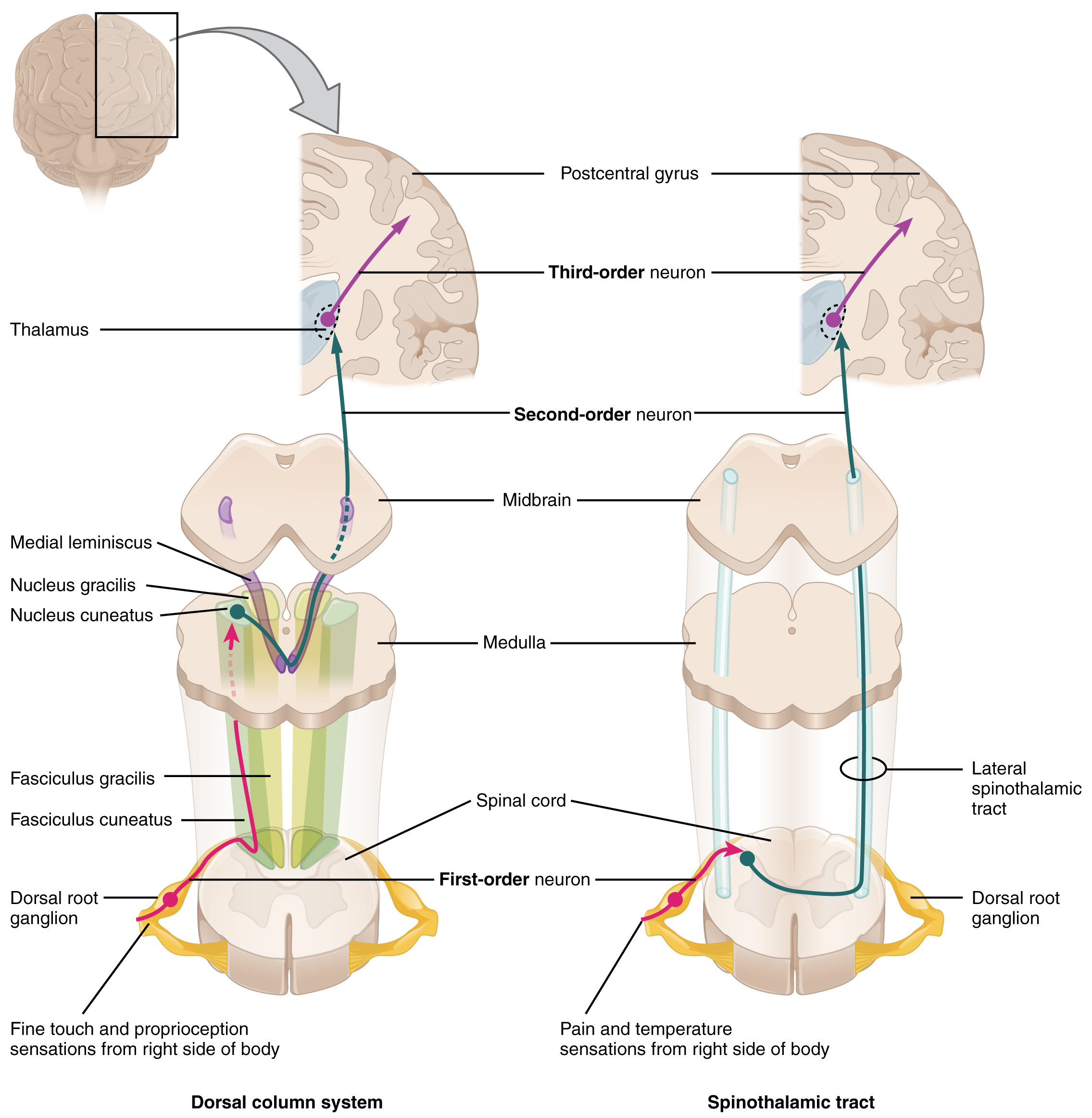
OpenStax College — CC BY 3.0. Image source.

Measuring electrical activity in selected muscles
Clinical needle electromyography records electrical activity in muscles at rest and during contraction. It can help distinguish muscle, root or peripheral nerve disorders depending on the presentation. It is often combined with nerve conduction studies, but the two components do not measure exactly the same thing.
A fine electrode is inserted into muscles selected by the examiner. The test may be uncomfortable and can leave temporary soreness or a small bruise. Report anticoagulants, bleeding disorders and implanted devices without stopping medication yourself. Time since symptom onset affects what can be detected. A normal result does not exclude all radicular pain, particularly when there is no detectable motor axonal loss. The examination is therefore selected to answer a neuromuscular question rather than to validate whether pain is real.
Interpret a finding in context
A clinical finding increases or decreases the plausibility of a diagnosis; it does not replace the full assessment. The clinician compares it with the history, strength, sensation and other relevant observations. An isolated response can be affected by pain, positioning, apprehension or normal variation. Comparison between sides and, when appropriate, between visits is often more informative than a single number. A finding becomes useful when it helps answer a specific clinical question rather than simply adding a label.
How it changes care
The result may lead to activity modification, another investigation, medical referral or continued conservative management. One test should not determine the choice of a therapeutic machine. At TAGMED, findings should help establish a working explanation and measurable goals, followed by review of response to care. Worsening strength or walking requires reassessment. Recent urinary changes or loss of perineal sensation requires emergency evaluation even when another test seems reassuring. Examination also identifies situations in which routine treatment should be postponed. The patient should leave understanding what the finding means, what remains uncertain and what change would require an earlier review.
Frequently asked questions
Does EMG directly measure pain?
No. It examines muscle electrical activity and provides clues about selected neuromuscular functions.
Does a positive test establish a diagnosis?
No; it must be considered alongside the other assessment findings.
Does a normal result rule out every disease?
No. Each test addresses particular functions or diagnostic possibilities.
Must it be repeated at every appointment?
Only when repetition adds useful information for decisions or monitoring.
Does the result select a treatment?
No. Diagnosis, safety, preferences and practical goals remain essential.
Concept diagram: Neuromuscular question → Selected muscles → Electrical recording → Specialist interpretation. This illustrates clinical reasoning rather than individual anatomy.
Role of TAGMED care
At TAGMED, this information helps clarify your history, guide assessment and determine whether conservative care is appropriate or medical referral is needed. An anatomical structure, sign or test result is not, by itself, an indication for decompression, laser, shockwave or manual treatment. Care selection depends on the cause of symptoms and your clinical circumstances.
Medical references
- National Library of Medicine, MedlinePlus. Electromyography (EMG) and Nerve Conduction Studies.
- NINDS, NIH. Peripheral Neuropathy.
References document the topic; their inclusion does not imply endorsement of TAGMED services by those organizations.
Educational information from The Spine Page. This entry does not replace an individual assessment. Documentary version: October 12, 2026. Sylvain Desforges, B.Sc., D.O., N.D., osteopath and naturopath.
TAGMED clinic contact details
For non-urgent consultations and information about available services.
Clinique TAGMED — Terrebonne
1150, rue Lévis, Suite 200
Terrebonne (Québec) J6W 5S6
450‑704‑4447
Clinique TAGMED — Montréal
1140, avenue Beaumont
Mont-Royal (Québec) H3P 3E5
1‑877‑672‑9060