


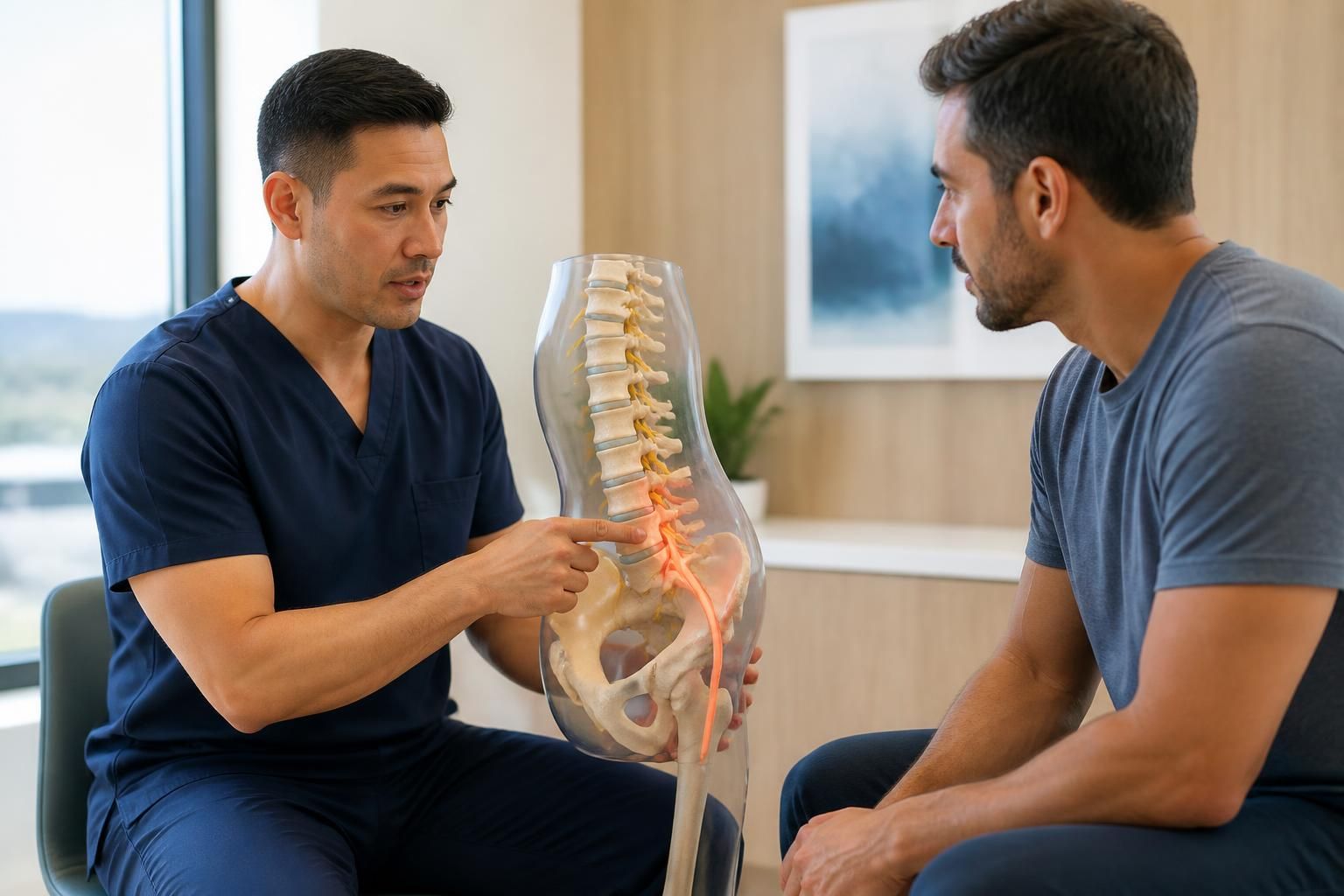
Foraminal stenosis, a narrowing of the nerve passage between the vertebrae, can be a significant cause of low back pain radiating into the leg, consistent with sciatica. In Pointe-Claire, many people have this condition which, by compressing the nerve root in the lumbar region, causes various symptoms such as numbness, tingling, and localized nerve inflammation.
Understanding these effects requires a detailed examination of the precise location of the narrowing and its severity, as the clinical presentation may vary according to individual characteristics. It is essential to consider sciatica as a symptom that can have several causes, with foraminal stenosis being one of the most common in cases of prolonged or recurrent low back pain.


Key points to know about foraminal stenosis and sciatica
Radiating sciatic pain accompanied by numbness or muscle weakness may indicate nerve compression in the lumbar canal.
Spinal osteoarthritis, disc degeneration, and ligament hypertrophy are often responsible for narrowing of the intervertebral foramen.
Progressive muscle weakness or “foot drop” requires urgent medical consultation in Pointe-Claire.
Treatment includes conservative approaches, ergonomic adjustments, and, in certain selected cases, motorized neurovertebral decompression.
Understanding foraminal stenosis and its impact on sciatic pain
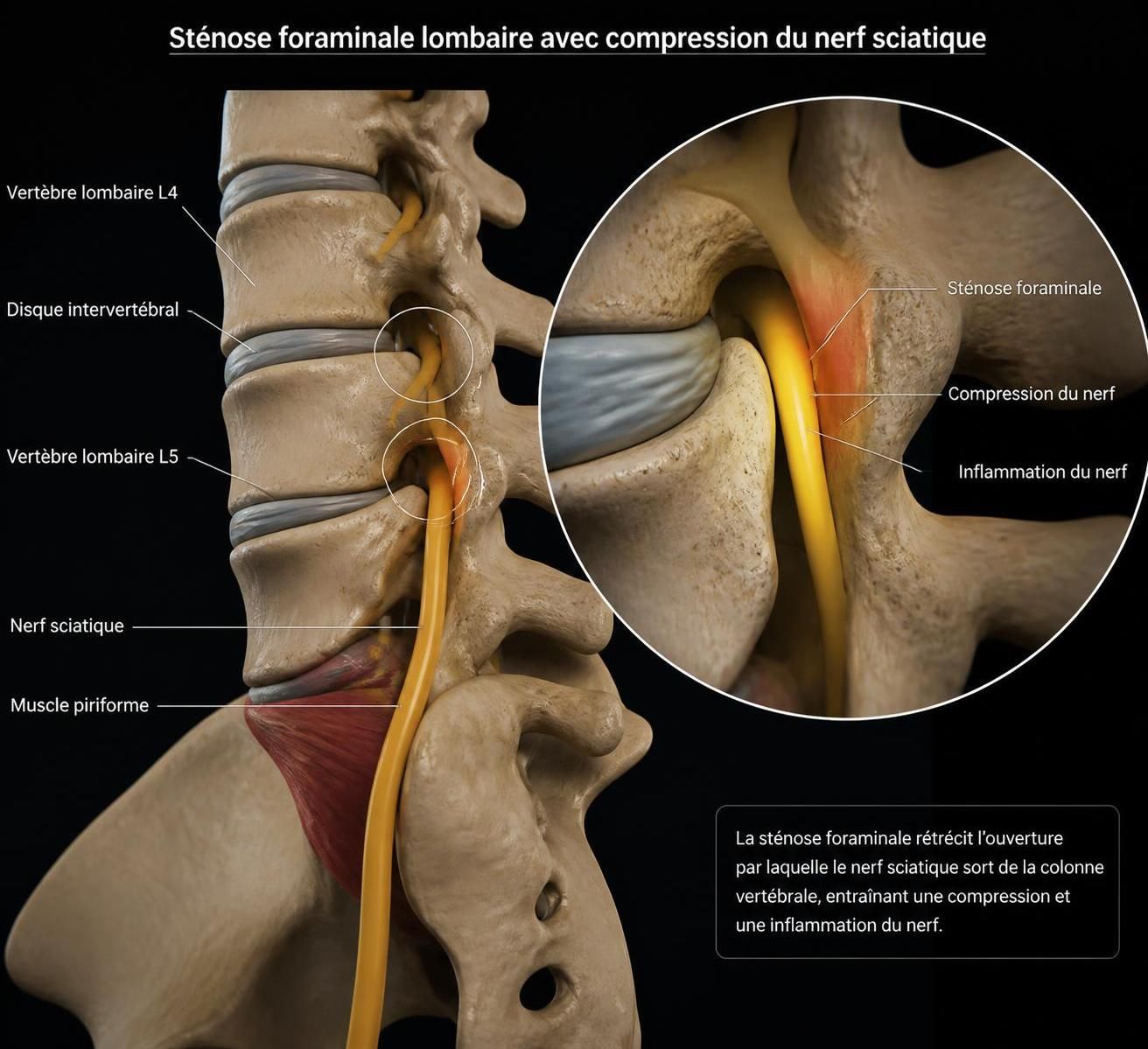
The intervertebral foramen is a small tunnel located between two vertebrae through which a nerve root from the spinal cord passes. This passage, naturally wide enough to allow the nerve to pass without restriction, can narrow because of various degenerative processes, resulting in foraminal stenosis. In the lumbar region, this narrowing often compresses the nerve root in the lumbar canal, causing irritation that may result in pain referred to the buttock, thigh, or calf, typical of sciatica.
This phenomenon differs from other types of low back pain because stenosis-induced sciatica is related to localized nerve inflammation or mechanical compression. It is not merely muscular discomfort: the pain follows the specific path of the sciatic nerve and may be accompanied by numbness, tingling, and, in some situations, muscle weakness. For example, foraminal stenosis at L4-L5 can cause pain radiating to the outer side of the leg and sometimes gait difficulties in people in Pointe-Claire.
It is also important to distinguish foraminal stenosis from other causes of sciatica, such as a disc herniation or disc protrusion, which involve slightly different mechanisms but can also cause very similar symptoms. Therefore, diagnosis based on precise clinical examinations and medical imaging, such as MRI, is essential to understand the exact cause of this low back pain.
To further understand the specific manifestations associated with this narrowing, you can consult the resource dedicated to the links between sciatica and foraminal stenosis, which details the clinical features observed.
Aggravating factors and symptom variations among patients in Pointe-Claire
Pain caused by lumbar foraminal stenosis does not present uniformly. Several factors alter the intensity and nature of the symptoms experienced. For example, prolonged sitting, common in office jobs in Pointe-Claire, can increase nerve compression and contribute to the onset of sciatic pain. Similarly, prolonged standing or walking, especially over long distances, tends to worsen symptoms by increasing pressure on the lumbar canal.
The duration of exposure to certain movements, as well as daily posture, play a notable role in managing or worsening low back pain. Some people report improvement when lying down, particularly in the supine position, when the spine returns to a position that places less strain on the foramina. This aspect leads to practical adjustments that are useful to address as part of conservative treatment.
In addition, all neurological signs associated with stenosis, such as numbness and muscle weakness, may vary depending on the degree of compression. Pain may alternate between periods of exacerbation and relative calm, often reflecting the chronic nature of this condition in many patients in the metropolitan area. Persistent nerve inflammation may affect quality of life, notably by disrupting sleep and the ability to carry out daily activities in Pointe-Claire.
To better understand treatments suited to these circumstances and useful ergonomic adjustments, you can visit the management recommendations specific to foraminal stenosis and sciatica offered by Clinique TAGMED in Mont-Royal.
Diagnosis and implementation of targeted treatment for foraminal stenosis
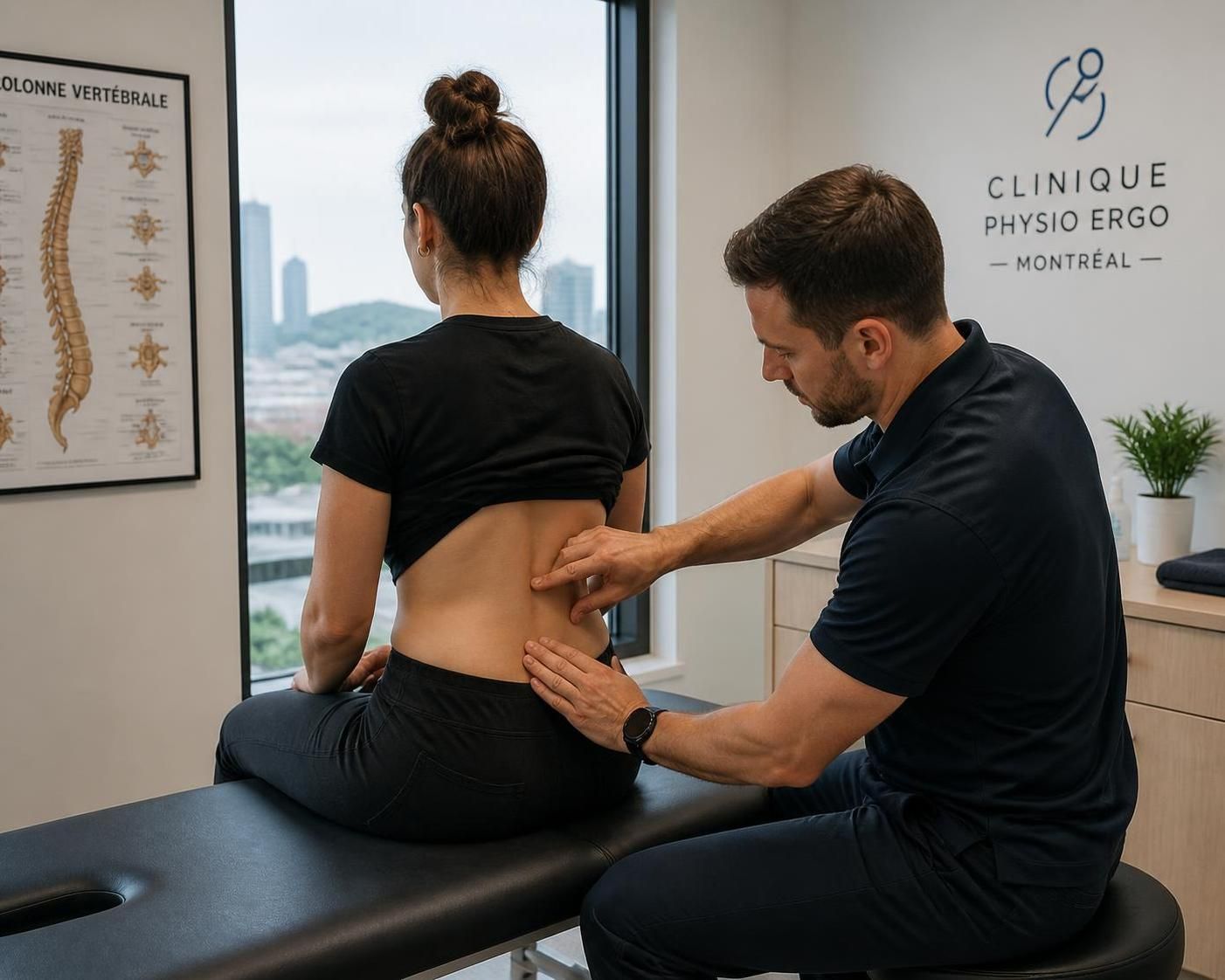
Diagnosis of foraminal stenosis is based on the patient interview, clinical examination, and confirmation by medical imaging. The clinician in Pointe-Claire will first assess the nature of the pain, its location, its spread into the leg, and the possible presence of neurological problems (numbness, loss of strength). Specific neurological tests are performed to assess reflexes and sensation.
Imaging examinations, notably MRI, make it possible to precisely visualize the degree of narrowing of the foramen and identify compressive elements such as osteophytes or an associated disc herniation. Radiological classification across several grades helps guide treatment.
Initial treatment encourages a conservative approach combining:
- Pain control with appropriate medication, including anti-inflammatory drugs or analgesics.
- Targeted physiotherapy to strengthen the lumbar muscles and improve posture.
- Ergonomic adjustments, for example, the use of lumbar cushions or workstation adjustments.
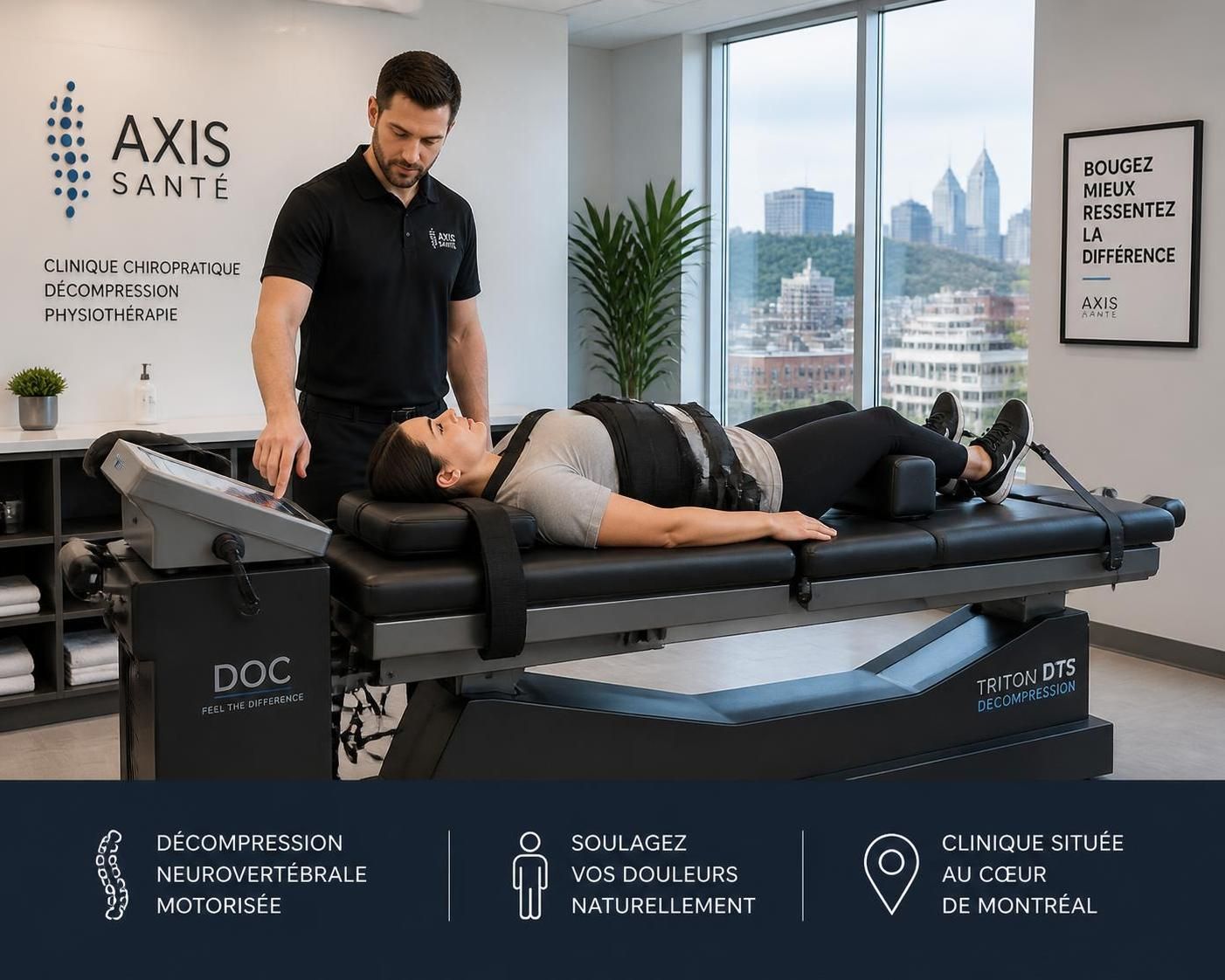
- Motorized neurovertebral decompression, a non-invasive technique intended to reduce mechanical pressure on nerve roots.
This decompression, provided at Clinique TAGMED in Mont-Royal, uses a controlled and progressive spinal traction system. It may be considered for patients with a disc herniation, protrusion, or foraminal stenosis without major contraindications. However, it is important to clarify that no single protocol is suitable for everyone, results vary among individuals, and this method does not replace urgent medical assessment if symptoms worsen.
When symptoms persist or worsen, a specialist consultation is recommended to consider the possibility of surgery intended to decompress the nerve more definitively. This option is reserved for patients with disabling pain or severe neurological problems.
Practical tips for managing foraminal stenosis in daily life in Pointe-Claire
Good management of pain and symptoms often involves simple daily adjustments. First, maintaining a neutral and balanced posture is crucial when working in an office or remotely, a common reality in the Pointe-Claire area. Using suitable lumbar support may reduce nerve compression during long periods of sitting.
It is also recommended to regularly practise gentle core-strengthening exercises. For example, working with a Swiss ball or performing a plank, under professional supervision, helps stabilize the spine, thereby reducing pressure on the vertebral foramina.
Low-impact activities, such as regular walking, swimming, or water aerobics, offer important benefits by improving mobility without increasing the mechanical load on the lumbar canal. However, it is advisable to adapt these programs according to tolerance and avoid exercises that worsen pain or neurological symptoms.
It is important to remain alert to signs of worsening, including a sudden increase in numbness, the onset of marked muscle weakness, or pain that intensifies while walking. In these situations, prompt medical reassessment is warranted.
Finally, prevention remains paramount. Careful weight management, limiting repetitive heavy lifting, and awareness of safe movements and postures during physical or work activities play a key role in preventing the progression of foraminal stenosis.
| Factor | Mechanism | Effect on the foramen | Possible symptoms |
|---|---|---|---|
| Disc degeneration | Loss of disc height and elasticity | Collapse and narrowing | Low back pain, intermittent sciatica |
| Spinal osteoarthritis | Osteophyte formation, joint hypertrophy | Nerve compression | Radiating pain, numbness |
| Disc herniation | Displacement of the disc nucleus | Partial obstruction of the foramen | Acute sciatica, muscle weakness |
| Ligament hypertrophy | Ligament thickening | Reduction of the nerve canal | Discomfort, chronic pain |
- Low back pain radiating into the leg, consistent with sciatica.
- Numbness, tingling, or weakness in the leg.
- Symptoms worsened by standing or walking.
- Possible improvement when lying down.
- Conservative treatments including physiotherapy and neurovertebral decompression.
Seek medical attention without delay if you experience: persistent low back pain extending below the knee, progressive numbness, muscle weakness, or loss of walking function.
Seek urgent medical attention if you notice: loss of bladder or bowel control, saddle anaesthesia, rapidly developing muscle weakness, associated fever, or significant back trauma.
What signs distinguish sciatica caused by foraminal stenosis?
Sciatica related to foraminal stenosis is often characterized by pain that worsens when standing or during prolonged walking, accompanied by numbness or muscle weakness. This pain may lessen when sitting or lying down.
Is surgery always necessary for foraminal stenosis?
No, surgery is considered only when conservative treatments do not provide sufficient pain relief or when significant neurological problems are present. Physiotherapy and neurovertebral decompression can often help manage symptoms effectively.
What exercises are recommended for people with foraminal stenosis in Pointe-Claire?
Core-strengthening exercises, gentle stretching, walking, and aquatic activities are generally beneficial. It is essential to adapt the program according to tolerance and consult a professional before starting.
When should you seek care for sciatic pain?
It is recommended to seek care as soon as pain persists for more than a few days, especially if it is accompanied by numbness, muscle weakness, or walking difficulties. Urgent assessment is required in the presence of serious symptoms such as loss of bladder control.
Are you experiencing low back pain radiating into your leg and wondering about a possible cause, such as foraminal stenosis? A specialized assessment in Mont-Royal can help clarify the likely cause, identify signs to monitor, and determine whether an appropriate conservative approach may be beneficial.
Book an appointment for an assessment in Mont-Royal
Dr. Sylvain Desforges, B.Sc., D.O., N.D., osteopath
This content is for educational purposes and does not replace a personalized assessment.
