



Sciatica, which is common and painful, leads many Côte-Saint-Luc residents to consider appropriate treatments to relieve their symptoms and preserve their quality of life. Among the most discussed options are spinal decompression and injections, two distinct approaches that aim to reduce pain by targeting different underlying causes.
This treatment choice requires a clear understanding of the mechanisms of action, specific indications, and benefits and limitations of each intervention. Depending on the clinical characteristics and patient profile, the optimal strategy may vary considerably. This is why a thorough assessment, often offered by qualified healthcare professionals, is important, particularly near Montréal and in the Côte-Saint-Luc community.
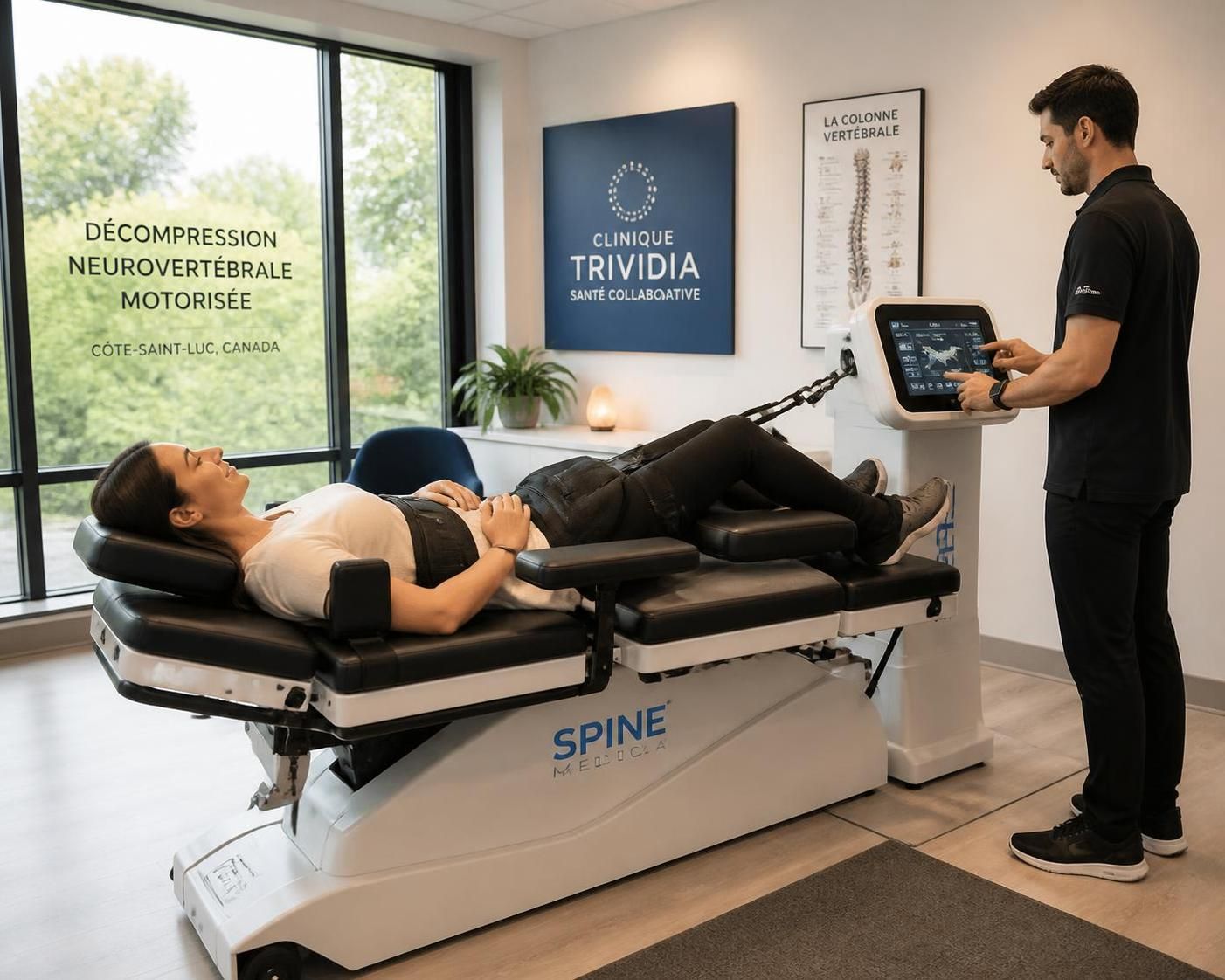
- Spinal decompression : a non-invasive technique based on controlled motorized traction to reduce pressure on the nerves.
- Injection : a corticosteroid injection intended to reduce nerve inflammation and provide rapid relief.
- Specific indications : each method is suited to certain clinical profiles, particularly depending on the cause of sciatica.
- Duration and effectiveness : injections generally provide more immediate but temporary relief, while decompression may lead to gradual and lasting improvement.
- Integrated approach : these treatments may be part of comprehensive care that includes rehabilitation and postural advice.


Exploring the mechanisms and contexts for using spinal decompression in Côte-Saint-Luc
Spinal decompression is an innovative therapeutic method intended to relieve sciatic pain by reducing pressure on the lumbar nerve structures. It uses a specialized device that applies gentle motorized traction to the spine, creating space between the vertebrae and easing compression on nerve roots that may be irritated or compressed by a herniated disc, protrusion, or foraminal stenosis.
This non-invasive technique is particularly suitable for patients whose symptoms are consistent with a mechanical cause, without major neurological signs requiring urgent surgery. Decompression offers several potential benefits, including improved local blood circulation, which is important for the recovery of damaged nerve and disc tissues. For example, patients with sciatica caused by a herniated disc in Côte-Saint-Luc may experience a gradual reduction in pain and restored mobility after several sessions tailored to their condition.
Furthermore, personalizing the treatment protocol is a key component of this approach. The number and intensity of sessions are adjusted according to the initial assessment, tolerance, and progression of symptoms, helping optimize results while minimizing the risks of overexertion or worsening. However, it is crucial to clarify that this method is not appropriate for all types of sciatica and requires a prior consultation with a qualified specialist, such as those at TAGMED Clinic located in Mount Royal, a few minutes from Côte-Saint-Luc.
Recent clinical data suggest that spinal decompression may, for some patients, reduce the need for medication and limit the need for surgery by improving the mechanical function of the spine. However, results vary, and there is no guarantee of complete or permanent relief. The technique may be recommended in addition to a targeted rehabilitation program and regular medical follow-up to maximize functional recovery.
Sciatica injections: effectiveness, indications, and limitations in Côte-Saint-Luc
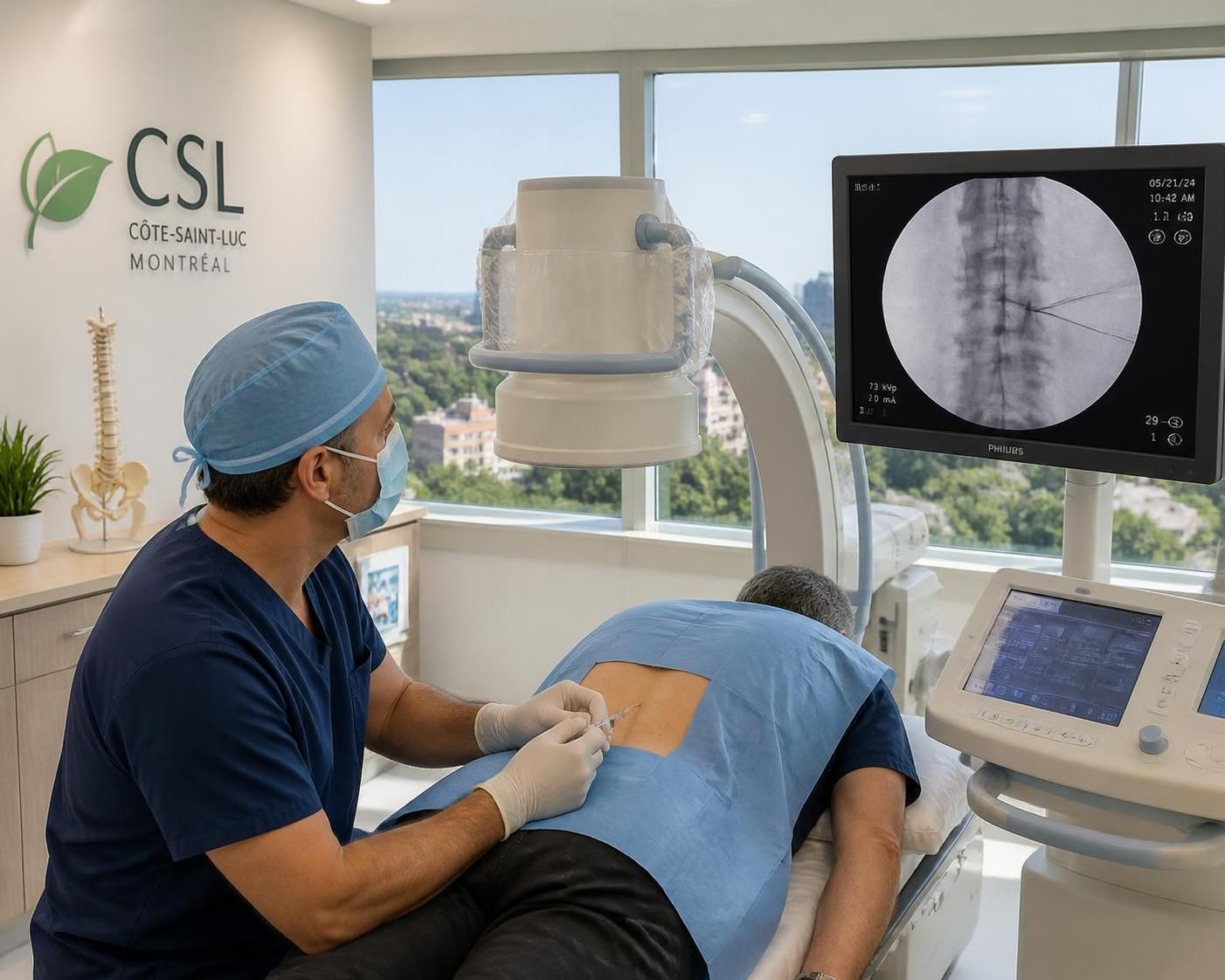
Injection is another treatment option frequently selected for persistent sciatica that is not relieved by standard conservative treatments. This technique involves injecting a corticosteroid anti-inflammatory near the sciatic nerve or into the epidural space, directly targeting the inflammation responsible for pain.
In Côte-Saint-Luc, injections are often offered to patients with sciatica related to a herniated disc or advanced spinal osteoarthritis, particularly when pain has persisted for more than six weeks despite rest, oral medication, and physiotherapy. The main benefit lies in the rapid onset of action, with a notable reduction in pain observed within 24 to 72 hours after the procedure.
However, relief provided by an injection is generally temporary, lasting an average of one to three months. Repeat injections are limited, usually to three times per year, because of corticosteroid-related risks such as local irritation, risk of infection, and effects on blood glucose, particularly in people with diabetes.
In addition, injections are not appropriate in cases of active infection, coagulation disorders, or for certain pregnant women depending on the products used. Injection accuracy, achieved under radiological or CT guidance, is essential for maximizing effectiveness and reducing the risk of complications.
To better understand these considerations, specialized resources on the effectiveness and precautions related to sciatica injections can be consulted; they also detail expected outcomes and post-injection recommendations.
While injections may sometimes make it possible to delay surgery, they do not replace comprehensive care involving appropriate exercises and regular assessment. Therefore, they are often part of a multidisciplinary program aimed at restoring function while managing pain.
A practical comparison of spinal decompression and injections: criteria and informed choices
Choosing between spinal decompression and injections depends on several factors, including the specific nature of the sciatica, symptom severity, and the overall medical context.
Spinal decompression primarily works by mechanically reducing pressure on the nerve roots, promoting an overall effect on the discs and spinal alignment. It is therefore intended for cases in which the radicular cause arises from identifiable, non-urgent physical compression. The beneficial effects are generally more gradual, with notable functional improvement over the course of sessions.
Injections, on the other hand, primarily target nerve inflammation. They are indicated for rapid relief, particularly when pain is severe and resistant to standard medication. This approach may be preferred during acute phases or severe inflammatory flare-ups.
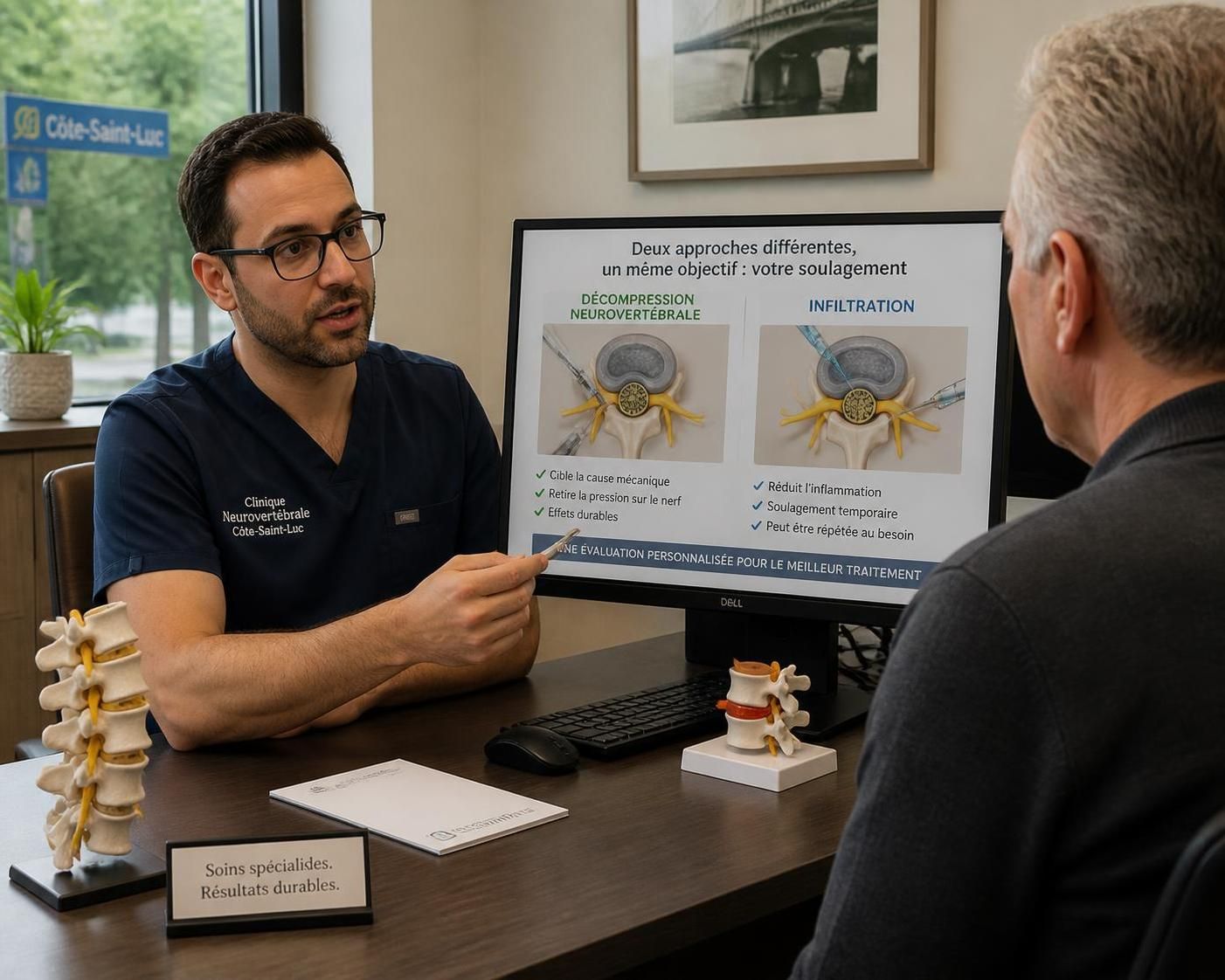
Here is an essential comparison table to better understand the distinct characteristics of each option:
| Criterion | Spinal decompression | Injection |
|---|---|---|
| Mechanism of action | Motorized spinal traction that reduces mechanical pressure | Injection of anti-inflammatory corticosteroids |
| Indications | Nerve compression related to herniated disc, protrusion, or stenosis | Persistent inflammatory sciatica, herniated disc, osteoarthritis |
| Duration of effect | Gradual, with the potential for lasting improvement | Rapid but temporary (1 to 3 months) |
| Risk | Low, with rare side effects | Risks of infection, hyperglycemia, and limits on repeat injections |
| Number of sessions | Between 15 and 25 sessions depending on the protocol | Limited to 3 per year |
| Complementary objective | Support healing and functional rehabilitation | Reduce inflammation to facilitate rehabilitation |
This comparison helps Côte-Saint-Luc patients better understand the importance of personalized medical advice. Specialized professionals, such as those at TAGMED Clinic in Mount Royal, often consider these two modalities to be complementary, depending on the progression of the condition.
Comprehensive care and the role of rehabilitation in treating sciatica
Whether following spinal decompression or an injection, rehabilitation plays a crucial role in managing and preventing recurrent sciatica. An appropriate program includes targeted muscle-strengthening exercises, specific stretches, and postural correction, intended to support the spine and reduce excessive strain.
In Côte-Saint-Luc, where the population includes a significant proportion of professionals working remotely or regular drivers, behaviours related to prolonged sitting may worsen symptoms. Incorporating appropriate exercises, ergonomic advice, and regular postural assessment helps improve quality of life over the long term.
Good coordination between the professional responsible for decompression or injection, the physiotherapist, and the patient ensures rigorous, personalized follow-up. In fact, stopping or modifying certain activities is sometimes necessary to avoid worsening inflammation or nerve compression.
Finally, complementary approaches, such as the specific osteopathy mentioned at TAGMED Clinic, may promote better overall mobility and contribute to muscle relaxation.
Warning signs, limitations of each treatment, and when to seek care in Côte-Saint-Luc
Although spinal decompression and injections may offer significant relief in some cases, it is essential to remain alert to certain signs of worsening. Severe and persistent pain below the knee, progressive muscle weakness, motor or sensory disturbances, and loss of bladder or bowel control require urgent medical attention.
Likewise, fever accompanied by sciatic pain may indicate an underlying infection, which formally contraindicates injections and requires prompt medical care.
Before beginning treatment, a comprehensive assessment including a clinical examination and, where appropriate, medical imaging is essential to rule out these complications and tailor the treatment strategy. Patients in the Côte-Saint-Luc area can contact centres such as SOS Sciatique to understand the possible causes of their pain, as well as TAGMED Clinic for an in-depth assessment.
- Severe sciatic pain below the knee that does not respond to treatment
- Marked numbness or loss of sensation in the perineal area
- Progressive leg weakness
- Loss of sphincter control (urine or stool)
- Fever or general malaise associated with low back pain



This video illustrates the principles of spinal decompression, detailing its mechanism, eligible patients, and precautions to consider.
This documentary provides an explanatory overview of sciatica injections, how they are performed, and the precautions to observe.
{“@context”:”https://schema.org”,”@type”:”FAQPage”,”mainEntity”:[{“@type”:”Question”,”name”:”Quelle est la principale diffu00e9rence entre la du00e9compression neurovertu00e9brale et lu2019infiltration pour la sciatiqueu00a0?”,”acceptedAnswer”:{“@type”:”Answer”,”text”:”La du00e9compression neurovertu00e9brale agit par traction vertu00e9brale douce, visant u00e0 ru00e9duire la pression mu00e9canique sur les nerfs, alors que lu2019infiltration consiste en une injection de corticou00efdes pour ru00e9duire lu2019inflammation nerveuse rapidement, avec un effet gu00e9nu00e9ralement temporaire.”}},{“@type”:”Question”,”name”:”Combien de su00e9ances de du00e9compression neurovertu00e9brale sont gu00e9nu00e9ralement nu00e9cessaires ?”,”acceptedAnswer”:{“@type”:”Answer”,”text”:”Le traitement comprend entre 15 et 25 su00e9ances selon la gravitu00e9 des symptu00f4mes et lu2019u00e9valuation clinique du patient.”}},{“@type”:”Question”,”name”:”Quels sont les risques majeurs liu00e9s u00e0 lu2019infiltration pour sciatique ?”,”acceptedAnswer”:{“@type”:”Answer”,”text”:”Les risques incluent lu2019infection locale, des saignements, une hyperglycu00e9mie transitoire, particuliu00e8rement chez les diabu00e9tiques, et une limitation u00e0 trois infiltrations par an en gu00e9nu00e9ral.”}},{“@type”:”Question”,”name”:”Peut-on combiner du00e9compression neurovertu00e9brale et infiltration ?”,”acceptedAnswer”:{“@type”:”Answer”,”text”:”Ces traitements sont souvent complu00e9mentaires ; la du00e9compression peut u00eatre privilu00e9giu00e9e dans un cadre mu00e9canique progressif, tandis que lu2019infiltration peut u00eatre utilisu00e9e pour un soulagement rapide en phase aiguu00eb, sous supervision mu00e9dicale.”}},{“@type”:”Question”,”name”:”Quand faut-il consulter en urgence pour une douleur sciatique ?”,”acceptedAnswer”:{“@type”:”Answer”,”text”:”La consultation urgente est justifiu00e9e en cas de faiblesse rapide, perte de contru00f4le urinaire ou fu00e9cal, douleurs intenses et persistantes, fiu00e8vre ou signes neurologiques graves.”}}]}What is the main difference between spinal decompression and injections for sciatica?
Spinal decompression uses gentle spinal traction to reduce mechanical pressure on the nerves, whereas an injection involves administering corticosteroids to rapidly reduce nerve inflammation, with an effect that is generally temporary.
How many spinal decompression sessions are generally needed?
Treatment includes between 15 and 25 sessions, depending on symptom severity and the patient’s clinical assessment.
What are the main risks associated with sciatica injections?
Risks include local infection, bleeding, transient hyperglycemia, particularly in people with diabetes, and a general limit of three injections per year.
Can spinal decompression and injections be combined?
These treatments are often complementary; decompression may be preferred in a gradual mechanical context, while injections may be used for rapid relief during an acute phase, under medical supervision.
When should urgent care be sought for sciatic pain?
Urgent consultation is warranted in cases of rapidly worsening weakness, loss of bladder or bowel control, severe and persistent pain, fever, or serious neurological signs.
If you have sciatic pain in Côte-Saint-Luc and would like to understand the likely causes and the options suited to your profile, a professional assessment can help you consider the most appropriate treatments.
To learn more about sciatica treatment in Montréal and benefit from personalized follow-up, contact qualified specialists near you.
Dr. Sylvain Desforges, B.Sc., D.O., N.D., osteopath
Please note that the content of this article is educational and does not replace an appropriate medical assessment.
