


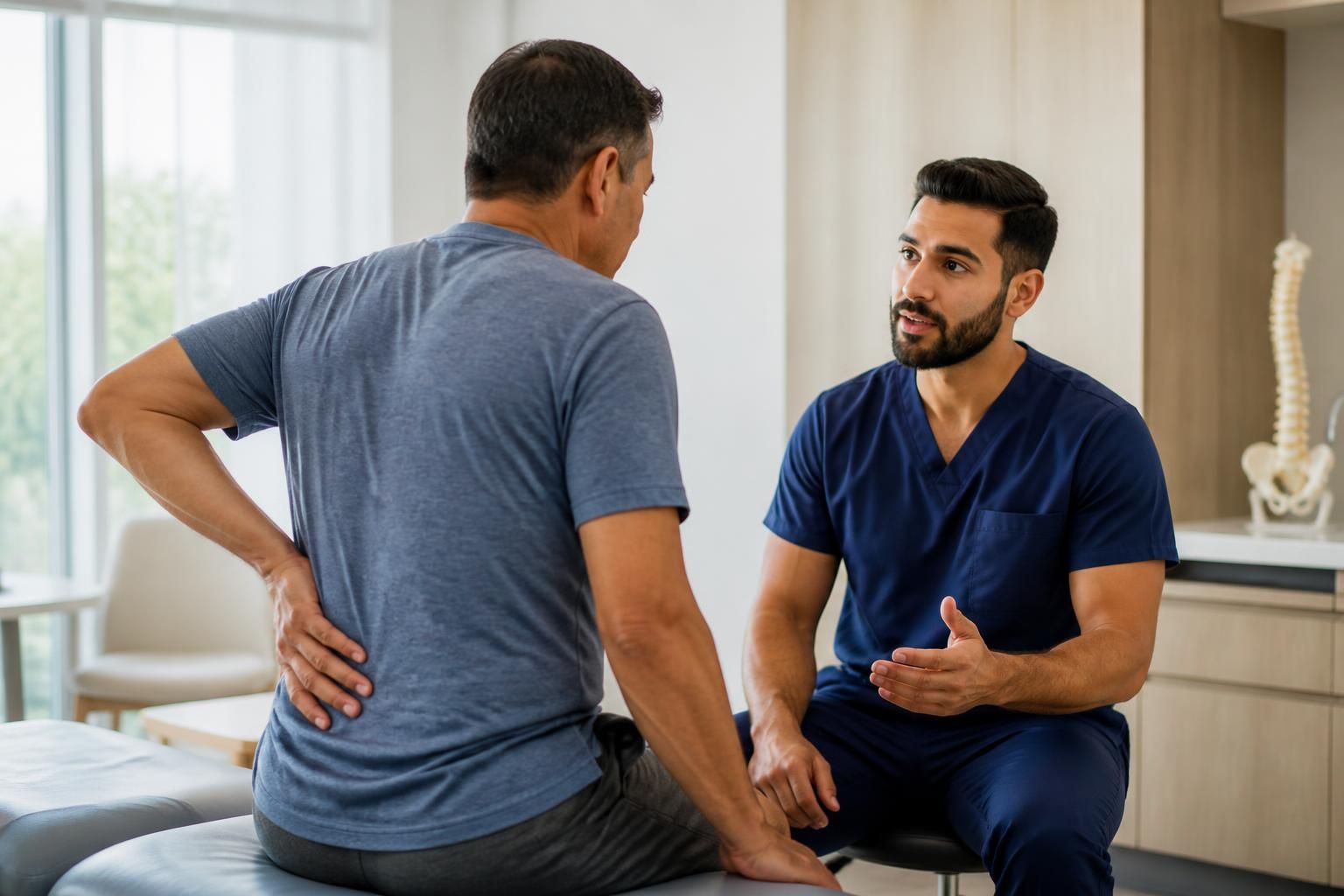
Sciatica in Hochelaga-Maisonneuve, a vibrant and diverse area of Montréal, affects many people experiencing low back pain that radiates into the legs. This pain, linked to irritation or compression of the sciatic nerve, can present with various signs that should not be underestimated. Understanding the associated symptoms, as well as the factors that affect their intensity, is crucial to guiding appropriate care and avoiding potentially serious complications.
Sciatic pain can present as a combination of sensations, ranging from burning to numbness, and affect different parts of the leg depending on the nerve root involved. The clinical assessment performed in Hochelaga-Maisonneuve or elsewhere in Montréal aims to distinguish these manifestations in order to better identify the likely cause, whether disc-related, osteoarthritic, or neurological. Each case deserves individualized attention, as changes in symptoms may indicate worsening or improvement with treatment.



![CB2 Natural Pain Relief Oil [TOPICAL] - Extra Stength Pain Relief for Arthritis, Inflammation, Nerve, Joint & Muscle Pain, Neuropathy, Sciatica, More Effective Than Hemp Pain Relief Cream, Natural Ingredients, Made in Canada, 50mL](https://m.media-amazon.com/images/I/715ewJuc8NL._AC_UL320_.jpg)
Key signs of sciatica to watch for in Hochelaga-Maisonneuve
Pain associated with the sciatic nerve is often described as a burning sensation, an electric shock-like sensation, or sharp pain that extends from the lower back into the leg. Recognizing these symptoms is essential to identifying pain that may be consistent with sciatica.
Common manifestations include:
- Pain radiating into one leg, usually on one side, following the path of the sciatic nerve from the buttock to the foot.
- Numbness or tingling in the lower limb, often felt in the foot or thigh.
- Muscle weakness in the leg, which may affect the ability to walk or perform certain foot movements.
- Initial low back pain before it spreads into the leg, which may be worsened by certain movements or positions.
It is important to clearly distinguish sciatic pain from other types of low back or pelvic pain, as the location and pathway of the pain may indicate specific nerve roots such as L5 or S1. For some Hochelaga-Maisonneuve residents, this pain may be reported as a dull discomfort that develops into burning, underscoring the variety of symptoms to consider.
So-called truncated sciatica is characterized by pain limited to the leg or foot without notable low back pain. This presentation can sometimes make diagnosis more complex and requires careful assessment. In addition, warning symptoms, such as loss of bladder or bowel control, saddle anaesthesia, severe motor weakness, or intense numbness, should never be ignored and warrant urgent medical consultation.
To better understand the manifestations and management of pain that may be consistent with sciatica, it can be helpful to consult dedicated resources such as symptoms to watch for or educational analyses on typical treatments and symptoms.
Understanding the causes and mechanisms of sciatica in the Montréal context
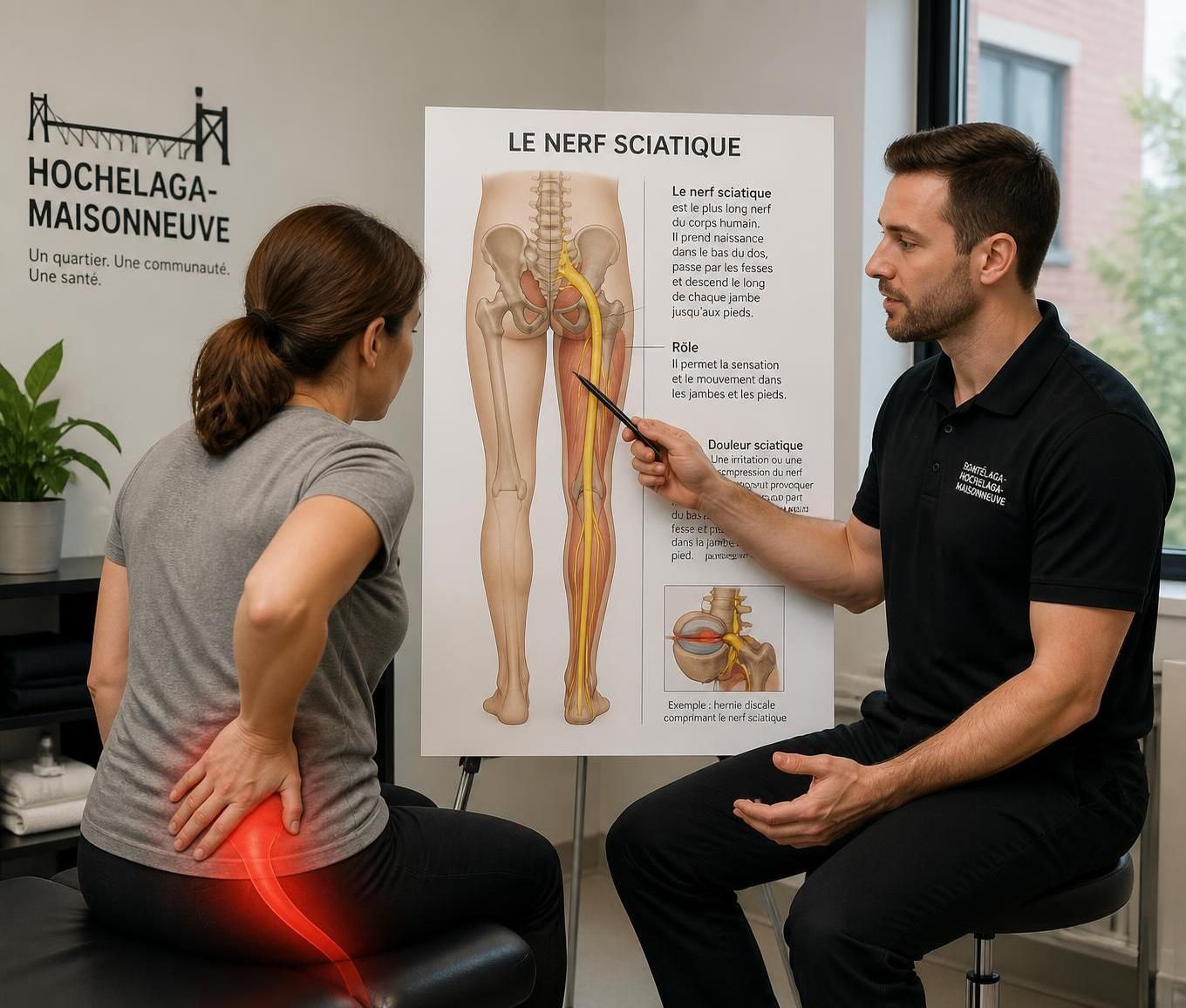
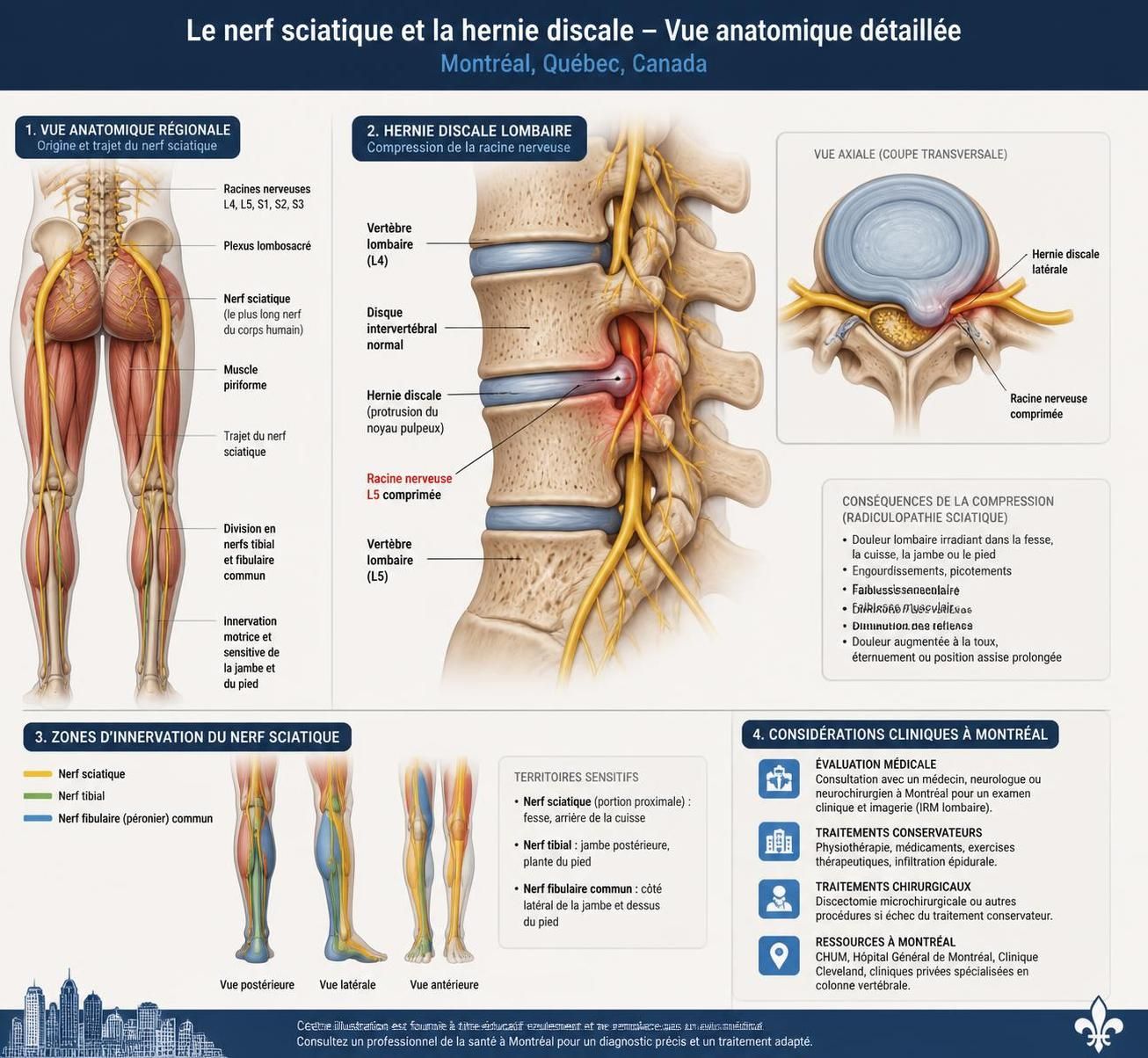
Sciatica often results from compression or inflammation of nerve roots arising from the lumbar spine, particularly the L5 or S1 roots. In Hochelaga-Maisonneuve, as throughout Montréal, the main causes remain herniated discs and lumbar osteoarthritis, common conditions associated with low back pain.
A herniated disc involves a protrusion or extrusion of disc material, which can place pressure on nerve roots. This condition is particularly common in adults aged 20 to 50, an active population often facing challenges related to sedentary work or sudden movements. Lumbar vertebral osteoarthritis, more common among older adults, can lead to narrowing of the lumbar canal, also called stenosis, thereby causing mechanical irritation of the nerve roots and neurovertebral conflict.
Certain local factors, such as lifestyle in active Hochelaga-Maisonneuve neighbourhoods where public transit use or walking is common, can influence the onset and intensity of symptoms. For example, prolonged sitting during bus commutes or professional activities in poorly adapted offices can increase pressure on the lumbar discs and worsen pain.
By understanding the anatomical and biomechanical mechanisms involved, it becomes clearer why symptoms often progress in phases, with periods of acute pain interspersed with improvement. A comprehensive clinical assessment, including one performed at Clinique TAGMED in Mont-Royal near Outremont, is essential to distinguish among the different types of low back and sciatic pain, taking radiology and clinical history into account.
Distinguishing between radicular pain (due to nerve root involvement) and referred pain (felt elsewhere but non-neural) is a fundamental aspect to clarify. This nuance helps avoid inappropriate treatments and optimize care based on the true underlying cause.
Factors affecting the course of sciatic pain in daily life in Hochelaga-Maisonneuve
Although intense for some patients, sciatic pain varies according to position, activities, and duration of symptoms. Factors affecting pain include several common among Hochelaga-Maisonneuve residents:
- Prolonged sitting: Common during public transit commutes or office work, it can worsen nerve compression or inflammation.
- Physical activity: Moderate walking may improve circulation and reduce pain, while certain sudden movements or heavy lifting can trigger or intensify symptoms.
- Lumbar flexion and extension: Some patients report worsening pain when bending their trunk forward, while extension may be better tolerated, or vice versa, depending on the cause of the sciatica.
- Bed rest: Prolonged strict rest is generally discouraged, as it may worsen stiffness and pain when activity is resumed.
- Psychosocial factors: Stress related to remote work or a heavy workload has been identified as a factor that may worsen lumbar and sciatic tension, particularly during unusual periods such as recent lockdowns.
These factors underscore the importance of adapting daily activities and adopting postures that reduce the load on the lumbar spine. For example, an ergonomic workstation setup or incorporating active breaks can make a noticeable difference in symptom management.
It is also recommended to reduce strain on the lower back while driving, particularly for commuters travelling to downtown Montréal, in order to prevent underlying worsening.
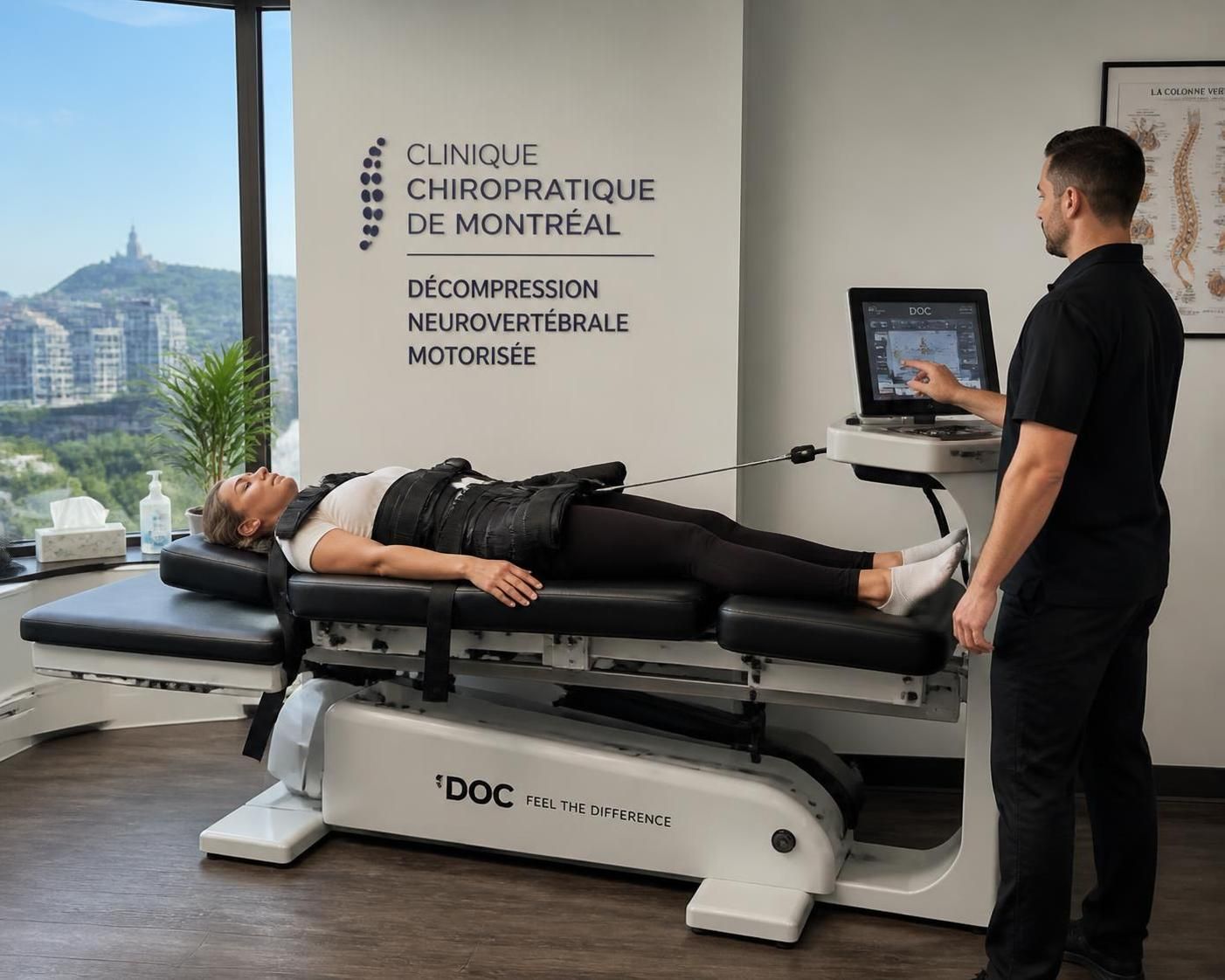
For certain profiles, motorized neurovertebral decompression, offered at Clinique TAGMED, may be considered after a detailed assessment. This approach aims to temporarily reduce pressure exerted on the nerve roots, although it is not appropriate for every case. It is crucial to recognize that this method does not replace urgent medical assessment when warning signs are present.
Warning signs requiring prompt consultation in Hochelaga-Maisonneuve
Several signs should prompt immediate medical care, as they may indicate worsening or a complication of sciatica. Hochelaga-Maisonneuve patients experiencing these symptoms should consult a health-care professional:
- Sciatic pain with significant motor deficit: inability to move the foot or leg, or a sensation of progressive weakness.
- Saddle numbness or anaesthesia: loss of sensation in the genital and perineal region.
- Loss of urinary or bowel control: incontinence or urinary retention that may indicate cauda equina syndrome.
- Severe pain not relieved by rest or usual medications.
- Fever associated with low back pain: may suggest an infection or systemic inflammation.
- Significant back trauma preceding the pain.
These signs represent medical emergencies requiring prompt assessment to avoid severe long-term effects. Medical staff in the Montréal area, including Hochelaga-Maisonneuve, are trained to recognize these indicators and direct patients toward the necessary examinations, including lumbar MRI, which remains the reference tool for visualizing nerve roots and discs.
For more details about signs indicating when to seek care, you can consult clear and comprehensive guides. A specialized consultation can clarify the diagnosis and explore treatment options suited to the individual, particularly in an active urban setting.
Treatment options for sciatica in Hochelaga-Maisonneuve
When dealing with sciatica, several treatment approaches may be considered, depending on symptom severity, the underlying cause, and the patient’s profile.
Continuing moderate activities while avoiding painful movements is often encouraged from the first signs. Prolonged strict rest is no longer recommended because it may slow recovery.
Medical management may include:
- Non-steroidal anti-inflammatory drugs (NSAIDs) and level 1 analgesics to manage pain.
- Manual therapies, including osteopathy or specialized mobilization, offered in particular at Clinique TAGMED in Mont-Royal.
- Adapted exercises under supervision to improve mobility and strengthen the lumbar muscles.
- Corticosteroid injections in certain persistent cases, when a local anti-inflammatory effect is needed.
- Motorized neurovertebral decompression, a controlled form of lumbar traction that may be considered according to the patient’s profile to reduce pressure on the nerve roots.
- Surgery, generally reserved for cases involving significant neurological deficit, prolonged failure of conservative treatment, or urgent complications.
It is important to emphasize that no treatment guarantees rapid or complete improvement. Individual variability often requires appropriate follow-up and regular reassessment to adjust treatment approaches.
Several interventions may be part of a multidisciplinary approach combining advice, exercises, manual care and, when needed, pharmacological interventions. It is recommended to avoid rigid protocols and adapt management to each person’s specific clinical progression.
To learn more about best practices for relieving sciatica and consider options suited to your symptoms, it is advisable to consult a qualified health-care professional in Montréal or the surrounding area.



| Treatment option | Main indication | Benefits | Limitations |
|---|---|---|---|
| Moderate rest and return to activity | Mild to moderate pain, onset of symptoms | Maintains mobility, prevents muscle stiffness | Risk of worsening with overexertion |
| Medication (NSAIDs, analgesics) | Inflammatory or acute pain | Reduces pain and inflammation | Possible side effects, does not treat the cause |
| Manual therapies and osteopathy | Mechanical pain, stiffness | Improves mobility and comfort | Effects vary between patients |
| Neurovertebral decompression | Herniated disc, protrusion, narrow lumbar canal | Controlled traction, reduces pressure on nerves | Not suited to everyone, requires assessment |
| Surgery | Severe motor deficit, prolonged failure of conservative treatment | May permanently decompress nerves | Surgical risks, variable recovery |
Dr. Sylvain Desforges, B.Sc., D.O., N.D., osteopath
{“@context”:”https://schema.org”,”@type”:”FAQPage”,”mainEntity”:[{“@type”:”Question”,”name”:”Quels sont les premiers signes qui peuvent u00e9voquer une sciatique ?”,”acceptedAnswer”:{“@type”:”Answer”,”text”:”Les premiers signes incluent une douleur lombaire irradiant dans une jambe, avec parfois des sensations du2019engourdissement et de picotements au niveau du pied ou de la cuisse.”}},{“@type”:”Question”,”name”:”Quand doit-on consulter en urgence en cas de sciatique ?”,”acceptedAnswer”:{“@type”:”Answer”,”text”:”Une consultation urgente su2019impose en pru00e9sence du2019une faiblesse musculaire importante, du2019une perte de contru00f4le urinaire ou anal, ou du2019une anesthu00e9sie en selle, signes qui peuvent indiquer une urgence neurologique.”}},{“@type”:”Question”,”name”:”Est-ce recommandu00e9 de rester au repos complet lors du2019une sciatique ?”,”acceptedAnswer”:{“@type”:”Answer”,”text”:”Un repos prolongu00e9 strict est gu00e9nu00e9ralement du00e9conseillu00e9, car lu2019immobilitu00e9 peut aggraver les symptu00f4mes. Il est pru00e9fu00e9rable de favoriser une activitu00e9 modu00e9ru00e9e et adaptu00e9e.”}},{“@type”:”Question”,”name”:”Comment la du00e9compression neurovertu00e9brale aide-t-elle u00e0 soulager la sciatique ?”,”acceptedAnswer”:{“@type”:”Answer”,”text”:”La du00e9compression neurovertu00e9brale motorisu00e9e offre une traction contru00f4lu00e9e qui peut diminuer la pression exercu00e9e sur les racines nerveuses, notamment en cas de hernie discale ou de stu00e9nose, aidant certains patients u00e0 mieux tolu00e9rer leurs symptu00f4mes.”}},{“@type”:”Question”,”name”:”Quels exercices sont les plus efficaces pour soulager une douleur sciatique ?”,”acceptedAnswer”:{“@type”:”Answer”,”text”:”Des u00e9tirements ciblu00e9s et des exercices de renforcement lombaire, ru00e9alisu00e9s sous la supervision du2019un professionnel, peuvent amu00e9liorer la mobilitu00e9 et ru00e9duire la douleur sciatique. Cependant, ces exercices doivent u00eatre adaptu00e9s individuellement.”}}]}What are the first signs that may suggest sciatica?
The first signs include low back pain radiating into one leg, sometimes with numbness and tingling sensations in the foot or thigh.
When should you seek urgent care for sciatica?
Urgent consultation is necessary in the presence of significant muscle weakness, loss of urinary or bowel control, or saddle anaesthesia, signs that may indicate a neurological emergency.
Is it recommended to remain on complete bed rest with sciatica?
Prolonged strict rest is generally discouraged, as immobility may worsen symptoms. It is preferable to favour moderate, adapted activity.
How does neurovertebral decompression help relieve sciatica?
Motorized neurovertebral decompression provides controlled traction that may decrease pressure on the nerve roots, particularly in cases of herniated disc or stenosis, helping some patients better tolerate their symptoms.
Which exercises are most effective for relieving sciatic pain?
Targeted stretches and lumbar strengthening exercises, performed under a professional’s supervision, may improve mobility and reduce sciatic pain. However, these exercises must be individually adapted.
