

Application of a stretching force to the lumbar spine, manually or using a device.
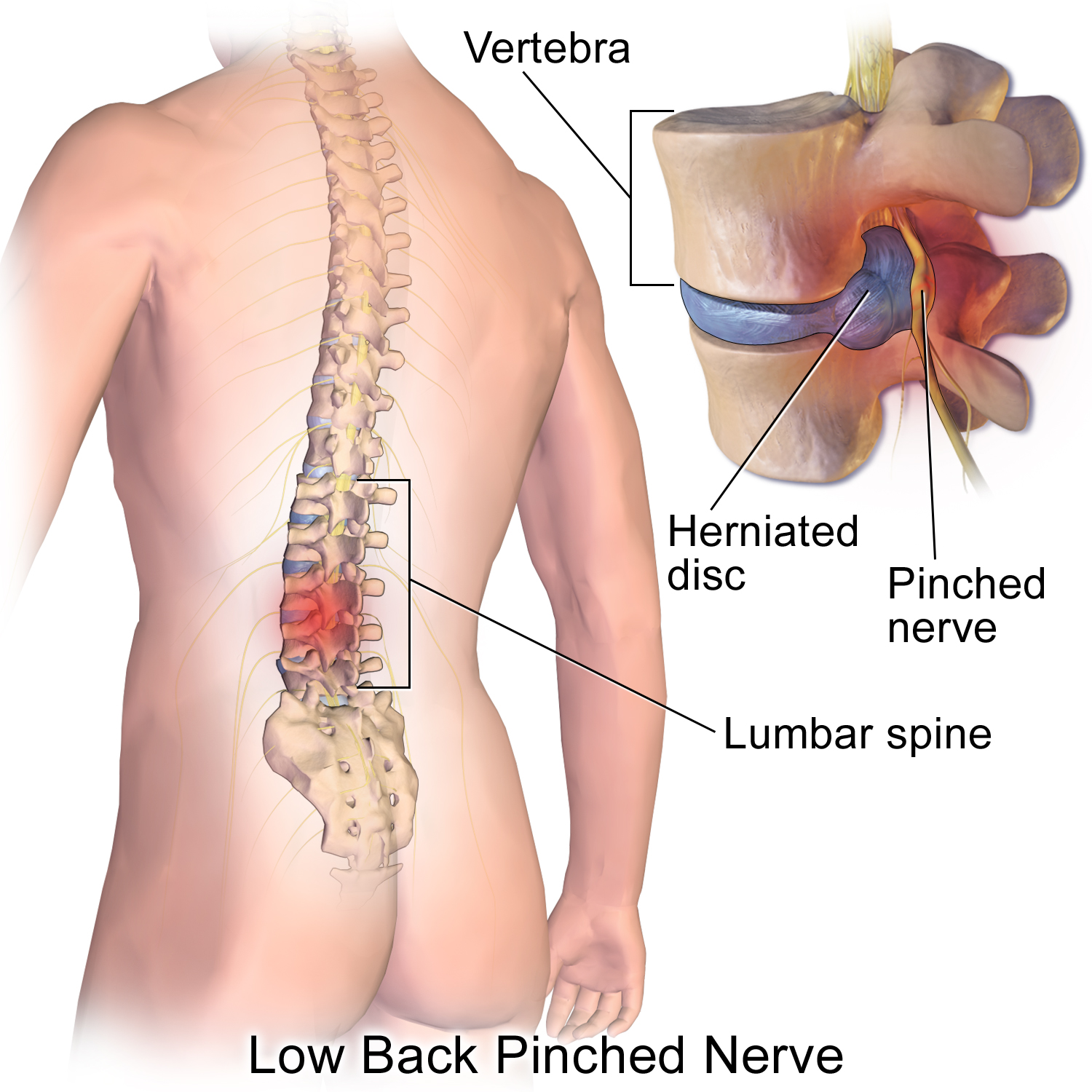
Blausen.com staff (2014), Medical gallery of Blausen Medical 2014, WikiJournal of Medicine 1(2), DOI: 10.15347/wjm/2014.010 — CC BY 3.0. Image source.

Understanding the approach
Lumbar traction applies a stretching force to the lower back manually or through a device. Position, harnesses and treatment cycles affect how that force is transmitted. It is a passive intervention and should not be confused with strengthening or restoring muscle capacity.
Indications and assessment
Assessment distinguishes isolated low back pain from radiating nerve pain and identifies findings requiring investigation. Less pain during stretching may be meaningful, but it proves neither a specific compression nor permanent correction. Traction force should not be determined solely by body weight.
Benefits, limitations and precautions
Trials have not established consistent benefit for low back pain, including presentations with leg symptoms. NICE recommends against offering traction for low back pain with or without sciatica. WHO advises against routine use for chronic primary low back pain. Results from one device cannot automatically be transferred to another treatment protocol or patient group.
Place in the care pathway
At TAGMED, motorized traction should therefore be explained as an option with uncertain benefit for selected situations and monitored tolerance. Increased pain, new numbness or weakness warrants stopping and reassessment. Active management options should still be considered.
Goals should be practical: walking farther, returning to a chosen activity or reducing symptoms that interfere with sleep. Improvement immediately after a session does not establish lasting benefit. Follow-up compares function with the starting point, records adverse effects and considers progress between appointments. An inadequate response should prompt a review of the clinical explanation or proposed approach, rather than an automatic extension of the same treatment.
Before starting, describe the outcome you want, treatments already tried and difficulties encountered. Ask how the response will be measured and when another option would be preferable. Available reports complement the discussion without replacing your current experience, priorities or preferences.
Frequently asked questions
Is it identical to motorized decompression?
Motorized decompression is a form of traction; settings and terminology differ.
Is higher force better?
No. Tolerance and safety matter more than intensity.
Can it permanently widen the canal?
A temporary change in loading does not establish lasting correction of stenosis.
Is it suitable after surgery?
Only after reviewing the operation, healing and any postoperative restrictions.
What counts as success?
A functional improvement that persists between sessions and justifies the demands of treatment.
Conceptual diagram of clinical reasoning; not an anatomical drawing to scale.
Role of TAGMED care
TAGMED offers motorized spinal decompression, a form of traction. Initial assessment considers whether symptoms, neurological findings and imaging, when indicated, agree. The value of this approach remains uncertain depending on the condition; NICE recommends against offering traction for low back pain with or without sciatica. It does not guarantee disc resorption, disc repair or correction of stenosis. Alternatives, contraindications, functional goals and stopping criteria should be discussed before any trial.
Medical references
- NICE. Low back pain and sciatica in over 16s: assessment and management (NG59).
- Thackeray et al. — JOSPT, 2016. The Effectiveness of Mechanical Traction Among Subgroups of Patients With Low Back Pain and Leg Pain: A Randomized Trial.
- World Health Organization. WHO guideline for non-surgical management of chronic primary low back pain in adults.
References document the topic; their inclusion does not imply endorsement of TAGMED services by those organizations.
Educational information from The Spine Page. This entry does not replace an individual assessment. Documentary version: October 12, 2026. Sylvain Desforges, B.Sc., D.O., N.D., osteopath and naturopath.
TAGMED clinic contact details
For non-urgent consultations and information about available services.
Clinique TAGMED — Terrebonne
1150, rue Lévis, Suite 200
Terrebonne (Québec) J6W 5S6
450‑704‑4447
Clinique TAGMED — Montréal
1140, avenue Beaumont
Mont-Royal (Québec) H3P 3E5
1‑877‑672‑9060