


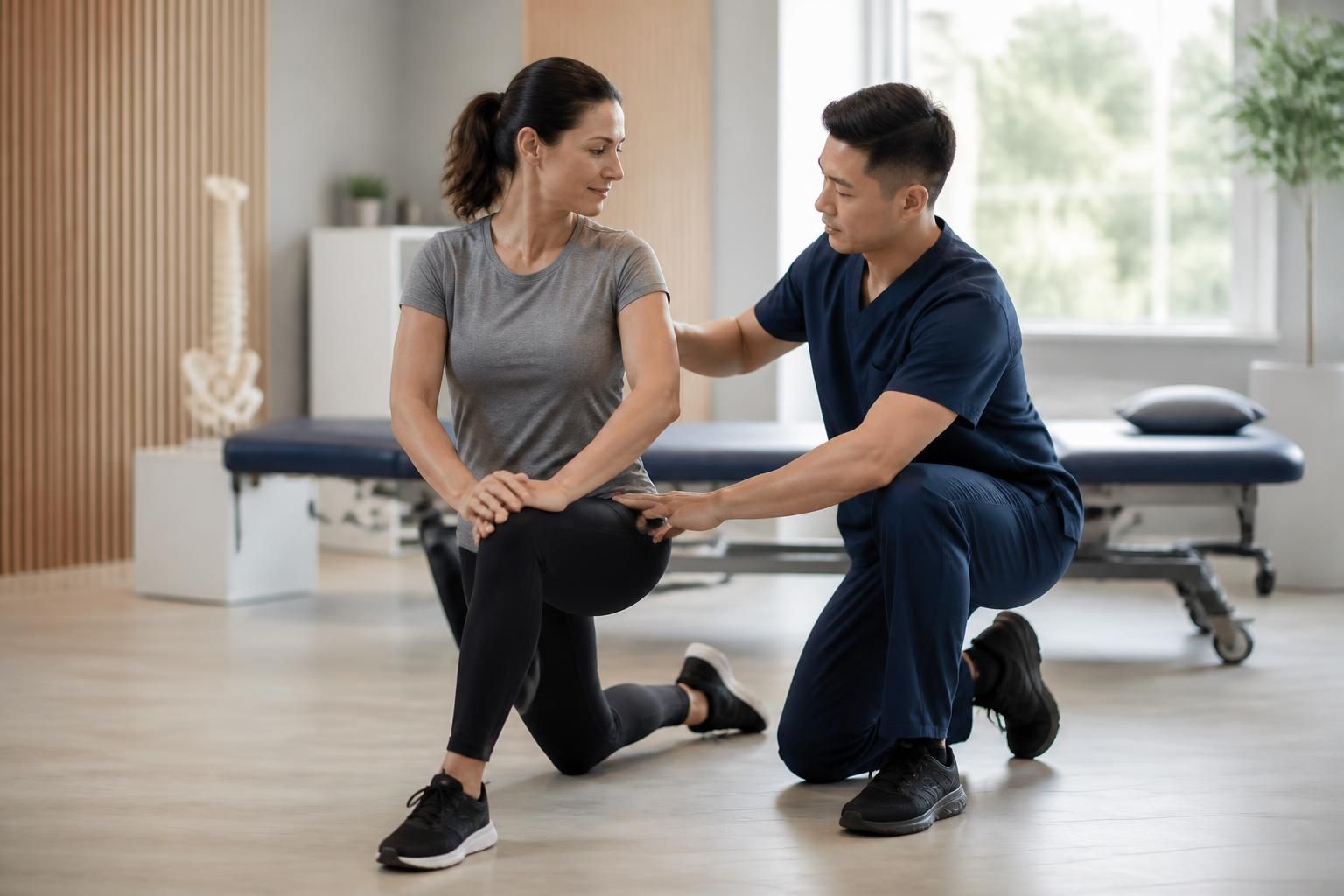
Playing sports is an essential source of well-being, but it can also lead to specific pain such as sciatica, especially among athletes in Lachine. This condition, linked to irritation or compression of the sciatic nerve, can quickly limit mobility and compromise athletic performance. Understanding the mechanisms, precautions to take, and approaches suited to an athlete’s situation is therefore fundamental to limit risks and optimize recovery.
Sciatica symptoms vary depending on the cause and the affected nerve pathway, and management cannot be uniform. For athletes, the balance between rest, adapted exercises, and appropriate treatment is crucial to relieve pain without compromising the dynamics of physical activity. In Lachine, where the athletic population is active in a range of settings, a sensitive and thoughtful approach helps preserve spinal health while maintaining a regular sporting life.


In brief: sciatica and its relationship with sports in Lachine
Pain radiating down the leg, numbness, possible muscle weakness, worsened when sitting or after exertion.
Sudden movements, asymmetric spinal twisting, repetitive-impact sports such as football, or activities requiring rapid changes of direction.
Complete warm-up, targeted stretching, balanced core and leg muscle strengthening, and possible use of a lumbar support belt.
Relative rest, activity adjustments, physiotherapy including possible neurovertebral decompression, osteopathic care, professional support.
Understanding sciatica in athletes: anatomy and common causes
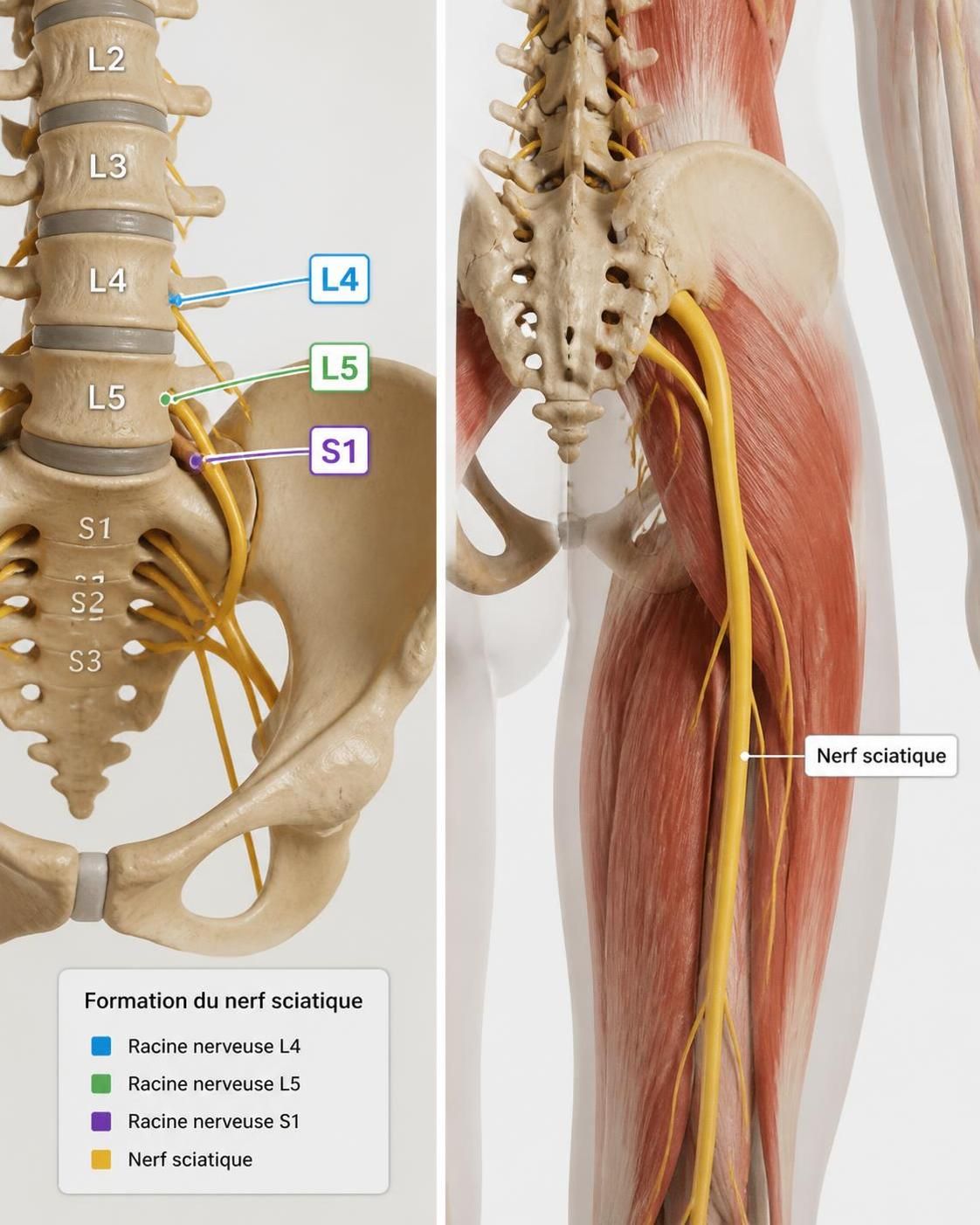
The sciatic nerve, the largest nerve in the human body, originates from the spinal cord at the lumbar level, then travels through the buttock and down the leg. It consists of nerve roots, notably between the L4-L5 and L5-S1 lumbar vertebrae. Irritation or compression at these roots can cause intense pain known as sciatica.
Among athletes in Lachine, several mechanisms can trigger or worsen sciatica. Repeated exertion that places considerable strain on the spine, such as rapid twisting or repetitive impacts, can slightly shift a vertebra or cause disc inflammation, with a pinched nerve or disc herniation that may irritate the nerve root.
In addition, inflammation of the piriformis muscle, located in the pelvis, can lead to peripheral compression of the nerve. This phenomenon is common in certain sports that place intense demands on pelvic mechanics, such as tennis or football. The range of causes highlights the importance of a precise assessment, as the location and type of pain (sciatica, low back pain, femoral neuralgia) vary depending on the root involved and the nature of the injury.
For athletes, it is essential to distinguish disc-related sciatica from piriformis syndrome, which, although similar in symptoms, requires adapted treatment. Underlying this is the complex relationship between posture, movement, and muscle balance, which strongly influences the risk of developing sciatic pain.
Essential precautions for athletes in Lachine with or at risk of sciatica
When symptoms suggesting sciatica arise, it is essential for an athlete in Lachine to modify their activities. It is recommended to avoid sports or movements that cause substantial spinal compression or sudden twisting. For example, running can increase the load on sensitive discs, while certain asymmetric sports such as tennis can lead to muscle imbalances.
Complete bed rest is not recommended, as it promotes muscle stiffness and loss of tone. Instead, relative rest combined with gentle mobilization and stretching exercises is preferable to preserve mobility and facilitate nerve recovery. In particular, targeted stretches for the piriformis, hamstrings, and lumbar muscles help reduce tension on the sciatic nerve.
A complete warm-up before any sport helps prepare the muscles and limit the risk of sudden movement, a key step according to several sports health experts. Wearing a properly fitted lumbar support belt can provide temporary support by limiting excessive spinal movement, but it should not replace lasting muscle strengthening.
Particular attention should be paid to posture, especially during daily activities such as driving or working remotely, which are common in Lachine. Maintaining an appropriate position, with sufficient lumbar support, helps limit strain on the nerve.
List of essential precautions:
- Adjust the intensity and duration of activity according to pain tolerance.
- Choose gradual warm-ups and stretching before and after exertion.
- Avoid sports involving significant lumbar twisting during the painful phase.
- Use an inflatable lumbar support belt during moderately risky activities.
- Monitor your posture regularly, especially in seated or prolonged work settings.
- Consult a professional if pain persists or associated neurological signs occur.
Role and limitations of neurovertebral decompression for athletes in Lachine
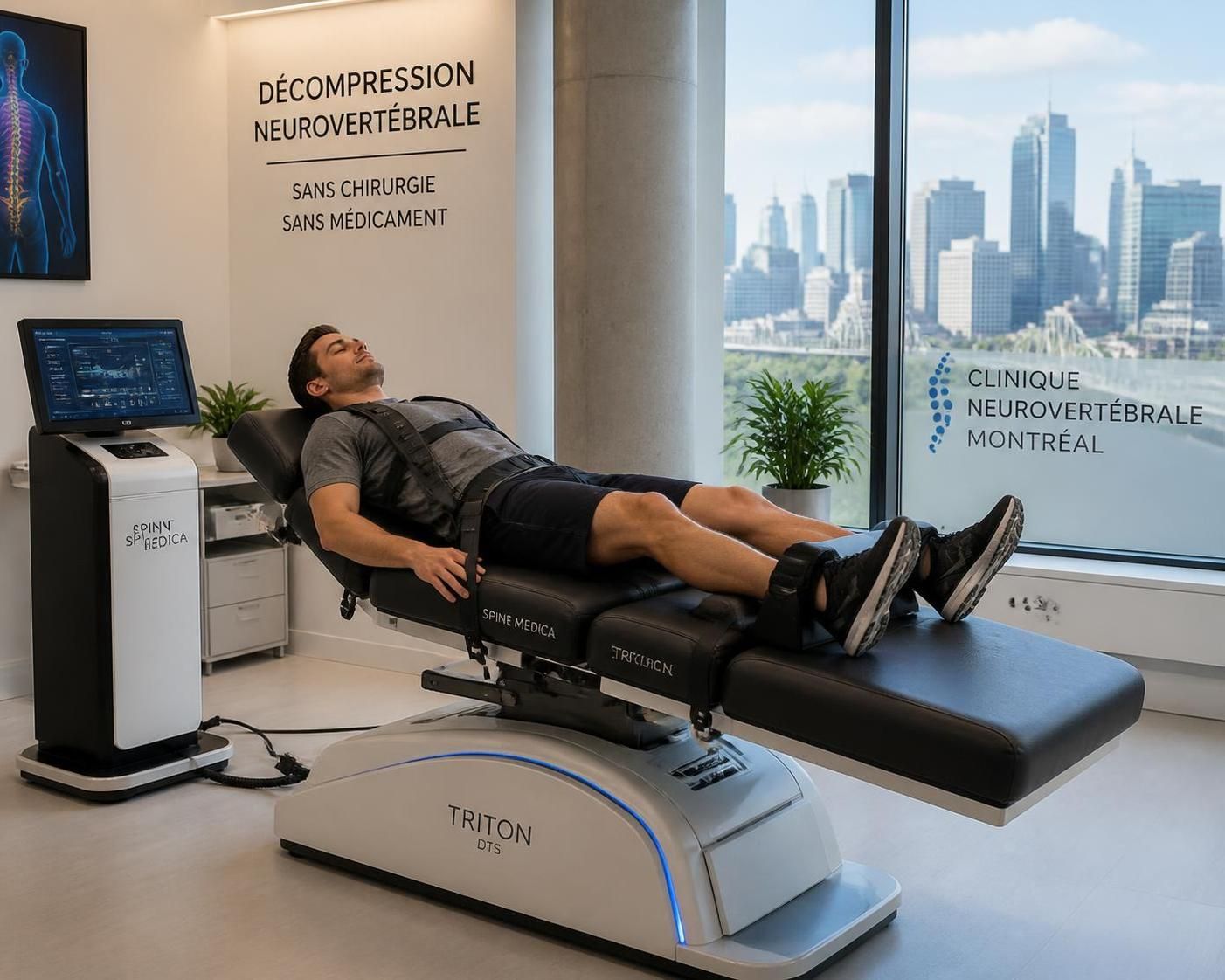
Motorized neurovertebral decompression is a therapeutic option to consider for certain athletes in Lachine with sciatica related to a herniated disc, disc protrusion, or foraminal stenosis. This technique uses gradual, controlled traction to temporarily reduce pressure on nerve roots and intervertebral discs.
However, it is not a universal solution. Patient selection is critical and is based on a thorough clinical assessment, often supplemented by imaging to confirm an appropriate indication. This approach may reduce mechanical stress, improve spinal mobility, and decrease radicular symptoms, without promising a definitive cure or replacing comprehensive medical care.
In addition, the required duration of sessions varies according to symptom intensity and individual response. A personalized approach with interdisciplinary follow-up, including physiotherapy and osteopathy, optimizes outcomes. In the Greater Montreal area, TAGMED Clinic offers personalized support incorporating this approach, adapted for athletes living in Lachine or nearby.
It is important to note that decompression does not replace urgent treatment in the event of severe neurological signs, nor does it rule out other modalities such as specific exercises, medication, or surgery in certain circumstances.
Adapting sports participation and rehabilitation programs to prevent recurrence
A gradual return to sports after a period of sciatica in an athlete from Lachine requires a structured and supervised approach. The goal is to balance resuming movement with protecting vulnerable lumbar and nerve structures. Favouring low-impact sports such as swimming, stationary cycling, or brisk walking helps maintain cardiovascular endurance without worsening pain.
The gradual introduction of muscle-strengthening exercises targeting the core, abdominals, lower back, and leg muscles also plays a central role. These exercises should be supervised to ensure proper performance and prevent harmful compensations.
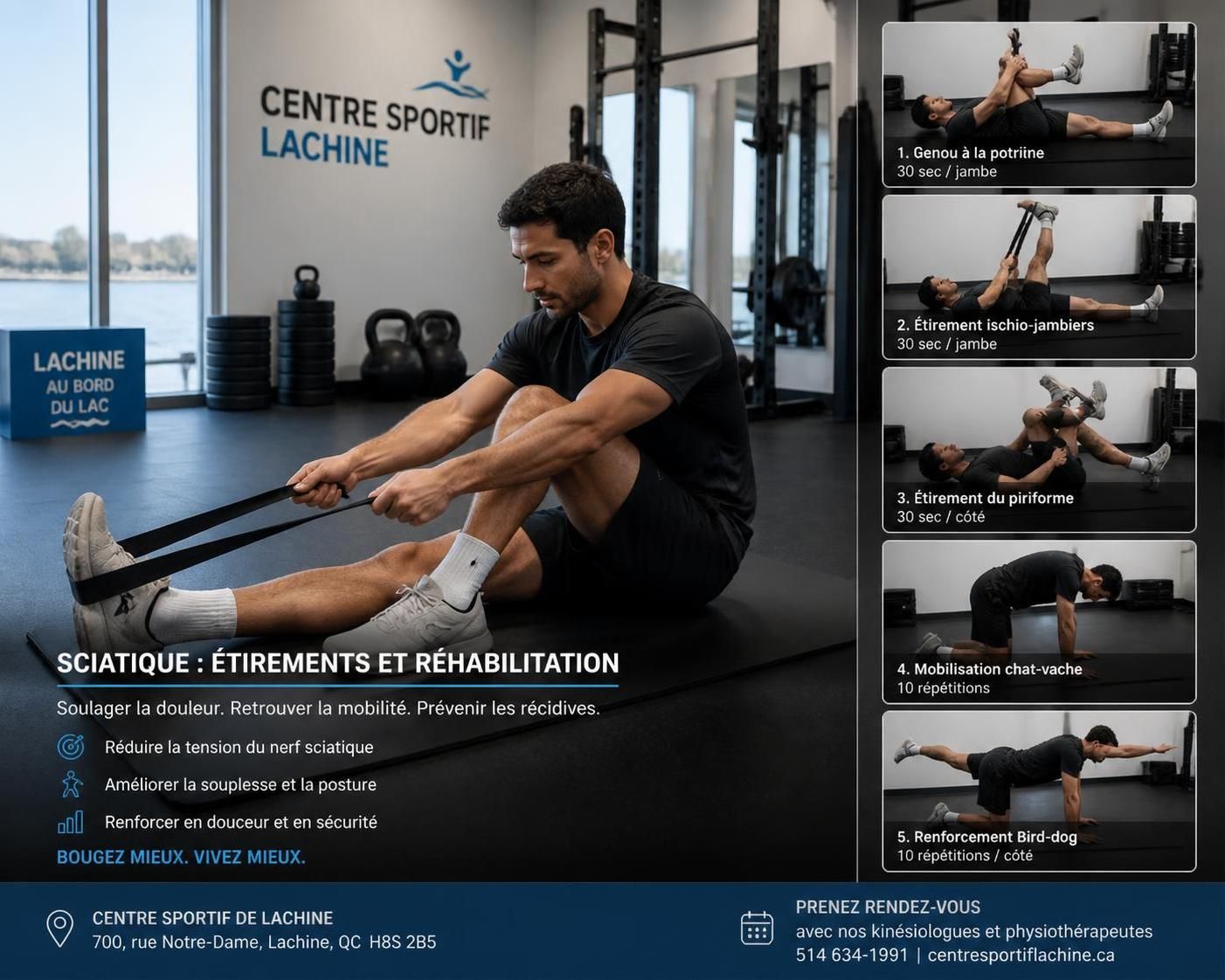
Regular stretching, specifically of the piriformis, hamstrings, and paravertebral muscles, helps maintain the flexibility needed to reduce tension on the sciatic nerve. Postural rehabilitation, including adapted advice for the workstation or frequent driving in Lachine, effectively complements this program.
In addition, regular consultation with a trained professional, such as a physiotherapist specializing in sports osteopathy, allows exercises to be adjusted and precautions adapted according to progress and symptoms.
According to current recommendations, it is best to avoid activities that cause clear sciatic pain and not to persist if nerve symptoms worsen. Returning too quickly or without proper supervision can increase the risk of recurrence or lead to worsening disc injuries.
Comparing preventive and therapeutic strategies for managing sciatica in athletes
| Approach | Benefits | Limitations | Specific indication |
|---|---|---|---|
| Adapted exercises | Maintaining mobility, targeted muscle strengthening, improved posture | May require supervision to avoid errors | Mild to moderate sciatica without motor deficit |
| Motorized neurovertebral decompression | Mechanical reduction of disc pressure, temporary symptom relief | Not suitable for everyone; requires a precise assessment | Compatible disc protrusion or herniation, foraminal stenosis |
| Osteopathic care | Improved joint and muscle mobility, reduced contractures | Not always sufficient on its own for complex cases | Secondary muscle pain and nerve tension |
| Medication (analgesics, anti-inflammatories) | Temporary pain relief | Side effects, does not treat the mechanical cause | Disabling acute pain |
| Adapted rest | Helps reduce initial inflammation | Prolonged rest promotes stiffness and muscle loss | Acute phase of intense pain |
| Surgery | Rapid reduction of nerve compression in cases of major deficit | Surgical risks and recovery period | Significant and persistent neurological deficit |
This comparison highlights the importance of a personalized, gradual approach to managing sciatica in athletes. Coordination among specialists in Lachine and the Greater Montreal area can provide optimal follow-up tailored to specific athletic needs.
{“@context”:”https://schema.org”,”@type”:”FAQPage”,”mainEntity”:[{“@type”:”Question”,”name”:”Quand la douleur doit-elle inciter u00e0 consulter un professionnel?”,”acceptedAnswer”:{“@type”:”Answer”,”text”:”En cas de douleur persistante au-delu00e0 de quelques jours, si elle descend sous le genou, ou su2019accompagne du2019engourdissements, de picotements, de faiblesse musculaire, il est recommandu00e9 de consulter un professionnel. Cela permet une u00e9valuation pru00e9cise et une prise en charge adaptu00e9e.”}},{“@type”:”Question”,”name”:”Est-il su00e9curitaire de pratiquer la natation avec une sciatique?”,”acceptedAnswer”:{“@type”:”Answer”,”text”:”La natation, notamment le dos crawlu00e9, est souvent recommandu00e9e car elle minimise la pression sur la colonne vertu00e9brale et peut aider u00e0 soulager la douleur sciatique. Cependant, il est important de ne pas forcer et du2019adapter la pratique selon la tolu00e9rance.”}},{“@type”:”Question”,”name”:”La du00e9compression neurovertu00e9brale est-elle une solution miracle?”,”acceptedAnswer”:{“@type”:”Answer”,”text”:”La du00e9compression neurovertu00e9brale peut u00eatre bu00e9nu00e9fique pour certains, mais elle nu2019est pas une solution universelle. Les ru00e9sultats varient et une u00e9valuation clinique pru00e9alable est essentielle. Elle ne remplace pas un suivi mu00e9dical complet ni une u00e9ventuelle chirurgie si indiquu00e9e.”}},{“@type”:”Question”,”name”:”Quels exercices sont u00e0 u00e9viter pour les sportifs souffrant de sciatique?”,”acceptedAnswer”:{“@type”:”Answer”,”text”:”Les mouvements qui compressent trop la colonne lombaire, comme les flexions du tronc profondes, les soulevu00e9s de terre mal ru00e9alisu00e9s, ou les sauts ru00e9pu00e9tu00e9s, sont u00e0 u00e9viter car ils peuvent aggraver la sciatique.”}},{“@type”:”Question”,”name”:”Peut-on reprendre le sport rapidement apru00e8s une sciatique?”,”acceptedAnswer”:{“@type”:”Answer”,”text”:”La reprise doit u00eatre progressive, en u00e9coutant les signaux du corps, et souvent sous supervision professionnelle. Une reprise trop rapide ou brutale peut provoquer une ru00e9cidive ou une aggravation des symptu00f4mes.”}}]}When should pain prompt you to consult a professional?
If pain persists for more than a few days, travels below the knee, or is accompanied by numbness, tingling, or muscle weakness, it is recommended to consult a professional. This allows for a precise assessment and adapted care.
Is it safe to swim with sciatica?
Swimming, particularly backstroke, is often recommended because it minimizes pressure on the spine and may help relieve sciatic pain. However, it is important not to push too hard and to adapt the activity according to tolerance.
Is neurovertebral decompression a miracle solution?
Neurovertebral decompression may be beneficial for some people, but it is not a universal solution. Results vary, and a prior clinical assessment is essential. It does not replace comprehensive medical follow-up or possible surgery if indicated.
Which exercises should athletes with sciatica avoid?
Movements that place too much compression on the lumbar spine, such as deep trunk flexion, poorly performed deadlifts, or repeated jumping, should be avoided because they may worsen sciatica.
Can you return to sports quickly after sciatica?
Returning to sports should be gradual, by listening to the body’s signals, and often under professional supervision. Returning too quickly or abruptly can cause recurrence or worsening symptoms.
If you are an athlete in Lachine and experience pain that may suggest sciatica, a personalized assessment can help you identify the likely cause, understand the signs to monitor, and determine the management options best suited to your condition.
Professional support, possibly including motorized neurovertebral decompression and targeted muscle strengthening, is often recommended for a safe return to activity.
Do not hesitate to contact TAGMED Clinic in Mont-Royal to learn more about the available solutions.
Dr. Sylvain Desforges, B.Sc., D.O., N.D., osteopath
This content is educational and does not replace a personalized clinical assessment.
