





For Notre-Dame-de-Grâce residents dealing with sciatica-related pain, falling asleep often becomes a major challenge. The throbbing pain that follows the path of the sciatic nerve disrupts rest, creating a vicious cycle in which pain worsens insomnia and lack of sleep increases sensitivity to pain. However, adjusting your nighttime posture and arranging your sleep environment offer practical ways to ease symptoms and improve sleep quality.
This situation requires a nuanced interpretation that takes into account individual variations in the cause and intensity of symptoms, as well as possible progression based on the nature of the nerve compression. Considering local factors, such as the urban lifestyle in Notre-Dame-de-Grâce, including daily travel and work habits, enhances the understanding of suitable solutions.
In brief: key points for sleeping better despite sciatica
- Preferred positions: sleeping on the non-painful side with a pillow between the knees or on your back with the legs slightly elevated helps reduce pressure on the sciatic nerve.
- Positions to avoid: sleeping on your stomach and asymmetrical postures worsen pain and should be avoided.
- Suitable bedding: an ergonomic mattress, firm but comfortable, combined with an orthopaedic pillow, improves lumbar support and reduces tension.
- Pain-relief routines: gentle stretches and relaxation techniques before bed may help you fall asleep and reduce muscle tension.
- Medical follow-up: a clinical assessment is recommended for persistent pain, numbness, or muscle weakness.
Understanding the impact of sciatica on sleep in Notre-Dame-de-Grâce
Sciatica presents as pain radiating from the lower back into the leg, often worsening at night. This nighttime intensification is mainly caused by compression or irritation of the sciatic nerve, often related to a herniated disc, spinal osteoarthritis, or foraminal stenosis. When lying down, the natural reduction in micro-movements increases mechanical pressure on the nerve root, amplifying the pain.
In the daily context of Notre-Dame-de-Grâce residents, who may combine remote work, urban public transit commutes, and prolonged office-chair postures, this nerve sensitivity takes on a particular dimension. The body, already strained by prolonged and sometimes inadequate sitting, is more likely to experience persistent symptoms.
Symptoms experienced during sleep can vary: tingling, burning, numbness, electric shock-like sensations, or muscle stiffness. These symptoms disrupt the normal sleep cycle, causing frequent awakenings and fragmented sleep, which impairs physical recovery and intensifies the perception of pain.
To understand why some positions provide relief while others worsen pain, it is important to consider that the lumbar spine is subject to different pressures depending on the posture adopted. A recent study shows that nighttime lumbar pressure may vary by as much as 40% depending on position, an essential factor to consider when adapting bedtime habits.
This awareness paves the way for targeted changes in sleep strategies, including the use of appropriate accessories, and makes it possible to offer practical solutions for improving nighttime comfort in this Montréal neighbourhood.
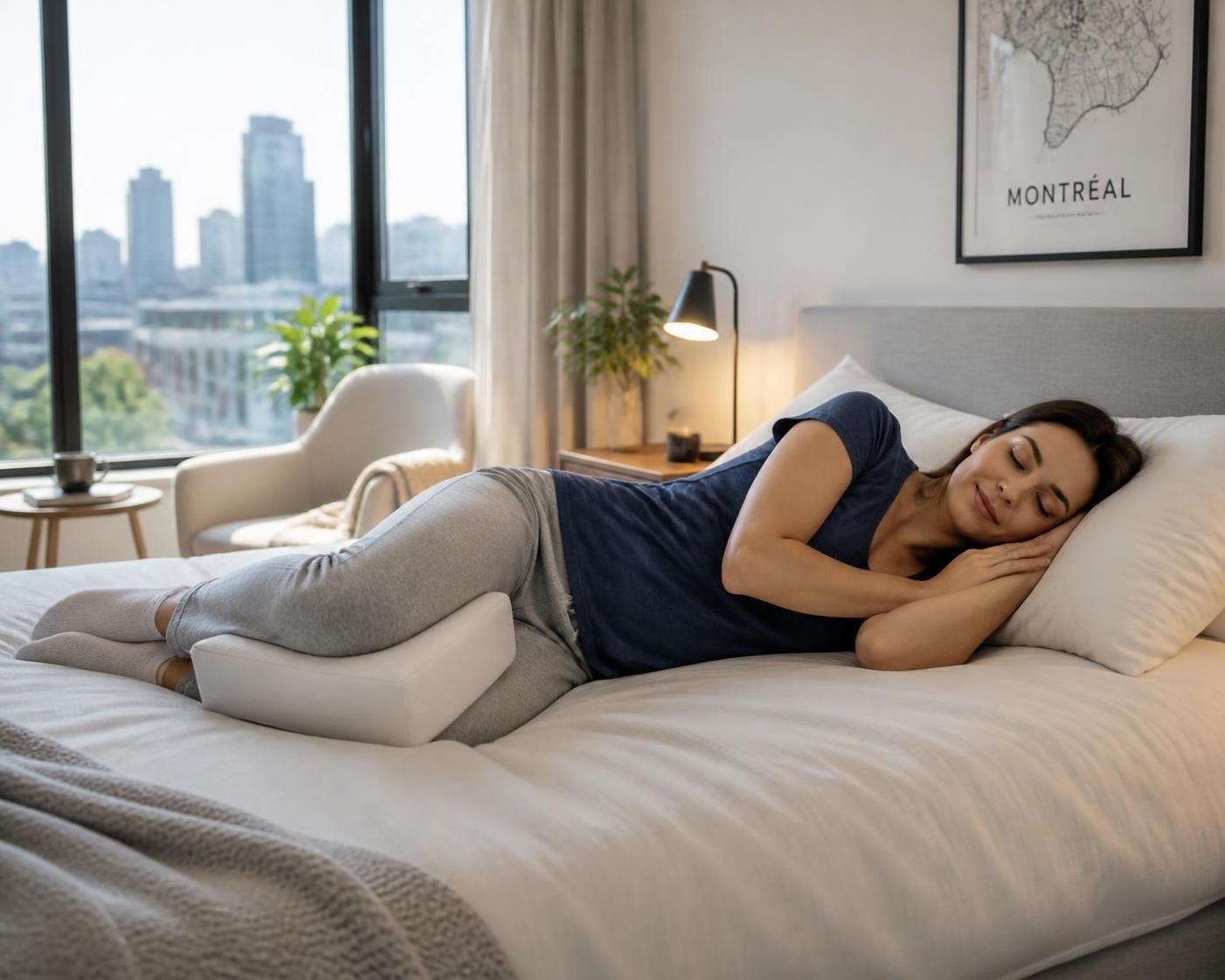
Sleep positions: which ones support sciatica relief?
The choice of sleep position is fundamental in modifying pressure on the sciatic nerve, especially when pain compromises rest. Several postures have been analyzed for their effect on the lumbar spine.
Sleeping on the non-painful side with a pillow between the legs
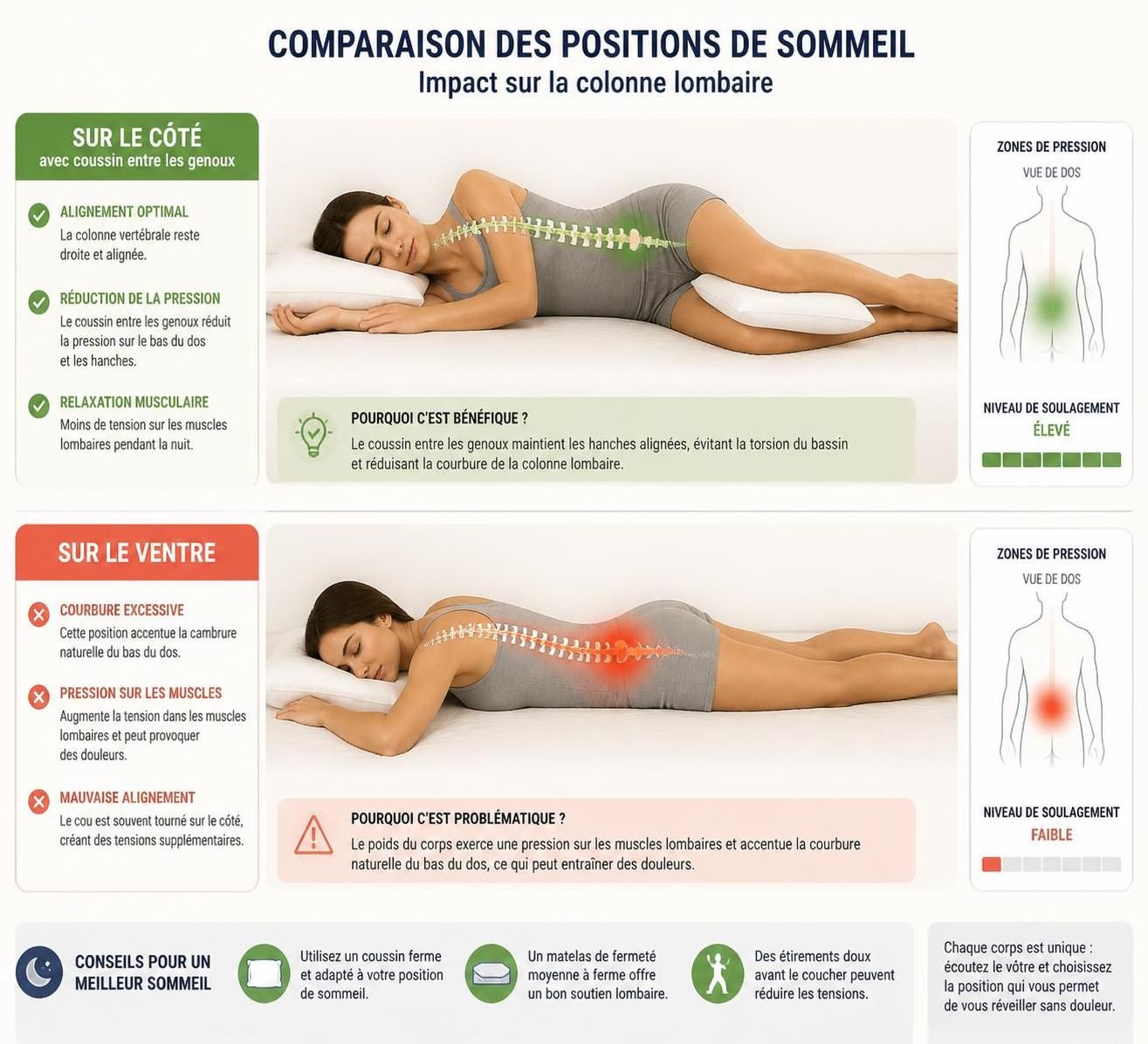
This position is generally recommended. It involves lying on the side where pain is less intense to open the intervertebral space in the lumbar region. The pillow placed between the knees helps keep the hips aligned, preventing excessive lumbar twisting. This posture reduces compression on the nerve root and limits associated muscle spasms.
A beneficial variation is to place a small pillow under the waist to preserve the natural curve of the lower back. Several orthopaedic accessory brands available in Montréal offer pillows specially designed for this use, promoting optimal alignment.
Back-sleeping position with elevated legs
When lying on your back, placing a pillow or bolster under the knees reduces the lumbar curve. This posture helps relax the paravertebral muscles and reduce tension accumulated during the day, particularly after a seated commute or a day of desk work, as is often the case for Notre-Dame-de-Grâce residents.
An ergonomic cervical pillow may sometimes complement this position by supporting the head properly and avoiding secondary neck tension. This posture is particularly suitable for people who tolerate side sleeping less well during the night.
Modified fetal position and the importance of alternating positions
The so-called “modified fetal” position involves slightly bending the knees while sleeping on the non-painful side. This slight curl opens the intervertebral spaces further, which may relieve nerve compression. Alternating this position with a back-sleeping position during the night helps prevent muscle fatigue and limits the formation of painful pressure points.
Postures to avoid to preserve nighttime comfort
Sleeping on your stomach, common among some people, should be avoided with sciatica. This posture causes lumbar hyperextension, which increases the natural curve and pressure on the sciatic nerve. In addition, sleeping with crossed legs or a rotated pelvis causes forced lumbar twisting, worsening pain and burning sensations.
An unsuitable mattress, whether too soft or too firm, can also increase these nighttime stresses, overloading sensitive areas of the spine.
To learn more about suitable positions provides a comprehensive overview of postures to favour and those to avoid.
Comparison table of sleep positions and their impact on sciatica
| Position | Benefits | Drawbacks | Recommendation for sciatica |
|---|---|---|---|
| On the non-painful side with a pillow | Aligns the pelvis, relieves nerve pressure, reduces awakenings | Requires a suitable pillow | Recommended |
| On the back, legs elevated | Relaxes the lower back and muscles, maintains the natural curve | May be uncomfortable for some | Recommended with caution |
| On the stomach | None | Increases lumbar curvature, increased nerve pressure | Avoid |
| Painful side-lying position or twisting | No relief, worsens pain | Increases compression, muscle fatigue | Avoid |
Optimizing bedding and incorporating soothing bedtime practices
Sleep comfort is a key element in reducing the nighttime impact of sciatica in Notre-Dame-de-Grâce. The mattress should balance firm support, to keep the spine straight, with some flexibility to reduce painful pressure points. Models offering memory foam or a pocket-coil system are often recommended.
An ergonomic pillow suited to the sleep position contributes to overall spinal alignment by supporting the neck or legs according to the posture adopted.
In addition, certain simple measures can prepare the body for rest and ease pain:
- Perform gentle stretches targeting the lower back and sciatic nerve, such as the lying fetal position, pelvic tilt, or piriformis stretch, which may reduce muscle tension.
- Apply a warm hot-water bottle or heat patch to the lumbar region to relax muscle spasms.
- Use deep-breathing or progressive relaxation techniques before falling asleep, helping reduce stress and the perception of pain.
These habits are especially helpful in an urban environment such as Notre-Dame-de-Grâce, where daily demands may perpetuate muscle and nerve tension.
The choice of textiles, such as soft cotton sheets and loose-fitting pajamas, also helps improve overall nighttime comfort while minimizing discomfort from friction or heat.
If persistent pain, numbness, or muscle weakness develops despite these adjustments, a consultation at a specialized clinic is recommended. A comprehensive assessment will help consider appropriate treatment options, potentially including motorized neurovertebral decompression offered by Montréale specialists.
Adapting daily life and knowing when to seek care in Notre-Dame-de-Grâce
Beyond nighttime, certain daily-life factors affect the severity and frequency of sciatic pain. Prolonged sitting, common among remote workers and public transit users in Montréal, often worsens nerve irritation.
Walking, especially with frequent stairs, may both provide relief through movement and worsen pain with excessive exertion. It is important to adjust physical activity according to individual tolerance.
Several signs warrant prompt consultation:
- Persistent or recurrent pain radiating below the knee.
- Numbness, tingling, or progressive weakness in the leg.
- Loss of motor function or bladder or bowel problems.
- Significant sleep disruption despite adaptations.
In these situations, medical or allied health intervention becomes necessary to consider specific treatments suited to the severity and cause of the problem. Notre-Dame-de-Grâce residents have easy local access to specialized clinics such as Clinique TAGMED, where approaches such as motorized neurovertebral decompression are offered based on the assessment.
This video illustrates positions that may relieve pressure on the sciatic nerve during the night, along with practical tips for improving sleep.
A routine of targeted stretches performed before bedtime may help relax the muscles and reduce sciatic pain.
Practical solutions for improving sleep with sciatica in Notre-Dame-de-Grâce
A conservative approach remains the first line of intervention for most cases of sciatica. Understanding the possible causes of sciatica guides the adjustment of postures and movements to regain better sleep.
Key steps include:
- Reviewing nighttime posture: favour supported side-lying positions or elevated back-sleeping positions to reduce nerve compression.
- Improving bedding: choose a suitable ergonomic mattress as well as validated orthopaedic accessories.
- Incorporating stretches and relaxing routines: these measures prepare the body for rest and reduce muscle tension.
- Consulting a professional: if warning signs occur, a prompt assessment is important to consider more targeted treatments, potentially including neurovertebral decompression.
Motorized neurovertebral decompression is a controlled traction technique that may be offered according to the patient’s profile and after a thorough medical assessment. This method aims to temporarily reduce pressure on the discs and nerve roots, particularly in cases of disc protrusion or foraminal stenosis. It should be noted that this option is not suitable for all cases and that results vary significantly depending on the specific diagnosis.
Finally, it is essential not to ignore intense pain episodes or neurological changes, which require urgent medical care.
To learn more about motorized neurovertebral decompression and its role in treating sciatica.
What is the best position for sleeping with sciatica?
Sleeping on the non-painful side with a pillow between the knees or on your back with a pillow under the legs is generally recommended to reduce pressure on the sciatic nerve.
Should sleeping on the stomach be avoided with sciatica?
Yes, this position increases lumbar curvature and may worsen sciatic pain, so it is preferable to avoid it.
What signs indicate that you should see a specialist?
Persistent pain below the knee, muscle weakness, loss of sensation, or urinary problems require a prompt medical assessment.
Is a firm mattress always preferable?
A medium-firm mattress that provides good support without creating pressure points is ideal for most people with sciatica.
Is neurovertebral decompression suitable for all cases of sciatica?
No, this intervention requires a prior assessment to determine whether it is appropriate for the individual case. Results are not guaranteed for everyone.
Sciatica-related pain can have a lasting impact on your sleep and quality of life in Notre-Dame-de-Grâce. A personalized assessment can help better understand your situation, identify signs to watch for, and establish suitable solutions to improve your comfort and promote restorative rest.
Schedule a sciatica assessment in Montréal
Dr. Sylvain Desforges, B.Sc., D.O., N.D., osteopath
This content is for educational purposes and does not replace a personalized consultation with a health-care professional.
