






Persistent sciatic pain in Saint-Léonard represents a significant challenge for many people living with chronic discomfort that limits their daily activities. When initial treatments do not provide the expected relief, it becomes essential to question their suitability and consider a medical reassessment to tailor care. Sciatica results from irritation or compression of the sciatic nerve, often related to a herniated disc, foraminal stenosis, or other mechanical disorders of the lumbar spine. This pain may present as burning sensations, electric-shock-like pain, or tingling radiating from the lower back to the foot, sometimes with associated muscle weakness.
In Saint-Léonard, where remote work and public transit commuting are common, prolonged sitting postures can worsen symptoms. Persistent nerve pain makes it necessary to distinguish cases in which a simple adjustment to conservative treatments is sufficient from those requiring more targeted care, potentially including motorized neurovertebral decompression or specialized medical intervention. Understanding when to change treatment can help prevent pain from becoming chronic while improving the quality of life of affected patients.
![CB2 Natural Pain Relief Oil [TOPICAL] - Extra Stength Pain Relief for Arthritis, Inflammation, Nerve, Joint & Muscle Pain, Neuropathy, Sciatica, More Effective Than Hemp Pain Relief Cream, Natural Ingredients, Made in Canada, 50mL](https://m.media-amazon.com/images/I/61rGLQYyf0L._AC_UL320_.jpg)


In brief: key points for understanding persistent sciatic pain in Saint-Léonard
- Persistent sciatic pain is often linked to prolonged compression of the sciatic nerve, requiring a precise assessment to tailor treatment.
- Initial conservative treatments include pain medications, NSAIDs, physiotherapy, and exercises, but may sometimes prove insufficient.
- A change in treatment should be considered if pain remains after several weeks, symptoms worsen, or concerning neurological signs appear.
- Motorized neurovertebral decompression is an option to consider for certain patient profiles in Saint-Léonard, following a complete clinical assessment.
- Seek prompt medical advice in the event of significant weakness, bowel or bladder dysfunction, or rapidly worsening severe pain, as these signs require urgent follow-up.
Understanding persistent sciatic pain: mechanisms and causes in Saint-Léonard
Sciatic pain results from irritation or compression of the sciatic nerve, the longest nerve pathway extending from the lower back through the buttock and into the leg. In Saint-Léonard, as elsewhere, this pain indicates an underlying issue that should be identified precisely before changing or intensifying treatment. The main causes include a herniated disc, in which a fragment of the intervertebral disc places pressure on the nerve root.
However, other causes such as foraminal stenosis—a narrowing of the spaces through which nerves pass—can also lead to persistent sciatic pain. These mechanical stresses cause local inflammation, responsible for burning sensations and radiating pain. In Saint-Léonard, a sedentary lifestyle combined with prolonged sitting at work, particularly in offices or while working remotely, can worsen this phenomenon and maintain nerve irritation.
An important distinction must be made between radicular pain, which follows the path of the sciatic nerve, and simple low back pain, which remains localized in the lower back. Sciatic pain is often accompanied by numbness, tingling, or even specific muscle weakness depending on the affected nerve root (L4, L5, S1). For example, irritation of the L5 root may cause weakness when lifting the foot, whereas S1 root involvement often affects the ability to stand on tiptoes.
Lastly, some patients in Saint-Léonard should pay particular attention to symptoms such as difficulty walking, urinary problems, or bilateral pain, which may suggest a complication requiring prompt medical assessment. The complexity of these mechanisms calls for a multidisciplinary approach to help prevent progression to chronic sciatica.
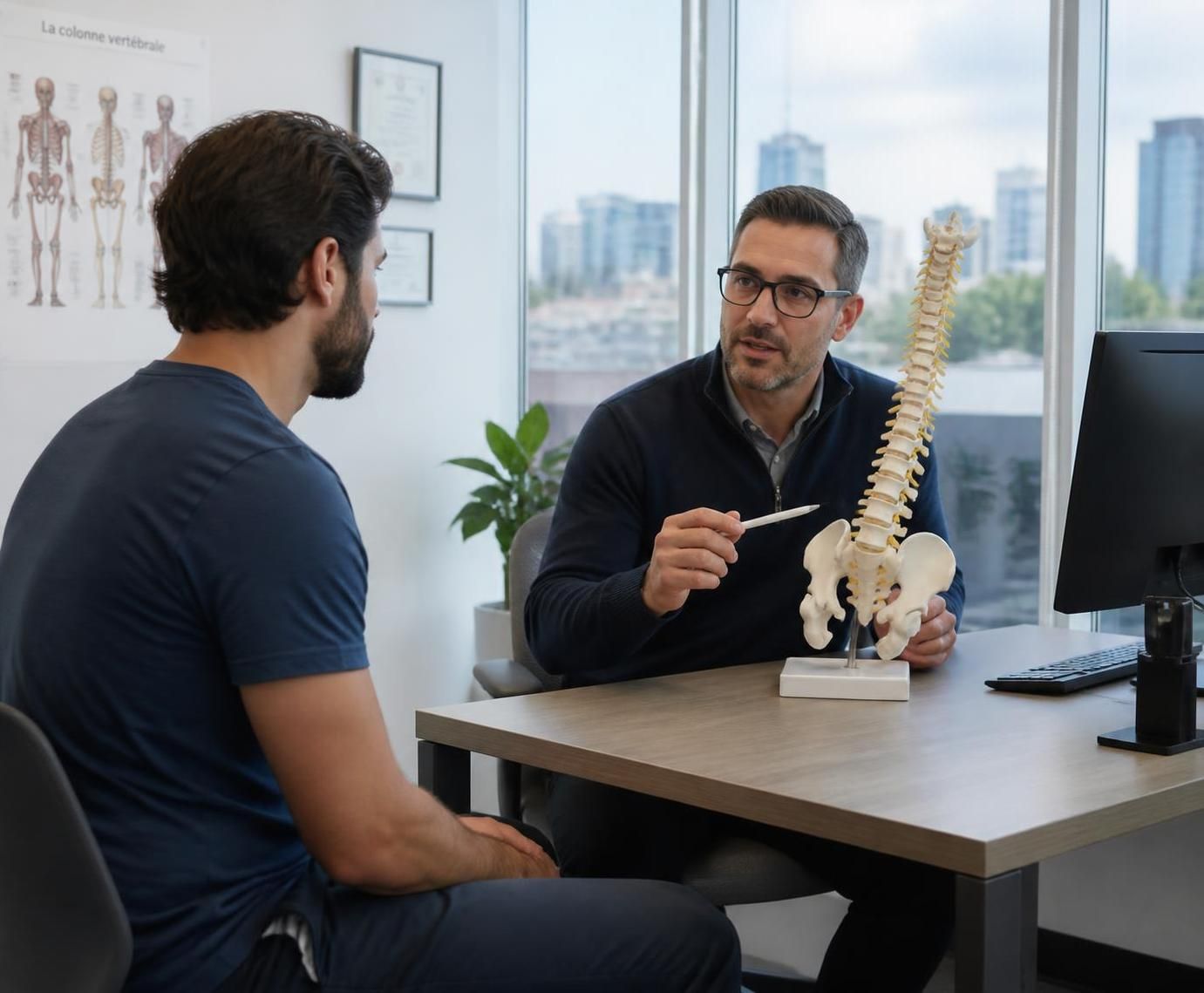
Factors influencing the persistence and changes in sciatic symptoms
Several factors can alter the intensity or nature of sciatic pain in Saint-Léonard. Prolonged sitting, common in office jobs or remote work, can worsen nerve compression and sustain inflammation. For example, remaining seated for more than 30 minutes without changing position often worsens pain or triggers tingling sensations in the leg.
Conversely, moderate physical activity, such as walking or swimming, tends to improve regional blood circulation and partially reduce pressure on the nerve root. However, it is important to emphasize that each patient may respond differently: a movement that benefits some people may trigger a flare-up of pain in others.
Certain daily activities, such as lifting a heavy load, bending frequently, or participating in high-impact sports, can trigger pain or its recurrence. In addition, sleep quality may be disrupted by pain, creating a vicious cycle that reduces the body’s ability to recover.
In Saint-Léonard, symptom management may also be influenced by psychosocial factors, including stress or fatigue related to commuting or balancing work and family life. These non-physical factors should not be overlooked in a holistic treatment approach. Recommendations should therefore be tailored to each patient’s individual circumstances.
In the event of persistent pain, regular reassessment by a professional in Saint-Léonard is essential to adjust treatment, assess neurological changes, and prevent chronic pain, a common issue when pain becomes resistant to conventional approaches.
List of aggravating or relieving behaviours to consider
- Prolonged sitting without breaks is a common aggravating factor.
- Appropriate physical activity (walking, swimming) tends to improve symptoms.
- Sudden movements and lifting heavy loads can trigger pain.
- Managing stress and sleep are important factors in reducing pain.
- Changing posture at work (ergonomic workstation) can provide significant relief.
When should you consider changing treatment for persistent sciatica in Saint-Léonard?
Changing treatment for persistent sciatic pain is primarily based on a complete reassessment of the clinical situation. If pain continues beyond 6 to 8 weeks despite appropriate treatment—often including pain medications, anti-inflammatory medications, and a physiotherapy program—it is appropriate to consult a health-care professional to consider other options.
In particular, patients in Saint-Léonard should remain alert to changes in their symptoms. The onset of muscle weakness, loss of sensation, or bowel or bladder dysfunction, such as urinary difficulties or changes in bowel movements, requires urgent consultation. In addition, pain that worsens quickly despite following recommendations or that now limits walking or everyday activities deserves particular attention.
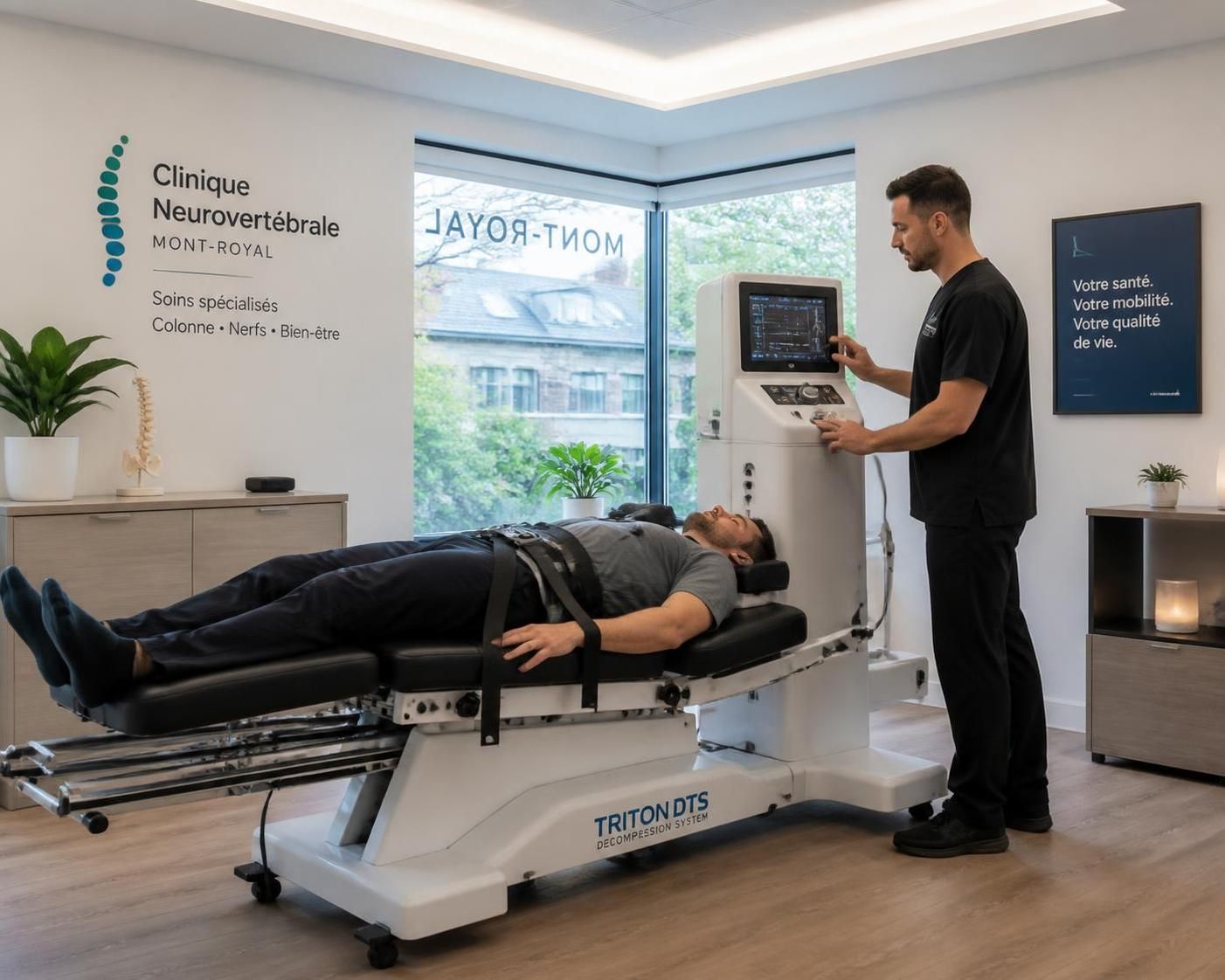
This may involve changing medication, by assessing whether more targeted anti-inflammatory medications, muscle relaxants, or even corticosteroid injections are indicated according to the patient’s profile. In addition, some cases may benefit from complementary approaches such as motorized neurovertebral decompression, a technique used at Clinique TAGMED in Mont-Royal that may provide relief by decreasing mechanical pressure on nerve roots.
This decompression, performed through gradual, controlled spinal traction, is not suitable for everyone but is a non-invasive alternative for certain patients who are appropriate candidates with a herniated disc or foraminal stenosis. Rigorous clinical supervision and appropriate patient selection are essential to optimize outcomes.
Lastly, changing treatment often involves reviewing therapeutic exercises, strengthening postural correction, and sometimes multidisciplinary support integrating physiotherapy, osteopathy and ergonomic advice tailored to Montréal’s realities.
Comparison of treatment options for persistent sciatica in Saint-Léonard
| Treatment | Indications | Benefits | Limitations and precautions |
|---|---|---|---|
| Pain medications and anti-inflammatory medications | Moderate to severe pain without motor deficit | Rapid pain reduction; readily accessible | Possible side effects; does not treat the cause |
| Physiotherapy and tailored exercises | Persistent pain without a neurological emergency | Improved function; prevention of recurrence | Results vary depending on adherence; prolonged duration |
| Corticosteroid injections | Refractory pain after unsuccessful conservative treatments | Moderate to high effectiveness; rapid relief | Risk of infection; side effects; limited repetition |
| Motorized neurovertebral decompression | Selected disc protrusion, herniation, or foraminal stenosis | Non-invasive; reduces mechanical pressure on nerve roots | Not suitable for everyone; variable outcomes; requires clinical opinion |
| Surgery (discectomy or decompression) | Significant motor deficit; cauda equina syndrome; disabling pain | Rapid, lasting results; anatomical correction | Surgical risks; recovery period; not routinely indicated |
Patients in Saint-Léonard have good access to qualified professionals to guide treatment choices, including specialized centres such as Clinique TAGMED in Mont-Royal. The goal is always to find a balance among effectiveness, safety, and the patient’s ability to follow treatment over the long term.
Adopting a tailored strategy in Saint-Léonard for lasting relief from sciatic pain
In daily life, managing sciatic pain in Saint-Léonard involves combining different complementary strategies. Adapting the ergonomic workspace, for example by adjusting chair height or backrest tilt, can significantly reduce strain on the lower back. Regular breaks and gentle stretching are recommended to prevent stiffness.
Incorporating targeted exercises recommended by a trained physiotherapist is essential to strengthen the back’s stabilizing muscles and improve spinal mobility. These exercises must be individualized, and their progression carefully monitored to avoid any worsening.
Care may be supplemented with specific osteopathy, a complementary approach offered locally that aims to release muscle and joint tension, although its effects remain dependent on individual cases. Moderate use of heat or cold may also provide temporary relief during the acute or subacute phase.
Lastly, although medication may sometimes be necessary, it is essential to use it under medical supervision to limit adverse effects. Clear communication among the patient, health-care professional, and clinic in Saint-Léonard allows for optimal coordination of care.
Local and online resources, such as information on signs indicating when to seek care or appropriate treatments for sciatica, are also valuable for better understanding the condition and engaging in an active recovery process.

When should you consider changing treatment for persistent sciatica?
A change is recommended if pain persists beyond 6 to 8 weeks despite appropriate treatment, worsens, or is accompanied by neurological signs such as weakness or urinary problems.
Is neurovertebral decompression a solution for all cases of sciatica?
This method is suitable only for certain selected profiles with compatible mechanical nerve compression and following a thorough professional assessment.
How can virtual care help manage persistent sciatic pain?
Virtual care allows for an initial, precise assessment of symptoms and directs the patient toward appropriate care, while recognizing that an in-person clinical examination is often still necessary.
What warning signs require urgent medical consultation?
Loss of bladder or bowel control, genital numbness, marked motor weakness, or rapidly progressing pain should prompt urgent consultation.
What advice can help prevent sciatic pain from becoming chronic?
Maintaining appropriate physical activity, adopting good posture at work, managing stress, and closely following treatment recommendations are key elements in preventing chronic pain.
If you have persistent sciatic pain in Saint-Léonard and your current treatment does not provide sufficient relief, a professional assessment can help clarify the likely cause and options suited to your situation. This approach includes monitoring for warning signs and exploring solutions such as care at Clinique TAGMED, combining neurovertebral decompression and manual care.
Provided safely and at a pace that respects each individual, this approach aims to improve your comfort without unrealistic promises.
Dr. Sylvain Desforges, B.Sc., D.O., N.D., osteopath
This content is educational and does not replace a personalized assessment by a health-care professional.
