

Neck pain extending into the arm. The term describes a distribution without by itself confirming radiculopathy.
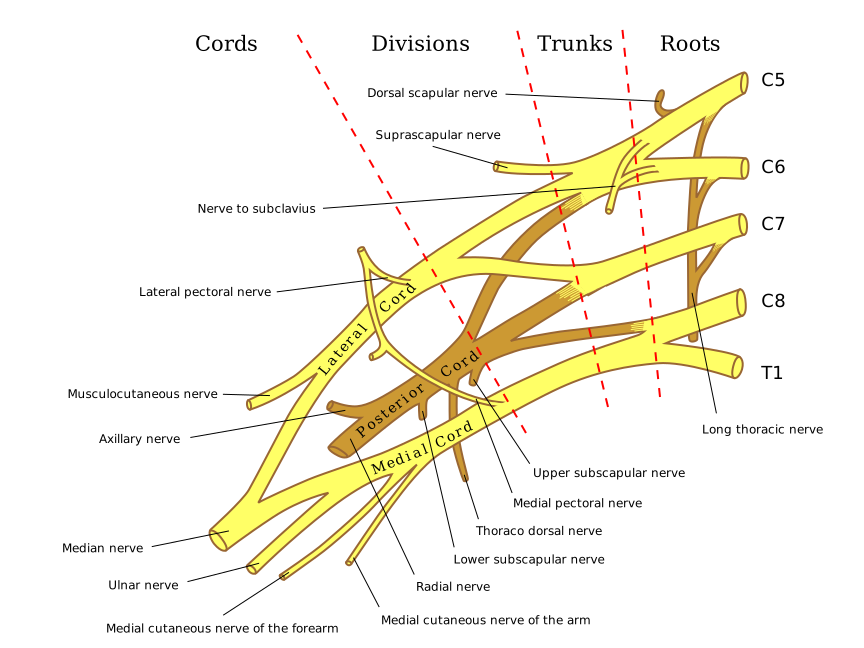
Mattopaedia, Captain-n00dle et MissMJ, d’après Gray’s Anatomy (1918) — Domaine public — PD-self. Image source.

Understanding the mechanism
Cervicobrachial pain describes pain involving the neck and arm. It is a distribution of symptoms, not proof of nerve compression. Cervical radiculopathy, referred muscular pain, a shoulder disorder or a peripheral nerve entrapment can produce this presentation. More than one mechanism may coexist, which is why treatment should not be selected from the label alone.
Symptoms and warning signs
It helps to identify whether symptoms reach the shoulder blade, elbow, wrist or particular fingers and whether tingling or weakness is present. Pain reproduced by shoulder movement may have a different origin from pain provoked by neck movement. Arm pain accompanied by chest pressure, shortness of breath or sweating requires emergency assessment rather than a musculoskeletal appointment.
Diagnosis and investigations
Examination considers the cervical spine, shoulder and peripheral nerves separately. Strength, sensation, reflexes and coordination help localize the problem. Imaging and electrodiagnostic tests are chosen to answer specific clinical questions rather than ordered as a routine package. Cervical spondylosis on a scan does not establish that every painful sensation in the arm is coming from the neck.
Treatment and outlook
Management may combine temporary task modification, neck and shoulder-girdle exercises and a gradual return to loading. Persistent symptoms or neurological deficits require reassessment of the initial explanation. A shoulder tendon disorder and a nerve-root problem need different approaches. Medication, an injection or a surgical opinion may be considered through the appropriate medical professional when the findings justify it.
The role of TAGMED care
At TAGMED, manual care, movement advice or consideration of traction depends on the source identified during assessment. Arm pain alone is not an indication for spinal decompression. Laser and shockwave therapy have specific musculoskeletal applications rather than a universal role in cervicobrachial pain. Signs of spinal cord dysfunction or progressive weakness make medical assessment the priority.
Practical follow-up
A personal sketch of the painful distribution and a list of difficult activities can make the consultation more informative. Distinguishing pain, fatigue and actual loss of strength helps the clinician choose different examinations, investigations and appropriate next steps.
Frequently asked questions
Is it the same as radiculopathy?
No. Radiculopathy specifically involves impaired function of a nerve root.
Can neck pain be felt in the shoulder?
Yes, but a local shoulder condition can also produce symptoms in nearby areas.
Does tingling identify the exact level?
No. Sensory territories overlap, so examination is still needed.
Can ergonomic changes be enough?
They may reduce certain loads but cannot explain or resolve every cause.
What should follow-up measure?
Strength, sleep, movement and the everyday activities that are actually restricted.
Conceptual diagram: the steps depend on clinical findings and do not provide an individual diagnosis.
Medical references
- American Academy of Orthopaedic Surgeons. Cervical Radiculopathy (Pinched Nerve).
- Johns Hopkins Medicine. Our Nerve Entrapment Approach.
- Johns Hopkins Medicine. Thoracic Outlet Syndrome.
- NICE. Low back pain and sciatica in over 16s: assessment and management (NG59).
References document the topic; their inclusion does not imply endorsement of TAGMED services by those organizations.
Educational information from The Spine Page. This entry does not replace an individual assessment. Documentary version: October 12, 2026. Sylvain Desforges, B.Sc., D.O., N.D., osteopath and naturopath.
TAGMED clinic contact details
For non-urgent consultations and information about available services.
Clinique TAGMED — Terrebonne
1150, rue Lévis, Suite 200
Terrebonne (Québec) J6W 5S6
450‑704‑4447
Clinique TAGMED — Montréal
1140, avenue Beaumont
Mont-Royal (Québec) H3P 3E5
1‑877‑672‑9060