

Degenerative changes of the cervical spine that may involve discs, joints and neighbouring structures.
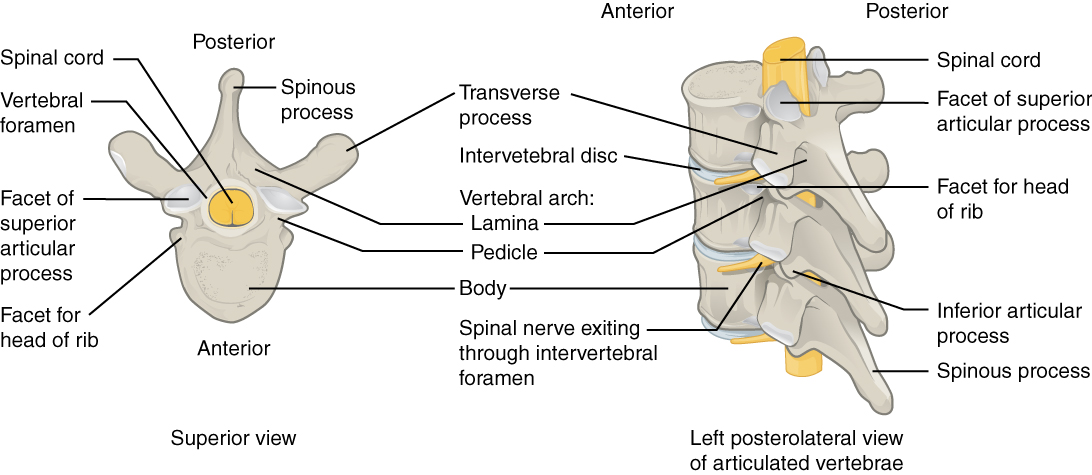
OpenStax College — CC BY 3.0. Image source.

Understanding the mechanism
Cervical spondylosis describes degenerative changes involving neck discs, vertebral endplates and joints. Reduced disc height and bone spurs can alter the spaces surrounding neural structures. These changes become common with age but may remain symptom-free. Spondylosis should not be confused with spondyloarthritis, which belongs to a different group of inflammatory diseases and requires a different assessment.
Symptoms and warning signs
Stiffness, neck pain or discomfort when turning the head can occur. Arm pain with neurological loss raises concern for radiculopathy. Hand clumsiness, unsteady walking or leg stiffness may indicate myelopathy. Such neurological features need prompt assessment even when neck pain is mild. The absence of severe pain does not reliably indicate that spinal cord function is normal.
Diagnosis and investigations
Assessment is primarily clinical and may include neck movement, shoulder examination, strength, reflexes, sensation and walking. Radiographs show some bone changes; MRI evaluates the cord and roots when indicated. Older scans do not prove that a new symptom has the same cause as a previous episode. Deterioration or an unusual context should prompt reconsideration of the initial explanation.
Treatment and outlook
For uncomplicated neck pain, gradual movement, strengthening and activity modification may be appropriate. Medication is individualized through the prescriber. Neural involvement changes the goals and may require specialist review. Surgery addresses selected compressions or instability; it is not necessary for every imaging report mentioning spondylosis. Clinical response should be assessed through useful activities as well as pain.
The role of TAGMED care
At TAGMED, any intervention aims at comfort and function rather than claiming to rejuvenate discs. Cervical traction should only be considered after examination and exclusion of contraindications. Suitable manual care can support activity. A technique that produces sustained worsening of neurological symptoms requires reassessment, and suspected myelopathy calls for medical referral rather than a trial of increasingly forceful treatment.
Practical follow-up
For daily activities, specify whether symptoms limit driving, reading or use of the hands. This helps individualize goals. Practical adjustments may be useful, but they should not conceal worsening walking or dexterity that calls for a different medical response.
Frequently asked questions
Is cervical spondylosis inevitably painful?
No. Many people have degenerative neck findings without meaningful symptoms.
Are neck noises dangerous?
An isolated noise does not measure severity; the context and associated findings matter.
Should the neck be immobilized?
Prolonged immobilization without an indication can limit capacity; activity is individualized.
Can conservative treatment remove bone spurs?
It does not remove them, but their presence does not always require treatment.
Which change deserves particular attention?
Worsening walking or hand dexterity, which can indicate more than joint pain.
Conceptual diagram: the steps depend on clinical findings and do not provide an individual diagnosis.
Medical references
- American Academy of Orthopaedic Surgeons. Cervical Radiculopathy (Pinched Nerve).
- American Academy of Orthopaedic Surgeons. Cervical Spondylotic Myelopathy.
- NIAMS. Osteoarthritis.
References document the topic; their inclusion does not imply endorsement of TAGMED services by those organizations.
Educational information from The Spine Page. This entry does not replace an individual assessment. Documentary version: October 12, 2026. Sylvain Desforges, B.Sc., D.O., N.D., osteopath and naturopath.
TAGMED clinic contact details
For non-urgent consultations and information about available services.
Clinique TAGMED — Terrebonne
1150, rue Lévis, Suite 200
Terrebonne (Québec) J6W 5S6
450‑704‑4447
Clinique TAGMED — Montréal
1140, avenue Beaumont
Mont-Royal (Québec) H3P 3E5
1‑877‑672‑9060