




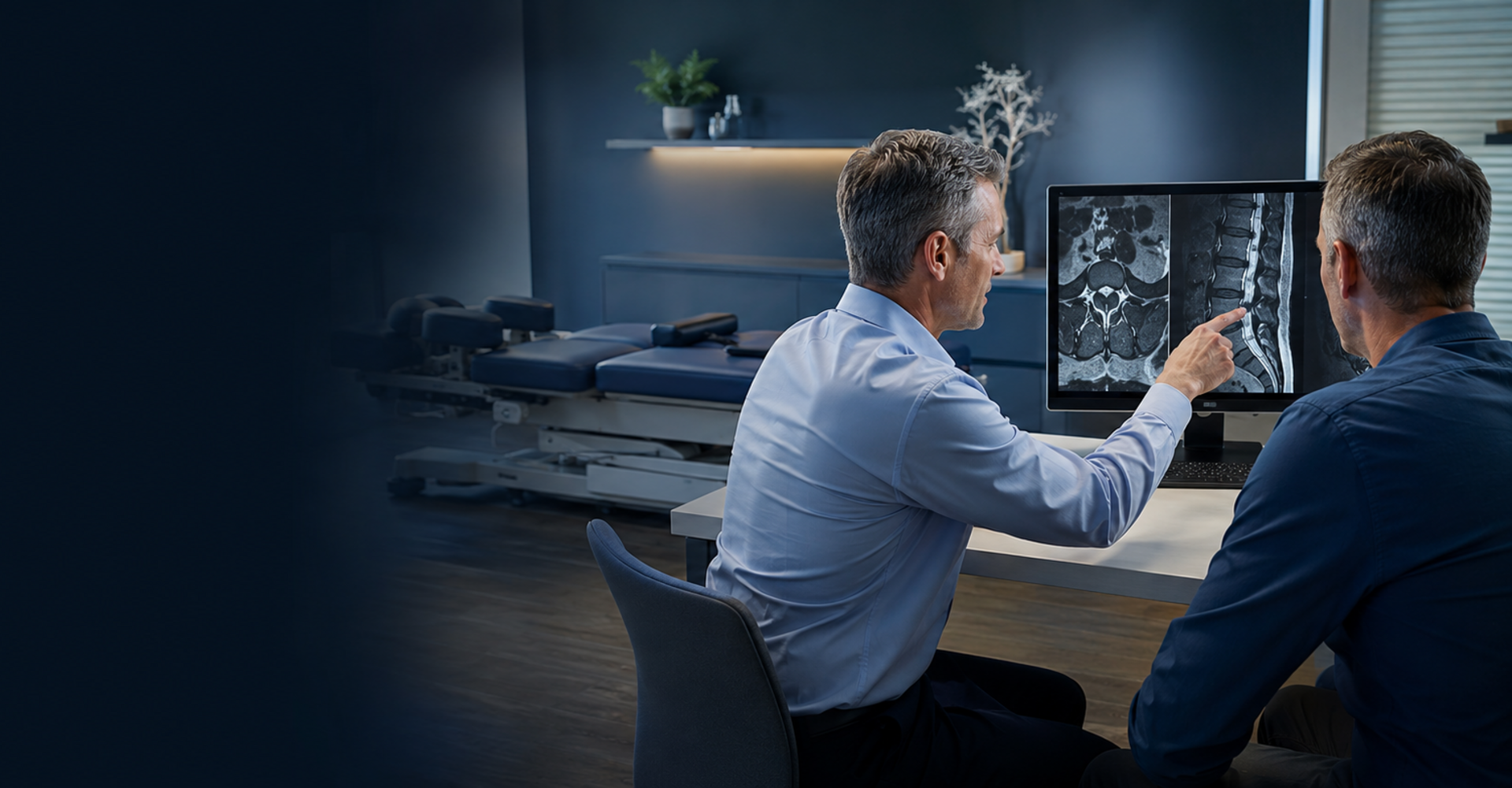
Herniated disc resorption and recovery time: what MRI changes mean
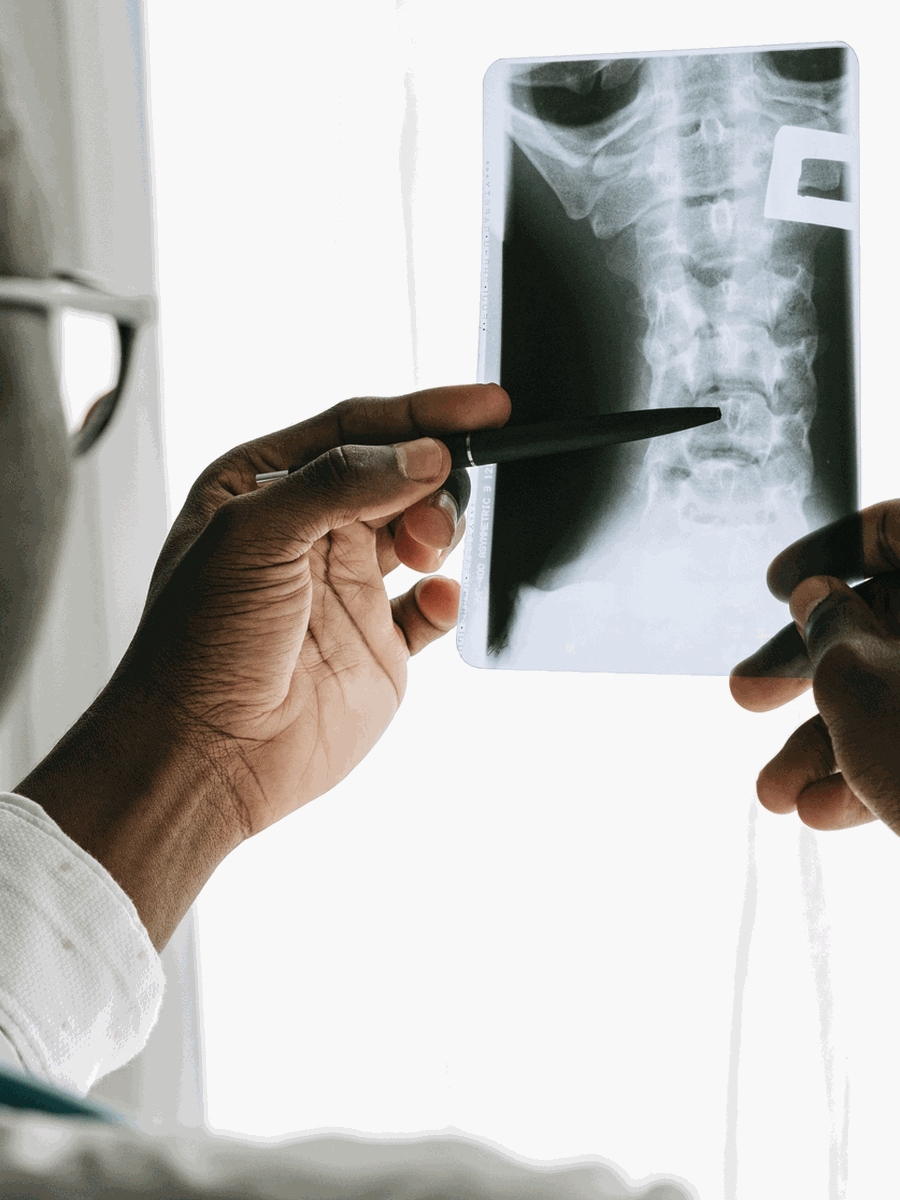
Lumbar disc material may shrink or disappear on follow-up imaging without surgery. Resorption is common, especially for extruded or sequestered fragments, but symptoms and MRI do not always change at the same speed.
Resorption involves inflammation, new blood vessels, macrophages and matrix breakdown. Exposed fragments may regress more often than contained bulges.
Assessment and decision points
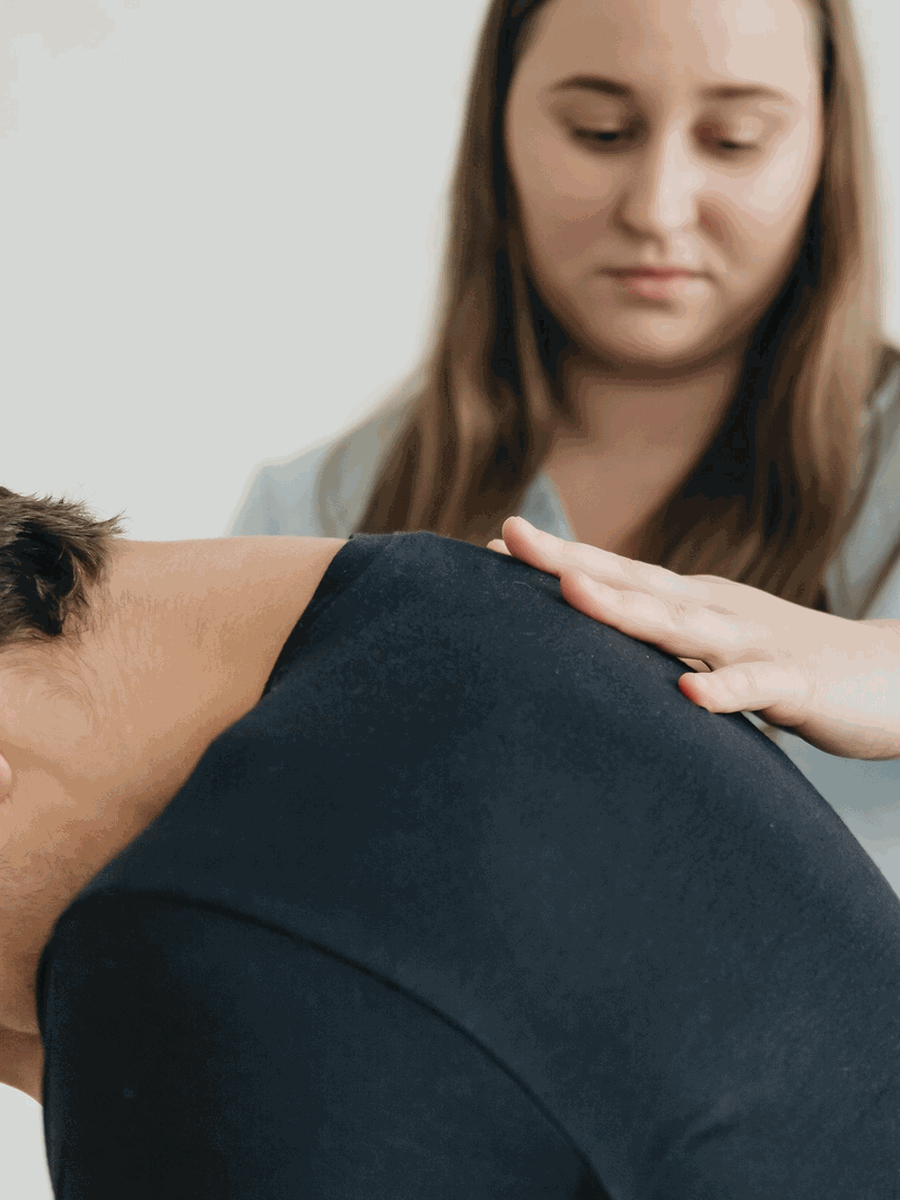
Recovery is followed through pain distribution, strength, sensation, walking, sleep and activity. Repeat MRI is not automatically necessary when symptoms improve and neurological findings remain stable.
| Clinical situation | Possible next step | Why it matters |
|---|---|---|
| Improving symptoms | Continue monitored conservative care | MRI shrinkage is not required to validate recovery. |
| Persistent severe radiculopathy | Reassess diagnosis and options | Imaging may help if intervention is considered. |
| Progressive weakness | Urgent assessment | Do not wait for resorption. |
Management and treatment choices
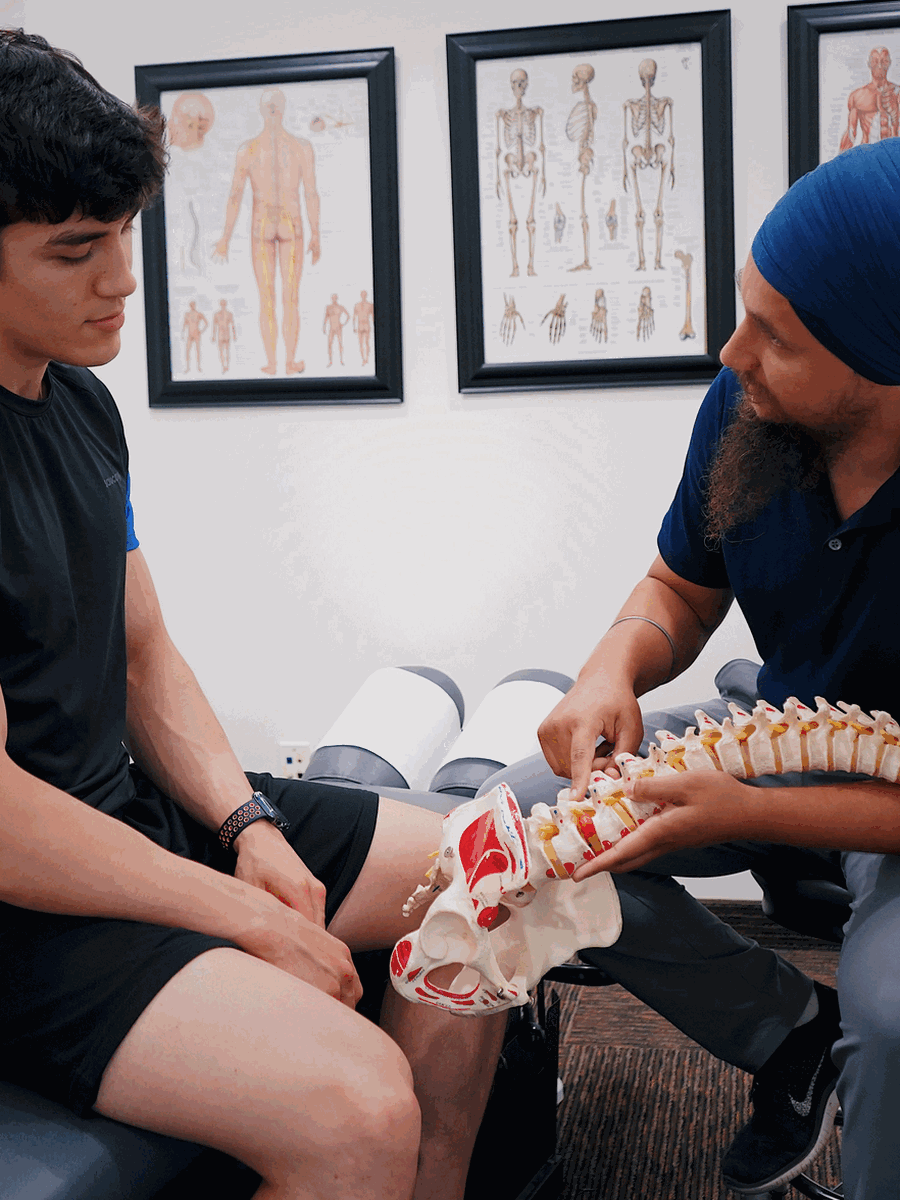
Conservative care may include education, activity modification, graded exercise and symptom management. Surgery remains appropriate for emergencies, progressive motor loss or severe persistent concordant symptoms.
Questions before choosing care
What is the working diagnosis?
Ask which findings support it.
What outcome is realistic?
Define measurable change.
What are the alternatives?
Compare active care, technology, procedures and surgery.
When will the plan be reviewed?
Set criteria for continuation or escalation.
Relevant external resources
Some resources may share ownership or editorial direction; this relationship is disclosed.
Frequently asked questions
How long does resorption take?
Often several months to more than a year in imaging studies.
Does pain improve only after shrinkage?
No.
Which types regress most?
Extruded and sequestered fragments.
Does a large herniation always need surgery?
No.
Should MRI be repeated routinely?
No.
Can symptoms improve while MRI is similar?
Yes.
Can MRI improve while numbness remains?
Yes.
Does resorption restore a normal disc?
Not necessarily.
Can decompression accelerate resorption?
Not conclusively established.
When should conservative care stop?
When serious signs or unacceptable persistent limitation require escalation.
Sources consulted
- Xie et al. — Systematic review of resorption
- Zou et al. — Meta-analysis
- Rashed et al. — Predictive factors
Last editorial review: July 2026. General educational information only.
Dr. Sylvain Desforges, B.Sc., D.O., N.D., osteopath — The Spine Page
Continue exploring spinal health
Use the condition and treatment hubs to compare related guides.
The Spine Page — The best treatments for your spinal problems — www.thespinepage.com