

Group of disorders involving compression of nerves or blood vessels in the passage between the neck and upper limb.
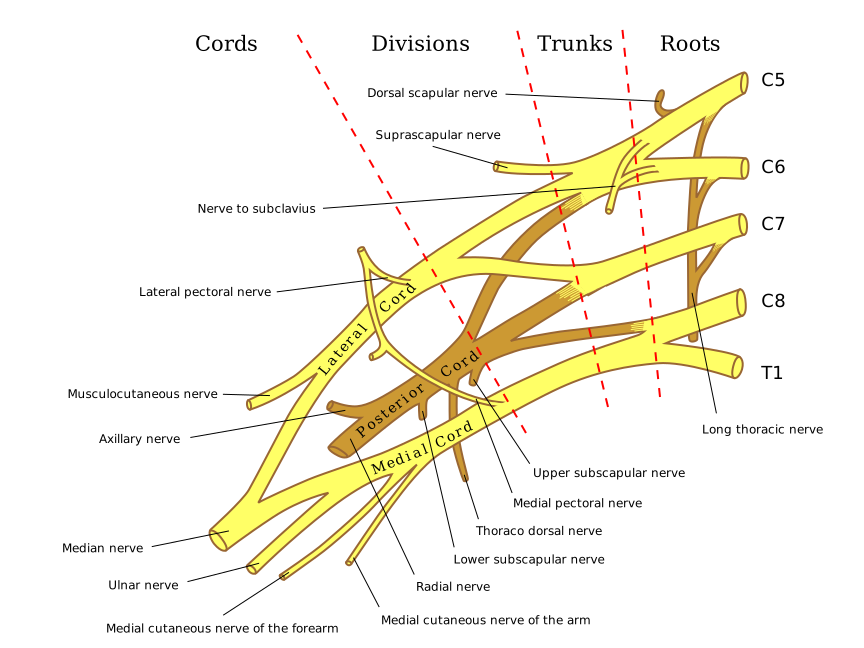
Mattopaedia, Captain-n00dle et MissMJ, d’après Gray’s Anatomy (1918) — Domaine public — PD-self. Image source.

Understanding the mechanism
Thoracic outlet syndrome includes compression of the brachial plexus or blood vessels between the neck, collarbone and first rib. Neurogenic, venous and arterial forms require different management. A cervical rib or other anatomical constraint can contribute, but an anatomical variation is not automatically symptomatic. Identifying the affected structure is more useful than applying one treatment to the whole label.
Symptoms and warning signs
The neurogenic form can cause pain, fatigue, tingling or weakness in the arm, sometimes worse with overhead activity. Sudden arm swelling or bluish discoloration suggests a venous problem; a cold, pale or painful hand may indicate arterial compromise. These acute vascular changes require urgent medical assessment rather than being treated as ordinary muscle tightness.
Diagnosis and investigations
Examination investigates neurological and vascular features while considering cervical radiculopathy, carpal tunnel syndrome and ulnar neuropathy. Positional tests can be positive in people without the disorder and are insufficient by themselves. Doppler ultrasound, other imaging and electrodiagnostic studies are selected according to the suspected form and the specific clinical question, rather than ordered as an indiscriminate package.
Treatment and outlook
Selected neurogenic presentations may benefit from rehabilitation addressing loading, scapular control and provoking activities. Vascular forms require specialist care, sometimes urgently, potentially including anticoagulation or surgery according to the diagnosis. An intervention should not be chosen solely on the basis of an Adson test or a cervical rib. The benefits and risks depend on the actual mechanism.
The role of TAGMED care
At TAGMED, any care should follow identification of the form and exclusion of a vascular emergency. Cervical decompression does not automatically release the thoracic outlet. Carefully dosed manual techniques or exercise can support some neurogenic presentations without aggressive pressure on vascular structures. Laser and shockwave therapy cannot treat thrombosis or arterial obstruction and must not delay the appropriate referral.
Practical follow-up
Describe whether the main issue is pain, numbness, swelling or colour change, because these features guide different pathways. A photograph of intermittent change may assist later discussion when appropriate, but taking one must never delay assessment of an acute vascular emergency.
Frequently asked questions
Is it always a nerve problem?
No. Venous and arterial forms require different investigations and treatment.
Does an overhead test confirm it?
No. Symptom reproduction needs interpretation within the full assessment.
Does a cervical rib require surgery?
No. It may be asymptomatic, and its significance depends on the clinical presentation.
Which change is especially urgent?
Sudden arm swelling or a cold, pale hand needs immediate medical assessment.
Can overhead activity resume?
Progression depends on the form, tolerance and the treating team's recommendations.
Conceptual diagram: the steps depend on clinical findings and do not provide an individual diagnosis.
Medical references
- Johns Hopkins Medicine. Thoracic Outlet Syndrome.
- American Academy of Orthopaedic Surgeons. Cervical Radiculopathy (Pinched Nerve).
References document the topic; their inclusion does not imply endorsement of TAGMED services by those organizations.
Educational information from The Spine Page. This entry does not replace an individual assessment. Documentary version: October 12, 2026. Sylvain Desforges, B.Sc., D.O., N.D., osteopath and naturopath.
TAGMED clinic contact details
For non-urgent consultations and information about available services.
Clinique TAGMED — Terrebonne
1150, rue Lévis, Suite 200
Terrebonne (Québec) J6W 5S6
450‑704‑4447
Clinique TAGMED — Montréal
1140, avenue Beaumont
Mont-Royal (Québec) H3P 3E5
1‑877‑672‑9060