

Excess epidural fat that may reduce the space available for neural structures.
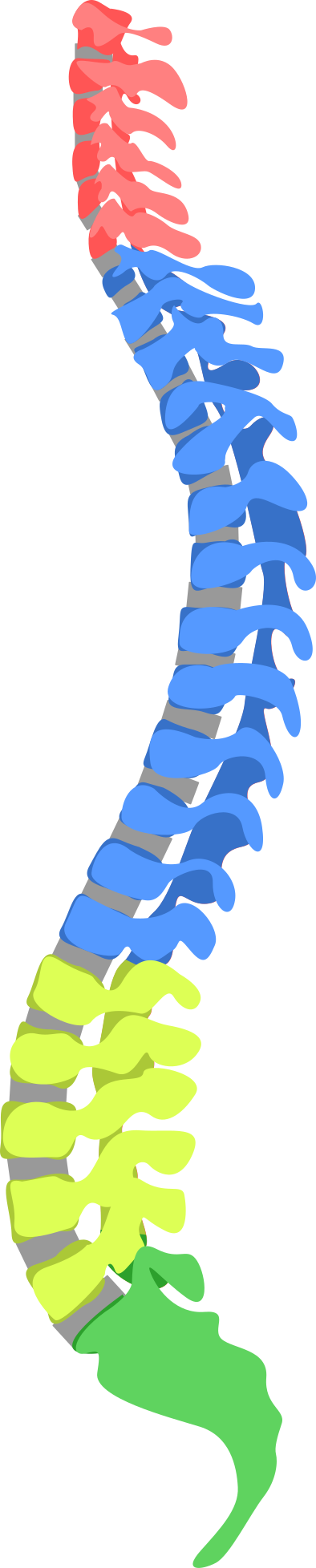
mikeingram1; recoloration : MJL — CC0 1.0. Image source.

Understanding the mechanism
Spinal epidural lipomatosis is excessive, non-encapsulated fat within the epidural space. The accumulation can reduce room for neural structures, particularly in the thoracic or lumbar regions. Associations include obesity, some corticosteroid treatment and hormonal disorders, although cases also occur without a clear cause. It is different from simply having fat outside the spinal canal.
Symptoms and warning signs
The condition may be asymptomatic or contribute to radicular pain, neurogenic claudication, weakness or myelopathy, depending on the level. Symptoms overlap with other causes of stenosis. New urinary retention, loss of bladder or bowel control, or saddle sensory loss requires immediate emergency assessment. A progressive neurological deficit also needs urgent evaluation, without waiting for weight-related measures to help.
Diagnosis and investigations
MRI identifies the fat and its effects on the dural sac and nerves. Medical assessment reviews medication, metabolic factors and possible endocrine disorders. The presence of epidural lipomatosis does not establish that it accounts for every symptom. Anatomical severity, other lesions and neurological examination need to be interpreted together before choosing a management strategy.
Treatment and outlook
Care may address contributing factors through supported weight management or medically supervised corticosteroid adjustment when appropriate. Corticosteroids must never be stopped abruptly without instructions. Surgical decompression can be considered for selected deficits or persistent symptoms. Available evidence does not justify promising the same response in every form, and follow-up should assess meaningful function as well as discomfort.
The role of TAGMED care
At TAGMED, motorized decompression does not remove epidural fat. Any conservative support should follow the diagnostic evaluation and must not delay referral when neurological loss is present. Laser, shockwave and percussion do not treat the fat inside the canal. Functional support should focus on safe, measurable activities in coordination with the medical team rather than claiming an anatomical cure.
Practical follow-up
Medication review should include corticosteroids in their different forms without assuming they are always responsible. Preparing a complete list helps the medical clinician. Any proposed change must also protect control of the condition for which those medicines were originally needed.
Frequently asked questions
Is it a fatty tumour?
It is diffuse non-encapsulated fat accumulation, different from a focal lipoma.
Is weight always the cause?
No. Medication, hormonal disorders and cases without an obvious cause also occur.
Can corticosteroids be stopped independently?
No. Changes require the prescriber and may need a gradual reduction.
Is weight loss always sufficient?
No. Response varies, and neurological deficits may require other interventions.
How is progress monitored?
Through symptoms, walking, strength and medically indicated follow-up investigations.
Conceptual diagram: the steps depend on clinical findings and do not provide an individual diagnosis.
Medical references
- Orthopedic Reviews. Spinal Epidural Lipomatosis: A Comprehensive Review.
- Global Spine Journal. Spinal Epidural Lipomatosis: Pathogenesis, Presentation, and Management.
- NICE. Low back pain and sciatica in over 16s: assessment and management (NG59).
References document the topic; their inclusion does not imply endorsement of TAGMED services by those organizations.
Educational information from The Spine Page. This entry does not replace an individual assessment. Documentary version: October 12, 2026. Sylvain Desforges, B.Sc., D.O., N.D., osteopath and naturopath.
TAGMED clinic contact details
For non-urgent consultations and information about available services.
Clinique TAGMED — Terrebonne
1150, rue Lévis, Suite 200
Terrebonne (Québec) J6W 5S6
450‑704‑4447
Clinique TAGMED — Montréal
1140, avenue Beaumont
Mont-Royal (Québec) H3P 3E5
1‑877‑672‑9060