


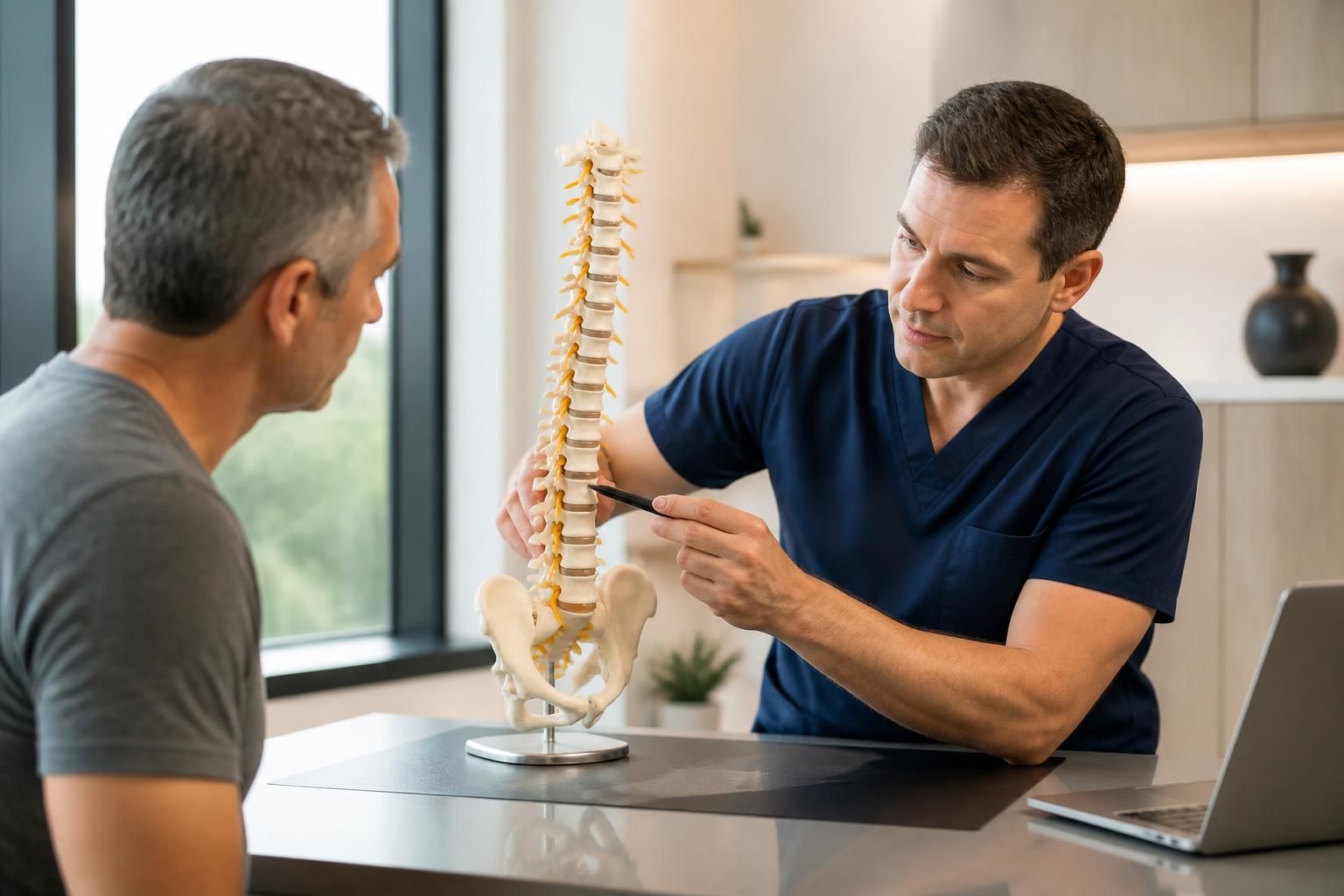


Persistent sciatic pain can be a frustrating reality for many Montréal residents who have already undergone treatment without obtaining the expected relief. This situation deserves special attention, as persistent pain does not always mean definitive treatment failure, but rather calls for a thorough reassessment of the cause and therapeutic strategies used. Understanding the reasons for apparent treatment failure, exploring the underlying mechanisms, and knowing the options available in Montréal are essential to better manage this pain that affects mobility and quality of life.
The journey for people with sciatica can vary, and the wide range of possible causes requires an individualized approach. Sciatic pain that continues despite initial treatment may result from factors such as persistent nerve compression, nerve sensitization, or even an undiagnosed underlying condition. Care in Montréal fits within this comprehensive framework, where an accurate diagnosis, possibly supported by medical imaging, complements and guides conservative or, if necessary, more specialized treatment.
In brief: key points to remember about persistent sciatic pain and its management
Why can sciatic pain persist despite initial treatment in Montréal?
Persistent sciatic pain after treatment is not uncommon. This phenomenon can be explained by several complex factors related to the nature of the sciatic nerve itself, the initial cause of the pain, and the nervous system’s adaptive mechanisms. Even after medication or physiotherapy, some nerve roots may remain irritated or compressed, leading to prolonged pain.
For example, a lumbar disc herniation may continue to irritate the nerve root despite conservative treatment. This mechanical conflict is often responsible for chronic inflammation that prolongs symptoms. In addition, central sensitization can amplify the experience of pain, making it disproportionate to the anatomical involvement visible on imaging.
Cases of foraminal stenosis, in which the bony canal narrows and compresses the nerve roots, often require special attention. In Montréal, increased sedentary behaviour due to urban lifestyles can worsen these conditions, particularly among remote workers or those facing long commutes on public transit.
In addition, a lesser-known but common cause is piriformis syndrome, in which a deep gluteal muscle can directly compress the sciatic nerve. This syndrome is not always detected on a lumbar MRI and requires specific clinical expertise.
Finally, initial treatment management plays a key role. Excessive strict rest or medication-only treatment can delay recovery, as the back’s stabilizing muscles weaken, contributing to a vicious cycle of persistent pain and stiffness.
You can learn more about the possible causes and diagnoses of persistent sciatica by consulting this resource dedicated to the possible causes of sciatica.
Montréal-specific factors that influence persistent sciatic pain
Life in Montréal, with its practical and environmental characteristics, can influence the duration and intensity of persistent sciatic pain. Although urban conditions are modern, they can lead to behaviours that sometimes contribute to ongoing or chronic symptoms.
Many public transit users and motorists in the Mont-Royal and Côte-des-Neiges area often spend several hours sitting, a posture that increases pressure on the lumbar intervertebral discs and exacerbates nerve inflammation.
Remote work, which has become common in areas such as Plateau-Mont-Royal and Rosemont–La Petite-Patrie, also presents challenges. Inadequate furniture or prolonged postural habits without appropriate breaks can worsen muscle tension, increase nerve pinching, and prevent optimal recovery.
In addition, among some Montrealers, insufficient physical activity, age-related musculoskeletal conditions, or excess body weight play a role in the persistence of neuropathic symptoms.
This is why ergonomics and personalized management of daily activities are an integral part of local care, particularly in consultations offered around Mont-Royal and Outremont. This understanding of local realities helps better guide and individualize treatment.
In this context, recommendations for preventing and managing sciatic pain in Montréal emphasize the importance of combining relative rest with appropriate exercises, modifying work and lifestyle habits, and incorporating specialized follow-up when symptoms persist.
How to effectively reassess persistent sciatica: medical assessment, imaging, and clinical examination
When sciatic pain continues despite initial treatment, a comprehensive reassessment is essential. It begins with an in-depth clinical examination by a qualified health professional, most often in Montréal, a specialized physiotherapist or neurologist.
This assessment aims to distinguish radicular pain caused by nerve compression from referred pain of muscular or joint origin, and to identify potential complications or associated causes such as piriformis syndrome or sacroiliac dysfunction.
Medical imaging plays a complementary role. Lumbar MRI remains the reference examination for visualizing disc herniations, protrusions, stenosis, or other structural abnormalities affecting the sciatic nerve. Sometimes, a CT scan or X-ray is needed to refine the diagnosis.
It is crucial to remember that imaging alone is not enough to determine treatment. Some visible abnormalities may be asymptomatic, and other causes, such as central sensitization of the nervous system, cannot be detected with these conventional methods.
This reassessment phase also helps guide the patient toward appropriate treatment, whether conservative, including specialized physiotherapy, or toward a more targeted medical intervention.
To learn more about the criteria for an appropriate medical consultation for persistent pain, it is recommended to consult the signs indicating when to seek care.
Treatment approaches for persistent sciatic pain in Montréal: physiotherapy, neurovertebral decompression, and complementary options
Managing persistent sciatic pain in Montréal involves a step-by-step approach tailored to the cause and severity of symptoms. Specialized physiotherapy plays an essential role on a daily basis. It includes modern techniques aimed at restoring nerve mobility, desensitizing the central nervous system, and strengthening stabilizing muscles, while respecting pain limits.
Among the options, motorized neurovertebral decompression is an interesting modality offered in some clinics, such as Clinique TAGMED in Mont-Royal. This method involves applying controlled, gradual traction to the lumbar spine, with the aim of temporarily reducing pressure on the intervertebral discs and nerve roots. Although promising, this approach is not suitable for everyone and requires a thorough prior assessment.
In addition, medical treatments such as anti-inflammatory medications can support symptom management, while corticosteroid injections, guided by imaging, can sometimes reduce local inflammation when pain is severe and refractory.
It is important to note that these interventions do not replace the need for comprehensive care, including adapting daily habits, specific exercises, postural rehabilitation, and patient education about pain.
A multidisciplinary approach that integrates physiotherapy, pain management, and medical follow-up improves the chances of enhancing quality of life. Depending on the case, referral for a specialized opinion in neurology or surgery may be considered if pain persists with neurological deficits.
| Criterion | Conservative treatment | Surgical intervention |
|---|---|---|
| Speed of relief | Gradual over several weeks | Rapid, especially for radicular pain |
| Risks | Low, related to medications and rehabilitation | Inherent surgical risk |
| Recurrence rate at 2 years | Comparable to surgery | About 5% recurrence |
| Effort required | Perseverance with rehabilitation and adaptation | Mandatory post-operative rehabilitation |
Signs and situations requiring urgent medical consultation for persistent sciatic pain
In some cases, persistent sciatic pain requires urgent medical consultation. These include situations where the following occur:
- Progressive or sudden weakness in the leg or foot, which may indicate severe neurological involvement.
- Loss of bladder or bowel control, or a sensation of numbness in the genital area (“saddle anesthesia”), which may suggest cauda equina syndrome.
- Fever accompanied by low back pain, which may indicate an infection.
- Severe pain following significant trauma.
- Sciatic pain associated with a history of cancer, requiring prompt exclusion of spinal metastasis.
These signs should prompt immediate consultation at a clinic or emergency department to avoid serious and irreversible complications.
Vigilance is essential, and prompt consultation will allow for appropriate and safe care.
To learn more about emergency and consultation criteria for sciatic pain, you can consult the signs indicating when to seek care.
If sciatic pain persists despite initial treatment, a personalized assessment in the Mont-Royal area may help clarify the likely cause and guide you toward the strategy best suited to your condition.
Book an appointment for a specialized assessment
Dr. Sylvain Desforges, B.Sc., D.O., N.D., osteopath
This content is educational and does not replace a consultation or personalized diagnosis.
