


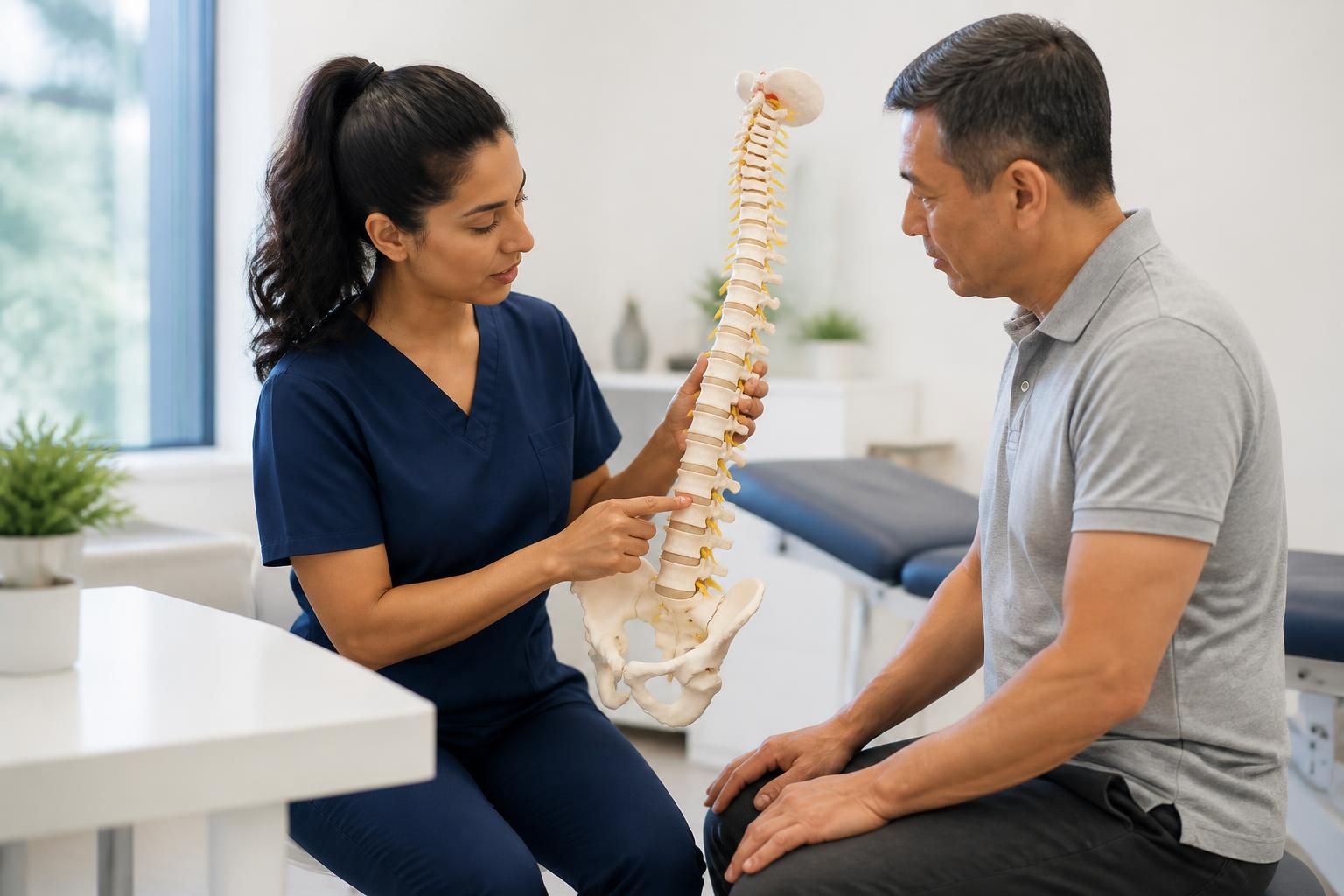



Sciatic pain is a common condition that affects many people in Longueuil and surrounding areas. Characterized by intense pain that radiates from the lower back to the leg, it disrupts mobility and makes daily activities more difficult to manage. Understanding how to live with sciatica involves not only recognizing the symptoms but also adapting your environment and habits to minimize the impact of this often persistent pain.
Every situation is unique: the causes of sciatica can vary, ranging from a herniated disc to foraminal stenosis, as well as postural issues. In Longueuil, where lifestyles alternate between desk work and commuting by public transit, it is essential to adopt a personalized strategy. This process includes an accurate assessment, caution with the positions adopted, and a gradual approach to treatment and rehabilitation.
In brief: key points for managing sciatica in Longueuil
- Clearly identify symptoms : pain radiating into the leg, numbness, or tingling should prompt appropriate care.
- Adjust your posture at work and at home to avoid compression of the sciatic nerve.
- Regularly practise gentle stretching and physical activities such as walking or swimming to maintain mobility.
- Know the warning signs that require urgent medical consultation, such as rapidly developing weakness or loss of bladder or bowel control.
- Explore several treatment options including motorized neurovertebral decompression available near Mont-Royal, osteopathy, and other approaches.
Recognizing and understanding sciatica: key elements for management tailored to Longueuil
Sciatica generally results from irritation or compression of the sciatic nerve, often caused by a herniated disc or lumbar spinal stenosis. It presents as pain that begins in the lower back and follows a specific path to the back or side of the leg. This pain may be accompanied by numbness, tingling, or muscle weakness.
For Longueuil residents, whose daily routine may involve long periods of sitting at an office or in a car, this condition can be worsened by prolonged positioning and a lack of regular movement. Distinguishing sciatica from simple low back pain is crucial for guiding care. Unlike low back pain, sciatica involves radicular pain with a well-defined nerve pathway.
Local medical specialists recommend a thorough assessment, often supplemented by imaging such as MRI, to identify the affected nerve root or roots (often L5 or S1). This analysis helps rule out other causes and assess the severity of nerve compression.
In addition, sciatica should be distinguished from other causes of pain radiating into the leg, such as femoral neuralgia, which affects the L4 root and causes pain at the front of the thigh. This distinction has a direct impact on the treatment options offered and on day-to-day management.
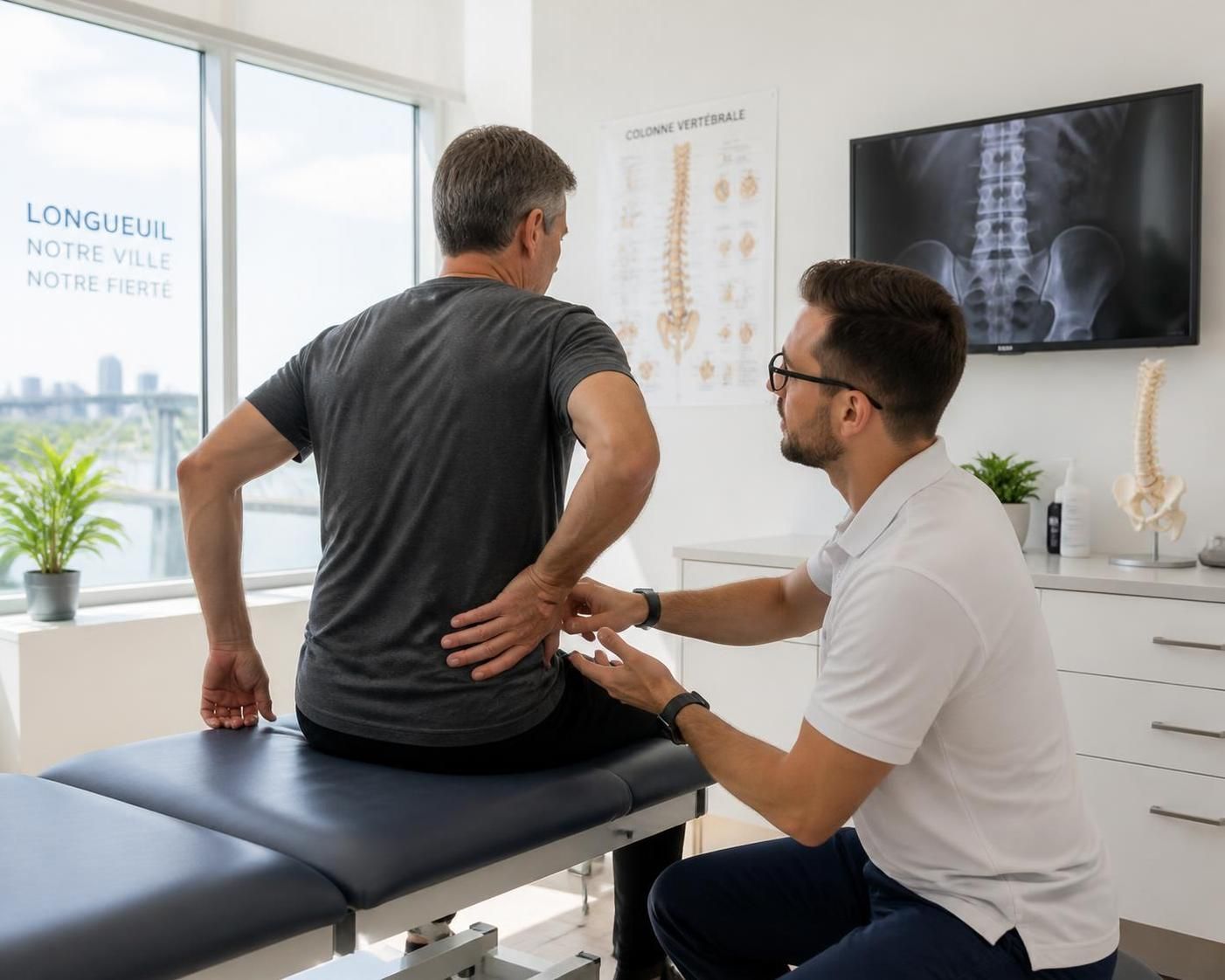
Factors affecting sciatic pain in Longueuil: posture, physical activity, and environment
Sciatica symptoms often fluctuate according to several lifestyle-related factors. In Longueuil, frequent remote work or long car commutes can trigger or worsen pain because of prolonged, inadequate static postures.
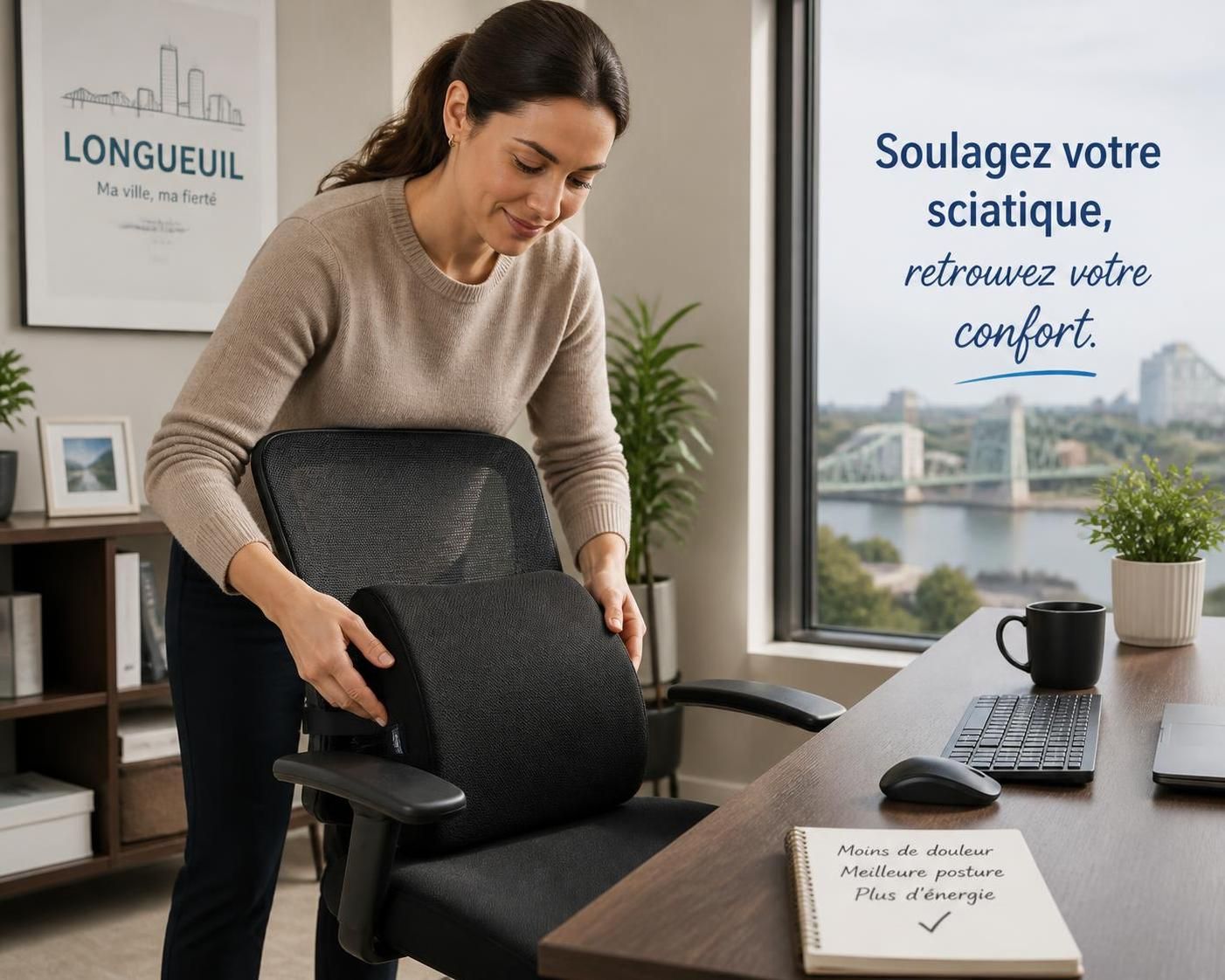
Adopting appropriate postures is therefore crucial. For example, maintaining a seated position with adequate lumbar support and ensuring that the desk and screen are at the proper height can help reduce pressure on the lower back and sciatic nerve. Taking regular breaks and changing positions every 30 to 45 minutes is also recommended to prevent muscle stiffness.
Physical activities are strongly recommended to help prevent pain from becoming chronic. Daily walking, swimming, or gentle exercises such as yoga can improve mobility while limiting nerve compression. It is important to progress slowly to avoid causing a flare-up.
Sleep quality also affects pain perception. It is advisable to adopt a side-lying fetal position, with a pillow between the knees, and to use a firm yet comfortable mattress. These measures help reduce painful strain at night and promote recovery.
Finally, one factor that should not be overlooked is psychological impact. Persistent pain can generate stress and anxiety, creating a vicious cycle that worsens symptoms. In some cases, psychological support or cognitive behavioural therapy may be beneficial.
List of factors that may influence sciatica symptoms in Longueuil:
- Prolonged sitting at an office or in a car
- Lack of regular physical activity
- Excess body weight increasing disc pressure
- Repeated postures while working from home (suboptimal ergonomics)
- Always ensure adequate sleep and recovery
- Stress and emotional state affecting pain perception
When should you seek care for persistent sciatic pain in Longueuil?
For people living in Longueuil, managing sciatica relies on recognizing when medical consultation is needed. In general, if pain persists for more than 12 weeks despite conservative measures, a repeat clinical assessment and potentially new imaging may be warranted.
Certain signs require urgent health-care services because they may indicate severe neurological involvement. These include:
- rapid loss of strength in the leg or foot,
- unexplained urinary or bowel problems,
- saddle anaesthesia (the area around the genitals),
- fever associated with sciatica,
- unbearable pain that does not respond to usual treatments.
Consultation with a professional specializing in orthopedics or physical medicine is also recommended when sciatica prevents normal activities, chronically disrupts sleep, or when pain spreads and is accompanied by numbness.
A thorough assessment in the metropolitan area, near Mont-Royal or Outremont, can help guide appropriate treatment options, whether conservative or requiring more specific interventions.
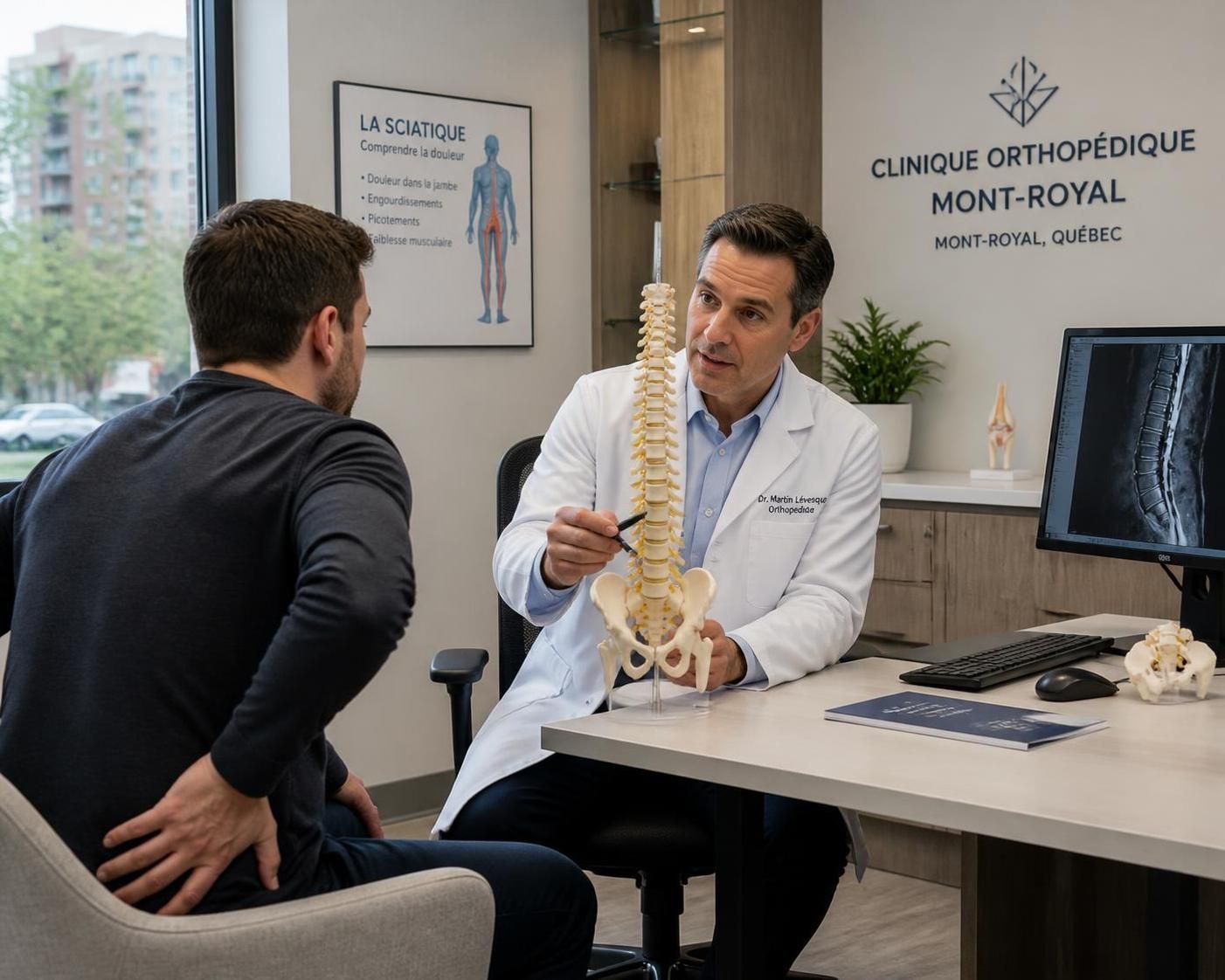
Treatment options and practical tips for living with sciatica in Longueuil
Several treatment options may be considered to manage sciatica effectively while prioritizing patient safety and comfort. The main goal is to reduce pain, limit symptom progression, and support a return to functional activity.
Initial management often relies on a combination of treatments:
- Maintaining or gradually resuming physical activity to strengthen the back and limit inflammation.
- Targeted stretching exercises to relax tight muscles and improve mobility.
- Manual approaches such as targeted osteopathy, which may help reduce certain mechanical tensions.
- Symptom-relieving medications prescribed with caution, while prioritizing the minimization of side effects.
- Epidural injections performed under guidance, which may provide temporary relief in cases of significant compression.
Among complementary treatments, motorized neurovertebral decompression is an option offered near Mont-Royal. This technique involves gradual, controlled traction of the lumbar spine. It aims to temporarily increase the space between the vertebrae, reduce pressure on the intervertebral discs, and relieve the irritated nerve root.
It should be emphasized that decompression is not indicated for every case of sciatica. It requires a prior medical assessment to evaluate contraindications and determine which patients may benefit. Results may vary from one individual to another, and this method does not replace urgent consultation in the event of severe symptoms.
A complementary treatment approach is often favoured in Longueuil, combining manual care, exercises, ergonomic advice and, when necessary, more invasive treatments with medical guidance.
| Type of treatment | Benefits | Limitations / Considerations |
|---|---|---|
| Exercise and physical activity | Improved mobility, muscle strengthening, prevention of stiffness | Must be adapted, gradual, and supervised to prevent worsening |
| Motorized neurovertebral decompression | Reduced mechanical strain, temporary improvement in disc space | Indicated after assessment, variable results, not a universal remedy |
| Medications | Initial control of pain and inflammation | Possible side effects, limited long-term effectiveness |
| Injections | Targeted and often significant short-term relief | Temporary effect, invasive procedures requiring follow-up |
| Osteopathy and other manual therapies | Improved posture, muscle relaxation | Variable results, to be combined with other treatments |
FAQ on managing sciatica in Longueuil
{“@context”:”https://schema.org”,”@type”:”FAQPage”,”mainEntity”:[{“@type”:”Question”,”name”:”Quu2019est-ce que la sciatique chronique et comment la reconnau00eetre ?”,”acceptedAnswer”:{“@type”:”Answer”,”text”:”La sciatique chronique se caractu00e9rise par une douleur persistante au-delu00e0 de 12 semaines, souvent continue ou ru00e9currente. Elle implique une irritation prolongu00e9e du nerf sciatique et nu00e9cessite une u00e9valuation mu00e9dicale approfondie.”}},{“@type”:”Question”,”name”:”Quels exercices sont recommandu00e9s pour soulager la sciatique ?”,”acceptedAnswer”:{“@type”:”Answer”,”text”:”Des u00e9tirements doux des muscles lombaires, des ischio-jambiers et du psoas, ainsi que des exercices comme la marche ou la natation, aident u00e0 maintenir la mobilitu00e9 et ru00e9duire la douleur, sous supervision adaptu00e9e.”}},{“@type”:”Question”,”name”:”Quand dois-je consulter un spu00e9cialiste pour ma sciatique u00e0 Longueuil ?”,”acceptedAnswer”:{“@type”:”Answer”,”text”:”Une consultation est recommandu00e9e si la douleur dure plus de 3 mois, su2019accompagne de faiblesse musculaire, engourdissement ou troubles urinaires. Des douleurs intenses et progressives justifient une u00e9valuation urgente.”}},{“@type”:”Question”,”name”:”La du00e9compression neurovertu00e9brale est-elle efficace pour toutes les sciatiques ?”,”acceptedAnswer”:{“@type”:”Answer”,”text”:”Cette mu00e9thode peut u00eatre bu00e9nu00e9fique pour certains patients apru00e8s une u00e9valuation, particuliu00e8rement lorsque la douleur est liu00e9e u00e0 une hernie discale ou une stu00e9nose. Ce n’est pas une solution universelle ni une alternative garantie u00e0 la chirurgie.”}},{“@type”:”Question”,”name”:”Comment adapter son quotidien pour mieux vivre avec la sciatique ?”,”acceptedAnswer”:{“@type”:”Answer”,”text”:”Amu00e9liorer lu2019ergonomie au travail, u00e9viter les positions statiques prolongu00e9es, adopter une bonne posture, pratiquer des activitu00e9s physiques ru00e9guliu00e8res et gu00e9rer le stress sont des clu00e9s essentielles pour attu00e9nuer les symptu00f4mes.”}}]}What is chronic sciatica and how can you recognize it?
Chronic sciatica is characterized by pain that persists beyond 12 weeks, often continuously or recurrently. It involves prolonged irritation of the sciatic nerve and requires a thorough medical assessment.
Which exercises are recommended to relieve sciatica?
Gentle stretching of the lower back muscles, hamstrings, and psoas, as well as exercises such as walking or swimming, can help maintain mobility and reduce pain with appropriate supervision.
When should I see a specialist for my sciatica in Longueuil?
Consultation is recommended if pain lasts more than 3 months or is accompanied by muscle weakness, numbness, or urinary problems. Severe and progressive pain warrants urgent assessment.
Is neurovertebral decompression effective for all types of sciatica?
This method may be beneficial for certain patients after an assessment, particularly when pain is related to a herniated disc or stenosis. It is not a universal solution or a guaranteed alternative to surgery.
How can you adapt your daily routine to live better with sciatica?
Improving workplace ergonomics, avoiding prolonged static positions, adopting good posture, engaging in regular physical activity, and managing stress are essential ways to reduce symptoms.
If you experience persistent sciatic pain in Longueuil, a personalized assessment may help determine the likely cause and appropriate management. Understanding the available options and signs to watch for is a first step toward lasting well-being.
Sciatica treatment options in Longueuil
Dr. Sylvain Desforges, B.Sc., D.O., N.D., osteopath
This content is educational and does not replace a personalized medical assessment.
