


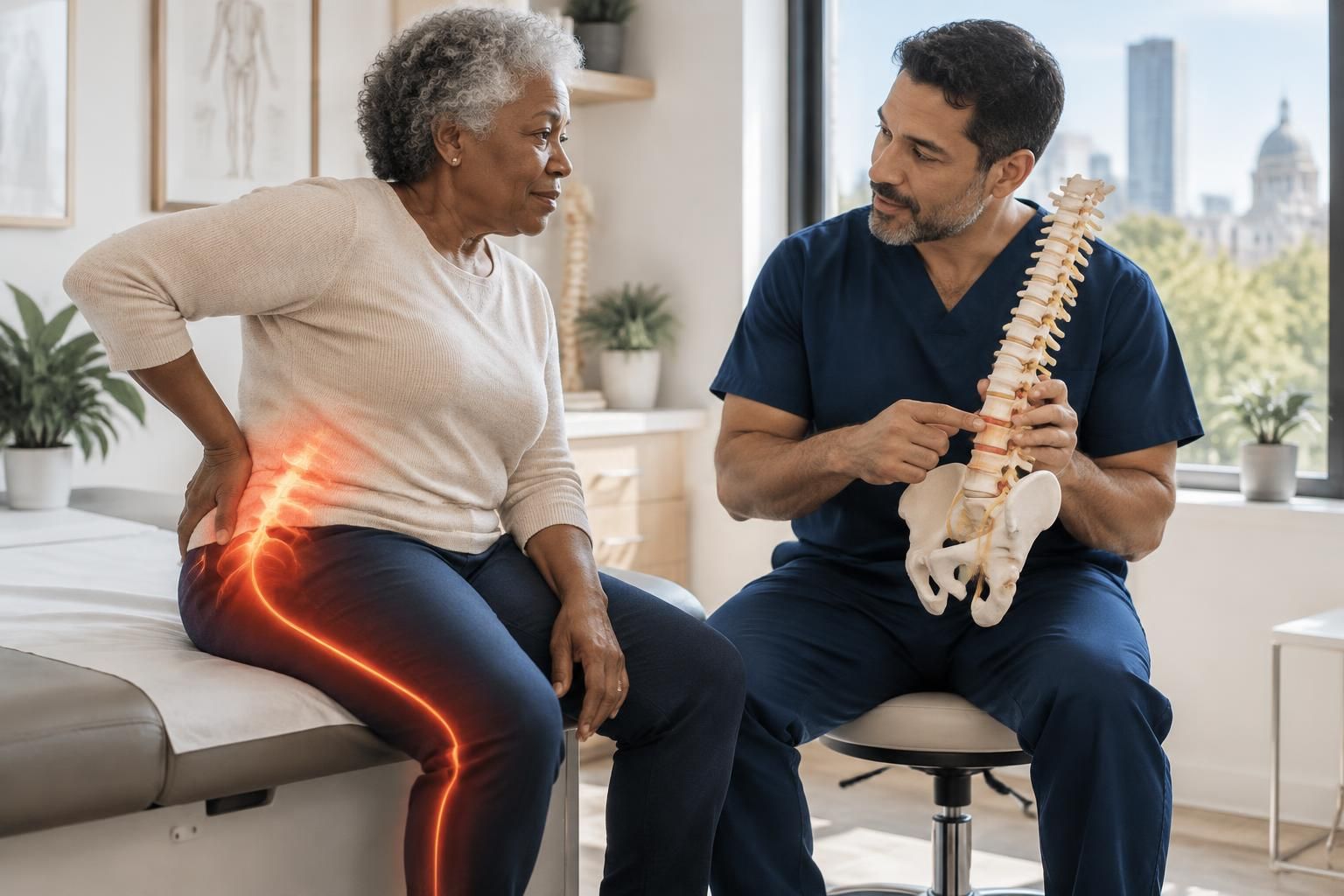
In Plateau-Mont-Royal, low back pain that radiates into the buttock and leg is not automatically explained by age. Aging can alter the structures of the spine and make certain causes more likely, such as narrowing of the spaces through which nerves pass, but a herniated disc and other problems can occur at different stages of life.
The nature of symptoms, how they change, and their effects on mobility matter more than a number on a health insurance card. Someone who has to stop their walks or experiences new weakness needs an appropriate assessment, whether they are 40 or 75 years old.
In brief: aging and sciatica in Plateau-Mont-Royal
- Age alone does not explain pain: symptoms may be related to a disc, osteoarthritis, spinal canal narrowing, or another cause.
- The pattern may change over the years: a herniated disc is an important cause in adults, while lumbar stenosis becomes more likely with age.
- Walking can sometimes provide clues: pain that worsens while standing or walking and improves when sitting may suggest stenosis, without confirming it on its own.
- Progressive weakness or urinary problems require urgent assessment.
For long periods of seated work or daily commuting, a movement break may be more helpful than an accessory presented as a solution. Searching for an ergonomic lumbar cushion may still help compare comfort products; it does not replace a diagnosis or personalized advice.


How aging can change the causes of sciatica
The term sciatica generally refers to pain associated with irritation of a lumbar nerve root, felt in the buttock and sometimes along the leg. It may be accompanied by burning, electric shock-like sensations, tingling, or loss of sensation. Low back pain alone, without radiating pain or neurological signs, is not necessarily sciatica.
In middle-aged adults, a disc herniation or protrusion may irritate a nerve root, sometimes after exertion, but not always. With age, changes such as osteoarthritis, thickening of certain tissues, and narrowing of the lumbar canal or foramina may contribute to nerve compression. These changes are common on imaging and do not necessarily cause symptoms.
The prevalence of each cause varies according to the groups studied and the definitions used. It is therefore more prudent to discuss trends than to state that one form of sciatica corresponds to a specific age. An overview of variations across stages of life is provided in this article on sciatica by age.
| Element | Middle-aged adult | Older adult |
|---|---|---|
| Possible causes | Disc herniation or protrusion, mechanical irritation | Lumbar or foraminal stenosis, osteoarthritis; disc involvement remains possible |
| Possible manifestations | Pain that may be sudden after exertion, radiating into one leg | Symptoms that may be progressive, sometimes worsened by walking or standing |
| Factors to consider | Seated work, physical activity, loads, and recovery | Balance, mobility, bone fragility, falls, and other health conditions |
| Prevention priority | Regular activity and reasonable progression of exertion | Maintaining functional capacity and preventing falls |
This table describes possibilities, not diagnostic rules. Pain in both legs, weakness, or major limitations deserve particular attention, as the clinical picture may differ from typical one-sided pain.

Walking, mobility, and daily habits in the neighbourhood
Walking, stairs, cycling, public transit, and office work are part of daily life for many people in Plateau-Mont-Royal. These habits do not necessarily cause sciatica, but they may reveal what triggers or relieves symptoms. Prolonged sitting, for example, bothers some people, while others experience more pain when standing or walking.
When spinal canal narrowing is involved, walking can sometimes cause pain, heaviness, or numbness in the legs, with relief when sitting or bending slightly forward. This pattern may guide assessment, but does not alone establish a diagnosis of stenosis. Pain that radiates below the knee or a persistent sensation of reduced sensation also warrants clinical attention.
In daily life, it may be helpful to vary positions and break up an activity according to tolerance. For example, someone working from home may alternate between sitting and standing periods, then take short walking breaks rather than trying to make up for an inactive day with intense exertion in the evening. Responses differ: if a movement causes pain to travel further down the leg, or if numbness progresses, it should be stopped and advice should be sought.
Walking is therefore neither a universal remedy nor an activity to avoid from the outset. Guidance on symptoms while walking is presented in this resource on sciatica and walking in Mont-Royal.
Clinical assessment: distinguishing sciatica from related pain
The description of the path of pain alone cannot identify the affected root or the cause. Assessment considers the history of symptoms, activities that change them, and examination of strength, sensation, and reflexes. The L4, L5, and S1 roots can produce different signs, but the areas overlap and individual variations are real.
Referred pain from joints, muscles, or the hip can resemble nerve pain without being radiculopathy. Femoral neuralgia generally radiates more toward the front of the thigh. Examination helps compare these possibilities and determine whether further testing is appropriate.
Imaging is not automatically necessary when pain first appears. It may be considered when symptoms persist, when a neurological deficit is present, or when the result is likely to change management. Disc or osteoarthritic abnormalities may be seen in people without pain; an image must therefore be interpreted in light of symptoms and examination findings.
Lifestyle habits, previous falls, known osteoporosis, medications, and other health conditions are particularly important to the health of older adults. A fall or injury accompanied by new pain should be reported without delay, especially if the person has bone fragility. To understand possible causes and assessment steps, see the guidance on the causes and diagnosis of sciatica.
Prevention and age-appropriate management options
Prevention mainly aims to preserve abilities and reduce modifiable factors, without promising to prevent every recurrence. Appropriate regular physical activity, gradual exercises, and breaks during prolonged periods of sitting can support mobility. For people at risk of falling, balance, home modifications, and assessment of bone health may also be part of discussions with health-care professionals.
Management depends on the likely cause and observed signs. Maintaining or gradually resuming activities is often preferable to prolonged immobilization when safe to do so. Exercises, movement advice, and manual therapy may be considered according to the individual’s profile; medications should be discussed with an authorized health-care professional, particularly for older adults taking multiple treatments or living with kidney, digestive, or cardiovascular conditions.
Neurovertebral decompression is motorized, gradual, controlled traction. Following assessment, it may be considered for certain patients whose symptoms are consistent with disc involvement or foraminal narrowing; the objective is to temporarily modify certain mechanical stresses, not to “put a disc back in place.” Results vary, the evidence does not support offering it to everyone, and no number of sessions is suitable for all.
This approach does not replace urgent medical assessment and may not be appropriate, among other circumstances, in certain situations involving instability, fracture, infection, or other contraindications identified during assessment. Physiotherapy, medications, injections, and, in selected cases, surgery also have potential roles and their own limitations. In Mont-Royal, Clinique TAGMED presents its services related to sciatica and decompression as part of an individual assessment; options and appropriateness should be discussed directly with the clinic.
Options are detailed in this resource on sciatica treatment and on the motorized neurovertebral decompression page. Consistent management takes age into account, as well as function, preferences, and individual risks.
When to seek care for sciatic pain after age 50 or 60
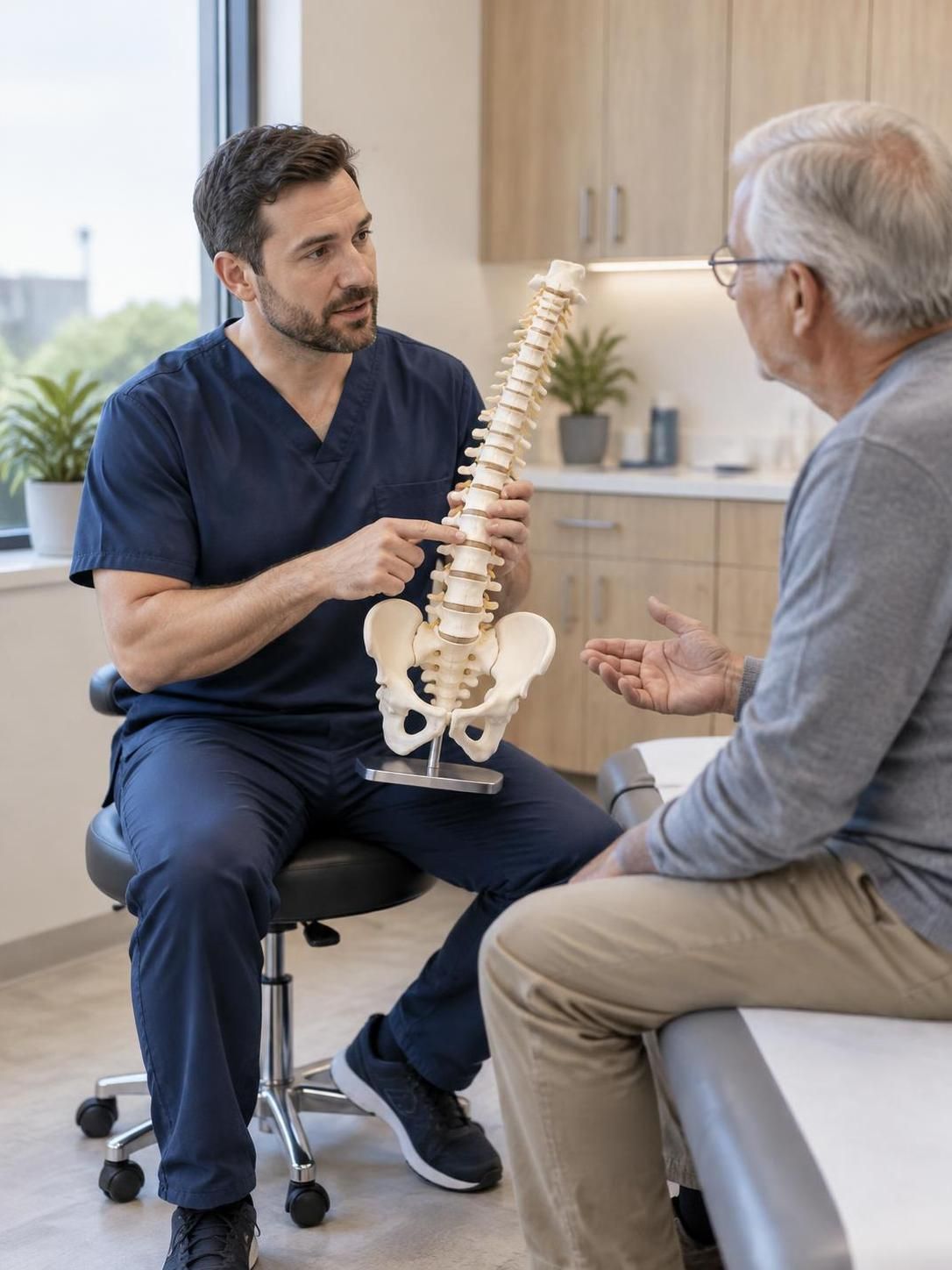
A consultation is indicated if pain persists or returns, radiates below the knee, disrupts sleep, or limits walking and usual activities. Tingling, numbness, loss of sensation, or weakness in the leg or foot also warrant assessment, especially if they worsen. The goal is to clarify the situation and determine whether tests or referral to another professional are needed.
Seek urgent medical assessment if you lose bladder or bowel control, have new difficulty urinating, numbness in the saddle area (between the legs), or significant or rapidly progressive weakness. Fever, severely impaired general health, major trauma, or new pain in the context of known cancer or infection also require prompt assessment.
These signs cannot establish a diagnosis from a distance, but may signal a situation that should not wait for a routine appointment. In the event of severe symptoms or rapid worsening, contact emergency services in your area.
Sciatica is not an inevitable consequence of aging, and pain intensity does not always reflect the significance of changes seen on imaging. An appropriate assessment can help distinguish causes and select cautious measures, without delaying urgent care when warning signs appear.
Frequently asked questions about age and sciatica
Is sciatica inevitable as you age?
No. Aging can contribute to certain changes in the spine, but it does not mean that pain is inevitable. Appropriate activity and symptom assessment can help preserve function.
Does pain while walking indicate lumbar stenosis?
Not necessarily. Pain that intensifies while standing or walking and improves when sitting may be consistent with stenosis, but other causes are possible. A clinical examination is needed to interpret this pattern.
When should you seek care for numbness?
Persistent, progressive numbness or numbness associated with weakness warrants a clinical assessment. Loss of sensation in the saddle area or urinary or bowel problems require urgent assessment.
Is neurovertebral decompression suitable for older adults?
Age alone does not determine whether this approach is appropriate. An assessment must consider the likely cause, overall health, contraindications, and goals; results vary.
If low back pain radiating into your leg limits your travel in Plateau-Mont-Royal or elsewhere in Montréal, an assessment can clarify the likely cause, signs to watch for, and the relevance of a conservative approach. To view the options offered in Mont-Royal, visit the page dedicated to sciatica treatment in Montréal.
Dr. Sylvain Desforges, B.Sc., D.O., N.D., osteopath
This content is educational and does not replace a personalized assessment.
