


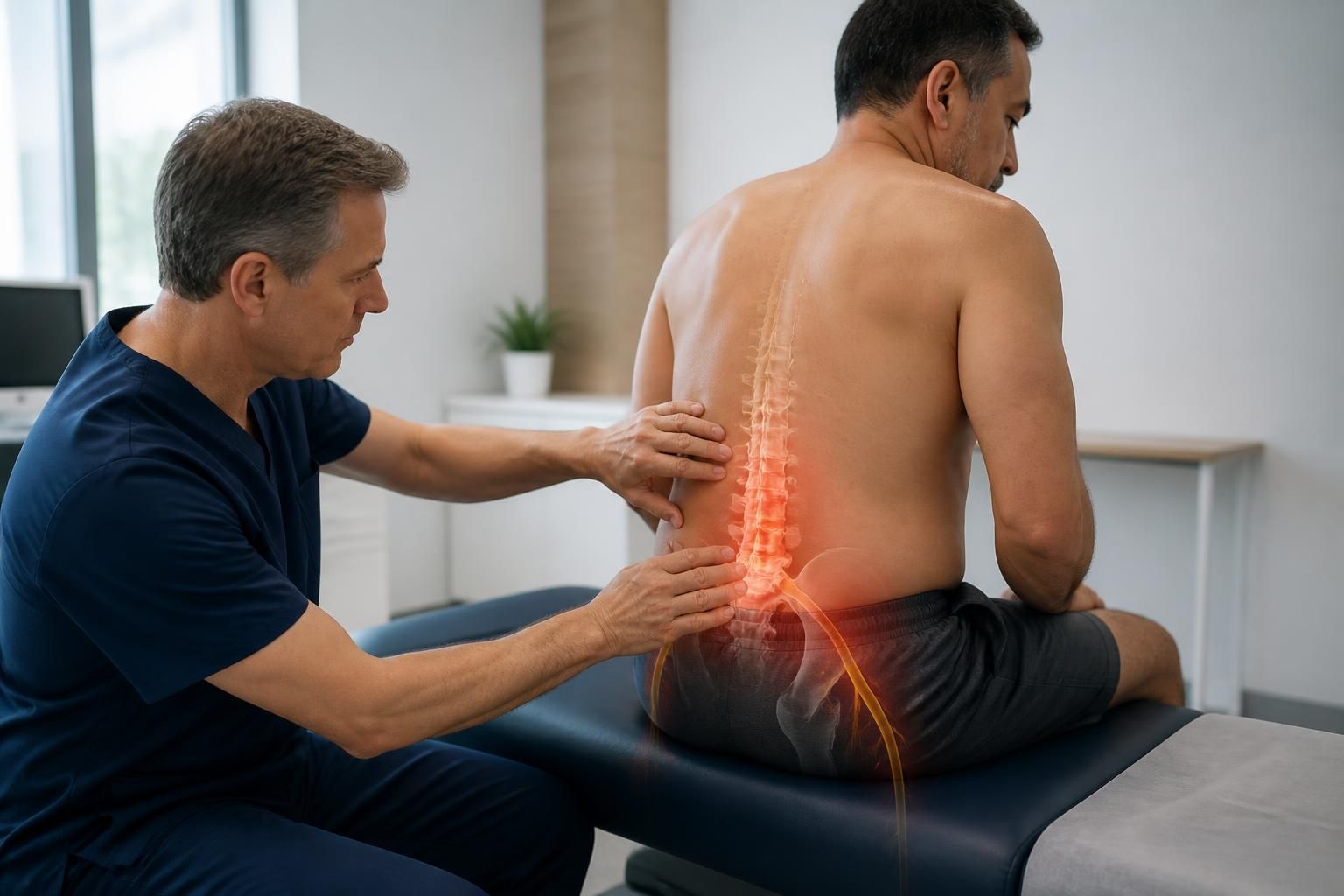
Nerve compression is a painful reality that affects many people in Outremont, particularly when it involves the sciatic nerve. This nerve, which extends several centimetres in length, plays a key role in leg sensation and mobility. When it is subjected to excessive pressure in the lumbar spine or pelvic region, it can cause intense pain, numbness, tingling, and sometimes reduced mobility.
Understanding the specific effects of this nerve compression is crucial to better recognize symptoms and consider appropriate care. In a setting such as Outremont, where lifestyles range from office work to regular physical activity, the causes and manifestations may differ, making a personalized assessment essential. Nerve inflammation related to this compression requires particular attention to avoid complications and improve quality of life.


In brief: key facts about nerve compression in sciatica in Outremont
- Sciatic nerve compression can cause low back pain radiating into the leg, accompanied by numbness and tingling.
- The main causes include lumbar disc herniation, lumbar osteoarthritis, and piriformis syndrome.
- Pain may vary depending on the affected nerve root (L5 or S1), which guides the clinical assessment.
- Maintaining appropriately adapted physical activity is recommended rather than prolonged strict rest.
- Conservative care such as physiotherapy, manual therapy, and motorized spinal decompression is preferred in Outremont.
- Warning signs, such as loss of bladder control or rapidly worsening weakness, require urgent medical consultation.
How nerve compression affects the sciatic nerve and causes pain
Nerve compression refers to pressure applied to a branch of a nerve, disrupting its normal function. The sciatic nerve, arising from the L4 to S3 lumbar nerve roots, is particularly susceptible to this phenomenon in Outremont because current lifestyles often involve prolonged sitting or irregular physical exertion.
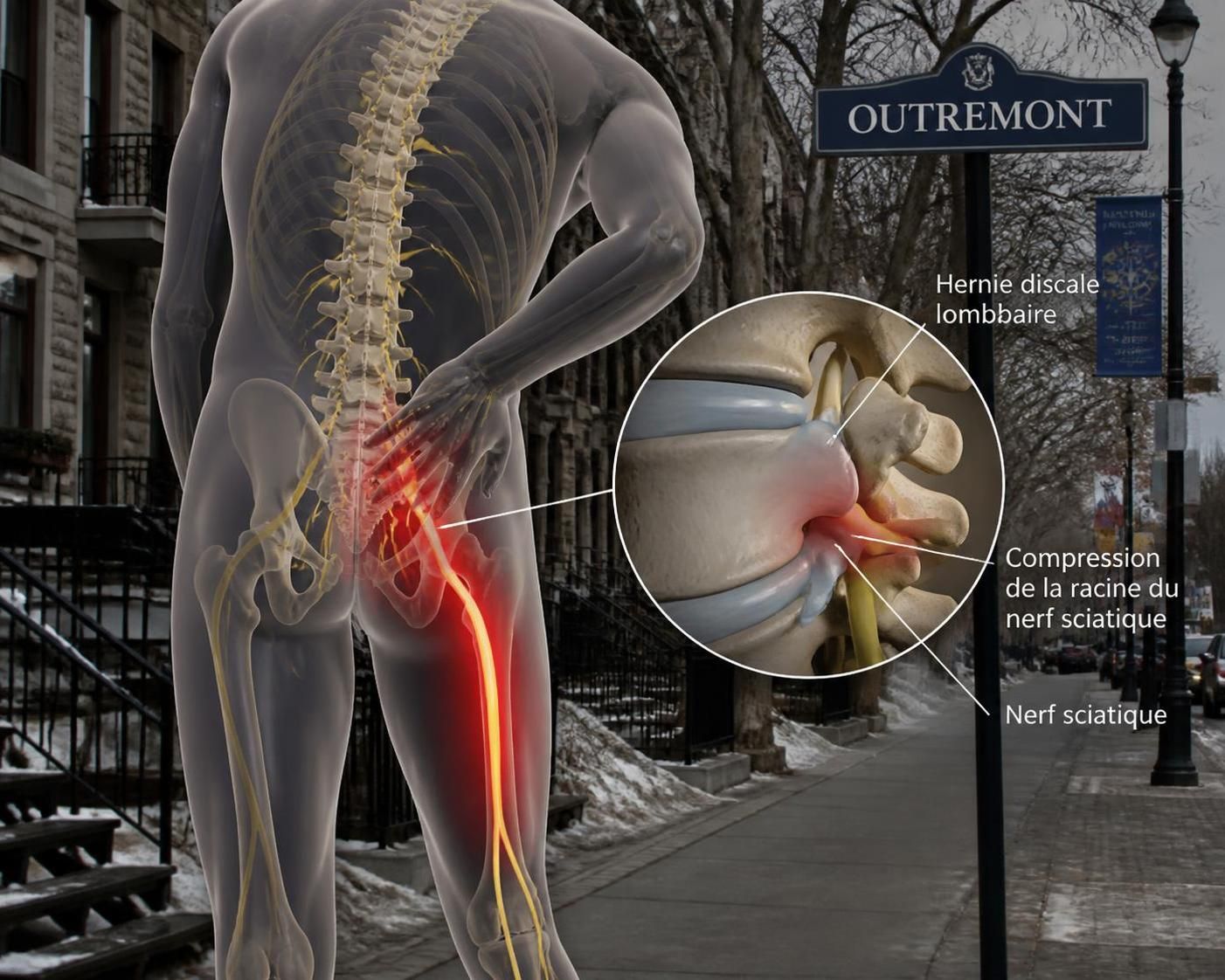
When the nerve is compressed, it may become inflamed, referred to as nerve inflammation. This inflammation contributes to worsening the pain and sensory disturbances experienced by patients. Typically, sciatica presents as pain radiating from the lower back to the buttock, then along the back or outer side of the leg, following the nerve pathway. This pain is not simply muscular but neurological, which explains why it may feel electric or burning.
Compression may occur in several locations, including from a disc herniation protruding toward the nerve root, narrowing of the lumbar spinal canal (stenosis), or piriformis syndrome, in which the muscle in the pelvic region compresses the nerve.
The precise location of pain provides key clues about the involved nerve root: pain extending to the outside of the leg and top of the foot often corresponds to L5 compression, whereas more posterior pain descending to the heel suggests S1 involvement. These distinctions, which are important during clinical assessment, help guide targeted treatment.
Understanding the distinction between sciatica and other types of low back pain, such as simple low back pain or femoral neuralgia, is essential to avoid inappropriate treatment. Sciatica always involves pain following a specific nerve pathway, often accompanied by numbness or tingling in the leg.
In Outremont, the urban environment, which encourages prolonged sitting, including during public transit commutes or working from home, may worsen this nerve compression. Sedentary behaviour combined with certain postures increases pressure on the lumbar discs and nerve roots.
Clinical signs and characteristic symptoms of sciatic nerve compression
The effects of nerve compression on the sciatic nerve result in a variety of symptoms that can vary in intensity and location. Pain is often described as dull, shooting, or burning, and typically occurs on one side of the body. Depending on the individual, this pain may be constant or occur in intermittent episodes.
Sensory disturbances accompanying pain may include tingling, pins and needles, or numbness in the lower limbs, particularly in the buttock, thigh, calf, or foot. In some patients, this sensation may alter the perception of touch or temperature, which can affect balance and mobility.
Another common consequence is muscle weakness, which may lead to reduced mobility. This may result in difficulty walking on the toes or heels, reduced knee or ankle reflexes, and, in more severe cases, difficulty bending the knee or controlling foot movements.
Some Outremont residents also report associated low back pain, which may complicate the interpretation of symptoms without a thorough examination. Pain intensity may increase with certain movements, especially bending or twisting the trunk, or with activities such as prolonged driving.
It is also crucial to note that sciatica with severe symptoms such as loss of sensation in the perineal area (saddle anaesthesia), loss of bladder or bowel control, requires urgent medical consultation, as this may indicate cauda equina syndrome.
Factors that aggravate and modify symptoms in Outremont
In the urban setting of Outremont and its surrounding area, certain behaviours or situations may influence the severity of symptoms related to sciatic nerve compression. Understanding these factors helps better manage pain and adapt daily activities.
Prolonged sitting, which is very common in office jobs or during public transit commutes, places increased pressure on the lumbar spine, particularly the intervertebral discs and nerve roots. This situation may worsen low back pain and nerve irritation.
In addition, certain postures adopted at work, without adequate lumbar support, increase nerve compression. For this reason, simple ergonomic adjustments, such as using a lumbar cushion or regularly standing up to walk, can provide noticeable relief.
When practised reasonably, physical activity can have a beneficial effect by mobilizing the spine and strengthening the back’s stabilizing muscles. However, sudden movements or lifting heavy loads can worsen existing symptoms and increase nerve inflammation.
Depending on how symptoms progress, it is important for Outremont patients to listen carefully to their bodies and adjust their activities. Pain that becomes more intense, travels farther down the leg, or is accompanied by progressive numbness should prompt a clinical reassessment.
Finally, sleep may also influence pain intensity. Poor positioning at night, without appropriate support (a firm mattress, suitable pillow), may increase tension on the sciatic nerve and lumbar areas.
Treatment options for sciatic nerve compression in Outremont
Several options are offered to patients experiencing sciatic nerve compression in the Outremont area, always taking a personalized assessment into account. The main goals of treatment are to reduce pain, decrease nerve inflammation, restore function, and prevent complications.
The first step generally involves maintaining or gradually resuming appropriately adapted physical activities according to individual tolerance. Remaining completely immobile is rarely beneficial, as controlled movement helps promote resolution of the compression.
Physiotherapy and manual care are commonly recommended. They include specific techniques for spinal mobilization, muscle decompression, and neurodynamics to reduce pressure on the nerve and improve mobility. These manual treatments are supplemented by targeted exercises to strengthen the muscles supporting the lumbar spine.
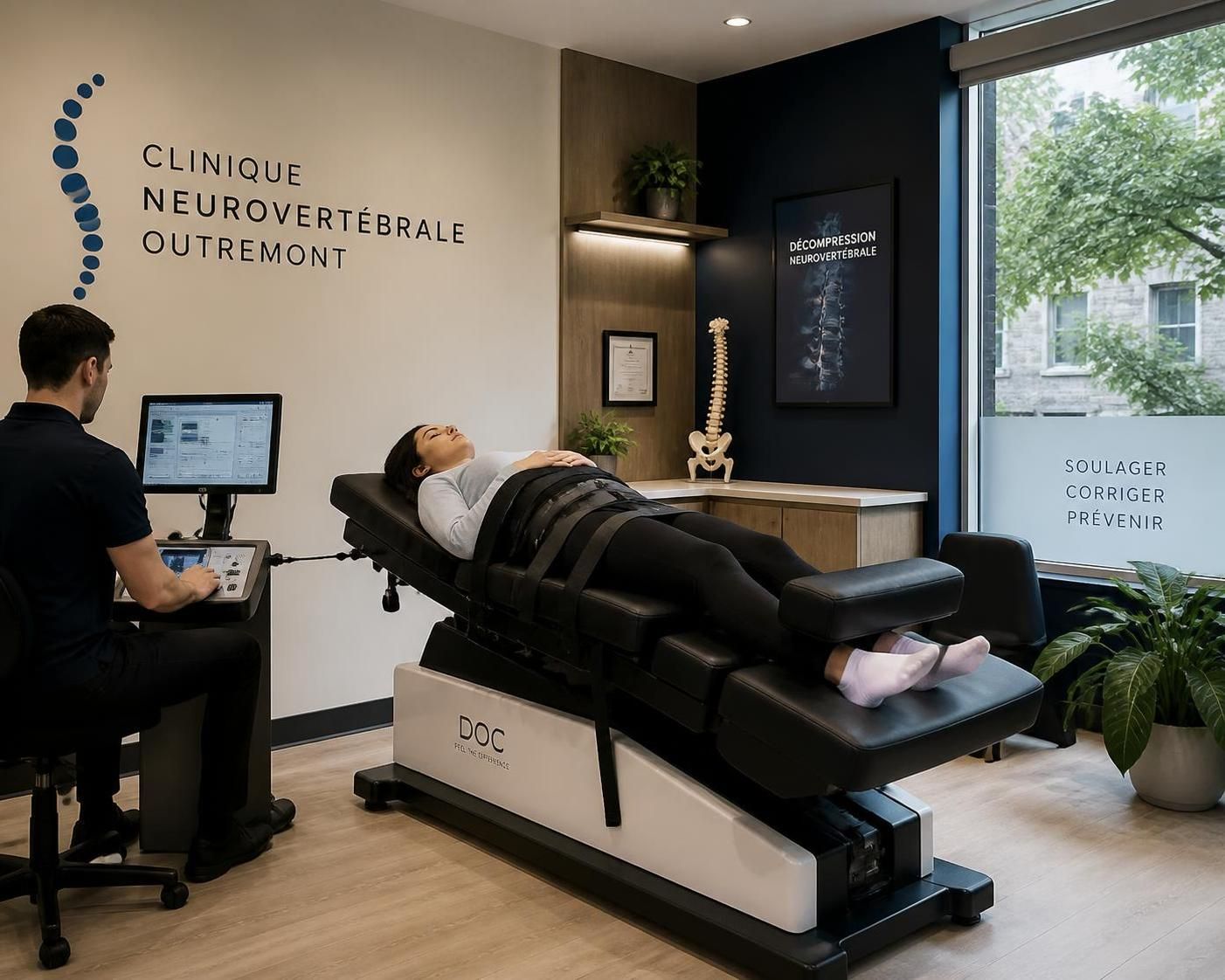
A leading intervention among modern manual therapies is motorized spinal decompression. This technique involves applying controlled traction to the lumbar spine to temporarily alter the mechanical pressures exerted on the sciatic nerve. For some patients with a disc herniation, disc protrusion, or foraminal narrowing, this approach may provide notable relief without immediate surgery.
Medication prescribed as appropriate by a health professional may include anti-inflammatory drugs to reduce inflammation and associated pain. The use of vasodilators or nerve-regenerating agents may also be considered in certain protocols in Montréal and surrounding areas.
In more complex situations, a local injection may be offered, sometimes in addition to conservative treatment. Surgery is considered only if significant neurological symptoms persist or worsen despite appropriate care.
To learn more about appropriate options, consult dedicated resources on the treatment and management of sciatic pain.
Comparison table of the main treatment options for sciatic nerve compression
| Treatment | Goal | Benefits | Limitations | Specific indications |
|---|---|---|---|---|
| Adapted physical activity | Maintain or restore mobility | Accessible, promotes functional recovery | May be difficult during the acute phase | Mild to moderate pain patterns |
| Physiotherapy and manual therapy | Pain reduction and muscle restoration | Personalized, non-invasive | Requires several sessions, variable results | Moderate to severe cases without major neurological deficits |
| Motorized spinal decompression | Reduce mechanical pressure on the nerve | Gradual, controlled, improves tolerance to movement | Not indicated for everyone, variable results | Selected disc herniation, disc protrusion, and foraminal stenosis |
| Anti-inflammatory medications and vasodilators | Reduce inflammation and improve blood circulation | Rapid action on pain | Possible side effects, limited duration of use | Moderate to severe nerve inflammation |
| Surgery | Correct severe nerve compression | A rapid solution in certain cases | Surgical risks, rehabilitation required | Progressive or significant neurological deficits |
What are the common symptoms of sciatic nerve compression?
Symptoms often include pain radiating into the leg, numbness, tingling, and a feeling of muscle weakness that may limit mobility.
How do I know whether sciatica requires emergency care?
Sudden loss of bladder or bowel control, rapidly worsening weakness, or numbness in the saddle area require urgent medical consultation.
Is spinal decompression effective for all cases of sciatica?
This technique may be considered for certain profiles involving a disc herniation or foraminal narrowing, but it is not appropriate for all cases.
Can you continue walking with sciatic pain?
Gentle walking is often recommended for sciatic pain, provided it does not cause a significant worsening of symptoms.
What practices should be avoided with sciatic nerve compression?
It is advisable to avoid prolonged strict rest, prolonged sitting without breaks, and unsupervised heavy lifting.
