


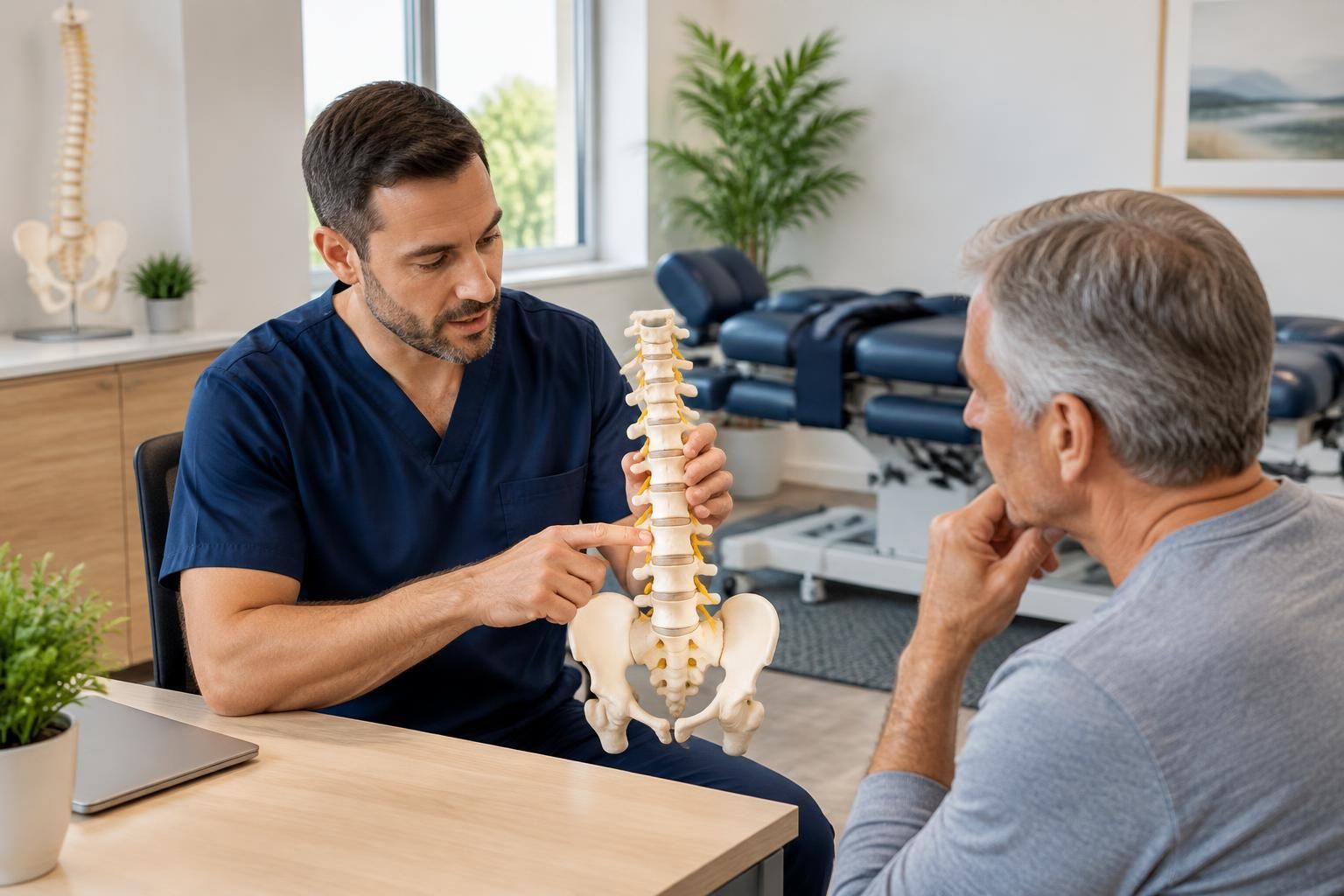
For a person in Dollard-des-Ormeaux living with back pain or pain travelling down the leg, spinal decompression may be a non-surgical option to consider, but it is not suitable for every profile. This expert opinion focuses on what the method aims to do, the limitations of the available evidence, and the questions to ask before starting spine care.
A herniated disc, nerve root irritation, or another lumbar condition can cause similar symptoms. The duration of pain, sensory changes, and the ability to walk or work are as important as imaging findings in determining whether a specialist consultation is indicated.


Spinal decompression: key points
Motorized traction. The device applies a gradual, controlled force to the spine; it does not put a disc back into place.
An indication to assess. Some symptoms associated with a disc herniation or protrusion may warrant discussion after an individualized assessment.
Variable results. Some people report improvement, but testimonials cannot predict another patient’s response.
Safety first. Progressive weakness, loss of bladder or bowel control, or saddle numbness requires urgent medical assessment.
The term “decompression” may suggest a simple mechanical solution. In reality, back and leg symptoms depend on several factors, and a traction technique does not automatically treat every possible cause.
How to interpret back pain and sciatica
Sciatica generally refers to pain associated with irritation of a lumbar or sacral nerve root, often felt in the buttock and along one leg. Tingling, numbness, or weakness may also be present. Low back pain alone, without radiation or neurological signs, does not necessarily have the same origin.
A herniated disc occurs when part of an intervertebral disc bulges out and may irritate a nearby structure. A protrusion also refers to a disc deformation, but its appearance on imaging is not enough to establish that it explains the symptoms. The clinical examination, progression, and imaging, when indicated, must be interpreted together.
Prolonged sitting, driving, or a day of remote work may worsen certain symptoms, particularly when breaks are infrequent. In Dollard-des-Ormeaux, car travel and periods of seated work may make these triggers more noticeable; however, responses vary from person to person. An activity that relieves one person’s symptoms may irritate another person’s symptoms.
A consultation may help clarify whether the pain suggests nerve involvement, referred pain, or another cause. The SOS Sciatica resource on the causes and assessment of sciatica helps explain why the pain pattern alone cannot establish a diagnosis.
What spinal decompression can and cannot do
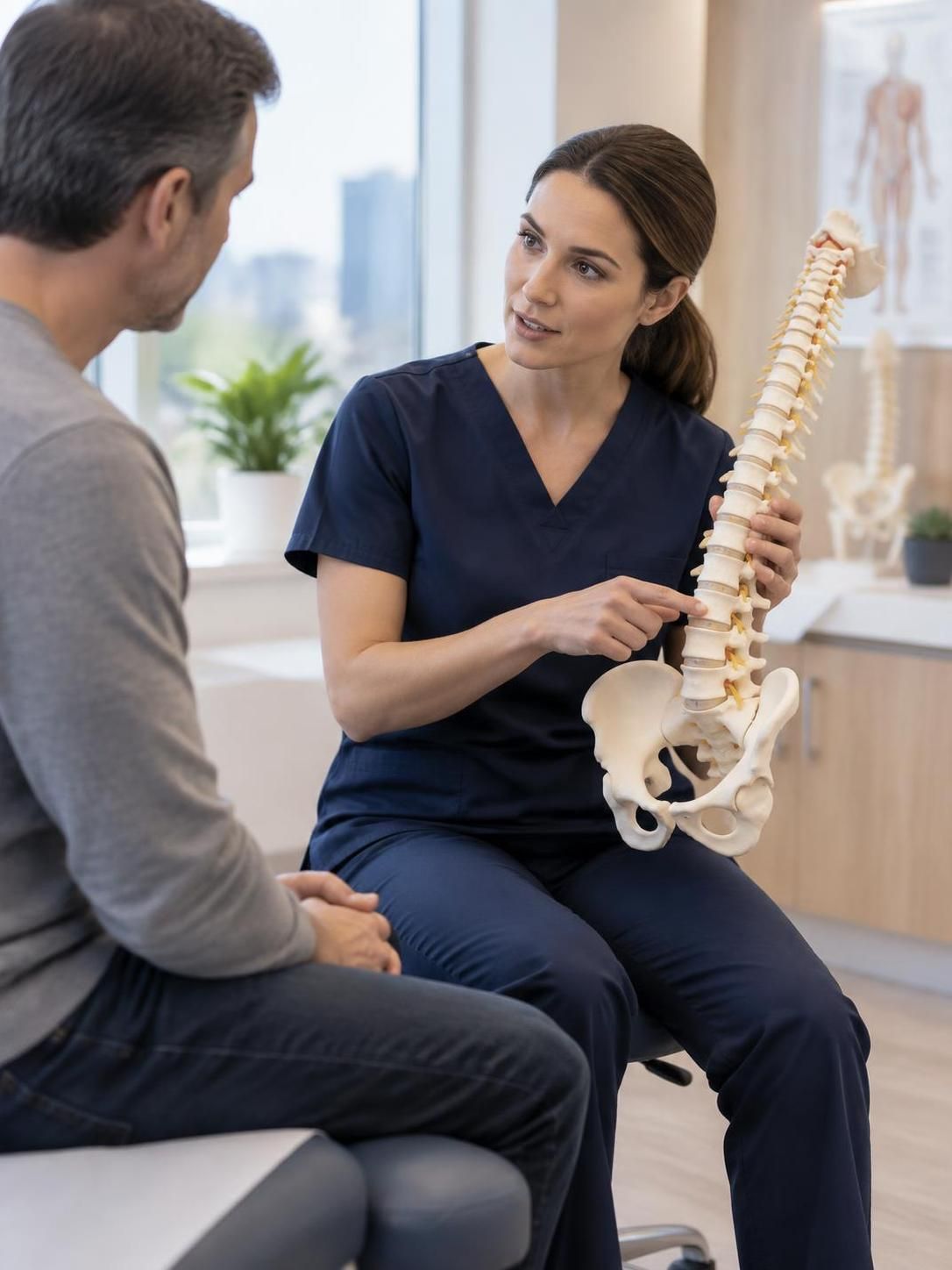
Spinal decompression is a form of motorized spinal traction. Depending on the device and assessment, straps stabilize the body while the table applies gradual forces, with the aim of temporarily modifying certain mechanical stresses around the discs and nerve roots.
This approach may be considered for certain patients whose symptoms are consistent with disc or foraminal involvement. However, it guarantees neither immediate relief nor disc repair, and it should not be described as a method that necessarily avoids surgery. Available studies do not support promising a uniform outcome for all people with sciatica.
Testimonials published online may describe an individual experience, but they do not on their own demonstrate a treatment’s effectiveness. Results may depend on the cause of symptoms, their duration, overall health, and associated care. An overview of opinions on spinal decompression can serve as a starting point, provided general explanations are distinguished from strong clinical evidence.
| Option | Possible role | Point to discuss |
|---|---|---|
| Graded activity and tailored exercises | Maintain function and gradually resume tolerated movements. | Choose movements that do not cause symptoms to progress down the leg. |
| Motorized decompression | Apply controlled traction for selected patients. | Indication, contraindications, objectives, and reassessment criteria. |
| Medication or injection | An authorized professional may consider these based on the clinical presentation. | Expected benefits, adverse effects, and appropriate duration of use. |
| Specialist opinion or surgery | Assess certain significant compressions or relevant neurological deficits. | Urgency, progression, and options suited to the individual situation. |
The comparison with injections is also a matter of clinical selection, not a competition between methods. For readers who wish to examine this distinction in a regional context, this article on decompression and injections for sciatica offers a discussion angle; decisions must remain individualized.
Assessment, precautions, and care choices in Dollard-des-Ormeaux
Before starting, a consultation should address symptoms, medical history, treatments already tried, and functional goals, such as walking longer or resuming certain tasks. A professional must also determine whether a medical assessment or referral to another service is needed.
An X-ray or MRI is not automatically required for every episode of back pain. The health professional determines whether imaging can answer a specific clinical question; its findings must then be considered alongside the symptoms and examination. The presence of a disc abnormality on imaging does not necessarily explain all pain.
Precautions vary according to health status and the device. Certain conditions, specific medical histories, or suspicion of a serious condition may make traction inappropriate or require medical advice before any trial. Decompression must not delay urgent assessment.
- Ask which clinical signs support the proposed indication and which other causes were considered.
- Clarify measurable goals, such as walking, sleep, or sitting tolerance, rather than a guaranteed number of sessions.
- Agree on a reassessment point if pain intensifies, travels farther down the leg, or is accompanied by increasing numbness.
- Verify the professional’s qualifications and scope of practice, as well as complementary management options.
In Mount Royal, Clinique TAGMED is located at 1140 Beaumont Avenue, near Outremont and Côte-des-Neiges; this location does not mean that it has an address in Dollard-des-Ormeaux. Depending on the assessment, approaches related to low back pain may include motorized decompression, specific osteopathy, or the precision percussor. The proposed modalities and their appropriateness must be discussed without presuming an outcome.
To better understand the service and its limitations, consult the page on spinal decompression at Clinique TAGMED. Depending on the profile, a reasoned care plan may also combine maintaining tolerated activity, tailored exercises, appropriate manual care, or medical advice.
An explanatory video can make how a table works more concrete, but it does not replace either an examination or a discussion of personal risks. The right choice is one that addresses an understandable indication and provides for reassessment if the situation changes.
When to seek care for pain travelling down the leg
A clinical assessment is indicated if pain persists or returns, travels below the knee, limits walking, or disrupts sleep. Numbness, loss of sensation, weakness, or reduced function should also be reported, particularly if the symptom is changing.
Urgent medical assessment is necessary in the event of loss of bladder or bowel control, saddle numbness, significant or rapidly progressive weakness, fever or impaired general health, significant trauma, or pain in the context of cancer or infection. Rapid worsening also requires prompt attention; it should not be treated independently with traction.
For additional guidance on when to seek help, consult the signs indicating when to seek care for sciatica. A cautious approach does not trivialize symptoms, but also avoids concluding that there is an emergency based on isolated pain without assessment.
Frequently asked questions about spinal decompression
Is spinal decompression suitable for every herniated disc?
No. A herniation visible on imaging is not enough to determine whether this approach is appropriate. Symptoms, examination, medical history, and contraindications must be considered.
Can relief occur after the first session?
Some people report a rapid change, while others do not experience one or respond differently. Immediate improvement alone does not prove lasting recovery.
How many sessions should be planned?
There is no universal number that is suitable for everyone. The plan should be explained and reassessed based on function, symptoms, and the observed response, without presenting a protocol as guaranteed.
Is an MRI needed before the consultation?
Not necessarily. The need for imaging depends on the clinical history and examination; a professional can determine whether it is useful and how to interpret the findings.
When does sciatic pain become urgent?
Loss of bladder or bowel control, saddle numbness, or significant and progressive weakness requires urgent medical assessment. Persistent pain, numbness, or limited walking also warrants a clinical assessment.
If low back pain or sciatica makes walking, working, or sleeping difficult, an assessment can help clarify possible causes, signs to watch for, and the relevance of a conservative approach. Patients in Dollard-des-Ormeaux can consult information about sciatica assessment and management options in Montréal.
Sylvain Desforges, B.Sc., D.O., N.D., osteopath and naturopath
This content is educational and does not replace a personalized assessment or advice from a health professional.
