


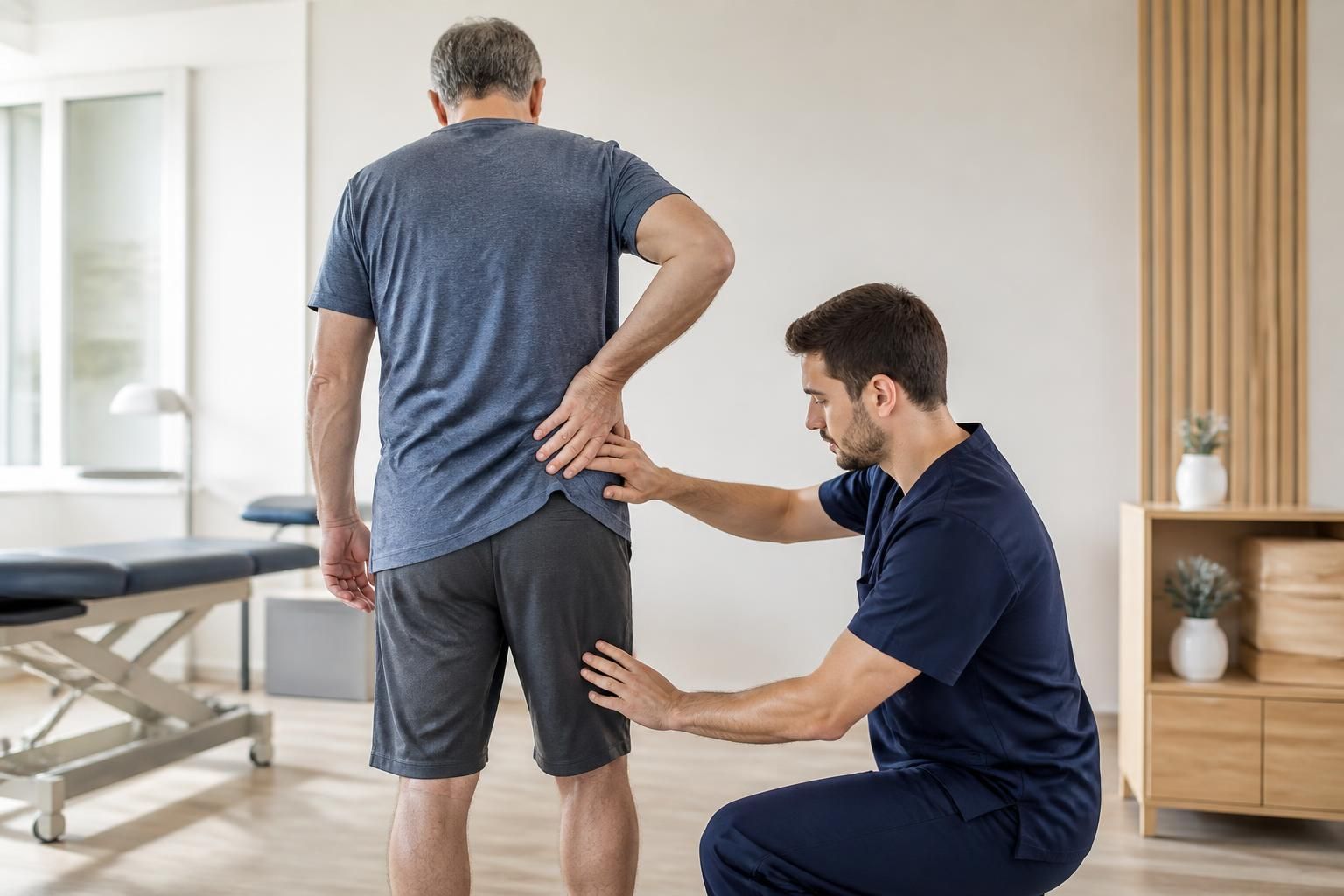
Sciatic pain experienced during prolonged standing is a common concern for many residents of Rosemont–La Petite-Patrie. This nerve-related condition can significantly affect quality of life on a daily basis, whether during work, family, or leisure activities.
It is essential to understand the possible causes, signs to watch for, and sound ergonomic and postural practices to better manage this type of pain in Montréal. These recommendations take into account the specific realities of occupational health and the demands associated with prolonged standing.


In brief: key recommendations for managing sciatica during prolonged standing
- Prolonged standing can increase pressure on the sciatic nerve, thereby intensifying the pain experienced.
- Alternating postures and taking frequent breaks can reduce strain on the lumbar spine.
- Workstation ergonomics, particularly in Rosemont–La Petite-Patrie, should be adapted to limit stress on the lower back.
- Gradual stretching and gentle mobilization of the sciatic nerve help improve mobility and reduce discomfort.
- Medical or osteopathic follow-up is recommended if pain persists or if associated neurological signs are present.
Understanding sciatica and its impact during prolonged standing in Rosemont–La Petite-Patrie
Sciatica refers to radicular pain resulting from irritation or compression of the sciatic nerve, extending from the lower back to the leg. This nerve, the longest in the human body, has sensory and motor functions that are essential to the lower limbs.
Pain related to sciatica may worsen during prolonged standing. This may be explained in particular by increased compression of spinal and disc structures under the effect of gravity, sometimes increasing pressure on the nerve root. Residents of Rosemont–La Petite-Patrie, particularly those who spend long periods standing at work or in daily life, may therefore experience an intensification of symptoms.
Common causes of sciatica include a herniated disc, foraminal or spinal stenosis, which can limit the space through which the nerve travels, as well as muscular conditions such as piriformis syndrome. In Rosemont–La Petite-Patrie, where the urban environment combines an active lifestyle and a variety of sports activities, managing these factors remains key.
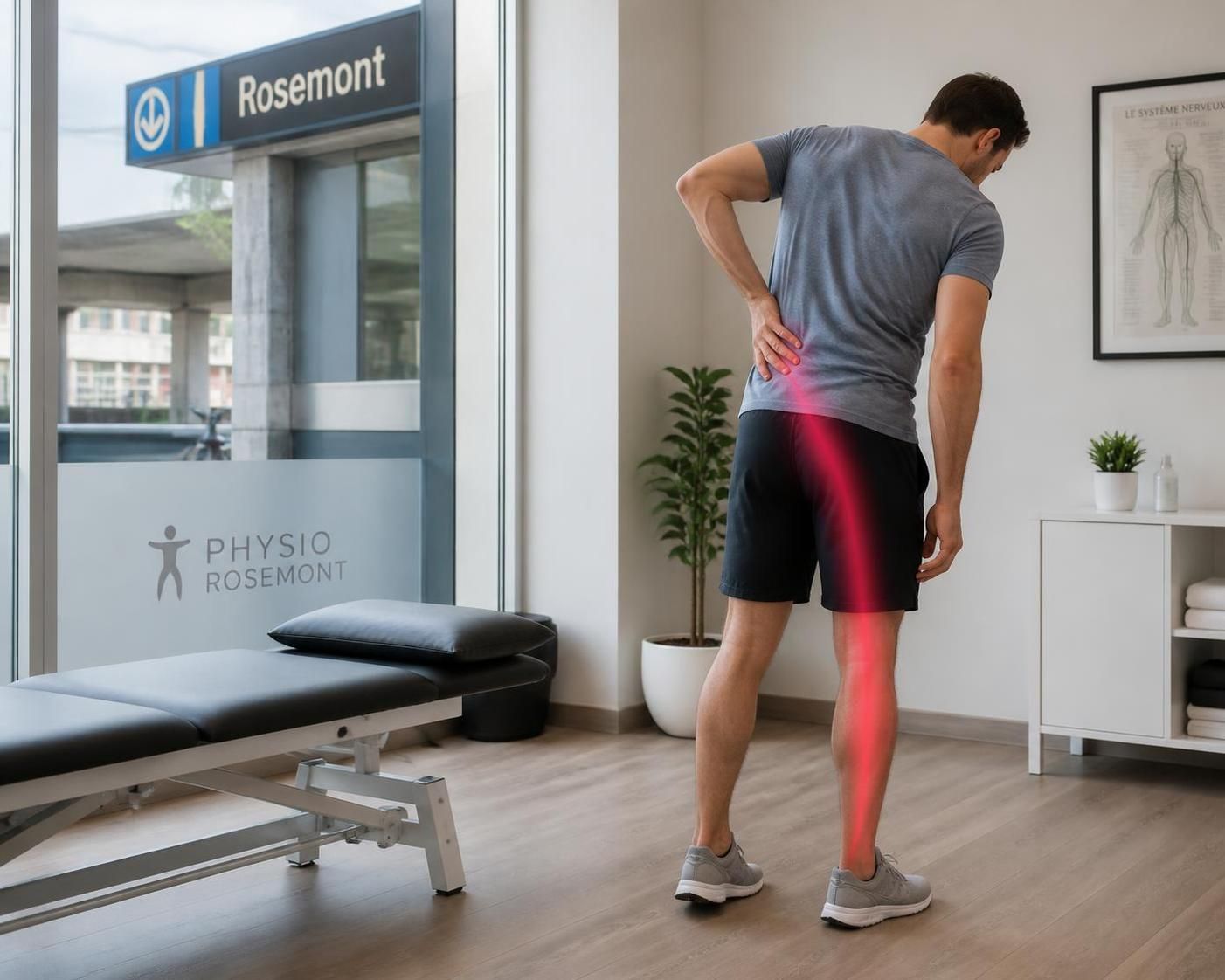
The type of pain varies depending on the nerve root involved, with the L4-L5 and L5-S1 roots being the most commonly affected. The pain may follow a path down the back of the thigh and calf, extending to the toes, accompanied by numbness or tingling. Understanding that standing may sometimes worsen these sensations highlights the importance of strategies adapted to this specific context.
Postures and ergonomic strategies to relieve sciatica while standing in Rosemont–La Petite-Patrie
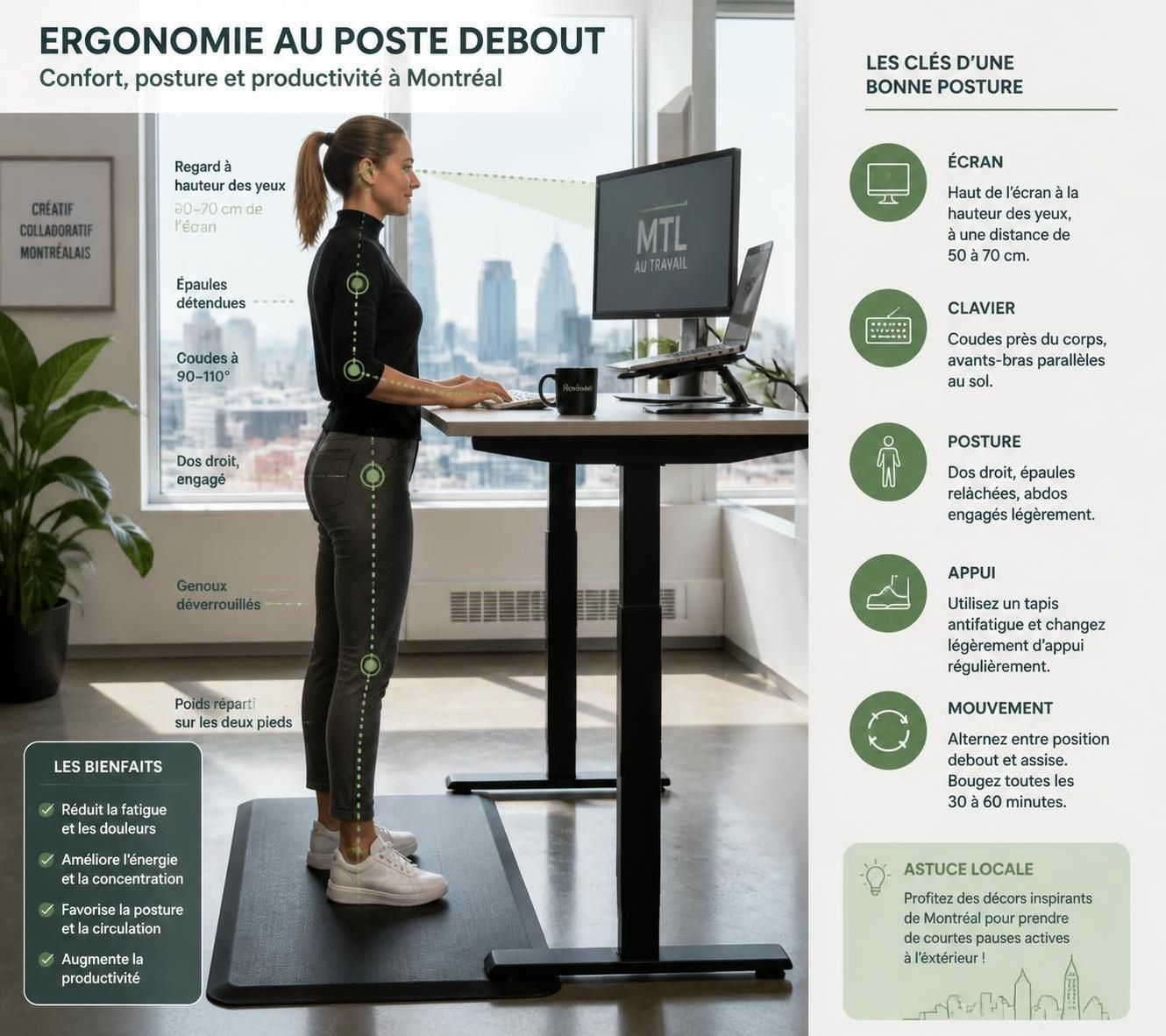
Spending long hours standing is commonly required in many jobs and domestic situations. To minimize the impact of this posture on sciatic pain, it is essential to prioritize appropriate postural and ergonomic adjustments.
A first recommendation is to alternate regularly between standing and sitting. For example, at work, incorporating seated breaks or short walks helps relieve the load on the lumbar spine. In Rosemont–La Petite-Patrie, where remote work is becoming increasingly popular, avoiding static standing is equally relevant.
It is also recommended to use appropriate supports, such as an anti-fatigue mat, to absorb impact from the floor. Wearing shoes with good cushioning is another recognized preventive measure. This helps reduce the microtrauma transmitted to the spine through the legs during long periods spent standing.
Workstation ergonomics can be reassessed so that the height of work surfaces allows a neutral posture, with slight knee flexion and without lumbar hyperextension or excessive arching of the back. In Rosemont–La Petite-Patrie, employers committed to occupational health are increasingly incorporating these recommendations, in the interest of prevention and worker well-being.
Gentle movements that shift weight from one leg to the other, and reducing the load by placing one foot on a small stool during less active moments, are also good habits to consider for limiting pressure on the sciatic nerve.
Stretching and nerve mobilization: routines adapted for the sciatic nerve
The use of targeted stretches can contribute greatly to symptom management for people with sciatica, particularly in the context of prolonged standing. These exercises are especially helpful when practised gradually and in a controlled manner.
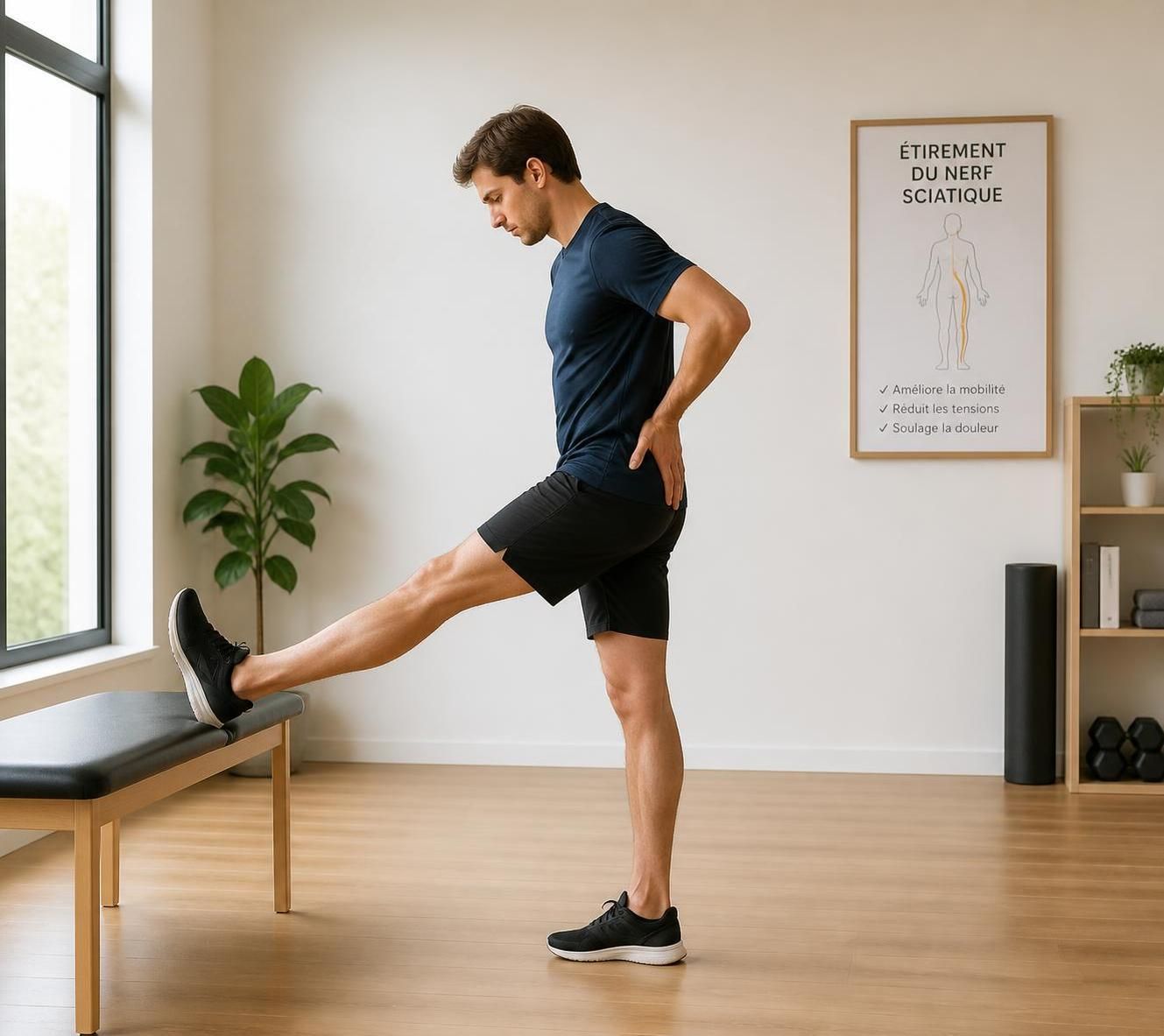
One commonly recommended stretch consists of placing the heel of the painful leg on an elevated surface—such as a small bench or step—while keeping the leg straight and gently leaning the torso forward. This technique engages the sciatic nerve, promoting relaxation of its surrounding structures without causing excessive irritation.
While seated, placing the ankle over the opposite knee and slowly leaning the torso forward targets stretching of the piriformis muscle, which is often involved in nerve compression. This movement, which is easy to incorporate during breaks at work, helps reduce tension in the gluteal region.
Finally, gentle neurodynamic mobilization, consisting of alternating ankle flexion and extension with the leg straight, facilitates the nerve’s movement within its sheaths. This low-demand technique can be used frequently without a risk of overloading.
It remains essential to remember that each exercise should be performed while respecting the body’s signals, without causing sharp pain or pain that persists after the session. To explore these practices further, it is always recommended to consult a health-care professional who can personalize an appropriate program. In addition, consulting educational resources such as understanding which positions to avoid with sciatica can be helpful for better managing pain on a daily basis.
Warning signs and key times to seek care for persistent sciatica in Rosemont–La Petite-Patrie
Sciatica often presents as pain that may radiate from the lumbar region to the leg, sometimes associated with numbness, tingling, or a feeling of muscle weakness. In some cases, prolonged standing can worsen these symptoms.
Certain signs warrant prompt care or a necessary consultation to avoid more serious complications. Medical follow-up is needed if the pain persists beyond a few weeks, worsens, or becomes disabling.
The following signs should also raise concern: sciatic pain accompanied by significant weakness in the leg, loss of sensation in the soles of the feet, or associated urinary or bowel problems. These symptoms may suggest severe nerve compression and require urgent medical assessment.
For residents of Rosemont–La Petite-Patrie, access to specialized assessments is made easier in particular by the proximity of centres such as Clinique TAGMED in Mont-Royal, which offers care adapted to lumbar radicular pain and neurovertebral decompression under professional supervision.
Consultation in the early stages of pain is also beneficial in helping prevent pain from becoming chronic. When in doubt, consulting recognized resources to identify the signs indicating when to seek care for sciatica is relevant.
See a professional promptly if you notice:
- Persistent pain below the knee or radiating throughout the leg.
- Increasing numbness, tingling, or muscle weakness.
- Loss of bladder or bowel control.
- Fever associated with pain or feeling generally unwell.
- Pain beginning after significant trauma.
Management options adapted to sciatica related to prolonged standing
The treatment of sciatica generally begins with conservative measures aimed at reducing pain, improving mobility, and preserving sciatic nerve function while maintaining adapted physical activity as much as possible.
One of the pillars of care is the recommendation to gradually resume activities, with specific exercises prescribed by a professional trained in musculoskeletal health. Physiotherapy, osteopathy, or manual care such as that offered by Clinique TAGMED often allow for better pain control and functional improvement.
Motorized neurovertebral decompression is an interesting complementary option for some patients with confirmed nerve impingement or disc protrusion after assessment. This technique involves controlled traction intended to temporarily reduce pressure on the nerve roots and improve tolerance to movement.
However, it is not indicated for everyone, and its effectiveness varies according to the patient’s profile and the nature of the sciatica. It is essential to emphasize that decompression does not replace medical monitoring and does not guarantee that more invasive treatments can be avoided if surgery is necessary.
Anti-inflammatory or analgesic medications may be used during acute phases, always under medical supervision. Cortisone injections may be considered in severe cases that are not relieved. Surgery remains rare and is often reserved for situations involving marked neurological deficits or paralytic sciatica.
Prevention for residents of Rosemont–La Petite-Patrie also includes good ergonomic management at work and at home, as well as maintaining habits that support lumbar health to limit recurrences.
The exercises presented in this video demonstrate movements adapted to mobilize the sciatic nerve and reduce pain related to prolonged standing.
Detailed explanation of motorized neurovertebral decompression as an option for certain cases of sciatica with confirmed nerve compression.
{“@context”:”https://schema.org”,”@type”:”FAQPage”,”mainEntity”:[{“@type”:”Question”,”name”:”Quels gestes u00e9viter pour ne pas aggraver une sciatique en position debout ?”,”acceptedAnswer”:{“@type”:”Answer”,”text”:”Il est conseillu00e9 du2019u00e9viter de rester immobile trop longtemps en position debout, ainsi que les mouvements brusques de torsion ou de flexion excessive du tronc. Varier les postures ru00e9guliu00e8rement ru00e9duit la pression sur le nerf sciatique.”}},{“@type”:”Question”,”name”:”u00c0 quelle fru00e9quence puis-je faire des u00e9tirements pour le nerf sciatique ?”,”acceptedAnswer”:{“@type”:”Answer”,”text”:”Un rythme de 3 u00e0 5 su00e9ances de 10 u00e0 15 minutes par semaine est gu00e9nu00e9ralement raisonnable, en veillant u00e0 respecter les sensations du corps et u00e0 u00e9viter une douleur intense ou persistante apru00e8s les exercices.”}},{“@type”:”Question”,”name”:”La du00e9compression neurovertu00e9brale est-elle adaptu00e9e u00e0 toutes les sciatiques ?”,”acceptedAnswer”:{“@type”:”Answer”,”text”:”La du00e9compression neurovertu00e9brale motorisu00e9e peut u00eatre envisagu00e9e chez certains patients apru00e8s une u00e9valuation approfondie, notamment pour les cas de protrusion discale ou de stu00e9nose foraminale. Elle nu2019est toutefois pas indiquu00e9e de fau00e7on universelle et doit su2019intu00e9grer dans un plan de traitement global.”}},{“@type”:”Question”,”name”:”Quand faut-il consulter en urgence face u00e0 une sciatique ?”,”acceptedAnswer”:{“@type”:”Answer”,”text”:”Une consultation mu00e9dicale urgente est nu00e9cessaire en cas de perte de contru00f4le urinaire ou intestinal, anesthu00e9sie de la selle, faiblesse importante et progressive du2019une jambe, ou en pru00e9sence de fiu00e8vre associu00e9e u00e0 la douleur.”}},{“@type”:”Question”,”name”:”Comment adapter son poste de travail pour limiter la douleur sciatique ?”,”acceptedAnswer”:{“@type”:”Answer”,”text”:”Adoptez une posture neutre avec un bon soutien lombaire, alternez ru00e9guliu00e8rement entre position assise et debout, utilisez un tapis antifatigue et portez des chaussures adaptu00e9es. Ru00e9duisez les pu00e9riodes en station immobile pour diminuer la pression sur le nerf.”}}]}What movements should be avoided to prevent worsening sciatica while standing?
It is advisable to avoid remaining still for too long while standing, as well as sudden twisting movements or excessive bending of the torso. Varying postures regularly reduces pressure on the sciatic nerve.
How often can I stretch the sciatic nerve?
A schedule of 3 to 5 sessions of 10 to 15 minutes per week is generally reasonable, while ensuring that you listen to your body’s sensations and avoid intense or persistent pain after exercising.
Is neurovertebral decompression suitable for all cases of sciatica?
Motorized neurovertebral decompression may be considered for certain patients after a thorough assessment, particularly in cases of disc protrusion or foraminal stenosis. However, it is not universally indicated and should be part of a comprehensive treatment plan.
When should I seek urgent care for sciatica?
Urgent medical consultation is necessary in the event of loss of urinary or bowel control, saddle anesthesia, significant and progressive weakness in one leg, or fever associated with pain.
How can I adapt my workstation to limit sciatic pain?
Adopt a neutral posture with good lumbar support, alternate regularly between sitting and standing, use an anti-fatigue mat, and wear appropriate footwear. Reduce periods of standing still to decrease pressure on the nerve.
Pain radiating from the lumbar region to the leg during prolonged standing may indicate sciatica requiring focused attention. A personalized assessment can help clarify the likely cause, identify signs to watch for, and determine whether a conservative or specialized approach is appropriate.
Book an appointment for an assessment in Mont-Royal
Dr. Sylvain Desforges, B.Sc., D.O., N.D., osteopath
This content is intended for educational purposes and does not replace a personalized consultation with a health-care professional.
