


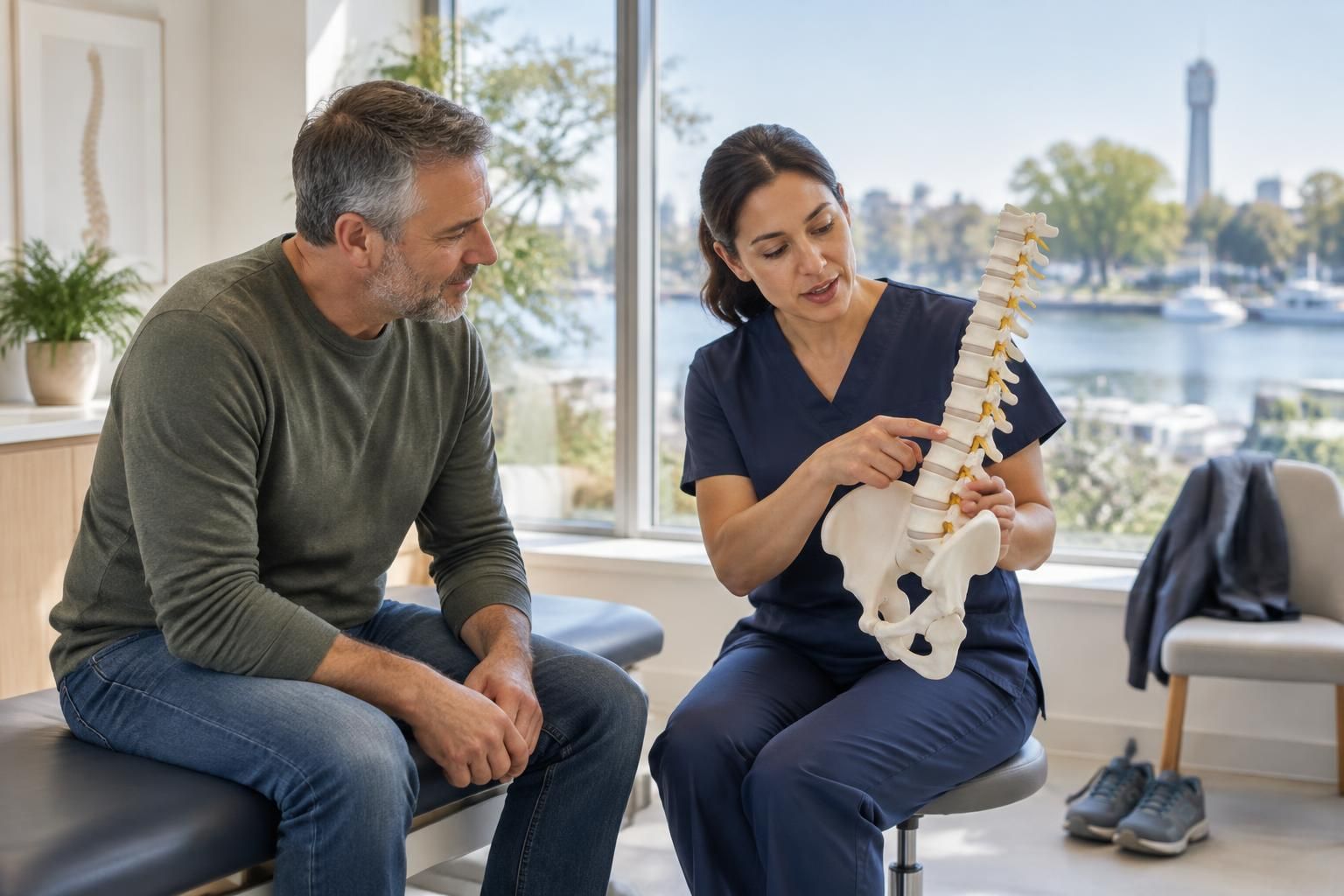
In Lachine, driving, hours of seated work and sports activities can make pain that travels down the leg particularly difficult to manage. When this pain suggests sciatica, adjusting certain lifestyle habits — without becoming inactive or pushing through — may help preserve mobility while the cause is being assessed.
The term “sciatica” generally describes symptoms associated with irritation of a nerve root, rather than a single cause. Low back pain, tingling or weakness can have different origins; helpful measures therefore vary according to the symptoms, their progression and the clinical examination.
Sciatica in Lachine: essential day-to-day guidance
The path of the pain alone is not enough to identify the structure involved. Nerve irritation originating in the low back can cause pain in the buttock and leg, while muscle or joint pain can sometimes resemble it.
- Monitor changes: note where the pain occurs and whether numbness or weakness develops.
- Adapt rather than stop everything: short periods of movement may be better tolerated than prolonged bed rest.
- Reduce temporary aggravating factors: an activity that clearly worsens pain radiating into the leg warrants a break or modification.
- Seek care if symptoms persist or progress: an assessment helps determine whether tests or specific management are needed.
For a general overview of preventive habits and factors that influence symptoms, resources from Ameli on preventing sciatica can complement a discussion with a health-care professional.





Low back pain and the sciatic nerve: what symptoms may indicate
The sciatic nerve is formed by nerve roots from the lower back and sacrum. When one of these roots is irritated or compressed, pain may begin in the low back or buttock and travel down the thigh, calf or foot; tingling, loss of sensation or weakness may also occur.
A herniated or bulging disc and narrowing of the space through which a nerve root passes are among the possible causes. Pain felt in the buttock may also be related to muscles or other pelvic structures. Assessing symptoms, strength and sensation helps guide the evaluation; medical imaging is not automatically necessary.
The pain pattern alone does not make it possible to determine whether an L4, L5 or S1 root is involved. Pain at the front of the thigh may, in particular, suggest femoral neuralgia rather than typical sciatica. To better understand these distinctions and the possible causes, see information on the causes and diagnosis of sciatica.
Posture, physical activity and ergonomics: adjusting lifestyle habits
In Lachine, driving, computer work or leisure activities can require prolonged positions. If sitting worsens symptoms, try varying your positions and getting up regularly, without seeking a “perfect” posture to maintain all day. Lumbar support may be comfortable for some people, but it does not necessarily treat the cause of the pain.
Movement should be adapted to the body’s response. A short walk on even ground, for example, may be more tolerable than running or sudden changes in direction. Stretches are not universally beneficial: if a movement causes pain to travel further down the leg or causes increasing tingling, stop it and seek advice.
A gradual warm-up and progressive return to sports activities are generally more prudent than an immediate return to heavy loads, repeated jumping or rapid twisting. Support belts may occasionally provide a feeling of stability, but they do not replace an assessment or the gradual development of physical capacity. Additional guidance on sports adaptations is provided in this article on sports participation and sciatica in Lachine.
At the office: keep your feet supported and change position before discomfort becomes pronounced.
In the car: adjust the seat to avoid sitting very low or leaning forward; take a break if the trip allows.
During training: temporarily reduce the intensity of a movement that triggers pain radiating into the leg.
A simple record can help identify patterns: activity performed, time spent sitting, location of pain and the presence of neurological symptoms. It is not intended to make a diagnosis, but it can make the consultation more precise.
Managing sciatica: options to choose according to the individual profile
Pain management may combine activity adjustments, movement advice and, depending on the assessment, tailored exercises or manual care. Medications should be discussed with an authorized professional, particularly because of possible adverse effects and other treatments being taken. If symptoms are persistent or disabling, a physician may consider other options, such as an injection or specialist consultation.
Motorized neurovertebral decompression is a form of controlled traction that may be considered for some people after an assessment. It is intended to temporarily modify the mechanical forces applied to the low back; it does not put a disc back into place and is not suitable for every situation. Results vary, the number of sessions cannot be determined for everyone, and this approach does not replace urgent medical assessment or necessary treatment when significant compression is present.
Decompression differs from exercises, manual care and conventional traction in its equipment and the way traction is controlled. None of these approaches is automatically superior for every person. In Mont-Royal, near Outremont and Côte-des-Neiges, Clinique TAGMED presents options that may include, depending on the assessment, motorized decompression, specific osteopathy or the precision percussor; this does not mean they are indicated in every case.
Surgery may be discussed in certain situations, for example, when significant neurological symptoms persist or when compression requires specialist input. This decision is based on the overall clinical picture, not solely on the presence of an imaging abnormality. The different management options for sciatica can serve as a starting point for preparing your questions.
| Option | Possible role | Limitation to consider |
|---|---|---|
| Preserve mobility and function in daily life | Some movements need to be modified according to symptoms | |
| Support movement and tolerance for physical exertion | The choice must take the likely cause and progression into account | |
| A controlled traction option for selected patients | Assessment required; variable results and possible contraindications | |
| Medical options depending on severity and circumstances | Their indications, benefits and risks must be assessed on a case-by-case basis |
When to seek care for pain that travels down the leg
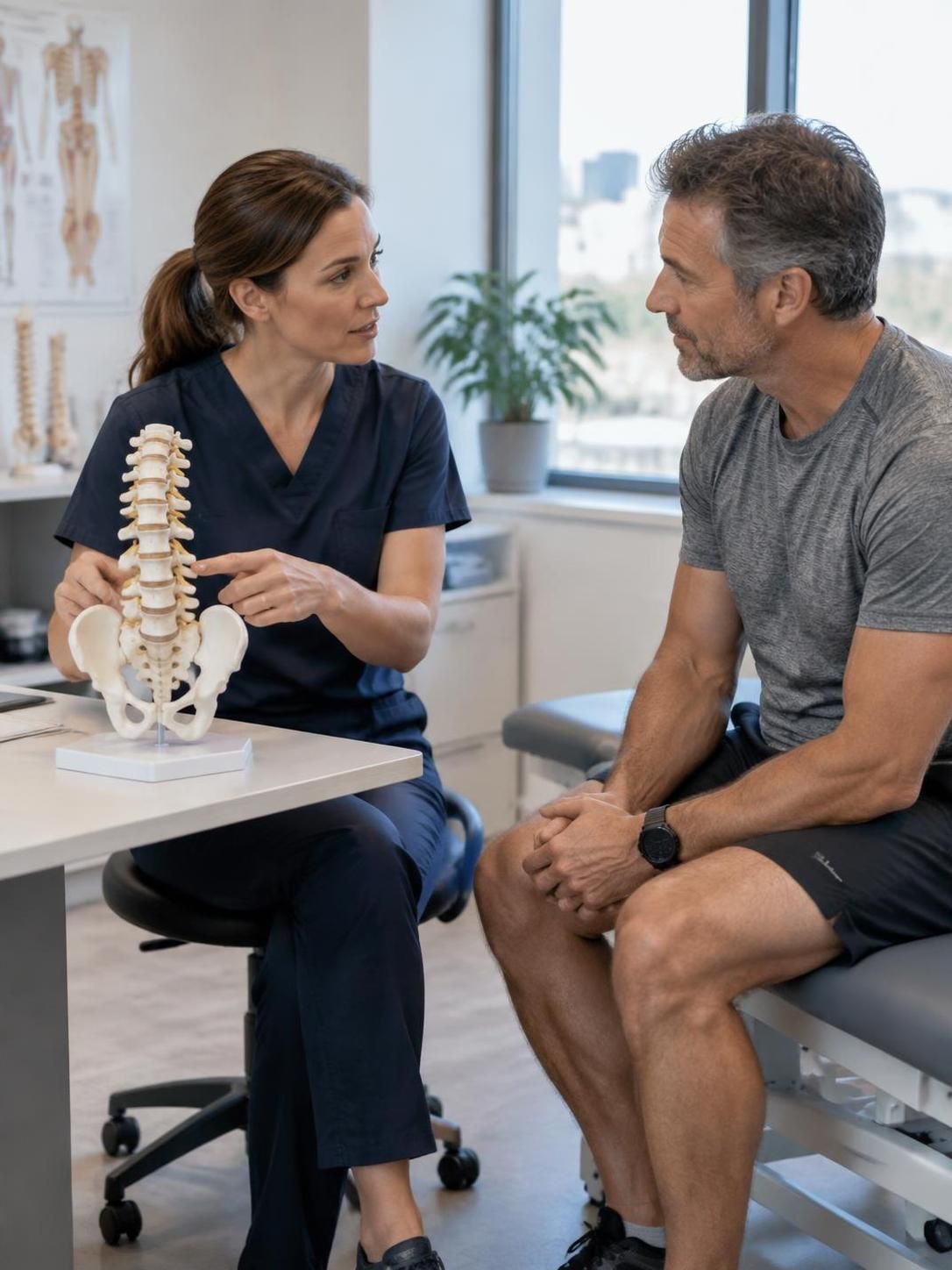
A clinical assessment is indicated if pain persists or returns, travels below the knee, limits walking or disrupts sleep. Numbness, loss of sensation, weakness or reduced function also warrant seeking advice, especially if these signs progress.
Urgent medical assessment is needed in cases of loss of bladder or bowel control, sudden difficulty urinating, numbness in the saddle area, or significant or rapidly progressing weakness. Also seek care without delay in the presence of fever or poor general condition, after significant trauma, or if pain occurs in the context of cancer or infection, or worsens rapidly.
These signs do not allow a specific cause to be determined remotely, but they should not be minimized. If you are unsure about the urgency, contact the appropriate medical services.
Frequently asked questions about sciatica and lifestyle habits
Should you stop all physical activity when you have sciatica?
Not necessarily. Gentle, tolerated activity may help preserve mobility, while a movement that clearly intensifies pain in the leg should be modified or stopped. Weakness or worsening symptoms calls for reassessment.
Can stretches relieve sciatic pain?
Some movements may be suitable for some people, but stretching is not a universal solution. Avoid forcing a stretch if the pain radiates further or numbness increases; a professional can help choose appropriate movements.
When should you seek care for pain that travels down the leg?
Seek care if it persists, recurs, limits your activities or is accompanied by tingling, loss of sensation or weakness. Bladder or bowel problems, saddle anaesthesia and rapidly progressing weakness require urgent assessment.
Is neurovertebral decompression suitable for all profiles?
No. This motorized traction may be considered for some patients after an assessment, but results vary and contraindications exist. It does not replace urgent medical assessment or care indicated for significant compression.
If low back pain or leg symptoms complicate your travel, work or sports activities in Lachine, an assessment can help clarify the likely cause, signs to monitor and the appropriateness of a conservative approach. Located in Mont-Royal, Clinique TAGMED provides information about its management options and assessment process.
View assessment and management options
Sylvain Desforges, B.Sc., D.O., N.D., Doctor of Osteopathy
This content is educational and does not replace a personalized assessment.
