




Neck Pain: Symptoms, Causes, Radiculopathy and Treatment
Neck pain may remain local or extend toward the shoulder blade, arm or hand. Stiffness alone cannot identify the responsible structure.
This pillar page organizes guides on cervical pain, radiculopathy, cervical disc disease, facet joints, cervicogenic headache, imaging and non-surgical treatment.

How is neck pain assessed?
History reviews onset, possible trauma, aggravating positions, sleep, work and arm symptoms. Examination compares motion, strength, sensation, reflexes and selected provocation or relief tests.
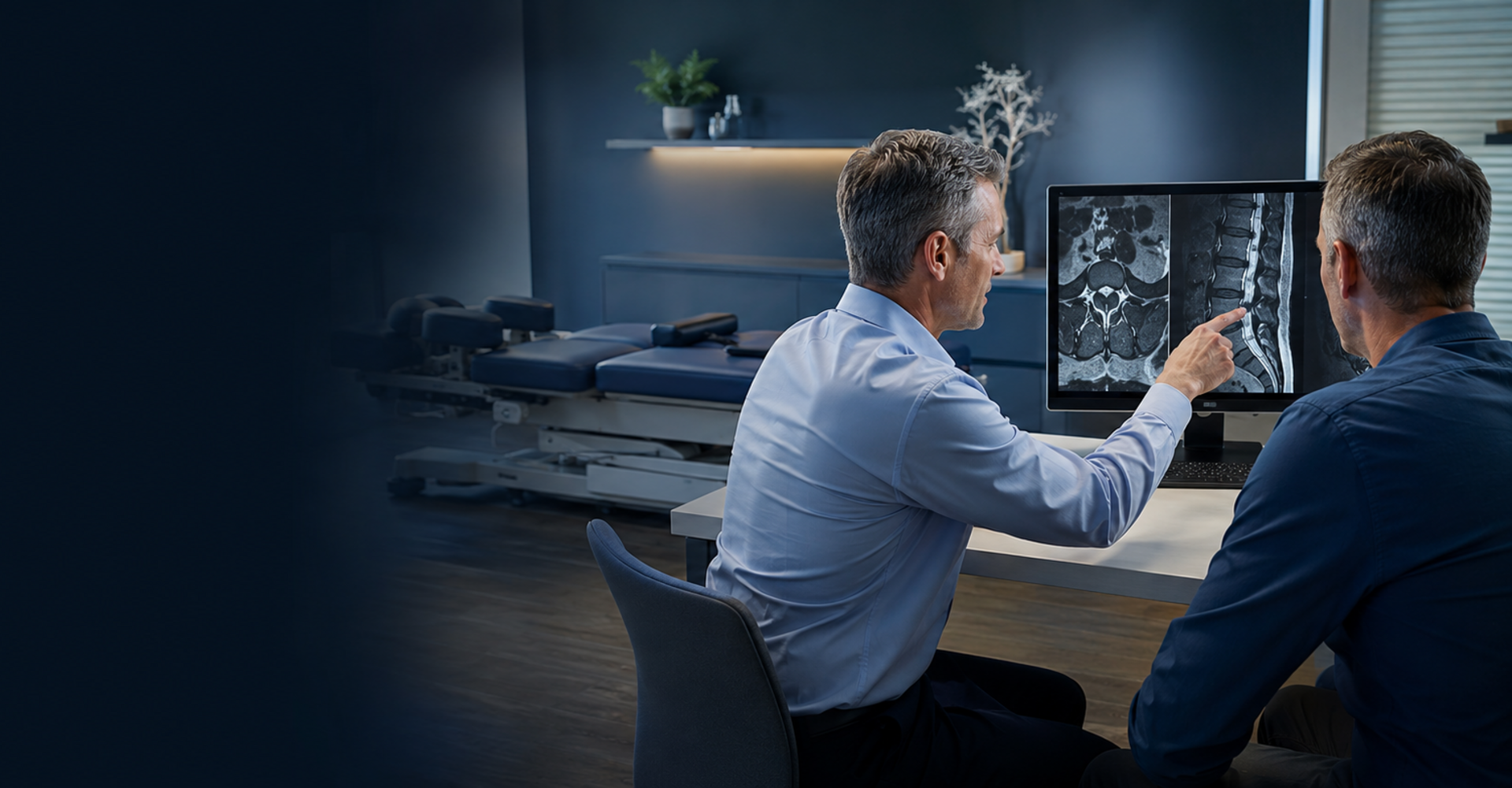
Imaging is not automatic for recent neck pain without warning signs. It becomes more relevant after trauma, with neurological deficit, suspected myelopathy, infection, cancer or when it may change an interventional decision.
| Pattern | Compatible findings | Priority |
|---|---|---|
| Mechanical neck pain | Local pain, stiffness, position dependent | Adapted activity and progression |
| Radiculopathy | Arm pain, paresthesia, weakness | Neurological examination |
| Possible myelopathy | Altered gait or dexterity | Prompt assessment |
| Warning sign | Fever, weight loss, cancer, trauma | Appropriate referral |

Non-surgical options and progression
Education, active breaks, reasonable ergonomics and graded exercise often form a foundation. Movement does not need to be perfect; it should be tolerated and progressed without sustained neurological worsening.
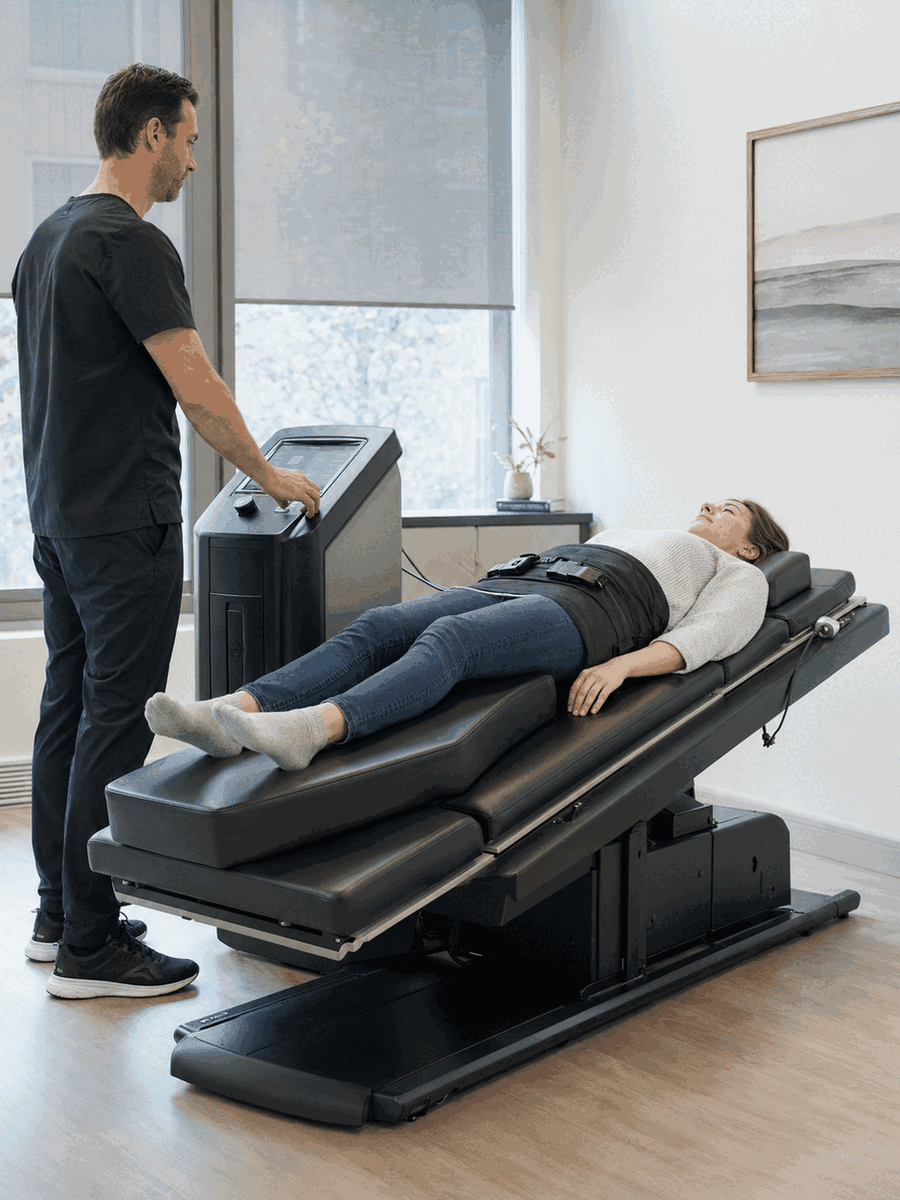
Depending on the working diagnosis, manual care, rehabilitation, cervical decompression for selected candidates, medication discussed with a clinician or specialist referral may be considered. Targeted procedures require a specific indication.
Monitor more than pain intensity
Upper-limb function and neurological findings complement pain monitoring.
- Range and tolerance of neck movement.
- Sleep, driving, screen use and work activities.
- Pain distribution into the arm or hand.
- Grip strength, dexterity and ability to raise the arm.
- Numbness, reflexes and balance when indicated.
- Sustained response to exercise and care.
Which category?
Local, radicular or spinal-cord related.
Any deficit?
Strength, sensation, reflexes or dexterity.
What goal?
Sleep, work, driving or arm use.
When to review?
Explicit timeline and escalation criteria.
Common mistakes to avoid
- Blaming all neck pain on poor posture.
- Ignoring hand symptoms or loss of dexterity.
- Prolonged neck immobilization without indication.
- Continuing treatment despite progressive weakness.
- Ordering repeated imaging without a focused clinical question.
Useful questions before making a decision
Ask whether the pattern suggests mechanical pain, radiculopathy or spinal-cord involvement and which findings support that classification.
Clarify goals, the role of imaging, reassessment timing and findings that require prompt medical review.

Neck symptoms also need to be interpreted in the context of the shoulder, peripheral nerves and general health. Shoulder disease, carpal tunnel syndrome and other nerve disorders may mimic cervical radiculopathy. A careful examination prevents every arm symptom from being attributed to the neck and helps select the most relevant tests. This broader view is especially important when symptoms are bilateral, poorly localized or not influenced by neck movement.
Related guides in this topic cluster
Frequently asked questions
Is posture the main cause?
Not always. Posture can modify symptoms, but biological, functional and psychosocial factors also contribute.
When does arm pain come from the neck?
When it follows a nerve distribution and includes compatible findings such as numbness, weakness or reflex change.
Is an X-ray enough?
It mainly shows bone and alignment. MRI better assesses discs, nerves and the spinal cord when indicated.
Should movement stop?
Prolonged rest is rarely useful. Adapted, graded activity is generally preferable.
Is cervical decompression always appropriate?
No. It may be discussed for selected patients, particularly with a concordant disc or radicular component.
What is cervical myelopathy?
It is spinal-cord involvement that may affect gait, balance, dexterity and sometimes bladder or bowel function.
Can headaches come from the neck?
Yes. Some cervicogenic headache patterns are influenced by cervical structures and movement.
When is prompt assessment needed?
After major trauma, with progressive weakness, unstable gait, fever, unexplained weight loss or a cancer history.
Are manipulations appropriate for everyone?
No. Choice depends on diagnosis, risk, tolerance and preferences; a cautious approach is essential.
How long does neck pain last?
The course varies. Follow-up should consider function, neurological findings and overall trend rather than a fixed timeline.
Key clinical sources
- American College of Radiology — Cervical Pain or Cervical Radiculopathy
- National clinical guidelines for non-surgical treatment of neck pain or cervical radiculopathy
- Clinical practice guideline for nonspecific neck pain
Last editorial review: August 2026. General educational information only.
Dr. Sylvain Desforges, B.Sc., D.O., N.D., osteopath – The Spine Page
Explore the Neck Pain cluster
Access guides on radiculopathy, disc disease, facet pain, headache, imaging and treatment.
Dr. Sylvain Desforges, B.Sc., D.O., N.D., osteopath
Topic index: Neck pain and cervical radiculopathy
Explore this topic cluster by search intent. Each link leads to a distinct guide directly related to the subject.