


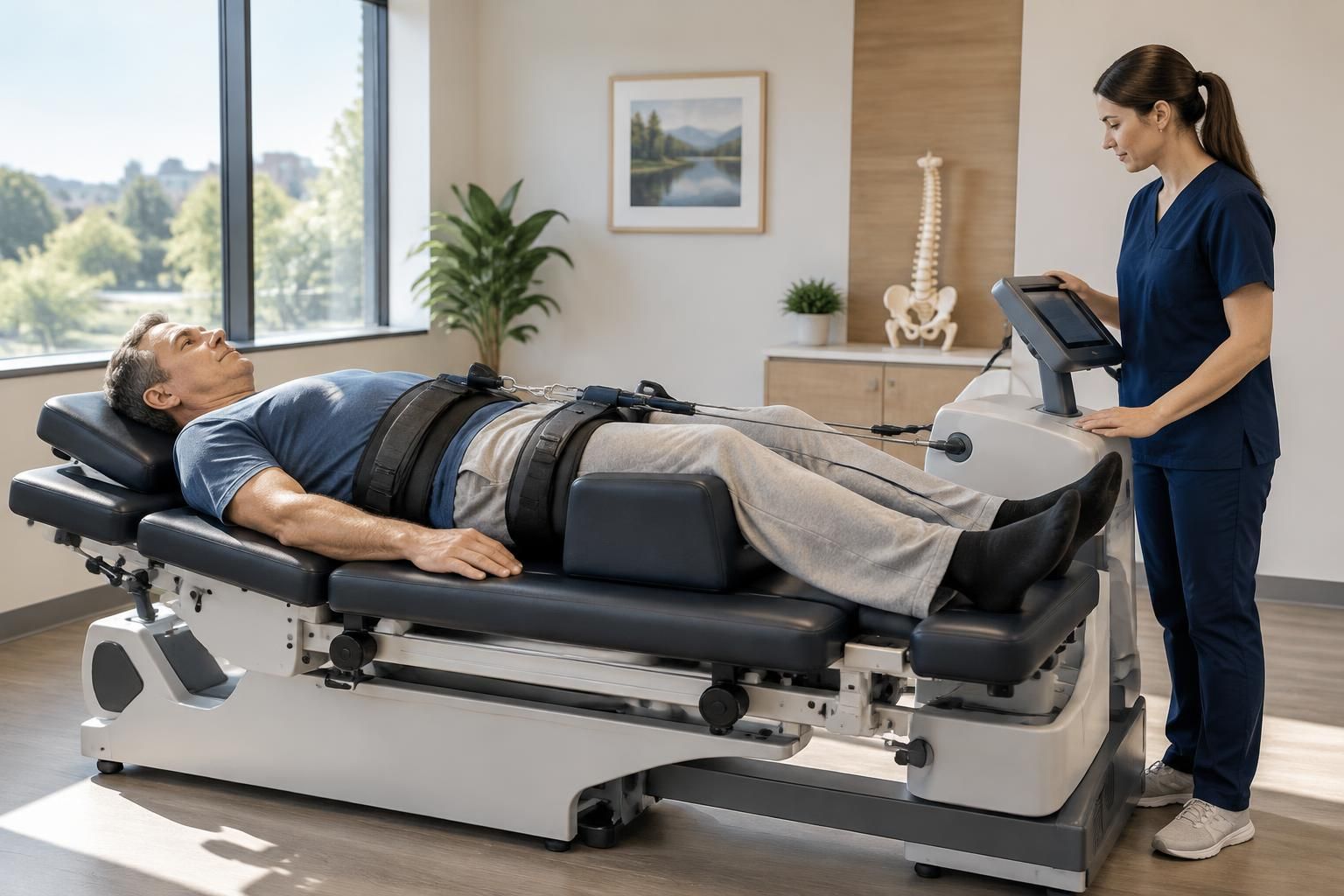
For a person in Pierrefonds-Roxboro experiencing persistent low back pain or pain that travels into the buttock and leg, motorized lumbar traction may be an option to discuss after an assessment. This method applies a controlled force to the lumbar region; however, it is not appropriate for all causes of pain and does not replace either a diagnosis or urgent care when concerning signs arise.
The term “traction” refers to several devices and methods, ranging from certain devices used at home to motorized tables adjusted by a professional. The equipment, applied force, and suitability of a session depend on symptoms, medical history, and examination findings. The goal is to determine whether this therapy can be integrated into a personalized treatment plan, rather than assuming it will relieve all low back pain.
Key takeaway: motorized traction is a form of controlled traction, but its effectiveness and tolerability vary from person to person.
The choice depends on the individual profile: pain radiating into the leg does not, by itself, reveal its cause or the structure involved.
Safety comes first: progressive weakness, loss of bladder or bowel control, or saddle anaesthesia requires urgent assessment.
Motorized lumbar traction: what the method aims to do
A motorized traction table applies gradual force to the lumbar spine according to parameters set by a professional. Some machines provide sustained or intermittent traction; the setup generally includes straps or a harness adapted to the person’s position. The movement should remain controlled and tolerable, without any attempt to “put a disc back into place.”
Lumbar decompression is sometimes presented as a way to temporarily alter the mechanical stresses placed on the discs and neighbouring structures. For some selected individuals, it may be considered when symptoms appear compatible with nerve root irritation related to a disc problem or foraminal narrowing. This does not make it possible to confirm that a nerve is compressed or predict the outcome.
Radicular pain may be accompanied by burning, tingling, numbness, or weakness in part of the leg. Low back pain that radiates into the buttock or thigh may also have other causes; the perceived path is therefore not enough to identify the nerve root or cause. The history of symptoms and clinical examination guide the interpretation, with imaging in some cases.
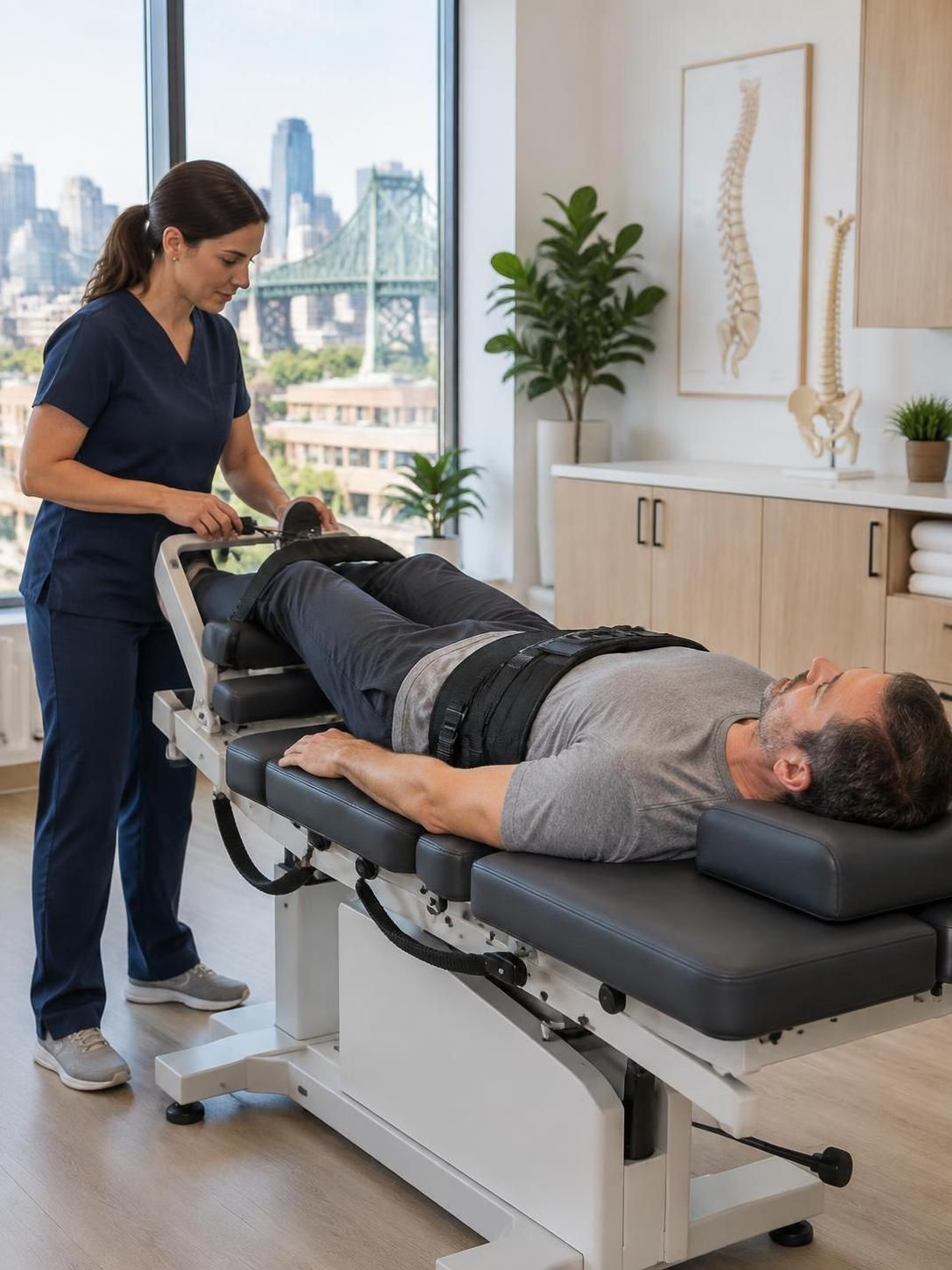
When can traction be considered in Pierrefonds-Roxboro?
The suitability of traction therapy is assessed using several factors: the location and progression of pain, sensation, strength, mobility, medical history, and responses to movement. A person who works from home while sitting for long periods or drives regularly may notice that certain positions worsen their symptoms, but this observation alone is not enough to select a device or protocol.
In Pierrefonds-Roxboro, as elsewhere in Greater Montréal, commuting, remote work, and prolonged periods of sitting may affect the daily life of a person in pain. They are not necessarily the cause of the problem. An assessment can help distinguish local low back pain from pain that follows a nerve pathway and determine whether a conservative approach is reasonable.
People with significant bone fragility, certain previous procedures, pregnancy, or particular health conditions may require precautions or a different referral. The list of contraindications depends on the situation and the device; medical history should therefore be shared before any session. In the event of significant or rapidly progressing neurological symptoms, trying traction is not the priority.
Describe where the pain begins, how far it travels, and how long it has been present.
Report any numbness, changes in sensation, or loss of strength, even if these signs seem intermittent.
Specify the positions and activities that change symptoms, without forcing a painful movement to test it.
Ask how tolerability will be monitored and which changes justify stopping or reassessment.
Traction devices: understanding the differences
The term “lumbar traction device” encompasses different devices. Some clinic units are motorized and allow controlled adjustment, while portable devices use pressure or inflation mechanisms and do not necessarily reproduce the function of a clinical table. A product presented as at-home traction should not be considered equivalent to an assessment or used without considering symptoms.
Manufacturers and distributors describe different devices, including the Saunders Hometrac lumbar device and traction units offered by equipment suppliers. These pages show that designs vary, but a commercial description does not establish that a device is suitable for a given person or that it will produce a particular clinical outcome.
A motorized table, conventional traction, exercises, and manual care do not act in interchangeable ways. The professional can discuss options according to functional goals, tolerance to movement, and assessment findings. Chiropractic care, when considered, must likewise be part of an appropriate approach and must not delay necessary medical assessment.
| Approach | What it involves | Point to consider |
|---|---|---|
| Motorized traction in a clinic | Force applied by an adjusted and monitored device. | Selection and tolerability must be reassessed; outcomes vary. |
| At-home traction device | Portable or mechanical device whose operation depends on the model. | It does not replace an assessment; use should be cautious and appropriate. |
| Back exercises and rehabilitation | Movements and activities gradually adjusted to abilities and symptoms. | The program is modified if pain spreads or neurological signs appear. |
| Other care or specialist consultation | Options discussed according to the clinical presentation, sometimes with medical referral. | No method is universal; emergencies require medical assessment. |
To compare forms of mechanical traction, a description sheet for a lumbar device provides an overview of possible settings, without replacing clinical advice. The useful question is not only “which device should I buy?” but rather “which approach is justified and how can I verify that it remains well tolerated?”
Monitor the response to treatment and adapt activities
A session should not be assessed solely based on the level of pain felt at the time. The ability to walk, sleep, sit, or gradually resume daily tasks can also help gauge progress. If symptoms worsen during traction, persist after the session, or travel farther down the leg, they should be reported and the approach reassessed.
Back rehabilitation generally aims to maintain or regain tolerable activities, with progress that takes the individual response into account. This may include movement advice and tailored exercises rather than a uniform program. “Pushing through” clearly increasing pain, worsening numbness, or the onset of weakness is not a prudent strategy.
Treatment for back pain may also include manual care when appropriate, medications recommended by an authorized professional or, in some circumstances, an injection. Surgery may be discussed when significant compression, a neurological deficit, or the clinical course warrants it. Traction is neither a guarantee of avoiding an intervention nor a substitute for other indicated options.
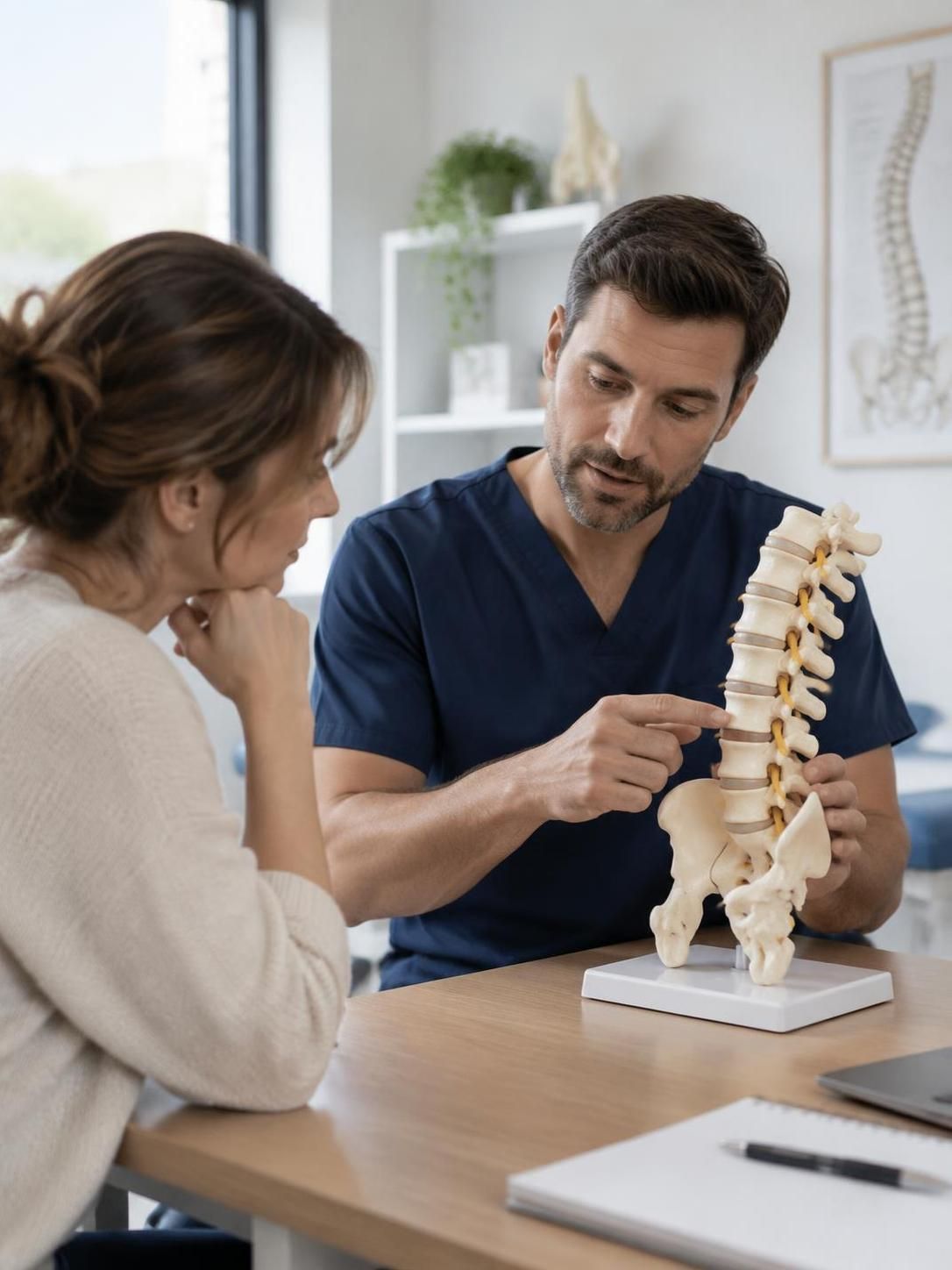
When to seek care for low back pain or leg pain
A clinical assessment is indicated if pain persists or returns, travels below the knee, limits walking, or disrupts sleep. Numbness, loss of sensation, weakness, or reduced function also require attention, even if pain intensity varies.
Urgent medical assessment is required in the event of loss of bladder or bowel control, saddle anaesthesia, significant or rapidly progressive weakness, fever, or impaired general health. Significant trauma, pain in the context of cancer or infection, or rapid worsening also warrant urgent care.
These signs cannot establish a diagnosis remotely, but they should not be dismissed. If an emergency is possible, do not begin traction therapy and contact the appropriate medical services.
To better understand symptoms and when to seek care, the resource on possible causes and assessment of sciatica can complement a discussion with a professional. It does not replace a personalized examination, particularly in the presence of weakness or loss of sensation.
Access an assessment and discuss options in Montréal
A health clinic can examine symptoms, movement, and the factors that affect daily life before discussing an approach. Clinique TAGMED, located at 1140 Beaumont Avenue in Mont-Royal, near Outremont and Côte-des-Neiges, states that it offers, depending on the assessment, approaches such as motorized neurovertebral decompression, specific osteopathy, or the precision percussor. This information does not mean that these options are suitable for every person.
For residents of Pierrefonds-Roxboro, the priority is obtaining appropriate guidance rather than choosing treatment solely based on an advertisement or product list. Options for sciatica assessment and care in Montréal can be discussed according to the clinical presentation; outcomes vary, and medical referral may be needed.
Motorized lumbar traction may therefore be among the conservative options for certain profiles, after indications, contraindications, and goals have been reviewed. The most useful decision is based on an assessment, monitoring the response, and the ability to modify the plan if symptoms change.
Frequently asked questions about motorized lumbar traction
Is motorized traction suitable for all low back pain?
No. Low back pain has many causes, and traction is not suitable for all profiles. An assessment is needed to determine whether it can be considered and which precautions should be taken.
Can traction treat a herniated disc?
It may be considered for some patients whose symptoms are compatible with disc involvement, but it does not put the disc back into place and does not guarantee relief. The clinical examination and, when needed, imaging are interpreted together.
How many sessions should be expected?
There is no universal number of sessions. Frequency and continuation depend on the assessment, tolerability, and functional progress.
When should you seek care rather than try an at-home device?
Persistent pain, pain below the knee, sleep disturbances, numbness, or weakness warrant a clinical assessment. Loss of bladder or bowel control, saddle anaesthesia, or rapidly progressive weakness requires urgent medical assessment.
Does traction replace exercises or medications?
Not necessarily. Depending on the situation, it may be discussed alongside other options, such as gradually returning to activity, tailored exercises, or medications recommended by an authorized professional.
If low back pain or pain travelling down the leg makes walking, sleeping, or activities difficult in Pierrefonds-Roxboro, an assessment can clarify the likely cause, signs to monitor, and the relevance of a conservative approach such as motorized traction.
Sylvain Desforges, B.Sc., D.O., N.D., osteopath and naturopath
This content is educational and does not replace a personalized assessment or medical advice.
