


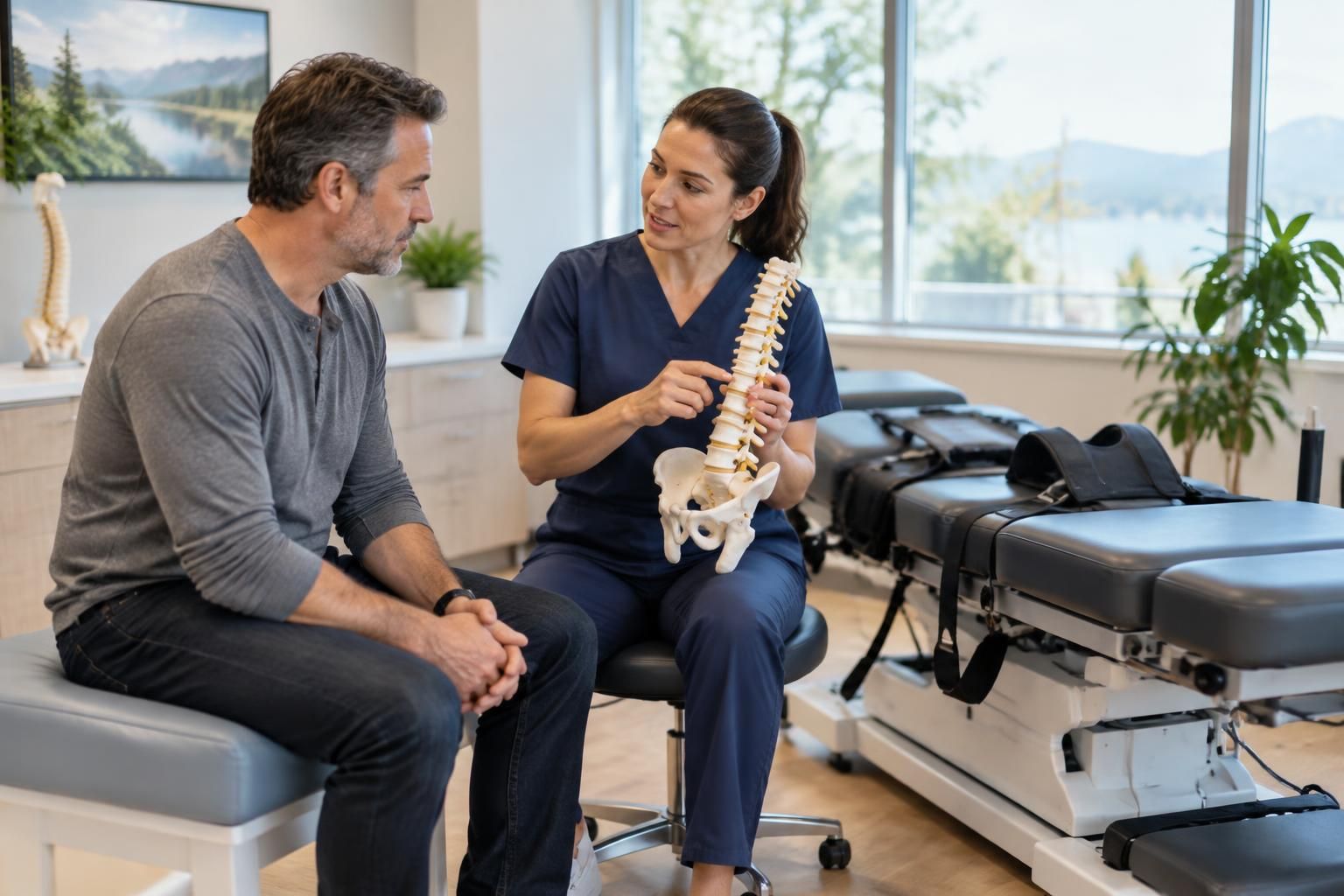
Motorized lumbar decompression may be considered for some people with low back pain that radiates into the leg, but it is not suitable for every situation. In Dorval, as elsewhere, selection criteria are based on the person’s symptoms, examination, function, risks, and goals—not solely on an MRI image.
This approach involves lumbar traction controlled by a device. It may be part of non-surgical treatment when the clinical presentation is appropriate, without replacing necessary medical care or guaranteeing pain relief. A clinical assessment helps determine, among other things, whether a disc herniation or spinal stenosis may correspond to the symptoms and whether other causes should be considered.


In brief: key selection criteria to know
- Clinical correlation matters: symptoms, examination findings, and, when relevant, imaging must be interpreted together.
- Safety comes first: rapidly progressing weakness, saddle numbness, or urinary or bowel problems require urgent medical assessment.
- Decompression is not universal: it may be discussed for certain stable profiles, but results vary and the evidence does not support promising an individual outcome.
- A trial should be measurable: walking, sleep, strength, sensation, and daily activities help determine whether to continue, modify, or stop the approach.
Why consider motorized lumbar decompression in Dorval
Low back pain may remain in the lower back or be accompanied by pain that travels through the buttock and down the thigh, calf, or foot. When symptoms suggest irritation of a nerve root, this is sometimes called radicular pain; however, the perceived path alone is not enough to determine which structure is involved.
A disc herniation or narrowing of the space through which a nerve root passes may be relevant in some cases. However, an image showing a protrusion does not, by itself, prove that it explains the pain or that motorized traction is indicated. Muscles, joints, and other factors may also contribute to the problem.
For someone in Dorval who drives regularly or sits for long periods at work, symptoms may vary according to time spent sitting, breaks, and travel. These circumstances provide useful information for the assessment, but do not by themselves determine the appropriate treatment.
Decompression is one mechanical option among others. It may be discussed after an examination and considered alongside adapted activity, physiotherapy, appropriate manual care, and, depending on the situation, medical options. The possible causes and assessment of sciatic pain help clarify why several factors must be considered before choosing an approach.
Selection criteria: symptoms, examination, and function
A careful approach begins with the history of symptoms: their onset, duration, progression, path, and the positions that worsen or relieve them. Previous care, medical history, medications, and recent changes complete this picture.
The examination may include mobility, walking, strength, sensation, and reflexes, depending on the symptoms and clinical question. It also helps identify a situation that would warrant a different direction rather than a trial of traction. An MRI is not automatically required; it is mainly useful when its result may change management, particularly in the presence of neurological signs or before a targeted intervention.
A profile sometimes considered includes relatively stable symptoms, reasonable correlation between the presentation and examination, and sufficient tolerance of the required positions. Significant instability, a relevant health condition, or warning signs may make this approach unsuitable or require medical advice first.
| Observed element | Clinical question | Possible implication |
|---|---|---|
| Low back pain without radiation | Which structure or combination of factors may be contributing to the symptoms? | Assess mobility and function first; traction is not automatically relevant. |
| Stable leg pain | Do the pain pathway, examination, and aggravating factors align? | A cautious trial may be discussed for some people, with baseline measures. |
| New or progressive weakness | Is there neurological involvement requiring prompt management? | Priority medical assessment rather than continuing a decompression protocol. |
| Image showing a protrusion | Does the image correspond with the symptoms and examination? | Do not choose a treatment based on the image alone. |
To learn more about selecting patients and the limits of this approach, see the guidance on profiles that may be candidates. A shared decision should clarify the expected benefits, uncertainties, and reassessment criteria.
Motorized decompression: goals and limitations of non-surgical treatment
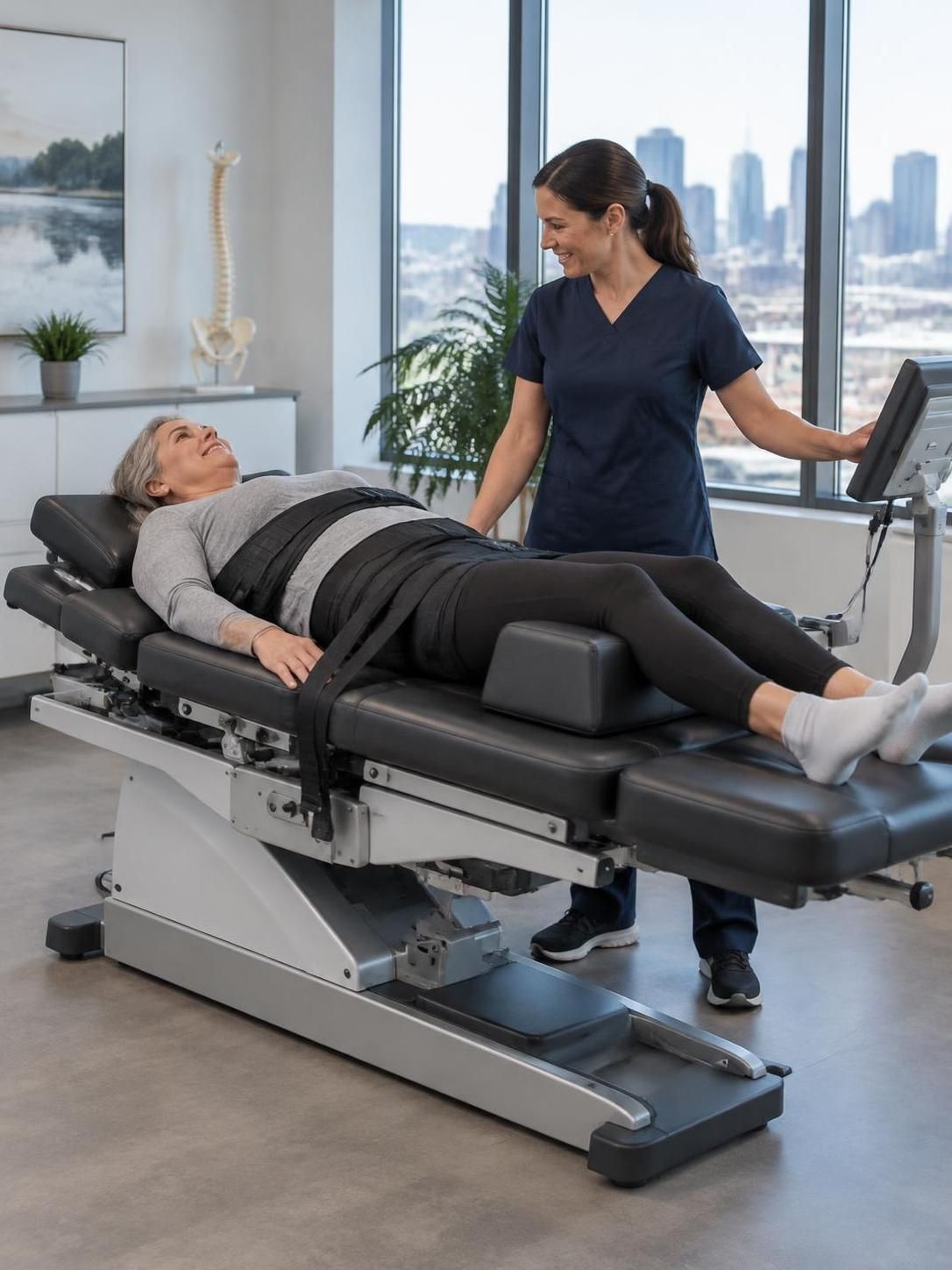
A motorized device applies a gradual, controlled distraction force to the lumbar region. Depending on the device and settings, the goal is to temporarily modify certain mechanical stresses and facilitate tolerance of movement in some patients. This does not mean that a disc is “put back into place” or that a lasting anatomical change is ensured.
Devices and protocols may differ, but technical sophistication alone does not demonstrate superior effectiveness. Traction is not a universal solution recommended for all low back pain; results vary, and available data do not justify promising an individual response. To put the research questions into context, one resource presents publications and scientific information on decompression; their interpretation must take into account the methods and limitations specific to each study.
Temporary relief after a session may be meaningful to the person, but it is not enough to prove the proposed mechanism or lasting recovery. Follow-up should also consider the ability to walk, sit, sleep, and resume important activities.
Depending on the assessment, decompression may be combined with activity advice and gradual exercises. Physiotherapy can help address mobility, strength, and functional recovery when indicated. Medications, injections, and surgery have other possible roles and should be discussed with the appropriate professionals; no option is superior for all profiles.
How to measure progress and when to modify the plan
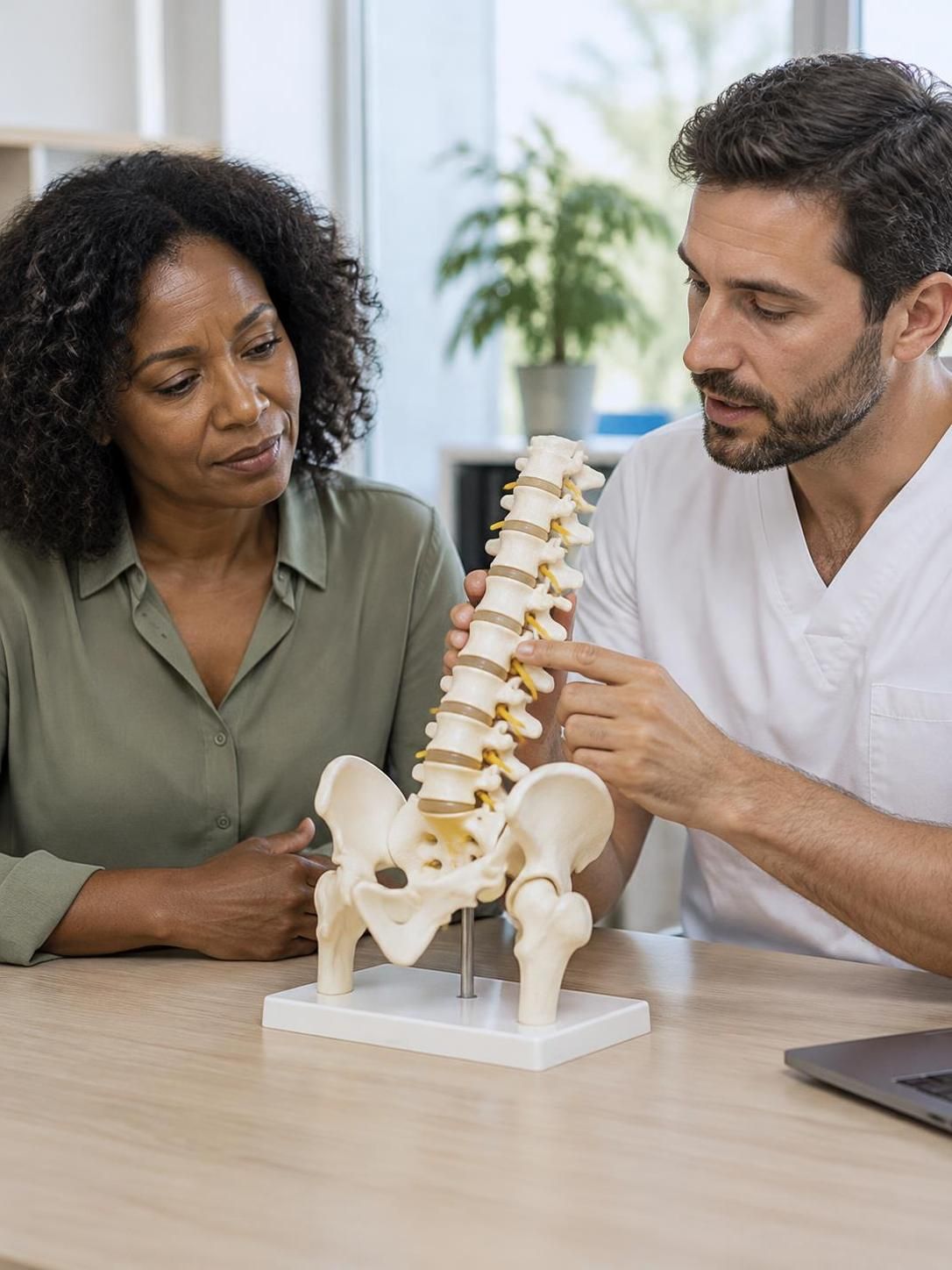
Before a trial, it is useful to note a few simple reference points: the extent of pain, comfortable walking duration, sitting tolerance, sleep quality, and limited activities. Strength and sensation should also be monitored when they are affected; a single pain score does not describe the full course.
A reassessment period should be agreed upon before starting. If symptoms repeatedly worsen, travel farther down the leg, if numbness progresses, or if weakness appears, the plan should be reviewed promptly rather than continued automatically.
Exercises are not the same for everyone. Adapted activity can support functional recovery, but one should not push through persistent worsening. A professional can adjust movements based on observed responses and daily goals.
For people travelling between Dorval and other areas of Montreal’s West Island, driving or transportation constraints can be recorded as concrete functional measures. The TAGMED clinic in the Montreal area is located in Mont-Royal; information about its approaches related to neurovertebral decompression can be consulted separately from this educational information.
When to seek a medical assessment
A clinical assessment is indicated if pain persists or returns, travels below the knee, limits walking, or disrupts sleep. Numbness, loss of sensation, weakness, or reduced function also warrant attention, particularly if the change is new.
Urgent medical assessment is necessary in the event of loss of bladder or bowel control, numbness in the saddle area, significant or rapidly progressive weakness, fever with spinal pain, poor general condition, or major trauma. Pain in the context of cancer or infection, or rapid worsening, also requires assessment without delay.
These signs do not allow for a diagnosis from a distance, but they may indicate that one should not wait for a decompression session or complete a protocol. If there is any doubt about the urgency, contact a medical service or emergency services.
Frequently asked questions about selection in Dorval
{“@context”:”https://schema.org”,”@type”:”FAQPage”,”mainEntity”:[{“@type”:”Question”,”name”:”Une hernie discale u00e0 lu2019IRM suffit-elle pour u00eatre candidat?”,”acceptedAnswer”:{“@type”:”Answer”,”text”:”Non. Lu2019image doit u00eatre mise en relation avec les symptu00f4mes et lu2019examen. Une anomalie visible peut ne pas expliquer la douleur et ne du00e9termine pas u00e0 elle seule le traitement.”}},{“@type”:”Question”,”name”:”La du00e9compression lombaire motorisu00e9e convient-elle u00e0 toute sciatique?”,”acceptedAnswer”:{“@type”:”Answer”,”text”:”Non. Elle peut u00eatre envisagu00e9e pour certains profils apru00e8s une u00e9valuation, mais elle nu2019est pas indiquu00e9e pour toutes les causes de douleur radiculaire. Les ru00e9sultats varient et les contre-indications doivent u00eatre considu00e9ru00e9es.”}},{“@type”:”Question”,”name”:”Combien de su00e9ances faut-il pru00e9voir?”,”acceptedAnswer”:{“@type”:”Answer”,”text”:”Il nu2019existe pas de nombre de su00e9ances adaptu00e9 u00e0 tout le monde. Un plan prudent fixe des mesures de du00e9part et une date de ru00e9u00e9valuation pour du00e9cider de poursuivre, modifier ou arru00eater.”}},{“@type”:”Question”,”name”:”Quand faut-il consulter rapidement?”,”acceptedAnswer”:{“@type”:”Answer”,”text”:”Une faiblesse qui progresse, une anesthu00e9sie en selle, une perte de contru00f4le urinaire ou intestinal, une fiu00e8vre avec douleur lombaire ou un traumatisme important justifie une u00e9valuation mu00e9dicale urgente.”}}]}Is a disc herniation on MRI enough to be a candidate?
No. The image must be considered in relation to the symptoms and examination. A visible abnormality may not explain the pain and does not by itself determine treatment.
Is motorized lumbar decompression suitable for all sciatica?
No. It may be considered for certain profiles after an assessment, but it is not indicated for every cause of radicular pain. Results vary, and contraindications must be considered.
How many sessions should be planned?
There is no number of sessions that suits everyone. A cautious plan establishes baseline measures and a reassessment date to decide whether to continue, modify, or stop.
When should you seek care promptly?
Progressive weakness, saddle numbness, loss of bladder or bowel control, fever with low back pain, or major trauma warrant urgent medical assessment.
If low back pain or leg radiation makes walking, working, or driving in Dorval difficult, an assessment can help clarify the likely causes, signs to monitor, and relevance of a conservative approach. To learn about options offered in Montreal, see the page devoted to the sciatica assessment and treatment pathway.
Sylvain Desforges, B.Sc., D.O., N.D., Doctor of Osteopathy
This content is educational and does not replace a personalized assessment or medical advice.
