





Lumbar radiculopathy L4, L5 and S1: pain patterns, weakness and treatment decisions
Lumbar radiculopathy describes dysfunction of a lumbar or sacral nerve root. Pain may travel into the leg with numbness, tingling, weakness or reflex change.
L4, L5 and S1 patterns assist reasoning, but dermatomes overlap. Diagnosis combines distribution, motor testing, sensation, reflexes and imaging when useful.
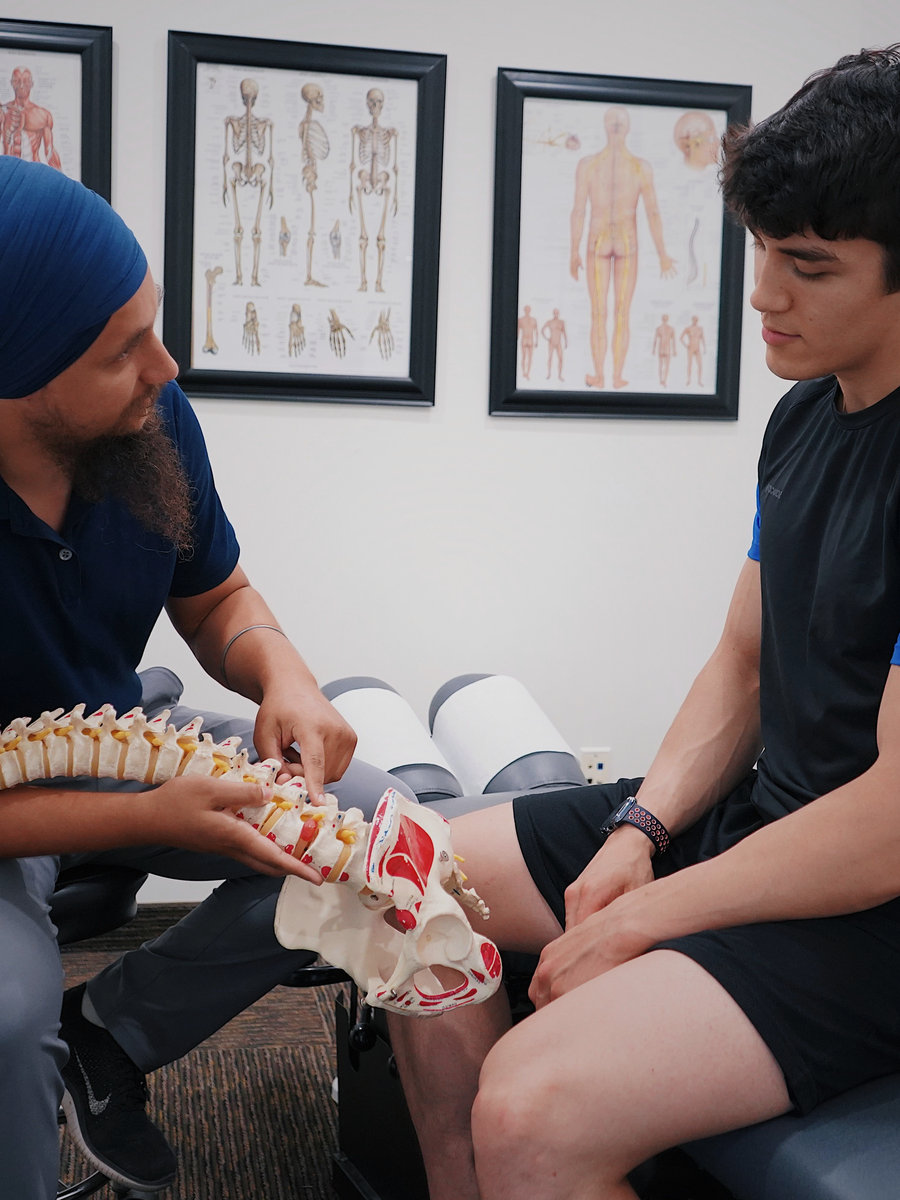
Comparing L4, L5 and S1
The patterns are useful clues rather than rigid rules. Motor loss and reflex change often carry more weight than pain location alone.
The examination also considers the hip, vascular status and peripheral nerves.
| Root | Possible pain or sensory area | Possible motor or reflex finding |
|---|---|---|
| L4 | Front of thigh, knee or medial leg. | Quadriceps weakness or reduced patellar reflex. |
| L5 | Lateral leg, dorsum of foot or great toe. | Weak dorsiflexion or foot drop. |
| S1 | Posterior calf, heel or lateral foot. | Weak plantar flexion or reduced Achilles reflex. |

Evaluation and imaging
Assessment reviews onset, cough sensitivity, sitting and walking tolerance, strength, sensation, reflexes and gait. Straight-leg raise may support lower-root irritation.
MRI is used for red flags, progressive deficits, persistent symptoms when intervention is considered or when the result will change care.
Motor testing
Compare toe, ankle, knee and hip strength.
Sensory testing
Map altered sensation while recognizing overlap.
Reflexes
Patellar and Achilles reflexes assist localization.

Treatment depends on deficit and cause
Stable symptoms without major deficit are often managed conservatively with education, tolerable activity, exercise and selected medication or physical care.
Injection, motorized decompression or surgery may be considered in selected cases. Surgery is urgent for cauda equina syndrome or progressive major motor loss.
- Monitor whether pain centralizes or travels farther.
- Recheck strength if the person trips or reports toe weakness.
- Do not rely on a dermatome chart alone.
- Escalate if neurological function deteriorates.
How anatomy changes the affected root
The disc level name is not always the symptomatic root. Direction of displacement matters.
This distinction is important before injection, decompression or surgery.
| Lesion location | Root often affected | Example |
|---|---|---|
| Paracentral | Traversing root. | L4–L5 herniation often affects L5. |
| Foraminal | Exiting root. | L4–L5 foraminal stenosis often affects L4. |
| Large central | Several roots. | Bilateral or cauda equina signs are urgent. |

Questions to ask before choosing care
Before beginning care for lumbar radiculopathy l4, l5 and s1, ask the provider to explain the working diagnosis and the findings that support it. The discussion should distinguish a structural description from the clinical syndrome, clarify whether neurological function is stable and identify the specific outcome the treatment is intended to improve.
A high-quality plan also explains the expected timeline, reasonable alternatives, possible harms, cost and the criteria for changing course. No treatment should continue indefinitely because it produced a brief change in pain. The decision should be reviewed against measurable function and safety.
What is the target?
Ask which structure, mechanism or functional limitation the treatment is intended to address.
What result is realistic?
Clarify the expected change in pain distribution, walking, sleep, work or daily activity.
What are the alternatives?
Compare education, exercise, medication, procedures, technology-assisted care and surgery when relevant.
When will the plan be reviewed?
Set an early review point and define the findings that would stop, modify or escalate care.
How to monitor progress
Progress should be tracked with more than a pain score. Useful measures include how far symptoms travel, strength, sensation, walking tolerance, sleep, medication use and the ability to perform meaningful activities. Neurological change should always be documented separately from pain relief.
Temporary fluctuations are common. The important question is whether the overall trajectory is safer and more functional. New weakness, expanding numbness, altered bladder or bowel function or a substantial loss of walking ability should trigger reassessment rather than automatic continuation of the same treatment.
Continue with specialized resources
The Spine Page is an educational blog. The links below lead to independent specialized websites.
Clinique TAGMED — spinal decompression
Service-specific information about motorized spinal decompression and disc-related conditions.
SOS Sciatique — nerve-root symptoms
Focused guides about sciatica, warning signs and treatment questions.
Frequently asked questions
Is radiculopathy the same as sciatica?
Not exactly.
Can L5 cause foot drop?
Yes.
Which root affects the big toe?
Often L5.
Which root affects the Achilles reflex?
Often S1.
Can L4 cause knee pain?
Yes.
Is MRI required?
Not always.
Can a disc level affect a different root?
Yes.
Can symptoms improve without surgery?
Many stable cases do.
When is surgery urgent?
With cauda equina or rapidly progressive major weakness.
Can The Spine Page identify my root?
No.
Sources consulted
- NICE — Low back pain and sciatica in over 16s
- American College of Radiology — Appropriateness Criteria: Low Back Pain
- Macki et al. — Foot drop secondary to lumbar degenerative disease
- Lumbar Disc Nomenclature: Version 2.0
Last editorial review: July 2026. This page provides general education and does not replace individualized medical assessment.
Editorial review : Dr. Sylvain Desforges, B.Sc., D.O., N.D., osteopath — The Spine Page
Explore the cause and pathway
Continue with sciatica or foraminal stenosis.
The Spine Page — The best treatments for your spinal problems — www.thespinepage.com