


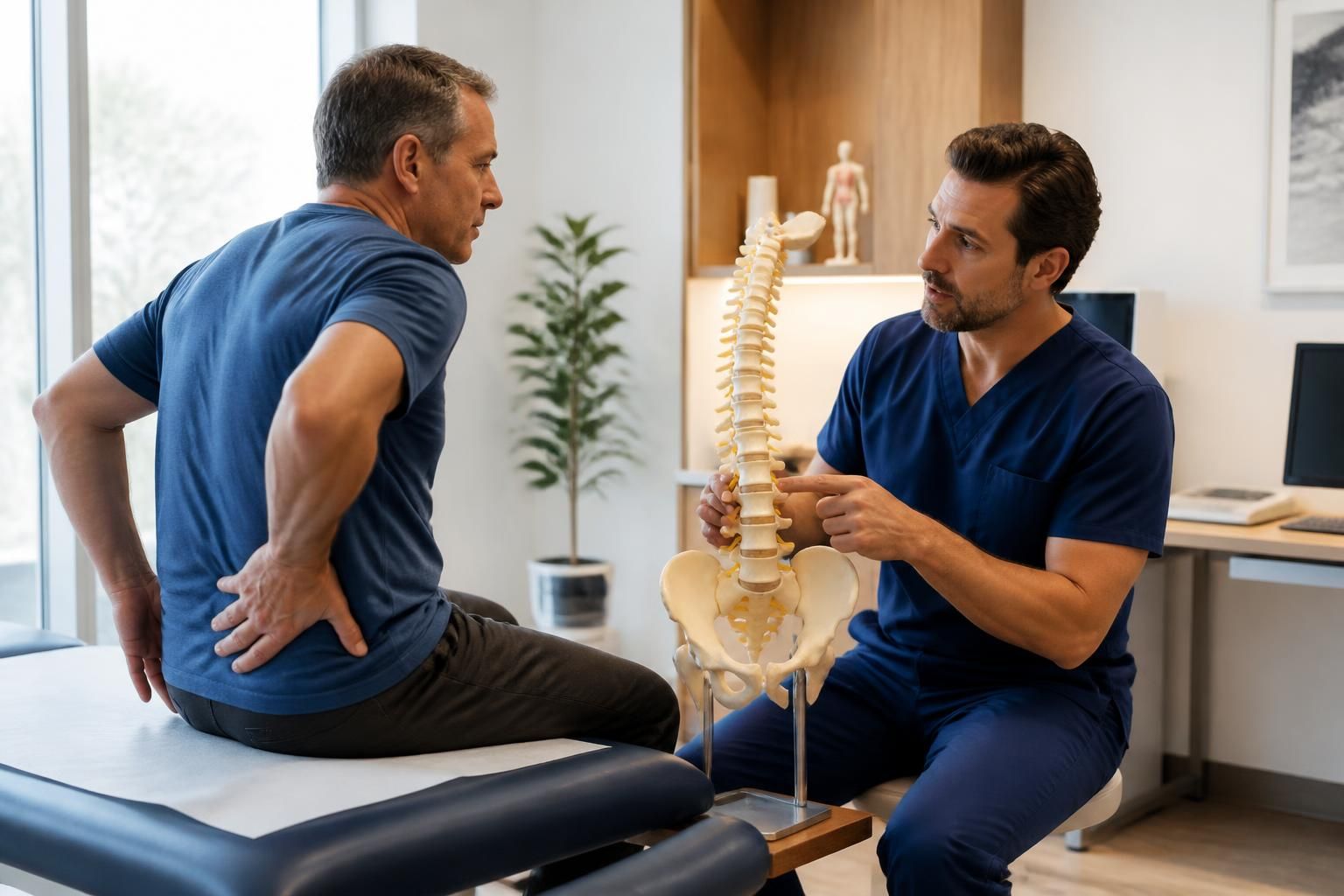
Intense lower back pain that radiates down the leg can often suggest sciatica, a common condition in Dorval and the surrounding area. This symptom, which may be sudden and severe, requires prompt attention to avoid potential complications. A timely consultation not only makes it possible to establish an accurate diagnosis but also to define an appropriate treatment plan aimed at relieving pain and preserving mobility.
Early management of severe sciatica should not be delayed, especially when clinical manifestations include intense pain, numbness, or progressive muscle weakness. Every patient deserves a personalized assessment to better understand the source of their symptoms. In Dorval, follow-up at a specialized medical centre plays a crucial role in prevention and rehabilitation, making it possible to act before the situation worsens.


In brief: key points on prompt consultation for severe sciatica
- Warning signs such as intense pain, muscle weakness, or numbness require an urgent consultation.
- Sciatica may result from nerve compression caused by a herniated disc, stenosis, or piriformis syndrome.
- An accurate diagnosis is based on a thorough clinical examination, sometimes supplemented by medical imaging such as MRI.
- Early treatment optimizes the chances of recovery without serious complications.
- Resources in Dorval include specialized centres offering integrated care, including consultation, treatment, and rehabilitation.
Understanding the mechanisms of severe sciatica in Dorval
Sciatica is related to irritation or compression of the sciatic nerve, one of the longest nerves in the human body, extending from the lumbar region to the feet. When this nerve is compressed, it can cause sharp pain, often described as burning or shooting sensations travelling through the buttock, thigh, calf, and sometimes the foot. In Dorval, where modern lifestyles can involve extensive sitting or prolonged driving, cases of severe sciatica may be particularly common.
The most common causes include a herniated disc, which occurs when an intervertebral disc protrudes and compresses a nerve root, or foraminal stenosis, which refers to narrowing of the nerve passageways in the spine. Piriformis syndrome, a muscle contraction that compresses the nerve, is also a possible, though less common, cause. These mechanisms explain why pain can be intense and sometimes disabling.
One particular feature of Dorval is rapid access to specialized medical services, including those dedicated to managing musculoskeletal disorders. A qualified professional performs a complete examination, assessing lumbar mobility, reflexes, and leg muscle strength. Depending on the findings, additional tests such as MRI may confirm the source of the pain. This step is essential because sciatica does not always have the same cause and requires appropriate management.
The assessment also differentiates sciatica from other non-radicular low back pain, which does not always require an immediate consultation. However, when pain is severe, extends below the knee, or is accompanied by neurological symptoms, a prompt consultation is needed to limit the risk of complications.
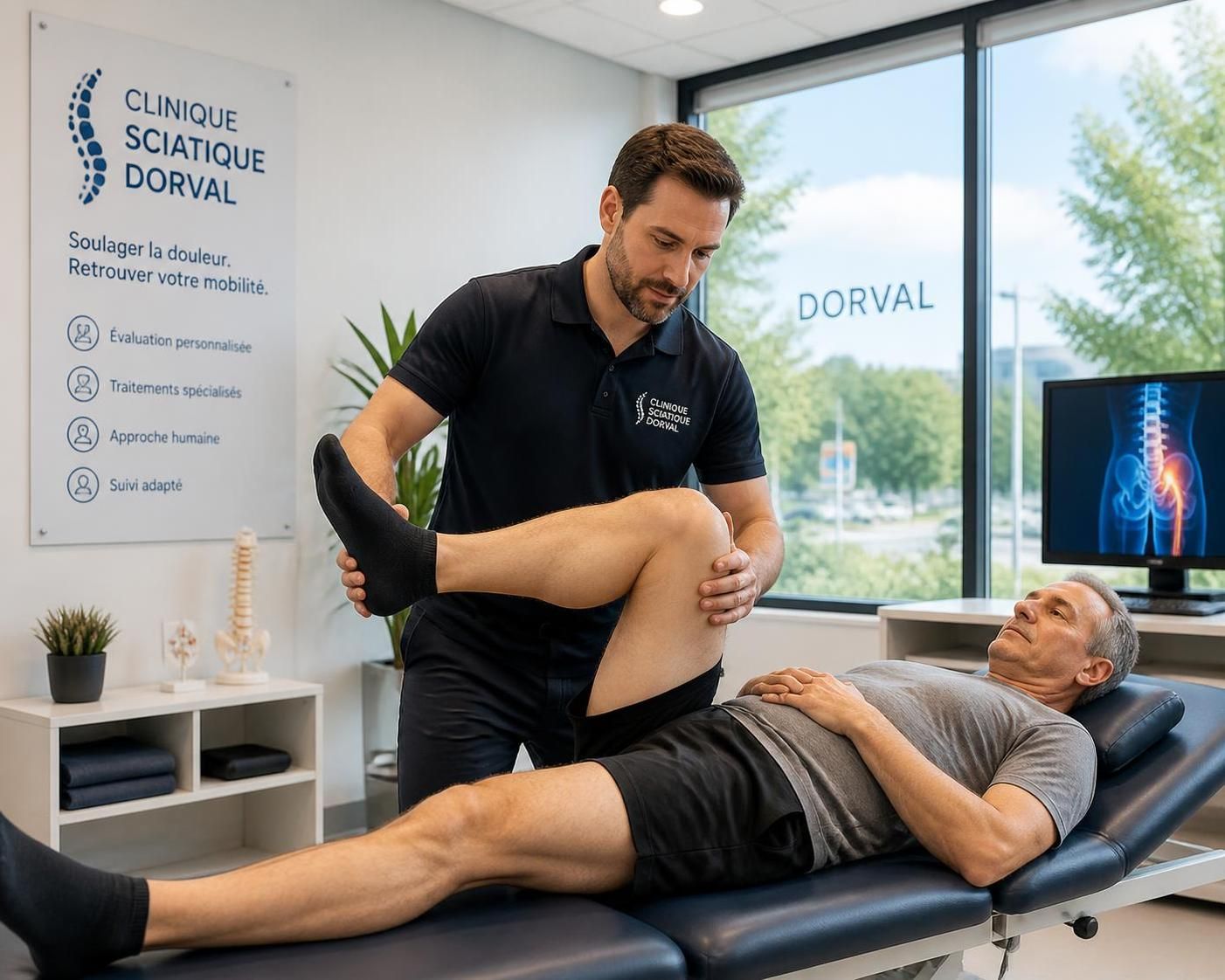
Factors that worsen sciatica symptoms: what may be concerning in Dorval
The experience of sciatica can vary considerably depending on each person’s activities, posture, and lifestyle. In Dorval, where remote work and prolonged computer use have increased, pain often intensifies during extended sitting or upon waking after an uncomfortable night.
Sometimes, simple movements such as bending forward or standing for a long time can worsen the pain. Likewise, stairs or prolonged walking can cause increased discomfort, reflecting excessive stress on the painful nerve. However, for some patients, these same activities may temporarily improve symptoms, highlighting the need for personalized support.
At this stage, it is crucial to adapt activities without resorting to prolonged strict rest, which could worsen muscle weakness. Abruptly stopping physical activity is not always the best solution. Specific, moderate exercises guided by a professional often help improve pain tolerance and support rehabilitation.
Driving, which is common when travelling between Dorval and Montréal, can also become problematic if radiating pain intensifies when the patient remains seated for long periods. Contacting a specialized medical centre makes it possible to receive appropriate follow-up to optimize comfort in these everyday situations.
- Pain that worsens despite treatment.
- Progressive numbness or tingling.
- Marked muscle weakness with difficulty walking.
- Bilateral pain, a more complex situation requiring urgent assessment.
Recognizing signs that warrant prompt or urgent consultation in Dorval
Sciatic pain can progress unpredictably. In some cases, it remains stable or decreases with conservative treatment, but at other times, it worsens and requires prompt intervention. In Dorval, it is essential to distinguish typical situations from those requiring consultation without delay.
A prompt consultation is essential when pain is intense, persists for more than one week, or is accompanied by progressive muscle weakness, severe sensory disturbances, or spreading numbness. These signs may indicate ongoing compression of the sciatic nerve, which can lead to functional complications without appropriate management.
A medical emergency may occur in particular with sphincter dysfunction (loss of bladder or bowel control), saddle anaesthesia (numbness around the perineum), or sudden paralysis. These symptoms suggest cauda equina syndrome, which requires immediate neurosurgical intervention to prevent serious and often irreversible sequelae.
Paying attention to these signals is particularly important for Dorval residents, where the relative proximity of hospital facilities facilitates rapid access to emergency care. Consulting promptly does not mean giving in to panic, but rather recognizing signs that go beyond the usual scope of sciatica.
To learn more about the criteria that should lead to an urgent medical opinion, it is helpful to consult reliable resources such as those offered by low back pain specialists.
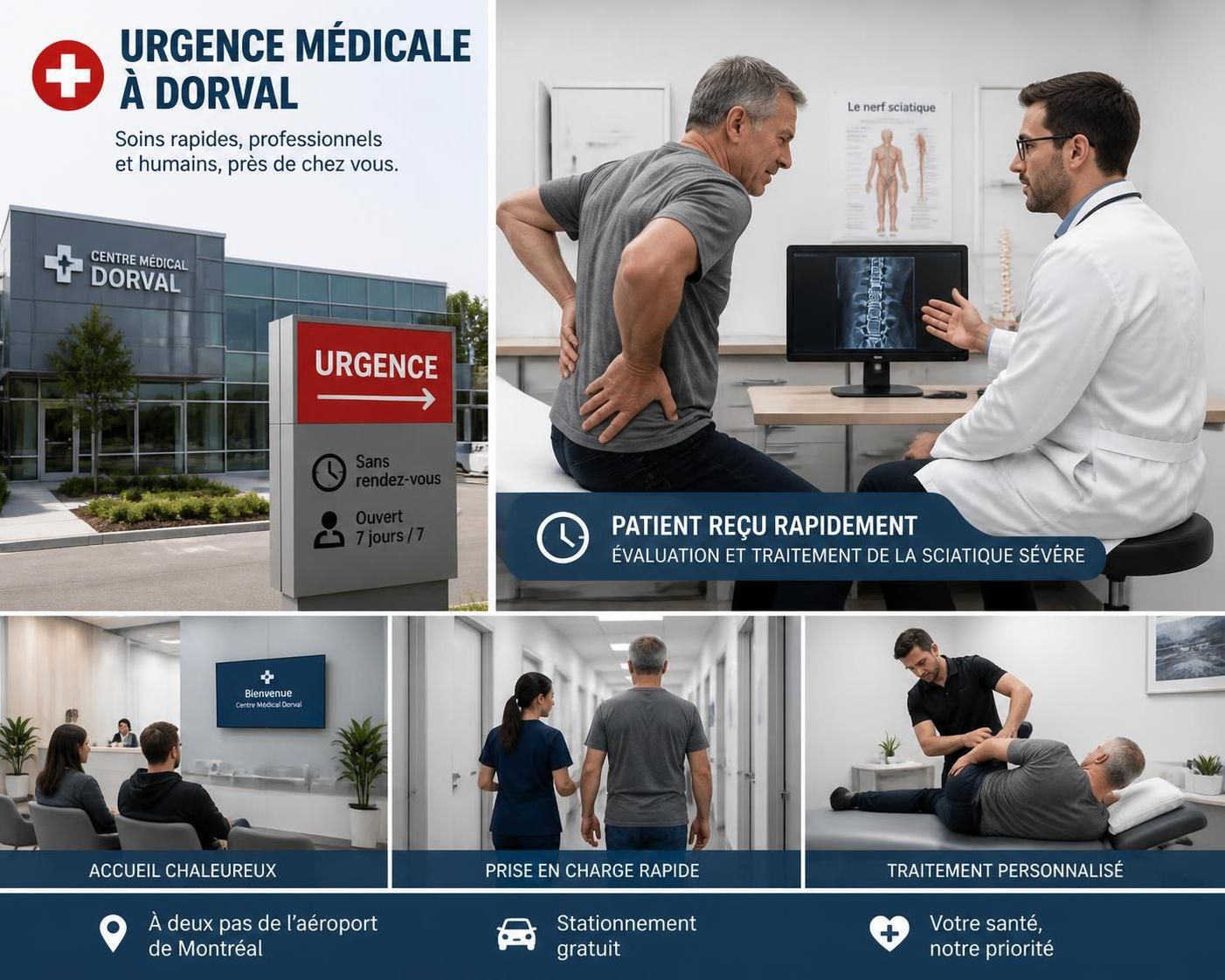
Management options and the role of neurovertebral decompression in Dorval
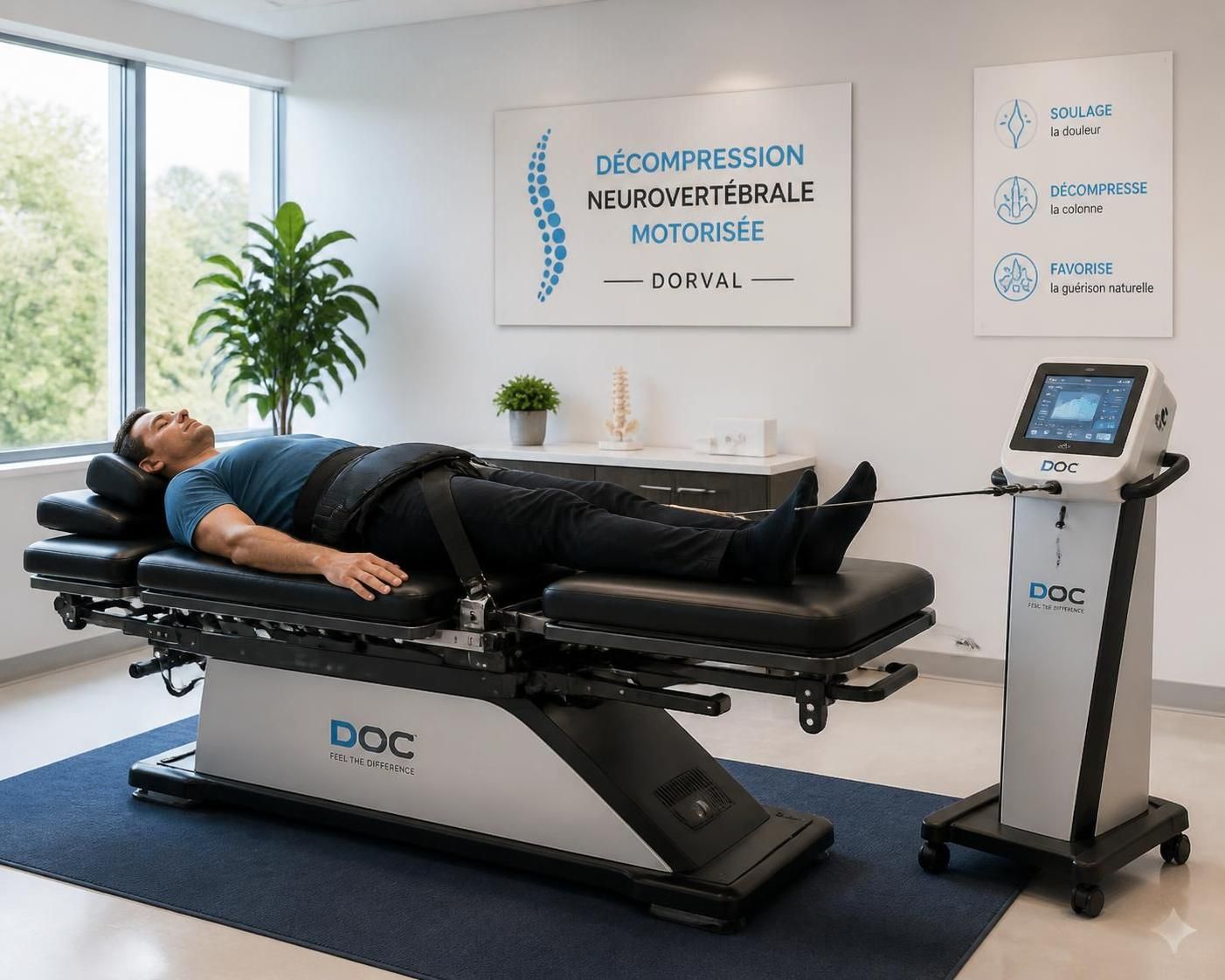
Severe sciatica in Dorval often requires multifactorial management, including medical care, rehabilitation, and sometimes advanced techniques such as motorized neurovertebral decompression. The latter, offered in certain specialized centres, involves gradual, controlled traction of the lumbar spine aimed at reducing pressure on the nerve roots.
Neurovertebral decompression may be considered in particular for patients in whom a herniated disc, protrusion, or foraminal stenosis has been identified as the main cause. This treatment does not replace a complete medical assessment but, following careful candidate selection, it may help reduce pain and improve function.
However, its indications are limited. It is not appropriate for all profiles, particularly in the presence of vertebral fractures or instability, or for patients with cauda equina syndrome, who require urgent surgical intervention.
In addition, appropriate exercises, physiotherapy, and postural follow-up are essential to support recovery. In Dorval, several clinics offer an integrated approach combining these different aspects. Conservative management, which includes medication often prescribed by a family physician or rheumatologist, can also help modulate inflammation and control pain.
In some cases, if the clinical course shows worsening or no improvement after several weeks, a consultation with a neurology or orthopaedic surgery specialist may be necessary. This gradual approach ensures that the patient receives care appropriate to the severity of their condition.
| Type of sciatica | Characteristic symptoms | Initial management | Indication for urgent consultation |
|---|---|---|---|
| Disc-related sciatica | Intense pain radiating from the lower back to the leg, often on one side | Relative rest, anti-inflammatory medication, appropriate exercises | Progressive muscle weakness, intense nighttime pain |
| Sciatica due to foraminal stenosis | Dull pain, sometimes bilateral, worsened by prolonged standing | Neurovertebral decompression, physiotherapy | Extensive numbness, difficulty walking |
| Piriformis syndrome | Pain localized in the buttock and radiating into the leg | Manual care, stretching, moderate physical activity | Bilateral pain, significant loss of strength |
| Severe sciatica with neurological signs | Severe weakness, loss of bladder or bowel control, saddle anaesthesia | Medical emergency, immediate neurosurgical assessment | Any signs suggesting cauda equina syndrome |
Local resources and advice for effective management in Dorval
In Dorval, several professionals contribute to the management of severe sciatica. Specialized medical clinics provide rapid access to thorough assessments and appropriate care. In addition, patients can benefit from rehabilitation follow-up to strengthen their backs and improve their posture.
The Montréal context also promotes coordination among general practitioners, rheumatologists, and sciatic nerve specialists. TAGMED Clinic, located in Mount Royal near Outremont and Côte-des-Neiges, offers expertise in motorized neurovertebral decompression as well as specific osteopathy, ensuring an integrated approach.
If there are doubts about the severity of symptoms or the need for a prompt consultation, recognized informational resources such as SOS Sciatica provide reliable advice to better understand the pain and the steps to take. Using these platforms can help avoid delayed management that could complicate the course of the condition.
To reduce the risk of recurrence, it is advisable to adopt a daily routine that supports proper spinal function: engaging in regular physical activity, maintaining good posture, limiting tobacco use, and monitoring weight are all recommendations applicable in Dorval and the surrounding area.
This video illustrates the signs that require a prompt medical consultation for sciatica, particularly in the Montréal context.
An overview of motorized neurovertebral decompression techniques used in the management of severe sciatica.
{“@context”:”https://schema.org”,”@type”:”FAQPage”,”mainEntity”:[{“@type”:”Question”,”name”:”Quels symptu00f4mes doivent alerter et justifier une consultation rapide ?”,”acceptedAnswer”:{“@type”:”Answer”,”text”:”Toute douleur intense irradiant dans la jambe, une faiblesse musculaire progressive, des engourdissements u00e9tendus ou des troubles sphinctu00e9riens nu00e9cessitent une consultation mu00e9dicale sans du00e9lai.”}},{“@type”:”Question”,”name”:”La du00e9compression neurovertu00e9brale convient-elle u00e0 tous les patients pru00e9sentant une sciatique ?”,”acceptedAnswer”:{“@type”:”Answer”,”text”:”Non, cette intervention est ru00e9servu00e9e u00e0 certains profils apru00e8s u00e9valuation. Elle nu2019est pas indiquu00e9e en cas de syndrome de la queue de cheval ou du2019autres urgences neurochirurgicales.”}},{“@type”:”Question”,”name”:”Peut-on diffu00e9rencier une sciatique bu00e9nigne du2019une situation plus grave u00e0 domicile ?”,”acceptedAnswer”:{“@type”:”Answer”,”text”:”La su00e9vu00e9ritu00e9 des symptu00f4mes et la pru00e9sence de troubles neurologiques sont des indices importants, mais seul un professionnel peut poser un diagnostic exact.”}},{“@type”:”Question”,”name”:”Pourquoi u00e9viter un repos strict prolongu00e9 en cas de sciatique ?”,”acceptedAnswer”:{“@type”:”Answer”,”text”:”Surtout dans les cas non urgents, un repos excessif peut aggraver la faiblesse musculaire, ralentissant la ru00e9cupu00e9ration.”}},{“@type”:”Question”,”name”:”Quels professionnels consulter u00e0 Dorval pour une sciatique su00e9vu00e8re ?”,”acceptedAnswer”:{“@type”:”Answer”,”text”:”Le mu00e9decin de famille est le premier interlocuteur. En fonction du cas, un rhumatologue, neurologue ou spu00e9cialiste en du00e9compression neurovertu00e9brale pourra u00eatre ru00e9fu00e9ru00e9.”}}]}What symptoms should be concerning and warrant a prompt consultation?
Any intense pain radiating into the leg, progressive muscle weakness, extensive numbness, or sphincter dysfunction requires a medical consultation without delay.
Is neurovertebral decompression suitable for all patients with sciatica?
No, this procedure is reserved for certain profiles after assessment. It is not indicated in cases of cauda equina syndrome or other neurosurgical emergencies.
Can mild sciatica be distinguished from a more serious situation at home?
The severity of symptoms and the presence of neurological problems are important clues, but only a professional can make an accurate diagnosis.
Why avoid prolonged strict rest for sciatica?
Especially in non-urgent cases, excessive rest can worsen muscle weakness, slowing recovery.
Which professionals should be consulted in Dorval for severe sciatica?
The family physician is the first point of contact. Depending on the case, a referral may be made to a rheumatologist, neurologist, or neurovertebral decompression specialist.
If you have intense pain radiating down your leg along with weakness or numbness in Dorval, a prompt assessment can help you understand the likely cause and the signs to watch for. Appropriate early treatment often improves comfort and function. Do not hesitate to consult a specialized medical centre for personalized follow-up.
Book an appointment for an assessment in Montréal
Dr. Sylvain Desforges, B.Sc., D.O., N.D., osteopath
This content is educational and does not replace a personalized consultation.
