


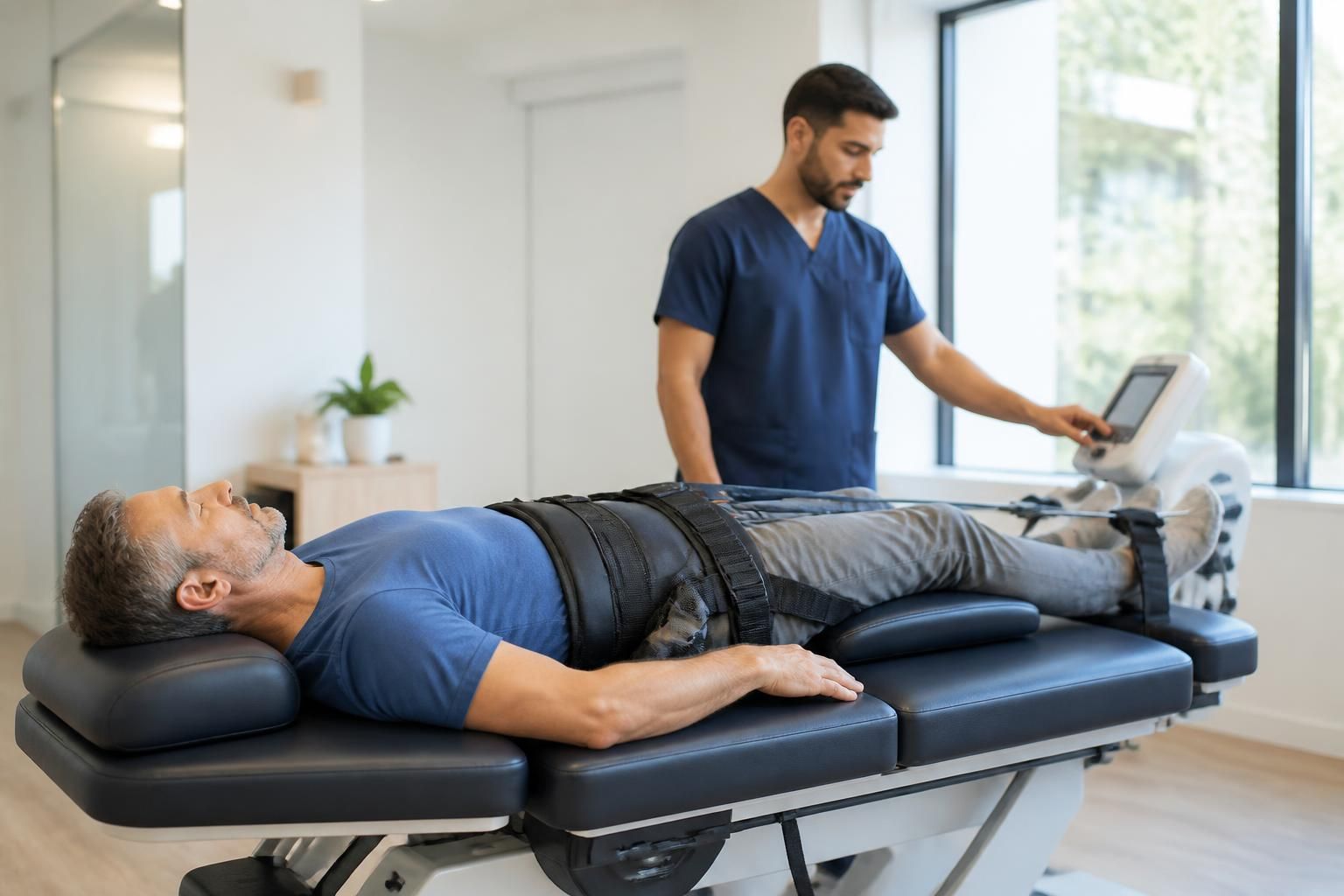
Sciatica is pain frequently felt in the lower back that radiates down the leg, often caused by compression of the sciatic nerve. Motorized lumbar decompression, a non-invasive treatment available in the LaSalle area, offers an innovative solution to help reduce this pain. By applying gentle, controlled traction to the lumbar spine, this technique helps relieve pressure on the intervertebral discs and alleviate the nerve compression responsible for symptoms.
The challenges associated with sciatica in LaSalle, where remote work and activities involving prolonged sitting are common, highlight the importance of appropriate, safe approaches. Motorized lumbar decompression not only offers symptom relief but also supports postural and functional rehabilitation, improving patients’ quality of life. However, its indication always depends on a personalized clinical assessment that considers the underlying causes and progression of the pain.



In brief: key points on motorized lumbar decompression and sciatica in LaSalle
- Motorized lumbar decompression uses gentle, gradual traction of the spine to increase the space between the vertebrae.
- It reduces pressure on the sciatic nerve, particularly when the intervertebral discs have a herniation, protrusion, or narrowing.
- The treatment is non-invasive and appropriate for certain patients, including those with radiating leg pain associated with nerve compression.
- The technique complements rehabilitation approaches, including specific exercises, postural advice, and manual therapy to optimize outcomes.
- Results vary from case to case and require a personalized assessment, particularly in LaSalle and the surrounding Montréal area.
- A consultation is essential in the presence of warning signs such as progressive muscle weakness or loss of urinary control.
- Decompression does not replace medical follow-up but may be an option for those seeking to limit the use of medication or surgery.
Understanding how motorized lumbar decompression helps manage sciatica
Sciatica often results from irritation or compression of the sciatic nerve, generally in the lumbar region. This compression frequently stems from a disc herniation, disc protrusion, or foraminal stenosis, conditions in which bony or disc structures exert pressure on the nerve roots. Motorized lumbar decompression works by stretching the spine through controlled traction that temporarily increases the space between the vertebrae.
This process can reduce pressure on the intervertebral discs and nerve roots, thereby easing pain that radiates from the lower back into the lower limb. By relieving compression, the technique also promotes better local blood circulation, supporting tissue nutrition and potentially contributing to reduced inflammation around the nerves.
In clinical settings, motorized decompression is often delivered using specialized equipment that adapts the traction force and duration to each patient. This approach, which differs from manual methods, provides precise repetition and better control of the mechanical stresses applied.
It is important to note that these mechanisms do not apply uniformly to all types of sciatica. For example, sciatica related to inflammatory, muscular, or central causes requires specific management other than neurovertebral traction.
Recent studies confirm that combining motorized decompression with other modalities, such as targeted physiotherapy or osteopathy, may maximize benefits, particularly by improving spinal stability and correcting postural imbalances. To better understand the principles and operation of this treatment, specialized resources on neurovertebral decompression and sciatica.
can be consulted.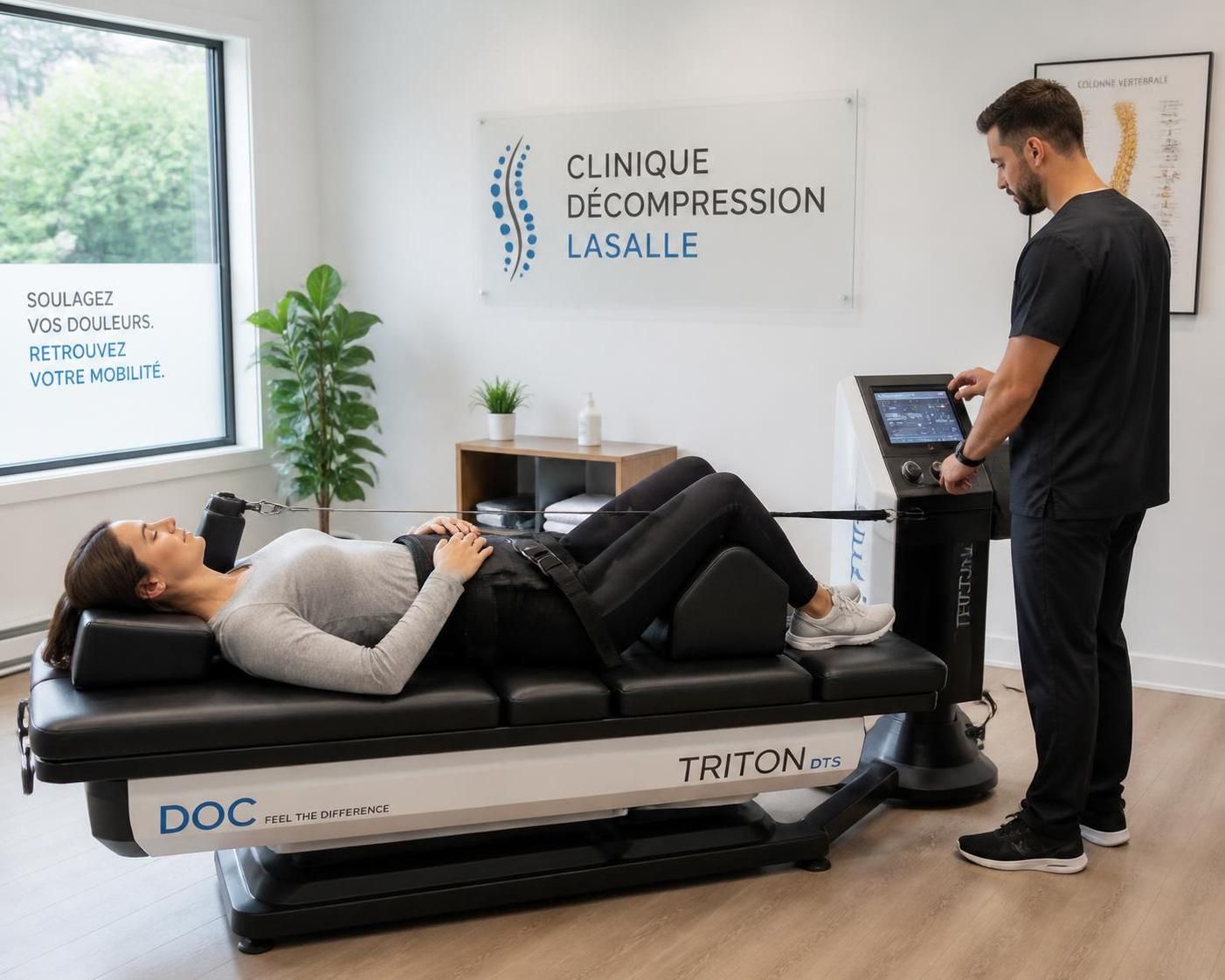
Local and personal factors influencing motorized lumbar decompression outcomes in LaSalle
Daily lifestyle factors and physiological characteristics play a major role in the perception and progression of low back pain with sciatica. In LaSalle, where remote work and sedentary lifestyles are common, posture at work or at home can worsen nerve compression.
For example, prolonged sitting without adequate support can increase pressure on the intervertebral discs and reduce lumbar mobility, thereby intensifying radiating leg pain. In this context, regular use of motorized decompression aims to counterbalance these effects by promoting targeted lumbar stretching.
Adjustments are often needed to match the patient’s profile. Session length, traction force, and frequency are therefore modified to avoid overloading or aggravation. Professionals also recommend incorporating specific postural strengthening and flexibility exercises that can be completed at home.
Symptoms such as numbness, tingling, or muscle weakness are closely monitored during treatment. Worsening or unusual spread of pain requires prompt reassessment to adjust management or consider additional testing.
Finally, sleep and leisure activities in LaSalle, such as outdoor walking or cycling, may be affected but can also improve during a well-adapted program. It is therefore essential to support motorized decompression with comprehensive, personalized follow-up.
When motorized lumbar decompression should be considered and the signs requiring urgent consultation
Motorized lumbar decompression may be considered for patients with persistent or recurrent sciatic pain and signs consistent with lumbar nerve compression. However, a professional assessment is needed to confirm the indication and rule out potential contraindications, such as severe spinal stenosis or vertebral fractures.
Signs requiring immediate medical consultation include the onset of significant or progressive muscle weakness, major sensory disturbances such as saddle anaesthesia, and loss of urinary or bowel control. These symptoms may indicate a neurological emergency requiring immediate medical treatment.
In the absence of these signs, persistent pain below the knee, numbness, sleep disturbances, or any functional limitation warrant a clinical assessment to adjust management.
In the Montréal area, several professionals, including those in LaSalle and Mount Royal, offer thorough assessments to guide the use of motorized decompression within a comprehensive treatment plan. To learn more about these clinical guidelines and better understand consultation criteria, the information available on when to seek consultation for sciatica provides a useful complement to this process.
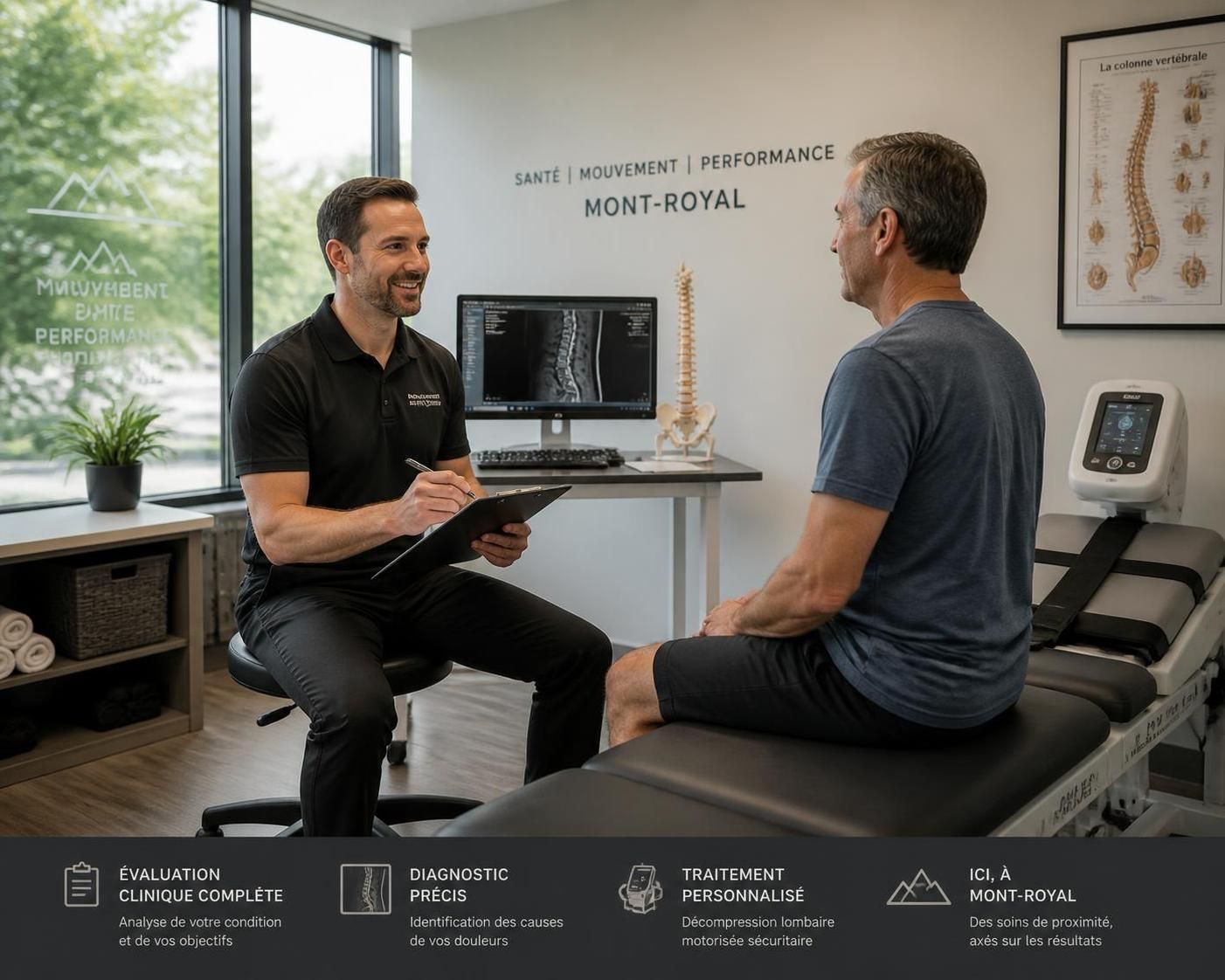
Complementary options for treating sciatica in LaSalle: the role of motorized neurovertebral decompression
Managing sciatica in LaSalle often involves a range of gradual, individualized treatments. Motorized lumbar decompression is part of this approach as an important component for reducing nerve compression without initially resorting to surgery or pain medication.
By widening the intervertebral space, this technique helps relieve pressure on the intervertebral disc and nerve roots. It may therefore be particularly helpful for profiles consistent with a disc herniation or protrusion, as well as moderate foraminal stenosis.
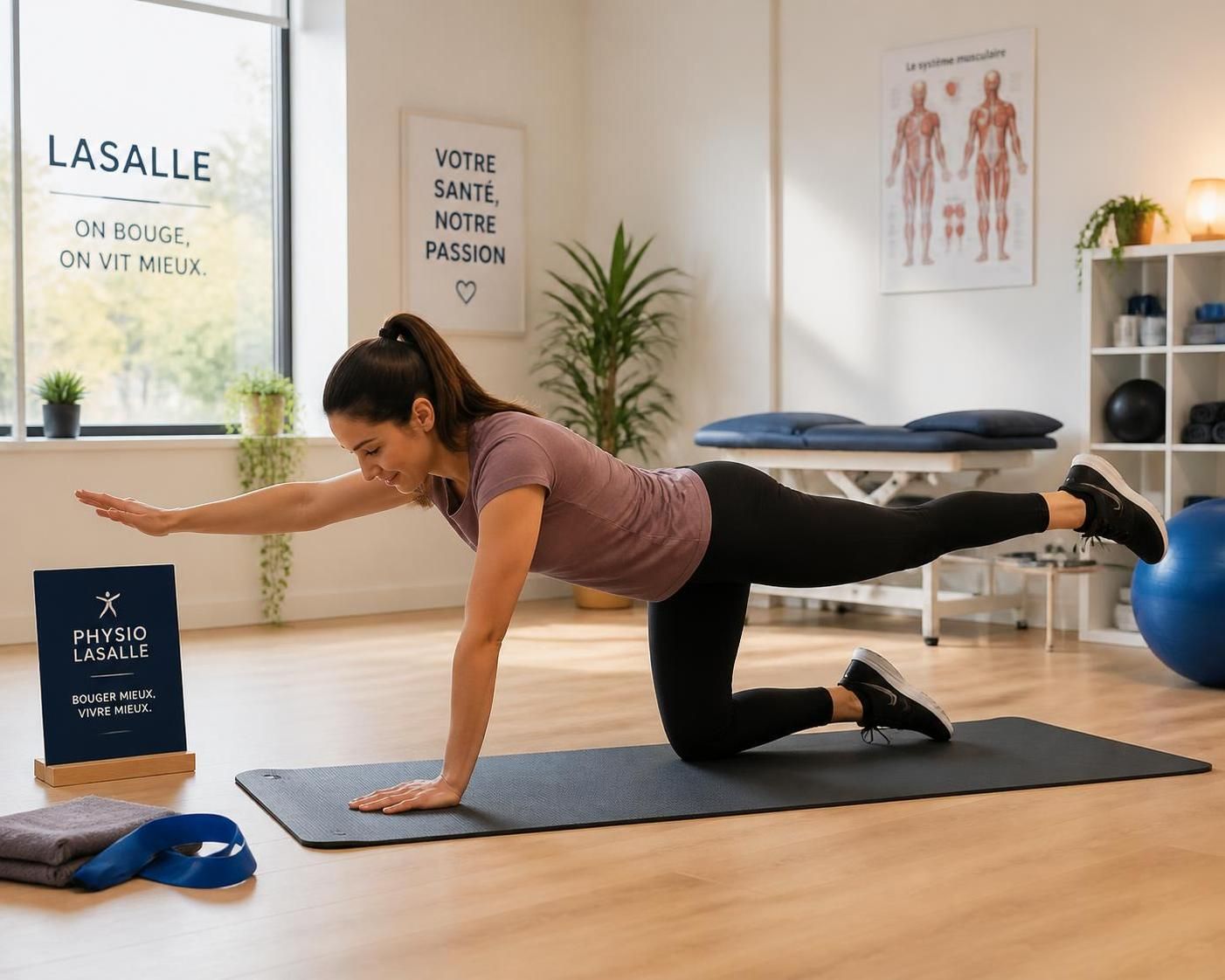
At the same time, supervised functional rehabilitation involving stabilization exercises, muscle strengthening, and postural correction contributes to lasting improvement and reduces the risk of recurrence.
As a complement, manual therapies such as specific osteopathy or gentle mobilization may promote muscle relaxation and improve joint comfort. Some situations may require a specialist opinion to discuss injections or surgery, particularly in cases of neurological deficit or failure of conservative treatments.
Specialized clinics in Montréal, including Clinique TAGMED in Mount Royal, offer care that integrates motorized neurovertebral decompression into a consistent, tailored care pathway. To better understand how the various available treatment options work together, refer to the article on the effects of neurovertebral decompression on sciatica and other specialized resources.
| Treatment options | Benefits | Limitations |
|---|---|---|
| Motorized lumbar decompression | Non-invasive, targets nerve compression, improves circulation and posture | Variable results, requires a thorough assessment, not suitable for everyone |
| Physiotherapy and exercises | Strengthens stability, improves mobility, reduces pain over the long term | May require patience and personal commitment |
| Manual therapy (osteopathy, massage) | Muscle relaxation, joint comfort, complements other treatments | Effects are often temporary, less targeted at the mechanical cause |
| Medications (pain relievers, anti-inflammatories) | Rapid pain relief | Does not treat the cause, possible side effects, limited duration of use |
| Injections | Significant reduction in local inflammation | Invasive procedure, specific indication, variable effectiveness |
| Surgery | Treatment for severe compression or failure of conservative treatments | Surgical risks, recovery period, not systematically necessary |
The video illustrates a typical motorized lumbar decompression session and its effects on relieving sciatic pain.
This video explains the different non-invasive options for managing sciatica, with a focus on neurovertebral decompression.
{“@context”:”https://schema.org”,”@type”:”FAQPage”,”mainEntity”:[{“@type”:”Question”,”name”:”Quels sont les principaux bienfaits de la du00e9compression lombaire motorisu00e9e pour la sciatique ?”,”acceptedAnswer”:{“@type”:”Answer”,”text”:”La du00e9compression lombaire motorisu00e9e soulage la douleur en augmentant lu2019espace vertu00e9bral et en ru00e9duisant la pression sur le nerf sciatique, tout en amu00e9liorant la posture et la circulation locale.”}},{“@type”:”Question”,”name”:”La du00e9compression motorisu00e9e convient-elle u00e0 tous les patients souffrant de sciatique ?”,”acceptedAnswer”:{“@type”:”Answer”,”text”:”Non, ce traitement est ru00e9servu00e9 u00e0 certains profils apru00e8s une u00e9valuation. Des contre-indications ou une su00e9vu00e9ritu00e9 particuliu00e8re de la pathologie peuvent orienter vers du2019autres traitements.”}},{“@type”:”Question”,”name”:”Peut-on pratiquer la du00e9compression lombaire motorisu00e9e u00e0 domicile ?”,”acceptedAnswer”:{“@type”:”Answer”,”text”:”Cette thu00e9rapie est gu00e9nu00e9ralement administru00e9e en clinique avec un appareil spu00e9cialisu00e9, mais certains dispositifs adaptu00e9s existent pour un usage u00e0 domicile sous supervision.”}},{“@type”:”Question”,”name”:”Quels signes de gravitu00e9 nu00e9cessitent une consultation urgente ?”,”acceptedAnswer”:{“@type”:”Answer”,”text”:”Faiblesse musculaire rapide, perte de contru00f4le des sphincters, anesthu00e9sie de la selle, ou fiu00e8vre associu00e9e demandent une prise en charge mu00e9dicale immu00e9diate.”}},{“@type”:”Question”,”name”:”Comment optimiser les effets de la du00e9compression motorisu00e9e ?”,”acceptedAnswer”:{“@type”:”Answer”,”text”:”Lu2019intu00e9gration du2019exercices de renforcement postural et du2019u00e9valuation ru00e9guliu00e8re favorise une ru00e9cupu00e9ration durable et limite les ru00e9cidives.”}}]}What are the main benefits of motorized lumbar decompression for sciatica?
Motorized lumbar decompression relieves pain by increasing vertebral space and reducing pressure on the sciatic nerve, while improving posture and local circulation.
Is motorized decompression suitable for all patients with sciatica?
No, this treatment is reserved for certain patient profiles after an assessment. Contraindications or particular severity of the condition may lead to other treatments.
Can motorized lumbar decompression be performed at home?
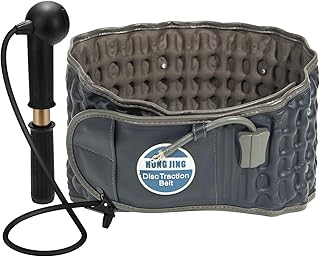
This therapy is generally administered in a clinic using specialized equipment, but certain adapted devices are available for home use under supervision.
What warning signs require urgent consultation?
Rapid muscle weakness, loss of sphincter control, saddle anaesthesia, or associated fever require immediate medical care.
How can the effects of motorized decompression be optimized?
Incorporating postural strengthening exercises and regular assessment promotes lasting recovery and helps limit recurrences.
Are you experiencing pain consistent with sciatica and would like to assess treatment options suited to your situation in LaSalle? A professional assessment can help clarify the likely cause, identify signs to watch for, and optimize rehabilitation safely. Discover the options offered through motorized lumbar decompression and other approaches during a specialized consultation in Montréal.
Book an assessment appointment
Dr. Sylvain Desforges, B.Sc., D.O., N.D., osteopath
This content is provided for educational purposes and does not replace a personalized assessment by a health-care professional.
