

Syringomyelia is a fluid-filled cavity within the spinal cord. Enlargement can disrupt nerve pathways. It may accompany a Chiari malformation, previous spinal injury or another condition that obstructs cerebrospinal fluid circulation, making investigation of the underlying cause essential.
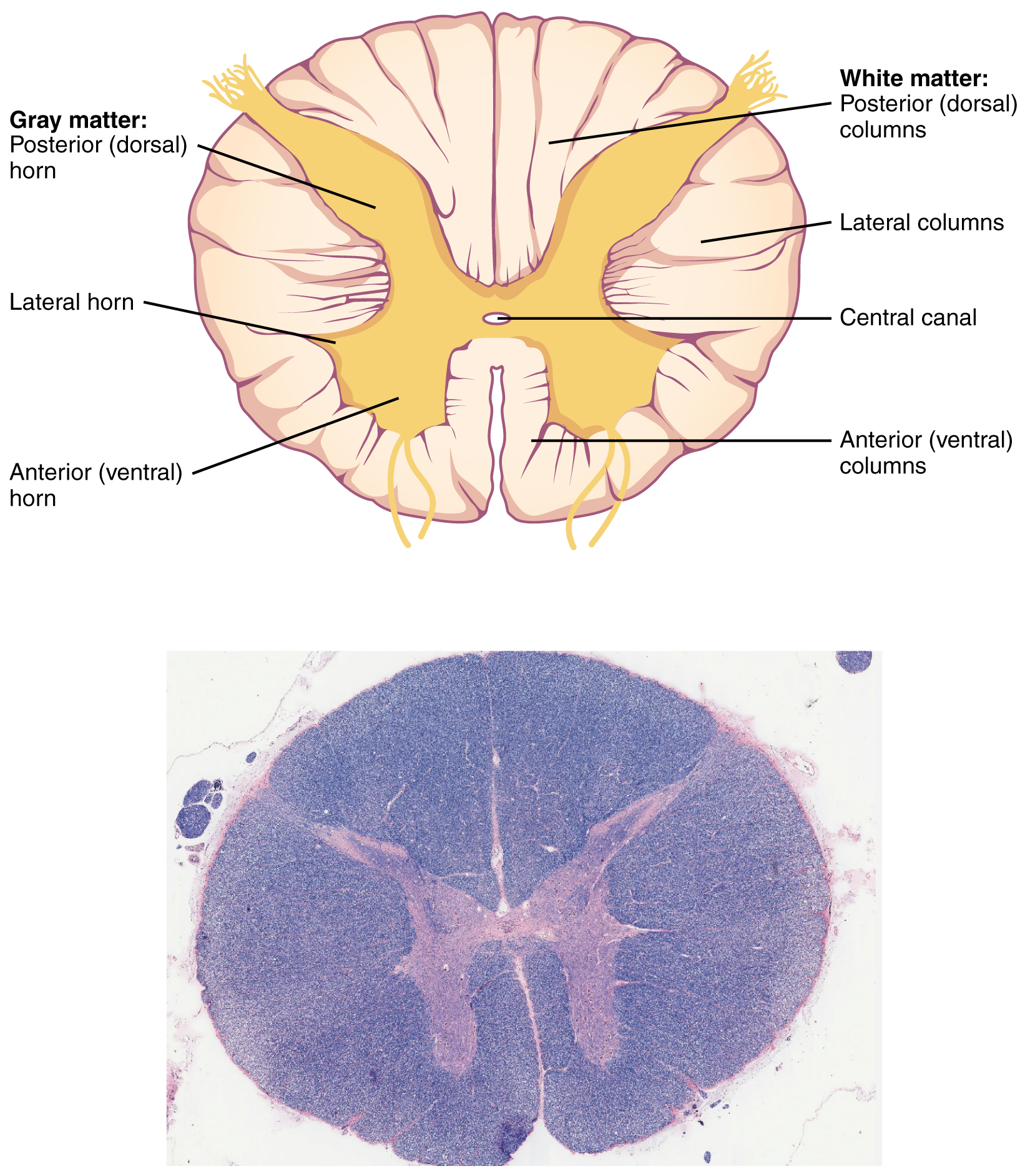
OpenStax — CC BY 4.0. Image source.

Understanding the spinal cord cavity
A syrinx develops inside spinal cord tissue, rather than inside an intervertebral disc. Abnormal cerebrospinal fluid circulation can contribute to its formation. Clinicians investigate associated causes, including Chiari malformation, previous injury, inflammation and a spinal cord tumour.
Manifestations and warning signs
Reduced awareness of heat and cold, hand weakness, nerve pain or scoliosis may develop gradually. Rapidly worsening weakness, breathing difficulty or new loss of bladder control requires immediate emergency assessment. Symptoms depend on the cavity’s location and effects on nearby nerve pathways.
Diagnosis
The examination compares sensation, strength, reflexes and walking. MRI identifies the cavity and associated abnormalities; imaging may include the brain and several spinal regions. Peripheral neuropathy or cervical cord compression can explain similar symptoms and must be distinguished from syringomyelia.
Treatment and outlook
A stable cavity without important functional effects may be monitored by a specialist. When deterioration occurs, neurosurgery generally addresses the cause of disturbed fluid flow; direct drainage is appropriate only in selected circumstances. Recovery depends partly on the damage already sustained by nerve tissue.
Role of TAGMED care
Neurological or neurosurgical assessment comes before spinal treatment. TAGMED may consider functional support consistent with specialist restrictions. Motorized traction does not empty a syrinx. Reduced temperature sensation also requires practical precautions against burns and unnoticed skin injuries during daily activities.
Frequently asked questions
Is this a herniated disc?
No. The cavity is inside the cord; a disc herniation affects a separate structure.
Is pain always present?
No. Changes in sensation or strength may be more noticeable.
Is surgery always necessary?
No. Symptoms, imaging progression and the cause determine the decision.
Is MRI the only follow-up measure?
No. Changes in everyday abilities and the neurological examination also matter.
Can someone exercise?
Activity should follow individual symptoms and the specialist’s recommendations.
Conceptual diagram: the presence of a cavity alone does not predict symptom severity.
Medical references
- NIH — NINDS. Syringomyelia.
- Mayo Clinic. Syringomyelia: diagnosis and treatment.
- Original research — Journal of Neurosurgery. Elucidating the pathophysiology of syringomyelia.
References document the topic; their inclusion does not imply endorsement of TAGMED services by those organizations.
Educational information from The Spine Page. This entry does not replace an individual assessment. Documentary version: October 12, 2026. Sylvain Desforges, B.Sc., D.O., N.D., osteopath and naturopath.
TAGMED clinic contact details
For non-urgent consultations and information about available services.
Clinique TAGMED — Terrebonne
1150, rue Lévis, Suite 200
Terrebonne (Québec) J6W 5S6
450‑704‑4447
Clinique TAGMED — Montréal
1140, avenue Beaumont
Mont-Royal (Québec) H3P 3E5
1‑877‑672‑9060