




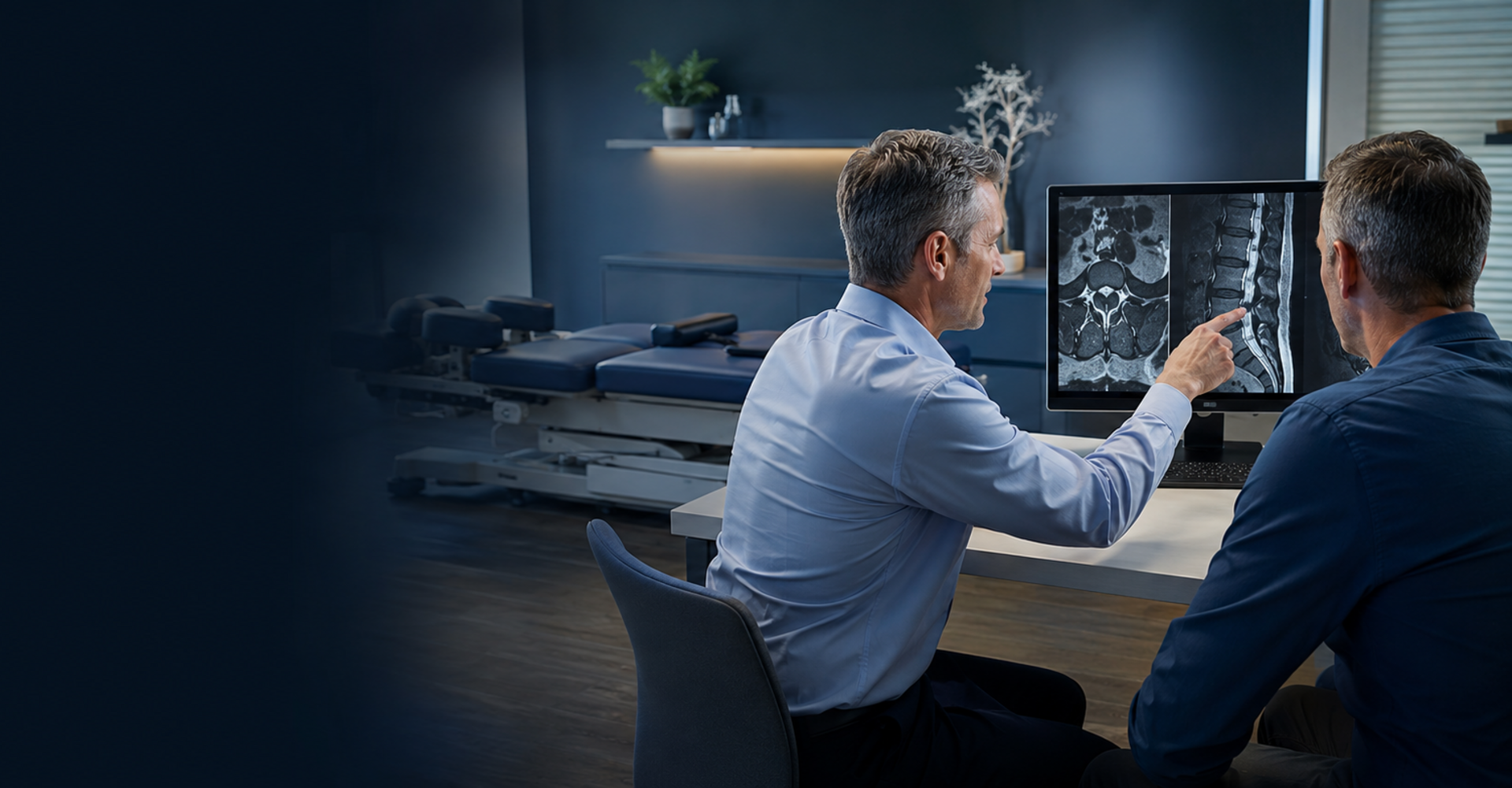
Neck pain and cervical radiculopathy: symptoms, evaluation and treatment choices
Neck pain may remain local or travel toward the shoulder blade, arm or hand when a cervical nerve root is irritated. Pain distribution, numbness, weakness and reflex changes assist clinical reasoning.
Most uncomplicated presentations improve without surgery, but progressive weakness, gait imbalance, hand clumsiness, trauma, fever or spinal-cord signs require a different pathway.
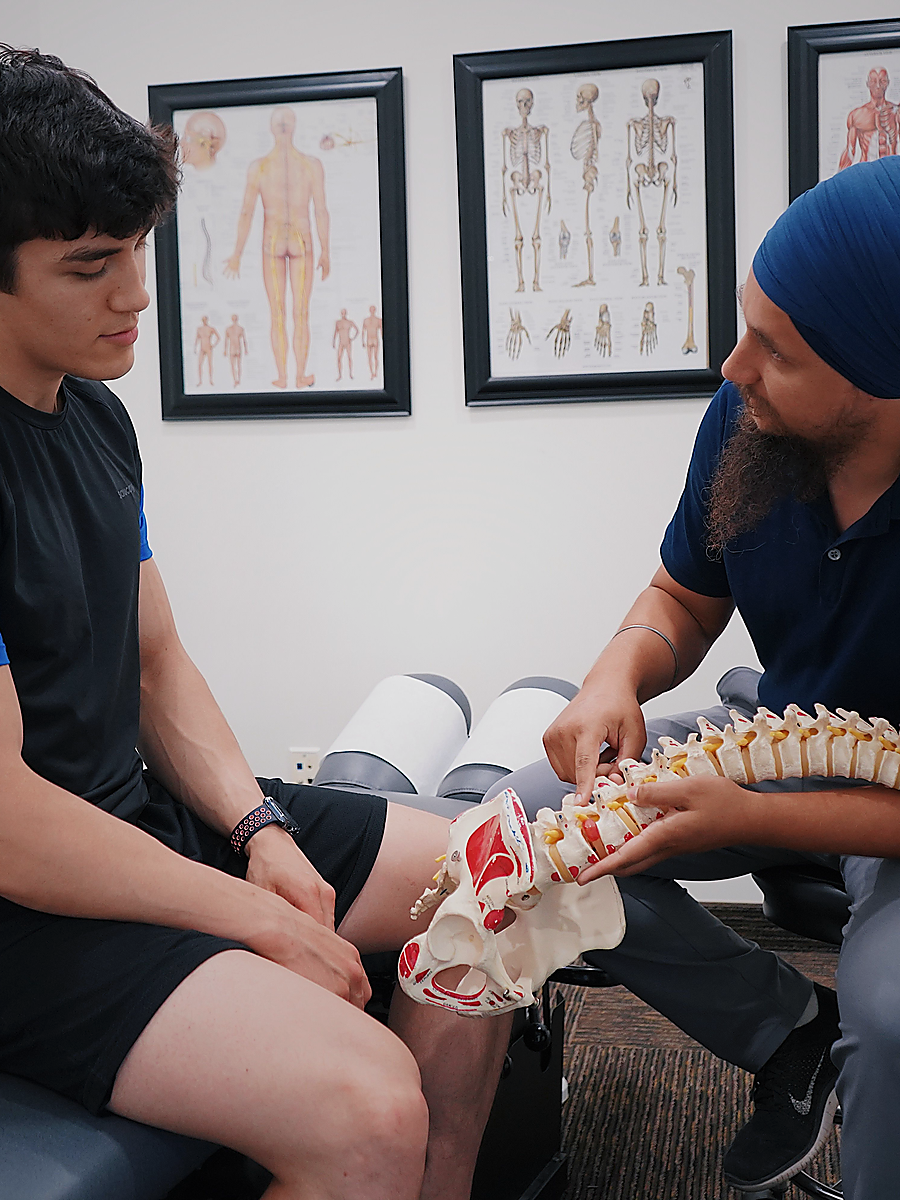
Common nerve-root patterns
C5 to C8 patterns are useful clues, not rigid maps. Shoulder disease, carpal tunnel syndrome, ulnar neuropathy and spinal-cord disease may mimic radiculopathy.
The pattern is more convincing when pain, sensation, motor testing and reflexes indicate the same level.
| Possible level | Typical clues | Important limitation |
|---|---|---|
| C5–C6 | Shoulder or lateral arm pain; possible biceps or wrist-extension weakness. | Shoulder disorders may appear similar. |
| C7 | Pain toward the middle finger; possible triceps weakness or reduced reflex. | Symptoms may not follow a textbook map. |
| C8–T1 | Medial forearm or hand symptoms; grip weakness. | Ulnar neuropathy must be considered. |
How is neck and arm pain evaluated?
The evaluation reviews onset, trauma, provoking positions, sleep, work and neurological change. Examination may include motion, strength, sensation, reflexes, nerve-tension testing, gait and hand dexterity.
MRI is not automatically required for uncomplicated acute neck pain. It becomes more relevant with progressive deficits, myelopathy, infection concern, persistent symptoms or planned intervention.
Neurological examination
Strength, sensation and reflexes help identify nerve-root dysfunction.
Alternative diagnoses
Shoulder and peripheral nerve problems may imitate radiculopathy.
Imaging in context
Degenerative findings are common and must match the clinical picture.

Non-surgical and surgical options
Education, temporary activity modification and a graded return to movement are common first steps when no major deficit is present. Exercise may address mobility, strength and function.
Medication or injections may be discussed. Surgery is considered when deficits progress, myelopathy is present or severe persistent symptoms match a treatable lesion.
- Choose exercises according to symptom response.
- Reassess if arm pain travels farther or strength declines.
- Do not choose treatment from the image alone.
- Discuss benefits, risks and alternatives before invasive care.
When does the pathway change?
Stable symptoms can often be monitored; neurological deterioration requires expedited imaging or specialist review.
Pain intensity alone does not determine urgency. Motor loss and spinal-cord signs carry greater weight.
| Clinical situation | Typical next step | Reason |
|---|---|---|
| Local neck pain without red flags | Education and conservative care. | Routine MRI rarely changes initial management. |
| Persistent arm pain with stable examination | Reassess and consider MRI if it may guide care. | Correlation matters before invasive treatment. |
| Progressive weakness or myelopathic signs | Prompt medical or surgical assessment. | Delay may increase neurological risk. |
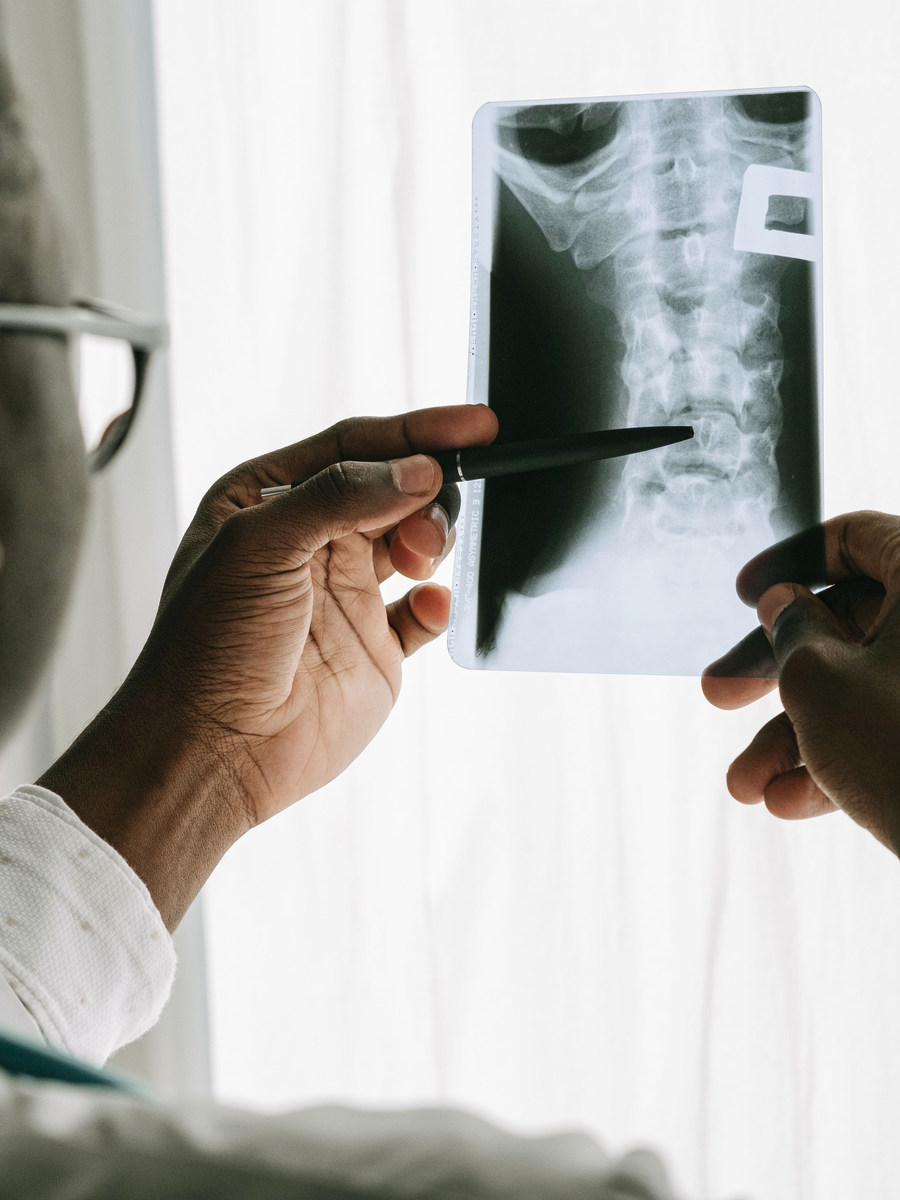
Questions to ask before choosing care
Before beginning care for neck pain and cervical radiculopathy, ask the provider to explain the working diagnosis and the findings that support it. The discussion should distinguish a structural description from the clinical syndrome, clarify whether neurological function is stable and identify the specific outcome the treatment is intended to improve.
A high-quality plan also explains the expected timeline, reasonable alternatives, possible harms, cost and the criteria for changing course. No treatment should continue indefinitely because it produced a brief change in pain. The decision should be reviewed against measurable function and safety.
What is the target?
Ask which structure, mechanism or functional limitation the treatment is intended to address.
What result is realistic?
Clarify the expected change in pain distribution, walking, sleep, work or daily activity.
What are the alternatives?
Compare education, exercise, medication, procedures, technology-assisted care and surgery when relevant.
When will the plan be reviewed?
Set an early review point and define the findings that would stop, modify or escalate care.
How to monitor progress
Progress should be tracked with more than a pain score. Useful measures include how far symptoms travel, strength, sensation, walking tolerance, sleep, medication use and the ability to perform meaningful activities. Neurological change should always be documented separately from pain relief.
Temporary fluctuations are common. The important question is whether the overall trajectory is safer and more functional. New weakness, expanding numbness, altered bladder or bowel function or a substantial loss of walking ability should trigger reassessment rather than automatic continuation of the same treatment.
Continue with specialized resources
The Spine Page is an educational blog. The links below lead to independent specialized websites.
Clinique TAGMED — spinal decompression
Service-specific information about motorized spinal decompression and disc-related conditions.
SOS Sciatique — nerve-root symptoms
Focused guides about sciatica, warning signs and treatment questions.
Frequently asked questions
Can radiculopathy occur without severe neck pain?
Yes. Arm pain or weakness may dominate.
Does hand numbness always come from the neck?
No. Peripheral nerve entrapment may be responsible.
Is MRI always needed?
No. It is useful when it may change management.
Can a cervical disc herniation improve without surgery?
Many do when deficits are stable.
What is cervical myelopathy?
Spinal-cord dysfunction causing hand, gait or reflex changes.
Should all neck movement be avoided?
Usually no; movement is adapted to symptoms.
Can traction be used?
Sometimes selectively, with screening and caution.
When is surgery discussed?
With progressive deficit, myelopathy or persistent concordant symptoms.
Can shoulder pain mimic radiculopathy?
Yes.
Does The Spine Page diagnose this condition?
No.
Sources consulted
- American College of Radiology — Appropriateness Criteria: Cervical Pain or Cervical Radiculopathy
- Childress & Becker — Nonoperative Management of Cervical Radiculopathy
Last editorial review: July 2026. This page provides general education and does not replace individualized medical assessment.
Editorial review : Dr. Sylvain Desforges, B.Sc., D.O., N.D., osteopath — The Spine Page
Explore related spine guides
Continue with the condition hub or compare treatment categories.
The Spine Page — The best treatments for your spinal problems — www.thespinepage.com
Topic index: Neck pain and cervical radiculopathy
Explore this topic cluster by search intent. Each link leads to a distinct guide directly related to the subject.