


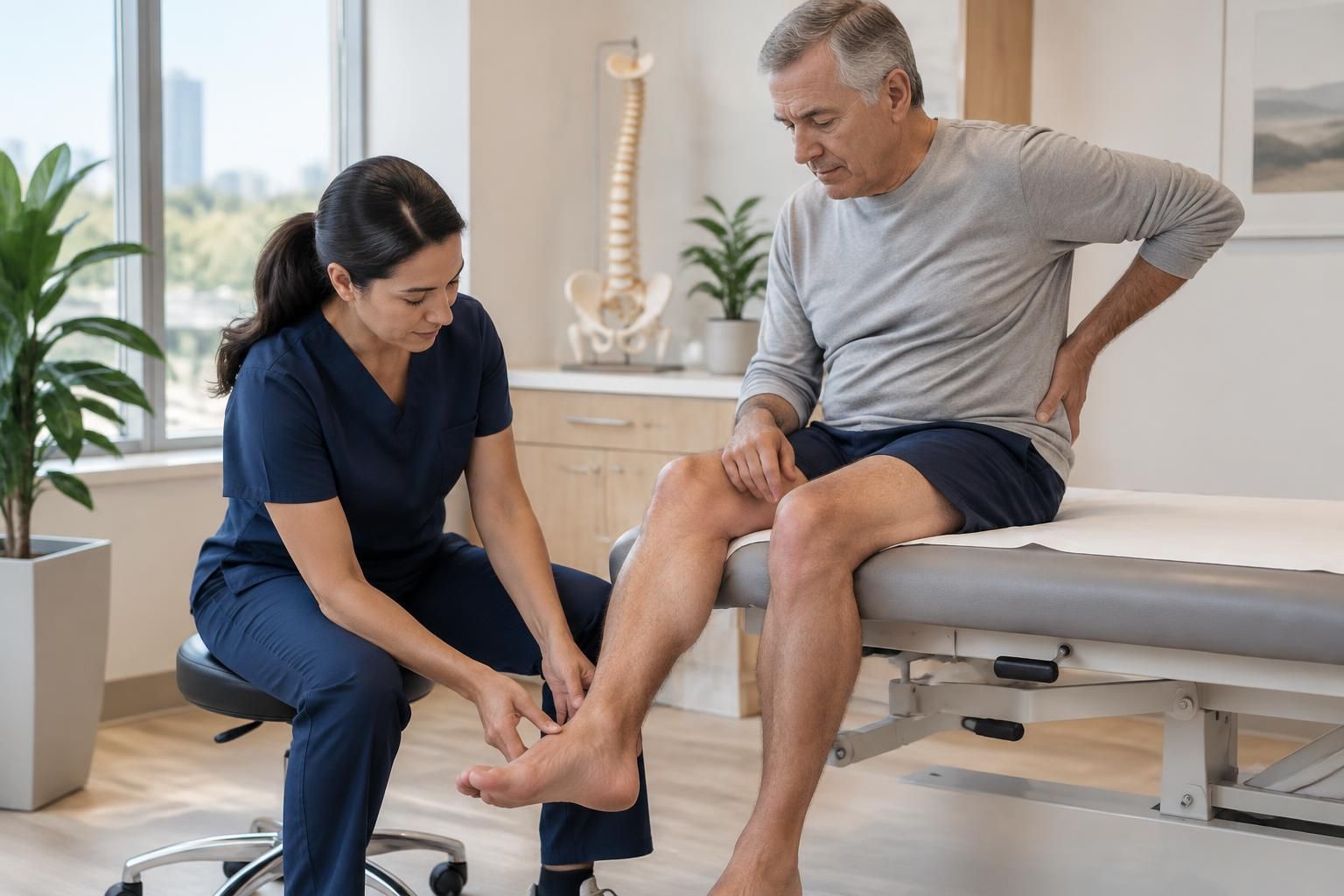
In Côte-Saint-Luc, leg pain brought on by walking can stem from a circulation problem, nerve irritation, or another cause. Vascular syndromes and sciatica can appear similar, but their course, associated symptoms, and the factors that relieve them often differ. These clues can guide the differential diagnosis without, on their own, determining the source of the pain.
Low back pain, tingling, or a feeling of leg heaviness warrant particular attention when they persist or limit mobility. A clinical assessment can help distinguish vascular claudication from neurogenic claudication and determine whether sciatic nerve compression is plausible; circulatory disorders and nerve conditions can also coexist.
To understand the possible causes of pain that travels down the leg, see the guide to the causes and assessment of sciatica. In Côte-Saint-Luc, where driving, walking, and periods of sitting may be part of everyday life, noting what triggers or relieves symptoms can be useful during a consultation.


In brief: useful clues, but not a self-diagnosis
Pain related to exertion may suggest vascular claudication, especially if it occurs repeatedly when walking and eases upon stopping.
Pain altered by posture, sometimes relieved by sitting or bending forward, may be consistent with back-related neurogenic claudication.
Pain radiating from the lower back or buttock, sometimes accompanied by tingling or numbness, may suggest irritation of a nerve root.
A leg that suddenly becomes cold, pale, or very painful, or weakness that progresses rapidly, requires urgent assessment.
Sciatica or vascular syndrome: understanding the mechanisms
The term “sciatica” commonly refers to pain that follows part of the path of the sciatic nerve, but the pain may instead come from irritation of a nerve root in the lower back. A disc herniation or protrusion, narrowing of the spinal canal, or foraminal stenosis are among the possible causes, but they are not the only ones.
Pain may begin in the lumbar region or buttock, then travel down the thigh and sometimes as far as the calf or foot. Burning sensations, electric shock-like sensations, tingling, or loss of sensation may also occur; however, their presence and distribution are not enough to identify the structure involved.
A vascular syndrome is a problem affecting blood circulation. In vascular claudication, leg muscles may receive insufficient blood flow during exertion, typically causing pain or cramping after walking for a certain period. The assessment takes into account the history, risk factors, and examination, and may require medical testing.
Muscular or joint pain, a hip condition, or other neurological problems can also mimic sciatica. An overview of the differences between disc herniation, sciatica, and piriformis syndrome can help explain why a painful pattern alone does not provide a diagnosis.
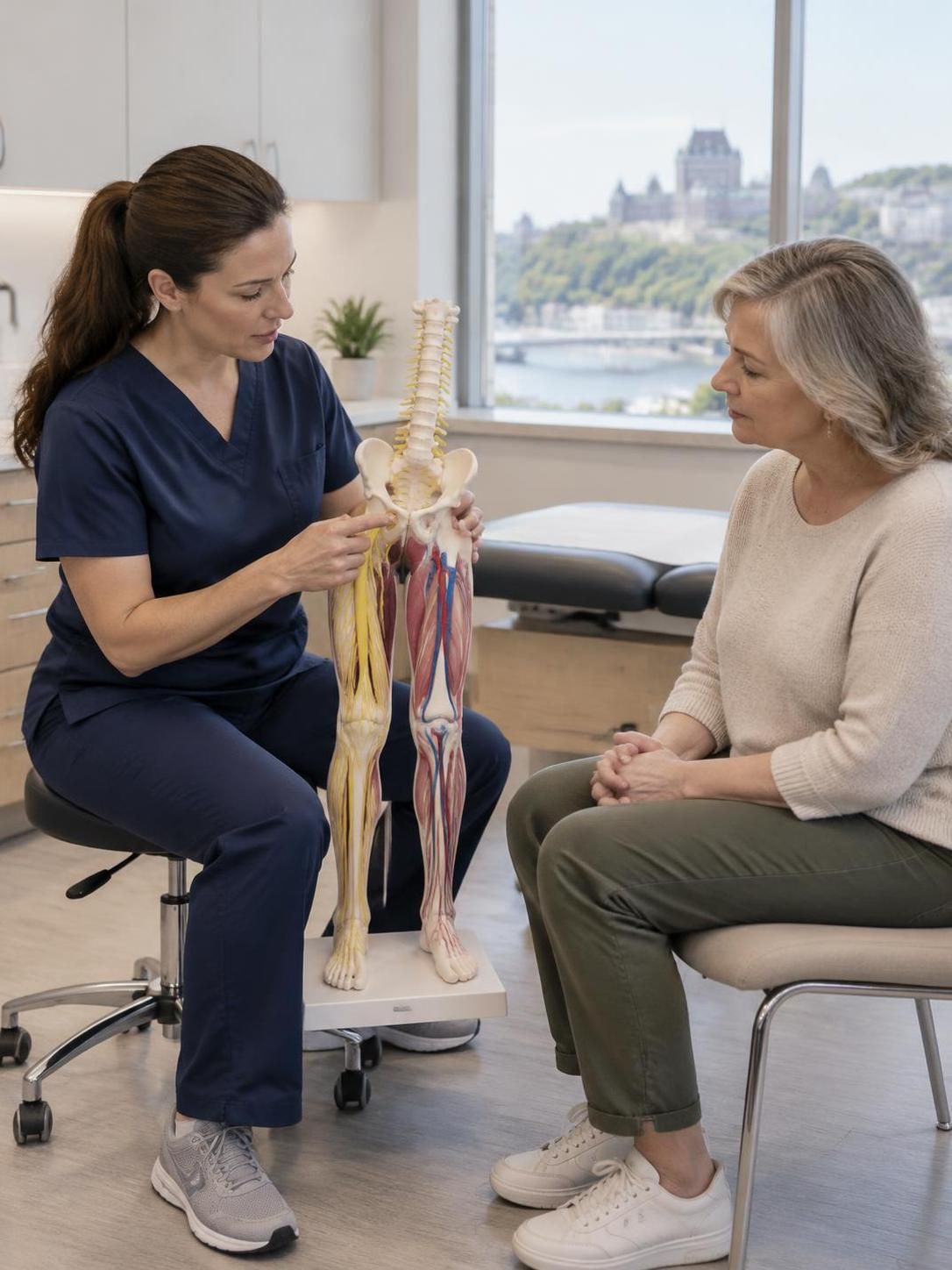
Vascular claudication and neurogenic claudication: comparison points
The context in which pain begins is often as informative as the painful location. A person may feel calf pain while walking, but the cause cannot be attributed to circulation or the spine without considering posture, recovery time, associated symptoms, and examination findings.
| Indicator | Possible vascular claudication | Possible neurogenic claudication or radicular pain |
|---|---|---|
| Trigger | Often related to exertion, particularly walking; the tolerated distance may be relatively reproducible. | Walking or standing may worsen symptoms; back posture may also play a role. |
| Relief | Stopping the activity may be enough, even while remaining standing, depending on the situation. | Sitting or bending forward may help some people, but not everyone. |
| Sensations | Cramping, fatigue, or muscle pain, often in the calf, may occur. | Low back or buttock pain radiating into the leg, numbness, or tingling may occur. |
| Limitations of this indicator | Pain while walking does not establish a circulatory disorder; other causes are possible. | The pattern of pain does not confirm nerve compression or a specific nerve root. |
This table presents trends, not criteria for self-assessment. Vascular symptoms may vary, and a lumbar condition can coexist with arterial disease; age, medical history, and risk factors are also considered by the health professional assessing the situation.
For example, someone who needs to stop after walking may note whether remaining still while standing relieves the pain, or whether they need to sit down and change their back position. This detail can guide clinical questions, but it does not replace a vascular examination or neurological assessment.
What changes should you observe in daily activities?
In Côte-Saint-Luc, symptoms may occur during a walk, on stairs, while driving, or after sitting for a long time. It is helpful to note the activity at the time pain begins, the part of the leg affected, the duration of the episode, and the type of rest that provides relief.
Back-related pain may fluctuate with bending, extension, sitting, coughing, or certain movements. Conversely, a circulatory problem may be more related to exertion; however, these trends are not absolute and some signs may overlap.
- Note the trigger: walking, standing, driving, stairs, or back movement.
- Describe the relief: stopping while standing, sitting, changing posture, or prolonged rest.
- Watch for associated signs: numbness, weakness, changes in foot colour or temperature, a wound, or swelling.
- Indicate how it changes: frequency of episodes, walking distance, and impact on sleep or activities.
Do not push through an activity that clearly worsens symptoms to “test” your leg. If exercise causes pain to travel farther down the leg, progressive numbness, or new weakness, stop and seek advice from a health professional.
When should you seek care for leg pain?
A clinical assessment is indicated if pain persists or returns, travels below the knee, limits walking, or disrupts sleep. Numbness, loss of sensation, weakness, or reduced function also warrant an assessment, even if the pain is not severe.
Seek urgent medical help promptly in the event of loss of bladder or bowel control, saddle anaesthesia, or significant or rapidly progressing weakness. A leg that suddenly becomes very painful, cold, pale, or bluish, particularly with numbness or difficulty moving it, may indicate an urgent circulatory problem.
Fever or feeling generally unwell, significant trauma, pain in the context of cancer or infection, and rapid worsening also require medical assessment without delay. These signs do not allow a diagnosis to be made remotely, but they should not be dismissed.
To determine which signs warrant a consultation, the guide to when to seek care for sciatica can supplement this information. When an urgent sign is present, an online resource does not replace emergency medical services.
Assessment and management options according to the cause
The assessment generally begins with a history of symptoms and a physical examination. Depending on the clinical picture, the professional may assess strength, sensation, reflexes, mobility, circulation, and leg pulses; additional tests or a medical referral may be needed.
Management depends on the likely cause. For some lower-back problems, maintaining or gradually resuming activities, movement advice, and tailored exercises may support function. Manual care may be considered in certain contexts, without replacing the assessment of a vascular cause or medical follow-up when indicated.
Medications should be discussed with a licensed professional, taking into account other health conditions and treatments already being used. For certain persistent radicular pain, an injection or specialist consultation may be considered; surgery is reserved for situations where the clinical assessment and course justify it, particularly when significant compression or neurological deficit is present.
Spinal decompression is a motorized, gradual, and controlled traction therapy that may be considered for certain patients following an assessment, particularly for symptoms consistent with certain disc or foraminal conditions. It does not treat a circulatory disorder, is not suitable for all cases of sciatica, and does not “put” a disc back in place; results vary, no number of sessions applies to everyone, and contraindications may require another referral.
This approach does not replace an urgent medical assessment and does not guarantee that surgery can be avoided. It differs from exercises, manual care, medications, injections, and surgery in its mechanism of action and indications; no option is universally superior. The differences between spinal decompression and injections can be discussed with a professional in light of your situation.
In Montréal, TAGMED Clinic is located at 1140 Beaumont Avenue in Mount Royal, near Outremont and Côte-des-Neiges. Depending on the assessment, approaches offered for sciatica may include motorized spinal decompression, specific osteopathy, or a precision percussor; this does not constitute management of circulatory disorders. The page dedicated to sciatica assessment and treatment options in Montréal presents this clinical resource.

Frequently asked questions about vascular syndromes and sciatica
Pain while walking or pain that travels down the leg can have several causes. An assessment can clarify plausible causes, signs to watch for, and whether a conservative approach is appropriate; it does not replace an urgent medical consultation when warning signs are present.
Request an assessment in Mount Royal
Sylvain Desforges, B.Sc., D.O., N.D., Doctor of Osteopathy
This content is educational and does not replace a personalized assessment or medical advice.
