


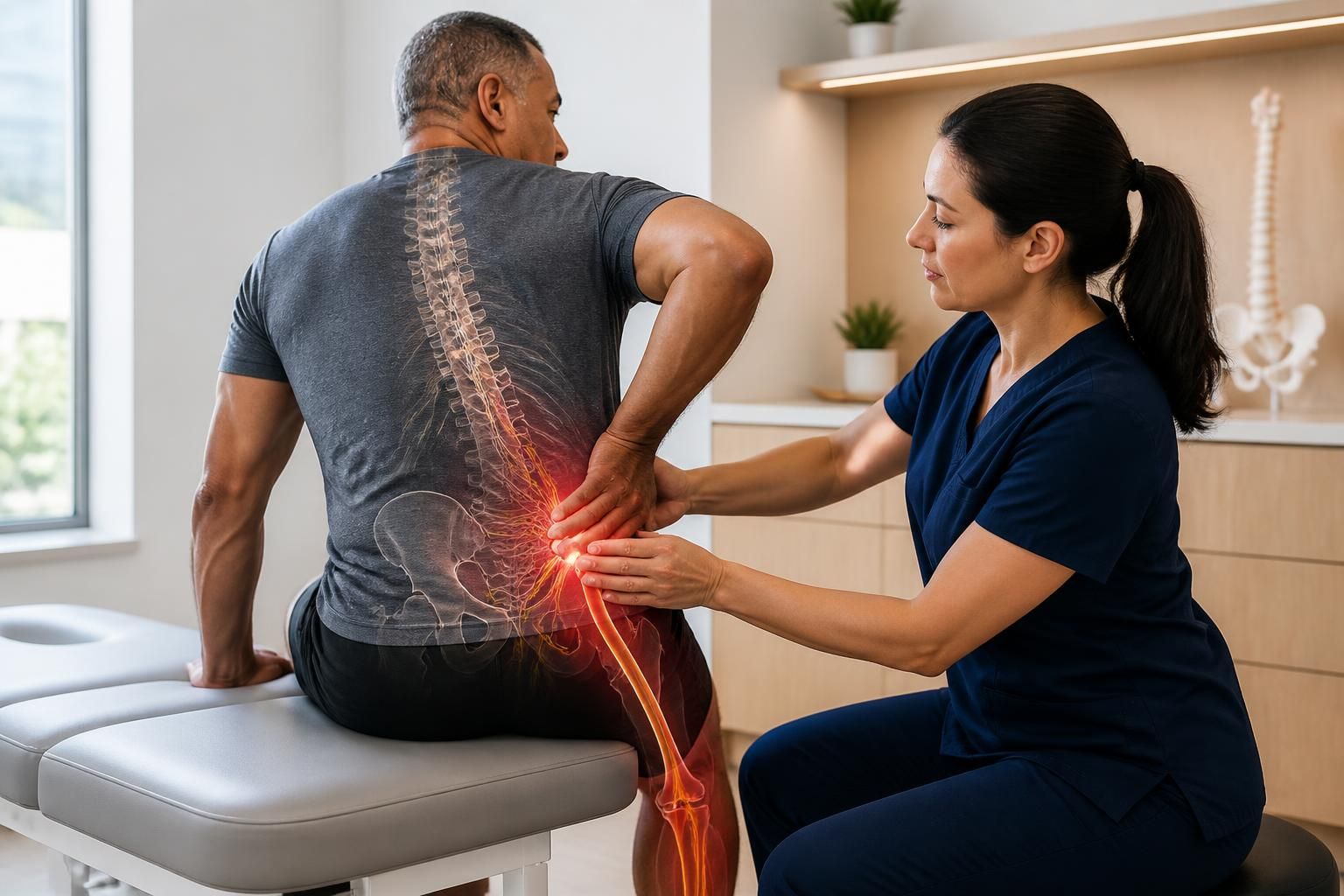
In the Côte-des-Neiges area of Montréal, distinguishing between sciatica and piriformis syndrome is essential to understanding the source of nerve pain radiating down the leg. Although these two conditions have similar symptoms, they result from very different mechanisms involving either lumbar nerve root irritation or localized neuromuscular compression within a deep buttock muscle. Precisely identifying the often unrecognized source of nerve pain makes it possible to tailor effective, personalized treatment.
Low back pain that radiates down the leg may result from nerve compression in the lower back or from more distal irritation of the sciatic nerve. In Montréal’s busy urban setting, particularly for Côte-des-Neiges residents who spend considerable time sitting or commuting, it is especially relevant to recognize the specific signs that point to one diagnosis or the other. Clinical differentiation is based on a detailed analysis of symptoms and, when needed, additional tests to ensure safe and effective care.



In brief: key points for understanding the difference between sciatica and piriformis syndrome in Côte-des-Neiges
- Sciatica is generally caused by nerve compression as it exits the lumbar spine, often due to a herniated disc or foraminal stenosis.
- Piriformis syndrome results from contraction or hypertrophy of the piriformis muscle, which compresses the sciatic nerve in the buttock region.
- Piriformis symptoms include deep buttock pain, worsened by prolonged sitting, with radiation into the thigh and rarely below the knee.
- Sciatic pain often starts in the lower back and travels down the leg, potentially reaching the foot, and is often worsened by coughing or sneezing.
- Differential diagnosis is based on specific clinical tests and a thorough medical assessment in Montréal, particularly to rule out other causes.
- Management of piriformis syndrome prioritizes stretching, rehabilitation, and gentle osteopathy, whereas sciatica may require a range of treatments, including neurovertebral decompression.
Mechanisms and symptoms that distinguish sciatica from sciatic nerve compression by the piriformis muscle
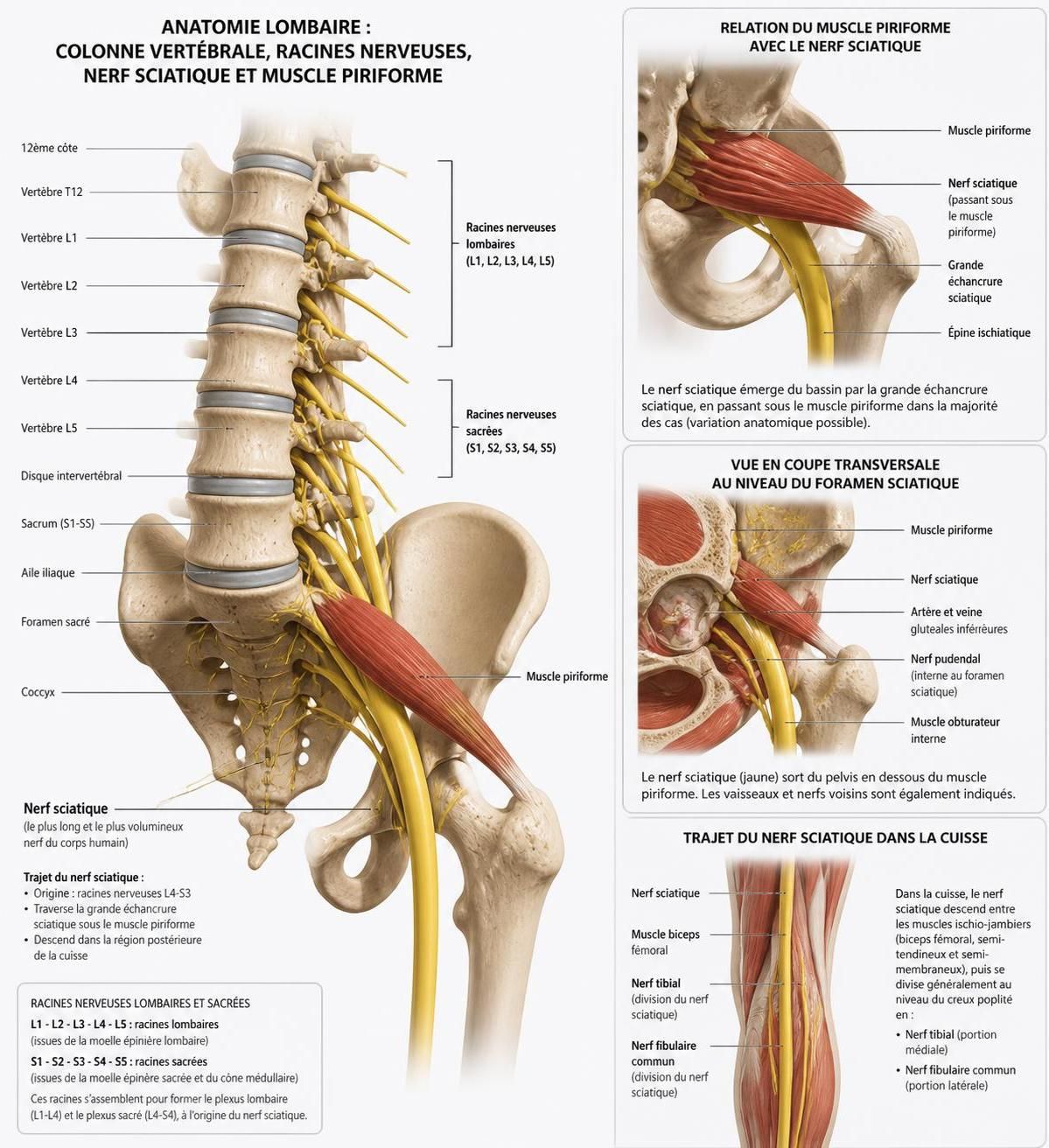
The sciatic nerve, the largest nerve in the human body, originates where the L4 to S3 lumbar nerve roots join, before passing through the buttock and down the leg. In cases of classic sciatica, the problem results from irritation or compression as the nerve exits the lumbar spine. The most common cause is a lumbar disc herniation pressing on the nerve root, but it may also result from stenosis (narrowing of the spinal canals).
Unlike this spinal origin, piriformis syndrome involves the piriformis muscle, a deep muscle in the buttock that externally rotates the hip and stabilizes the pelvis with every step. In some people, this muscle contracts excessively or becomes inflamed, compressing the sciatic nerve as it passes through. This neuromuscular compression causes pain known as “false sciatica.”
The symptoms of both conditions can appear similar, but several points help distinguish them:
- Origin of the pain: Sciatic pain often starts in the lower back, whereas piriformis syndrome begins with deep, localized pain in the buttock.
- Radiation: Sciatica can radiate to the foot, whereas piriformis-related pain rarely travels below the knee.
- Sitting: Piriformis pain is clearly worsened by prolonged sitting, whereas sciatica is less specific to this position.
- Provocative tests: Coughing, sneezing, or straining often trigger sciatic pain, without a notable effect on piriformis syndrome.
- Medical imaging: A lumbar MRI may reveal a herniated disc in cases of sciatica, but it is often normal in piriformis syndrome.
These clinical distinctions are crucial for determining appropriate treatment and avoiding inappropriate use of invasive interventions. Nokori provides an informative resource on the differential diagnosis between piriformis syndrome and sciatica, which may help further understanding of these mechanisms.
Factors that worsen and modify symptoms in sciatic pain and piriformis syndrome in Côte-des-Neiges
The daily activities and postures of Côte-des-Neiges residents, particularly due to the growing role of remote work and urban sedentary lifestyles, can strongly influence the onset and worsening of nerve symptoms. Both sciatic pain and pain related to piriformis syndrome are sensitive to certain movements and positions.
For sciatica, movements that increase pressure in the lumbar spinal canal, such as bending forward, or efforts that increase intra-abdominal pressure (coughing, sneezing) tend to worsen pain. Prolonged sitting may also contribute to increased discomfort, particularly in office work or public transit settings.
Strongly associated with prolonged contraction of the deep buttock muscle, piriformis syndrome is mainly worsened by prolonged sitting, particularly on a hard seat or with the legs crossed. Some patients report a marked increase in pain after a long time in the car or at their desk. Stairs and certain movements involving external hip rotation also increase pain in the buttock and back of the thigh.
In both cases, pain may be intermittent, with flare-ups often related to unusual activity, muscular stress, or poor posture. It is essential to recognize that each patient may respond differently depending on their neuromuscular makeup and daily habits.
It is also important to note that pain in these syndromes may be accompanied by numbness, tingling, or muscle weakness, which should always lead to a serious clinical assessment, especially in an urban setting where prompt access to care is possible.
When and why to seek care for persistent buttock and leg pain in Côte-des-Neiges
Medical follow-up is recommended when sciatic pain or piriformis syndrome-related pain persists or significantly disrupts daily life. Specific signs warrant priority consultation:
- Severe or constant pain that does not improve despite rest or conservative measures.
- Pain radiating below the knee and accompanied by muscle weakness, numbness, or significant tingling.
- Significant limitations in movement or walking.
- Unusual sensations in the perineal region (“saddle anaesthesia”) associated with new urinary or bowel problems.
- Fever, unexplained weight loss, or serious medical history (cancer, trauma).
These signs may indicate severe radicular syndrome, serious nerve compression, or an urgent medical cause requiring specialized assessment.
The Côte-des-Neiges area has access to several clinical resources in Montréal, such as TAGMED Clinic in Mont-Royal, which offers a comprehensive assessment of sciatic nerve-related pain and a range of therapeutic options tailored to individual needs. An initial assessment helps distinguish between sciatica and piriformis syndrome and guides personalized treatment.
Management options for sciatic pain and piriformis syndrome in Montréal
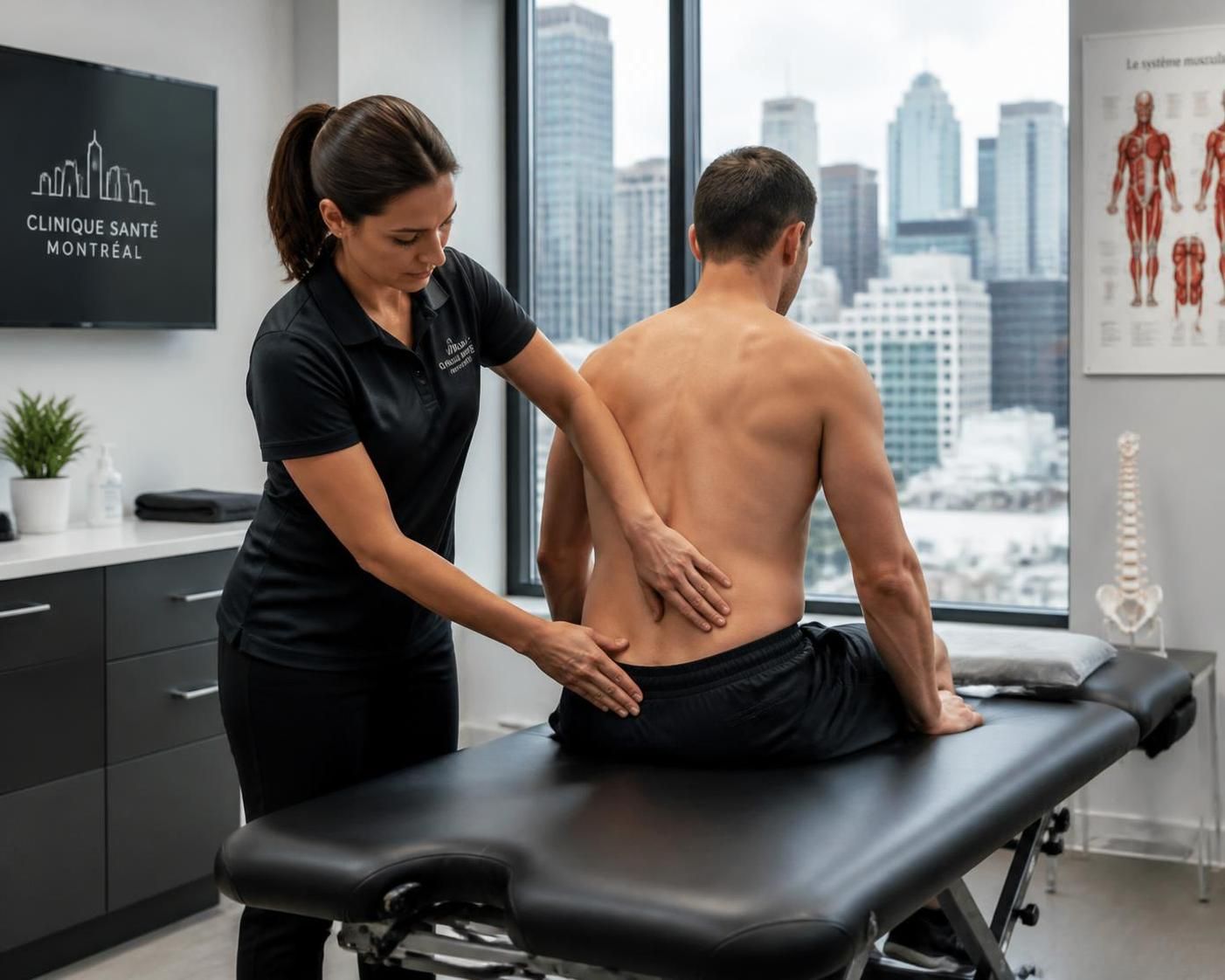
Treatment must be tailored to the precise cause of sciatic nerve irritation. For piriformis syndrome, a conservative approach is usually preferred. It includes:
- Regular stretches targeting the piriformis muscle, using safe techniques, including the supine figure-four stretch, which allows targeted relaxation.
- Gentle osteopathy and manual therapies to relieve muscle contracture and rebalance pelvic and lumbar function.
- Ergonomic modifications, including frequent sitting breaks, removing a wallet from the back pocket, and adjusting the workstation or car seat.
- Gradual strengthening of stabilizing muscles, such as the gluteus medius, to help prevent recurrence.
In cases of disc-related or radicular sciatica, management may include:
- Gradual return to or maintenance of physical activity according to tolerance.
- Specialized physiotherapy care aimed at improving mobility and reducing nerve compression.
- Medications prescribed by authorized professionals to manage pain and inflammation.
- Motorized neurovertebral decompression : a progressive spinal traction technique that may be considered following a thorough assessment and may temporarily reduce mechanical stress on discs and nerve roots.
- Injections in certain selected cases.
- Specialist opinion or surgery when there is a significant neurological deficit or persistent compression despite conservative treatment.
It is important to remember that neurovertebral decompression is not indicated for all types of sciatic pain. It requires careful patient selection, a thorough assessment, and clear information regarding this method’s limitations and variable results. It should be part of a comprehensive strategy, rather than a stand-alone solution.
To further explore these options, the SOS Sciatica resource on treatments provides a detailed overview of the different approaches for relieving sciatica in Montréal.


Comparison table of clinical differences between classic sciatica and piriformis syndrome
| Criteria | Piriformis syndrome | Lumbar sciatica |
|---|---|---|
| Origin of the pain | Compression of the sciatic nerve by the piriformis muscle in the buttock | Nerve compression as it exits the lumbar spine, most often from a herniated disc |
| Initial location | Deep pain in the centre of the buttock | Low back pain |
| Pain pathway | Radiation down the back of the thigh, rarely below the knee | Pain that can travel to the foot |
| Pain while sitting | Marked worsening | Possible, but less characteristic |
| Effect of coughing or sneezing | Little effect | Triggers or worsens pain |
| Imaging tests | MRI often normal | MRI often showing a herniated disc or stenosis |
| Typical duration without treatment | Often 3–6 weeks, with possible improvement after stretching | Variable; may last several months without appropriate care |
How can I tell whether my pain is from piriformis syndrome or sciatica?
Only clinical tests performed by a health professional, including standing examination, specific stretching tests, and imaging when appropriate, can distinguish piriformis syndrome from lumbar sciatica. The initial location and nerve irritation often help guide diagnosis, but several symptoms may overlap.
How long does piriformis syndrome usually last?
With appropriate management, including stretching and postural corrections, noticeable improvement is often seen within 3 to 6 weeks. However, exercises may need to be continued over the long term to prevent recurrence.
Is neurovertebral decompression effective for all types of sciatica?
This method may be effective for some selected patients with disc-related nerve root compression or foraminal stenosis, but it is not indicated in every case. A thorough assessment is necessary to determine whether it is appropriate.
What simple measures can help limit pain related to piriformis syndrome?
Avoid sitting for too long without taking a break, never keep a wallet in your back pocket, regularly perform targeted piriformis stretches, and use an ergonomic posture while working or driving.
When should I quickly see a doctor for sciatic or piriformis pain?
Seek immediate medical care if you experience progressive weakness in the foot or leg, loss of sensation in the genital or anal region, urinary or bowel problems, fever with pain, or very severe pain occurring after trauma.
Persistent pain in the buttock or leg may indicate sciatic nerve irritation related to piriformis syndrome or lumbar sciatica. A personalized assessment near Côte-des-Neiges can clarify the likely cause of your pain, identify signs to watch for, and determine whether conservative or specialized management is appropriate.
See a sciatica treatment expert in Montréal
Dr. Sylvain Desforges, B.Sc., D.O., N.D., osteopath
This educational content does not replace a personalized assessment by a health professional.
