


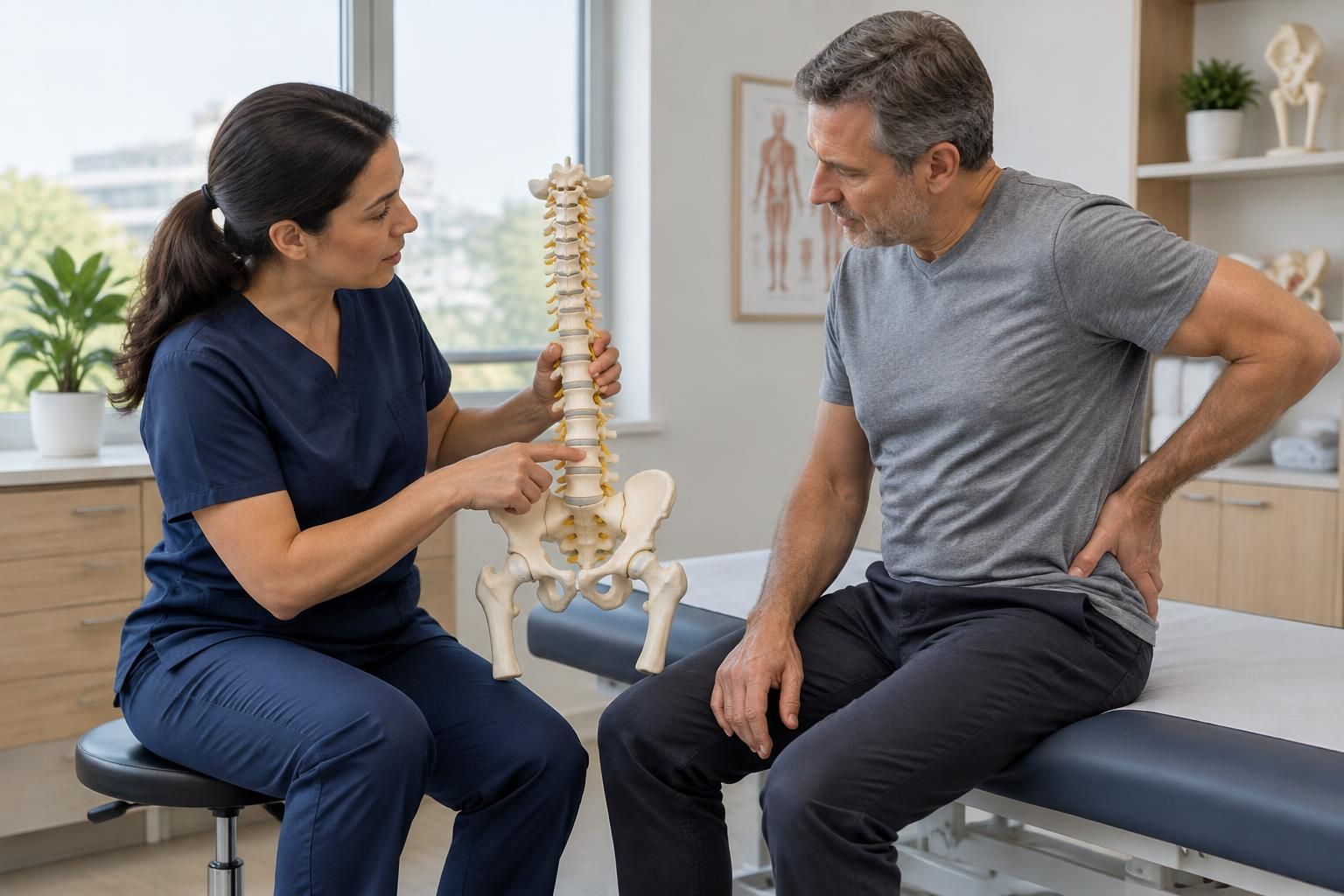
Pain that starts in the lower back and travels into the buttock or leg may suggest sciatica, but this pattern alone is not enough to determine its cause. In Côte-des-Neiges, as elsewhere in Montréal, a differential diagnosis becomes especially useful when symptoms are persistent, atypical, accompanied by loss of function, or difficult to explain with a single hypothesis.
This process involves comparing possible causes, looking for elements that support them or make them less likely, and then deciding whether testing would actually change management. It does not mean that a serious condition is necessarily present; rather, it helps prevent jumping to conclusions and identify warning signs that require prompt medical assessment.


In brief: when to consider a differential diagnosis for pain in Côte-des-Neiges
The pattern is not a diagnosis. Leg pain may arise from a nerve root, but also from a joint, muscle, or another structure.
Changes matter. Progressive numbness, weakness, or changing pain warrants reassessment.
Context guides the assessment. Medical history, symptom onset, and factors that change symptoms help prioritize possible explanations.
Testing is targeted. Imaging or another test is mainly useful when its result can change care decisions.
Sciatic pain or similar conditions: why symptoms are not enough
Sciatica generally refers to pain related to irritation of a lumbar or sacral nerve root. It may travel from the buttock to the thigh, calf, or foot, sometimes with tingling, reduced sensation, or weakness. However, two people with a similar pain pattern may have different causes, and referred pain can reach the leg without nerve compression.
Similar conditions include certain joint or muscle pain, peripheral nerve irritation, hip involvement and, depending on the presentation, femoral neuralgia, which more often affects the front of the thigh. Piriformis syndrome may also be considered in some presentations, but it cannot be inferred from buttock pain alone. A resource devoted to the differences between sciatica and piriformis syndrome in Côte-des-Neiges can help clarify this distinction, without replacing a clinical assessment.
A disc herniation or bulge, narrowing of the spinal canal or a foramen, and other lumbar changes may be considered based on symptoms and examination. The presence of an imaging abnormality does not, on its own, prove that it explains the pain: it must correspond with the clinical presentation. The possible causes and diagnostic steps for sciatica should therefore be interpreted cautiously, rather than based on an isolated image.
How medical assessment develops and verifies hypotheses
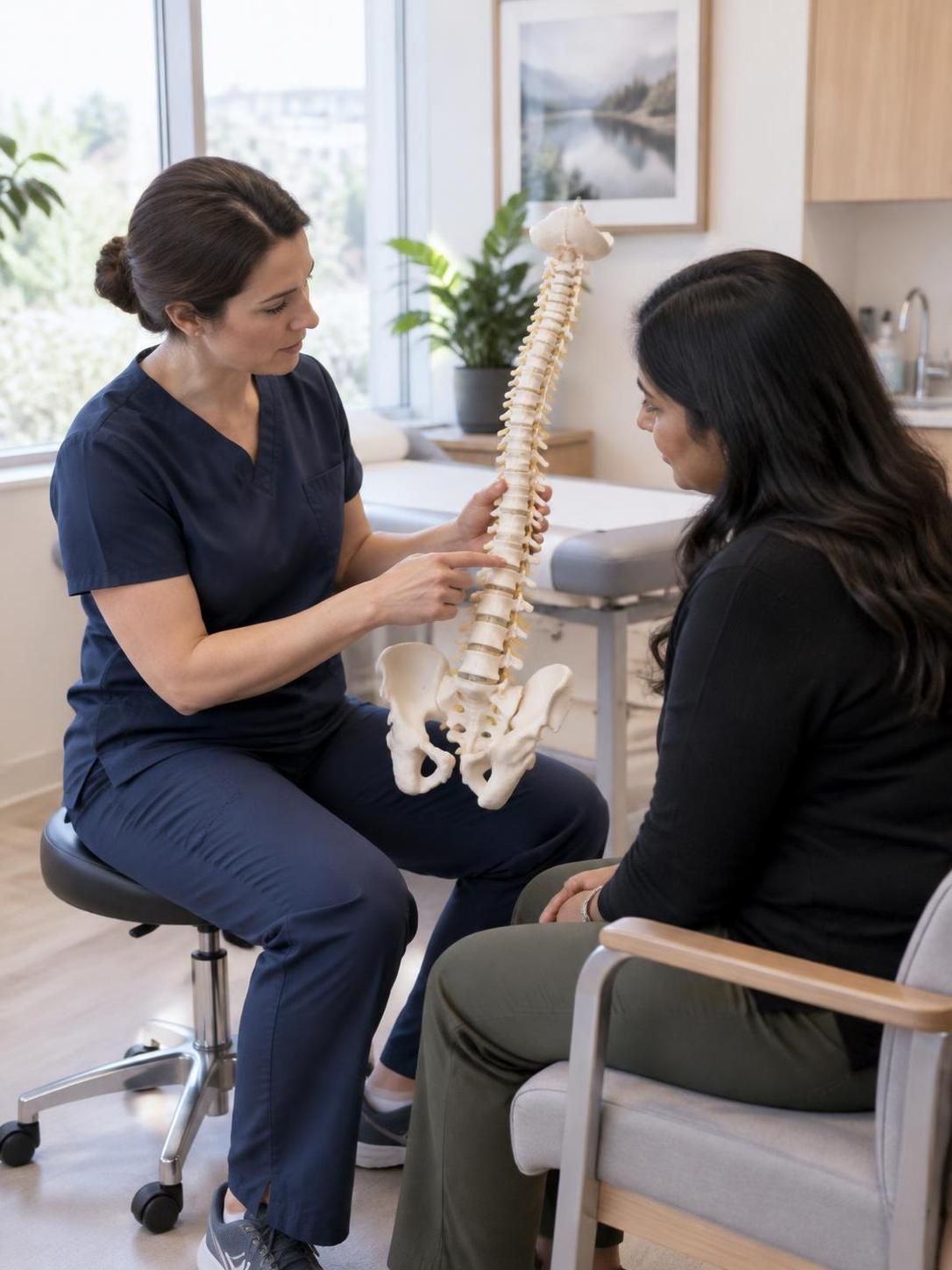
A differential diagnosis is similar to a process of verification: the health-care professional first gathers information, develops several hypotheses, then looks for elements that support or contradict them. Medical history, time of onset, relevant activities, associated symptoms, and their progression help refine the likelihood of each explanation. This likelihood often remains a clinical estimate, not a certain figure that applies to every person.
The examination is then guided by the questions raised: mobility, sensation, strength, reflexes, and movements that reproduce or relieve symptoms may be assessed. For example, pain worsened by coughing and accompanied by weakness in a muscle group may guide assessment toward nerve irritation, without on its own confirming a disc herniation. The clinical reasoning method is described in the clinical decision-making strategies.
Additional tests are not automatic. They are considered when uncertainty remains and the result could influence care, particularly if neurological signs are present, symptoms are worsening, or a cause requiring specific management is suspected. Imaging recommendations and the appropriate time to request it depend on the individual presentation; a test is not useful simply because pain is concerning or persistent.
| Observed element | What it may contribute | Limitation to keep in mind |
|---|---|---|
| Symptom history | Clarifies onset, progression, and factors that change the pain. | A description alone does not always distinguish among causes. |
| Neurological and functional examination | Assesses, among other things, strength, sensation, and certain leg functions. | A normal result does not rule out all possible causes. |
| Imaging or another test | May clarify a hypothesis when the result changes the course of action. | A visible abnormality is not necessarily the source of symptoms. |
Persistent or atypical symptoms: information to note before an appointment
An appointment in Côte-des-Neiges may be appropriate when pain returns, travels below the knee, disrupts sleep, or limits walking, work, or getting around. Long periods of sitting while working remotely, driving, and commuting by public transit may make certain symptoms more noticeable, but their presence alone does not reveal the cause. It can be helpful to note what changes with position, activity, and rest.
Before the assessment, a few concrete details can facilitate the discussion:
the onset date and how the pain has progressed, as well as its pattern;
the presence of tingling, numbness, loss of sensation, or weakness;
the movements or situations that worsen or ease symptoms, such as sitting, walking, climbing stairs, or coughing;
medical history, previous episodes, treatments tried, and their effects.
This information is not intended to establish a diagnosis at home. Instead, it helps distinguish pain that is progressing as expected from a presentation that warrants further investigation. The guide on developing a relevant differential diagnosis also highlights the value of prioritizing hypotheses rather than immediately choosing the first plausible explanation.
Diagnostic uncertainty does not necessarily mean more tests are needed. The professional can explain what is most likely, what still needs to be monitored, and when to reassess the situation. More than one issue may also coexist: mechanical low back pain may, for example, occur alongside nerve irritation, which can sometimes make the search for a single cause misleading.

Warning signs and management options based on the presentation
A clinical assessment is indicated if pain persists or recurs, travels below the knee, limits walking or sleep, or is accompanied by numbness, loss of sensation, weakness, or reduced function.
Urgent medical assessment is necessary in the event of loss of bladder or bowel control, numbness in the saddle area, significant or rapidly progressive weakness, fever or poor general condition, after major trauma, or if pain occurs in the context of cancer or infection. Rapid worsening should also be taken seriously. These signs cannot establish a diagnosis remotely, but they warrant not waiting for a routine appointment.
When the situation permits, management may prioritize maintaining or gradually resuming activities, tailored advice, and exercises selected according to the person’s abilities and responses. Physiotherapy or manual care may be considered when appropriate; medication should be guided by the advice of an authorized health-care professional. An injection or specialist consultation may be discussed in some cases, particularly depending on symptom duration and assessment findings.
Neurovertebral decompression is motorized, progressive, controlled traction that may be considered for certain profiles after an assessment. It aims to temporarily modify certain mechanical stresses applied to the discs and nerve roots; it is not indicated for all sciatic pain, does not put a disc back into place, and does not guarantee results or avoidance of surgery. Results vary, no number of sessions is appropriate for everyone, and certain contraindications or situations require prior medical referral.
At Clinique TAGMED, approaches for sciatic pain may include, depending on the assessment, motorized neurovertebral decompression, specific osteopathy, or a precision percussor. The Montréal clinic is located at 1140 Beaumont Avenue in Mont-Royal, near Outremont and Côte-des-Neiges; this does not mean it is located in every Montréal neighbourhood. The assessment and management options for sciatica in Montréal can be discussed without assuming that one approach is suitable for everyone.
Frequently asked questions about differential diagnosis in Côte-des-Neiges
Does pain travelling down the leg confirm sciatica?
No. It may suggest nerve root irritation, but referred pain or other conditions can produce a similar pattern. History and examination must be interpreted together.
When should you seek care if symptoms seem atypical?
Seek an assessment if pain persists, worsens, disrupts sleep or walking, or is accompanied by numbness or weakness. Rapidly progressive weakness or bladder or bowel problems require urgent assessment.
Do you always need an X-ray or MRI?
No. Imaging is considered when its result may change management or when a clinical finding supports it. The choice and timing of the test depend on the individual assessment.
Is neurovertebral decompression suitable for all cases of sciatica?
No. It may be considered for certain patients after an assessment, but results vary and contraindications exist. It never replaces urgent medical assessment.
If pain travelling down the leg remains difficult to understand or limits your activities, an assessment can clarify likely causes, signs to monitor, and the appropriateness of a conservative approach. Information about sciatica and when to seek care can also help you prepare your questions.
Request information about an assessment
Dr. Sylvain Desforges, B.Sc., D.O., N.D., osteopath
This content is educational and does not replace a personalized assessment or advice from a health-care professional.
