


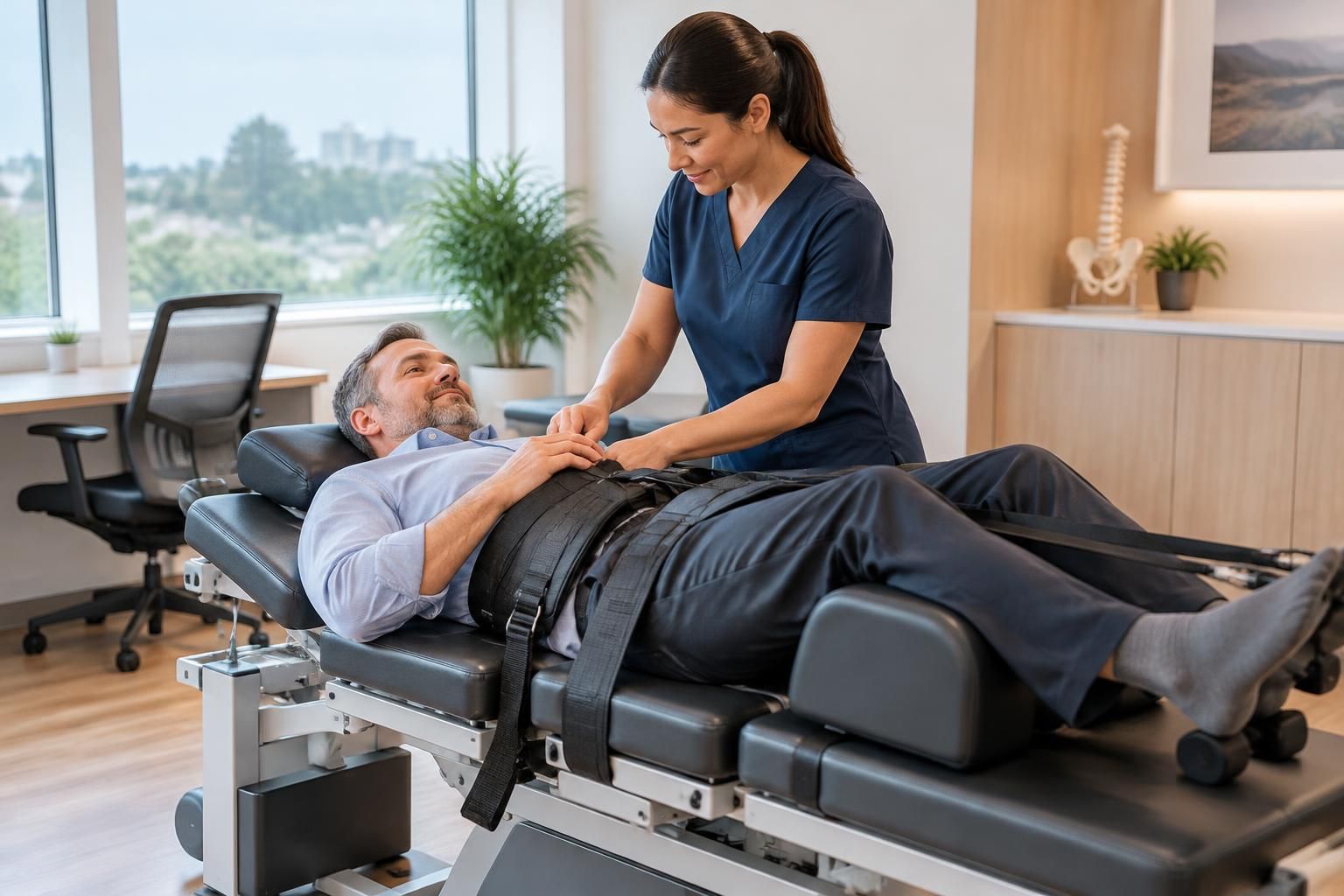
For a person who works while seated in Hampstead, neurovertebral decompression may be considered when low back pain or pain radiating down the leg persists and the assessment suggests a cause compatible with this approach. It is a progressive, controlled motorized traction treatment that is not suitable for every situation and whose results vary.
Long periods in front of a screen, driving, and infrequent breaks can make symptoms more difficult to manage, without being enough to explain their cause. A disc herniation, irritation of a nerve root, or other low back problems can produce similar symptoms: office posture and symptoms must therefore be examined in context.



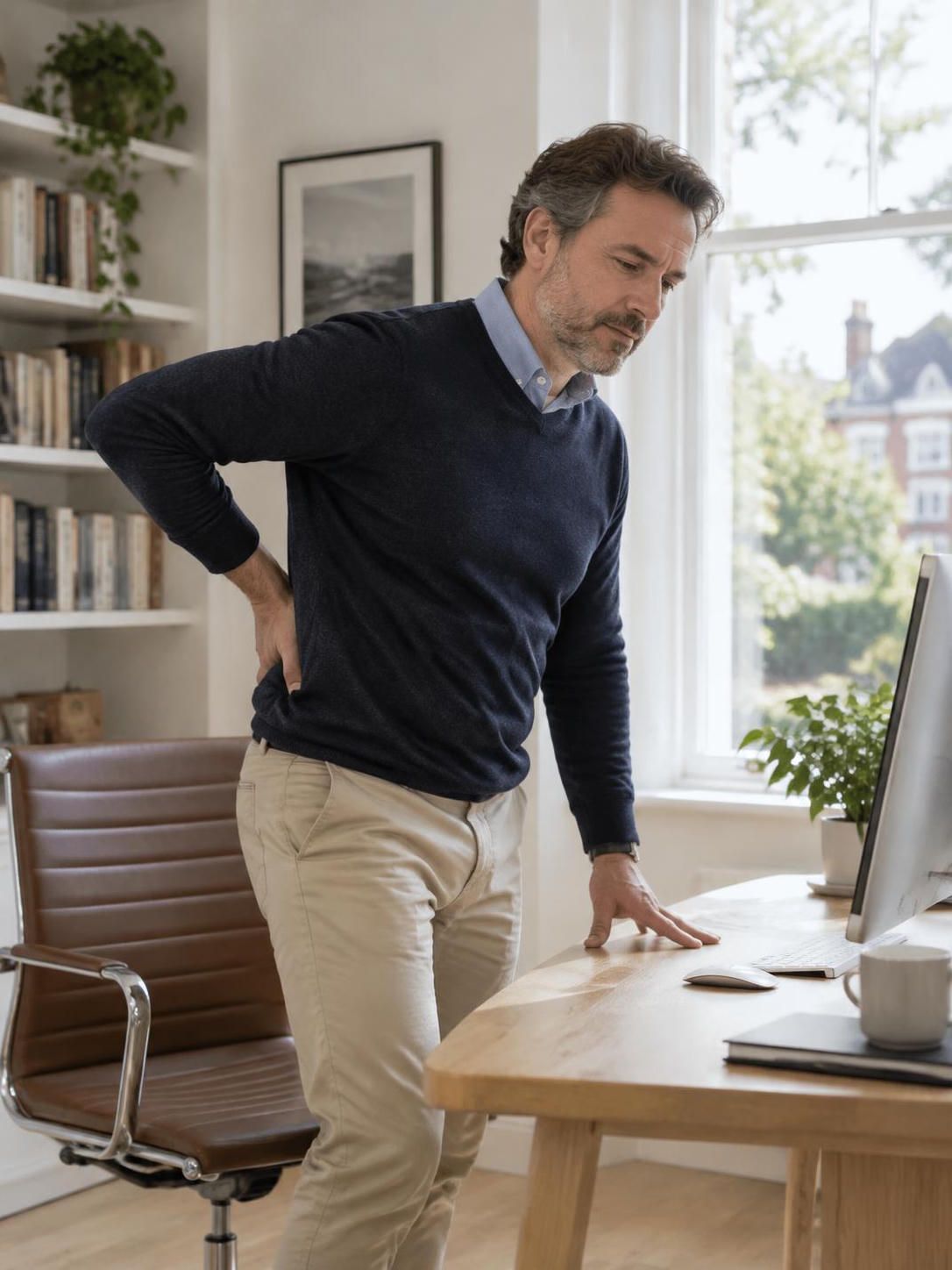
Sedentary work in Hampstead: identifying symptoms without jumping to conclusions
Sitting for long periods can increase discomfort for some people, particularly when the position is maintained without changes or when the workstation requires leaning forward. Pain may remain in the low back, spread into the buttock, or travel below the knee. Tingling, numbness, or weakness may also accompany nerve irritation, but none of these signs alone confirms sciatica.
Sciatica commonly refers to pain associated with irritation of a lumbar or sacral nerve root. The path felt in the leg alone cannot identify the structure involved: assessment of strength, sensation, movement, and symptom progression also matters. The clinician may also consider joint or muscular causes, among others.
In Hampstead, a day of remote work may involve back-to-back meetings, while travel by car or public transit can sometimes add more time spent sitting. It may be helpful to note the activities that change the pain, without assuming that a single posture is the cause. These observations may help during a consultation for sciatic pain in Hampstead.
Pain varies from person to person. It may remain in the low back or radiate to the buttock and leg.
A workstation does not explain everything. Posture can influence symptoms, but does not by itself reveal their cause.
Weakness and loss of sensation warrant attention. Worsening symptoms or functional limitations warrant a clinical assessment.
An assessment generally considers the duration, path, and intensity of the pain, as well as activities that have become difficult. Imaging is not necessary in every situation; its usefulness depends on the clinical signs and the decision of an authorized professional.
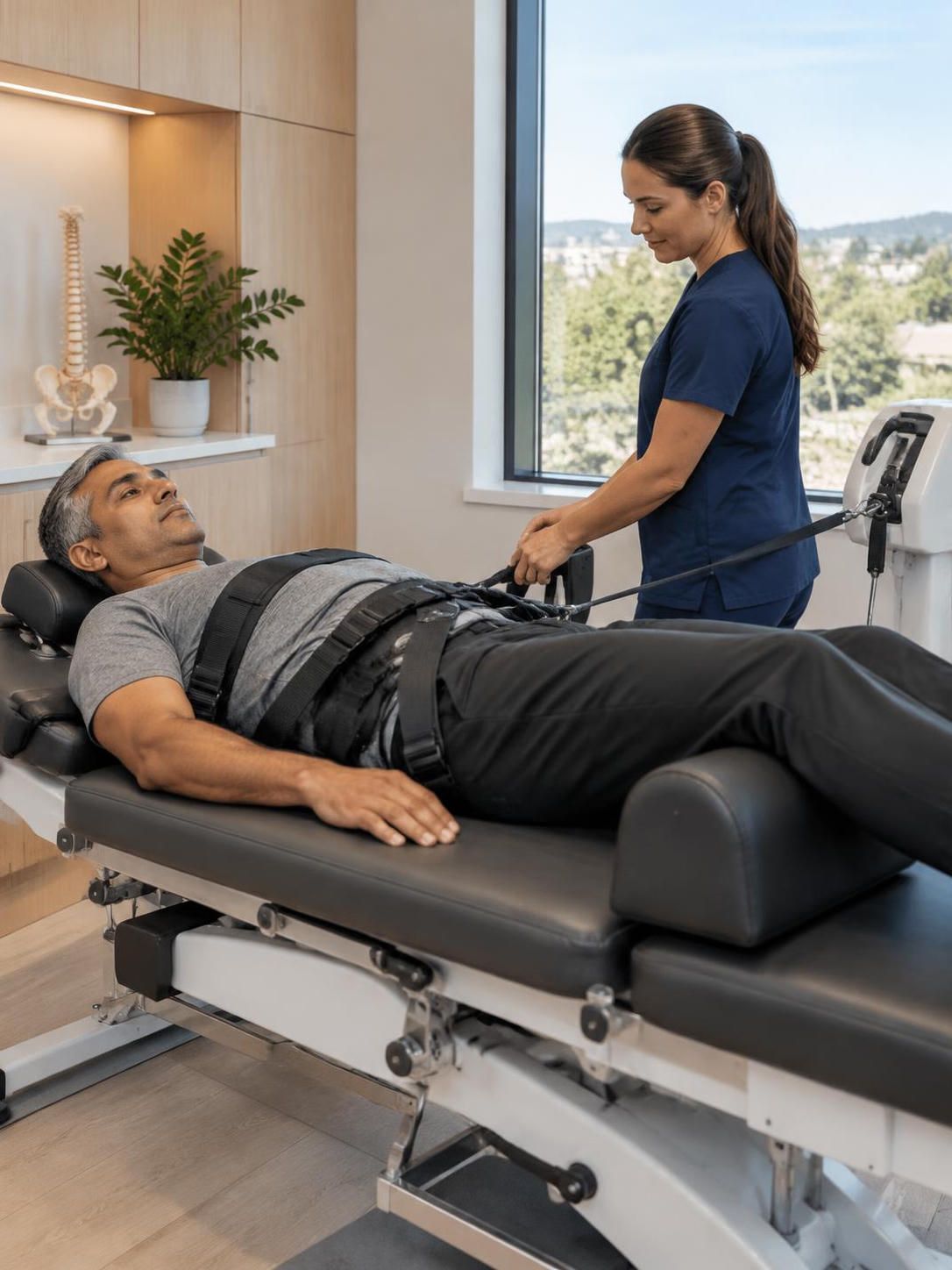
Neurovertebral decompression: principles and limitations for low back pain
Neurovertebral decompression is a form of lumbar traction performed on a motorized table. A device applies a gradual, controlled force according to parameters established after assessment and the person’s tolerance. The goal is to temporarily modify certain mechanical stresses in the lumbar region; this does not mean that a disc is “put back into place” or that the cause of the pain is certainly corrected.
This option may be considered for certain patients whose symptoms and assessment are compatible with disc involvement or nerve irritation. However, a disc herniation visible on imaging is not enough on its own to establish that decompression is indicated: the images must be considered in relation to symptoms and the examination. Available results do not allow promises of pain relief, reduced medication use, or avoidance of surgery.
The technique should not be confused with all conventional traction. Devices, parameters, and care settings differ, and the evidence does not justify presenting one method as superior for every patient. To understand the possible steps, measures monitored, and reassessment, see this overview of the course of a neurovertebral decompression protocol.
A clinical assessment is indicated if pain persists or returns, travels below the knee, disrupts sleep, or limits walking and daily tasks. Numbness, loss of sensation, or weakness should also be discussed, particularly if the symptom progresses.
Urgent medical assessment is necessary in the event of loss of bladder or bowel control, numbness in the saddle area, significant or rapidly progressive weakness, fever, or impaired general health. Significant trauma, rapid worsening, or pain in the context of cancer or infection also requires prompt attention; do not try to determine the cause remotely.
Decompression should be avoided or postponed in certain situations, for example when urgent medical assessment is required or when a condition makes traction inappropriate. Contraindications and the suitability of the approach must be assessed individually. It does not replace investigation of a warning sign or specialist advice when indicated.
Office posture, breaks, and spinal health
Changing positions regularly may be more realistic than trying to find a perfect posture to maintain throughout the day. If this does not worsen symptoms, you can alternate between seated and standing tasks, get up between meetings, or take a few steps during a call. These adjustments support comfort and function, but are not a universal treatment for radicular pain.
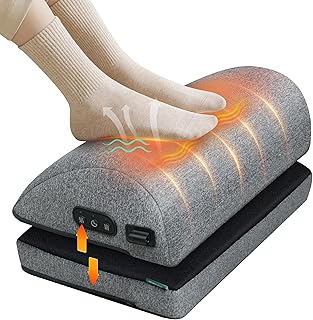
Screen height, foot support, and keyboard proximity can make work more comfortable. A footrest or lumbar support may help some people, but an accessory does not correct a disc herniation and does not replace an assessment in the event of persistent pain. In Hampstead, as elsewhere in the Greater Montreal area, the setup should suit the person’s tasks, height, and preferences.
Alternate positions and plan movement breaks suited to your day.
Adjust the screen to avoid keeping your head tilted or turned for long periods.
Observe whether walking, sitting, or certain movements change your symptoms, without forcing a painful movement.
Stop an exercise or activity if pain travels further down the leg, numbness progresses, or weakness appears.
Maintaining or gradually resuming activities is often preferred when safe, but the pace must take symptoms into account. Individualized exercises, physiotherapy, or manual care, including certain chiropractic care when appropriate, may be among the options discussed with the relevant professionals. Medications require the advice of an authorized professional; injections or surgical advice may be considered in certain circumstances, depending on the assessment and progression.
Spinal health does not depend on a single chair adjustment. It is also supported by an approach tailored to symptoms, work demands, and the person’s abilities.
Choosing care and reassessing decompression
Before neurovertebral decompression, the assessment should clarify symptoms, medical history, functional goals, and factors that could make traction inappropriate. The initial sessions, if the approach is selected, make it possible in particular to observe tolerance. There is no number of sessions that applies to everyone: continuation, modification, or discontinuation should depend on the response and reassessment.
It is useful to define concrete benchmarks rather than relying on a general impression. For example, a person who experiences symptoms while driving can track the amount of time tolerated while sitting, ease of walking after work, or the effect on sleep. Neurological worsening requires reassessment, rather than an automatic increase in traction.
| Option | Possible role | Point to consider |
|---|---|---|
| Motorized decompression | Controlled traction considered for certain selected patients. | Prior assessment, contraindications, and reassessment required. |
| Adapted activity and exercises | Support mobility and gradual resumption of tasks. | Movements must be adapted; worsening requires a review of the approach. |
| Medications or injection | Options to discuss according to symptoms and the advice of an authorized professional. | The choice depends on the individual profile and expected benefits and risks. |
| Specialist advice or surgery | May be indicated depending on compression, neurological deficit, and progression. | A decision is made following a medical assessment; no option is right for everyone. |
In Mont-Royal, near Outremont and Côte-des-Neiges, TAGMED Clinic presents approaches that may include, depending on the assessment, motorized decompression, specific osteopathy, or the precision percussor. To learn about the proposed framework, you can consult the page devoted to neurovertebral decompression at TAGMED Clinic. This information does not allow a conclusion in advance that a treatment is suitable for a given person.
An additional resource on signs indicating when to seek care for sciatica may help distinguish discomfort to monitor from a situation requiring assessment. The key is to connect each option to the symptoms, their progression, and the person’s goals.
Frequently asked questions about neurovertebral decompression in Hampstead
Does sedentary work necessarily cause sciatica?
No. Periods of sitting may change or worsen discomfort for some people, but they are not enough to establish the cause. Pain that travels down the leg can have several origins.
Is decompression suitable for every disc herniation?
No. The presence of a herniation on imaging does not alone determine the treatment choice. Symptoms, examination findings, medical history, and contraindications must be considered together.
How many sessions should be planned?
There is no universal number. Tolerance and functional progression are reassessed to decide whether the approach should be continued, adjusted, or discontinued.
When should you seek care for pain that travels down the leg?
Persistent or recurring pain, limited walking, numbness, or weakness warrant a clinical assessment. Loss of bladder or bowel control, saddle numbness, or rapidly progressive weakness requires urgent medical assessment.
Can decompression help avoid surgery?
It cannot be presented as a guaranteed way to avoid an operation. The need for specialist advice or surgery depends on the clinical picture and its progression.
If low back pain or pain travelling down the leg complicates your sedentary work in Hampstead, an assessment can clarify possible causes, signs to monitor, and the suitability of a conservative approach. People in Hampstead who wish to discuss their options can consult sciatica treatment resources in Montreal.
Dr. Sylvain Desforges, B.Sc., D.O., N.D., osteopath
This content is educational and does not replace a personalized assessment or medical advice.
