


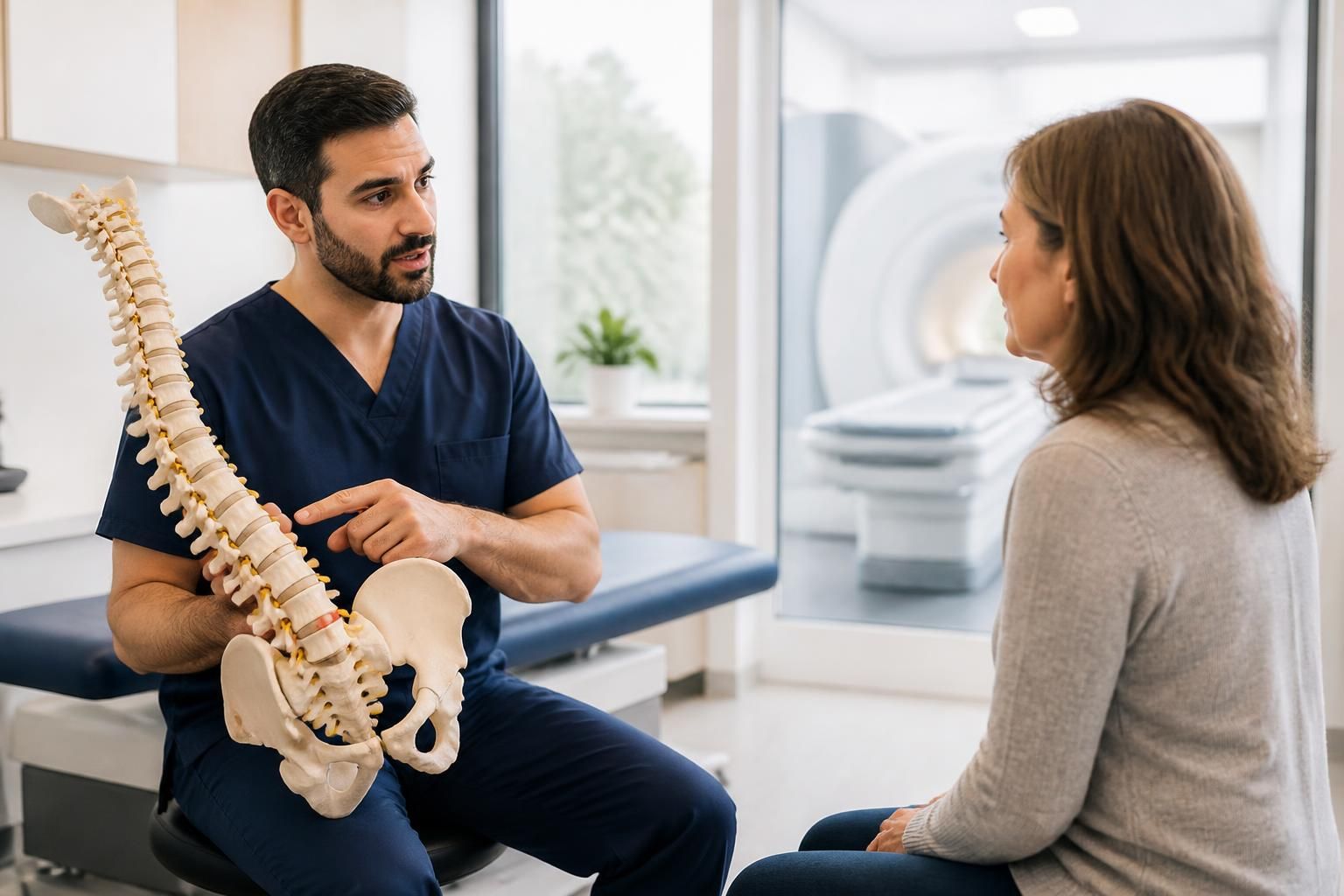
When experiencing low back pain that radiates along the sciatic nerve, it is normal to want a clearer understanding of the source of the symptoms. MRI, or Magnetic Resonance Imaging, is often seen as an essential test for visualizing the deeper structures of the back. However, in Mercier–Hochelaga-Maisonneuve, as elsewhere, this tool is not routinely recommended for every case of sciatica. MRI is instead used selectively, reserved for situations in which its impact on diagnosis and care is considered relevant.
This cautious approach reflects the fact that sciatic pain can result from multiple conditions, some of which do not systematically warrant advanced imaging. A detailed clinical assessment remains key to identifying when MRI can truly help guide the treatment pathway, particularly in cases of suspected nerve compression, persistent symptoms, or concerning neurological findings. Exploring the role of MRI in this context helps provide a better understanding of clinical decisions and the limitations of medical imaging in the treatment of sciatica.




Essential medical tests in diagnosing sciatica in Mercier–Hochelaga-Maisonneuve
Before an MRI is prescribed, diagnosing pain consistent with sciatica first involves a thorough clinical examination. The health-care professional in Mercier–Hochelaga-Maisonneuve performs several tests to assess neurological function and determine the nature of the pain.
Among these tests, the Lasègue test assesses sciatic nerve tension, while the assessment of deep tendon reflexes, muscle strength, and skin sensation completes the examination. These measures help localize the pain, clarify its characteristics (shooting, burning, electric), and identify potential functional limitations.
When the clinical examination suggests significant nerve involvement or when symptoms persist beyond a few weeks despite conservative treatment, medical imaging becomes an important step in refining the diagnosis. MRI is then preferred, particularly because it can accurately visualize soft tissues such as intervertebral discs and nerve roots, which are often involved in sciatica.
A plain X-ray of the spine remains useful for identifying bone abnormalities, such as vertebral deformities or osteoarthritis, but it does not allow visualization of neural structures.
An electromyogram may also be prescribed if the professional wishes to quantify nerve involvement, particularly to distinguish true nerve root compression from other neurological conditions. In addition, some blood tests may be requested in certain cases to rule out inflammatory or infectious causes.
In all cases, the decision to use MRI is part of a thoughtful process in Mercier–Hochelaga-Maisonneuve, taking into account the clinical situation, age, medical history, and findings of the initial assessment (medical examination for sciatica).
Understanding the specific role of MRI in assessing the sciatic nerve and its conditions
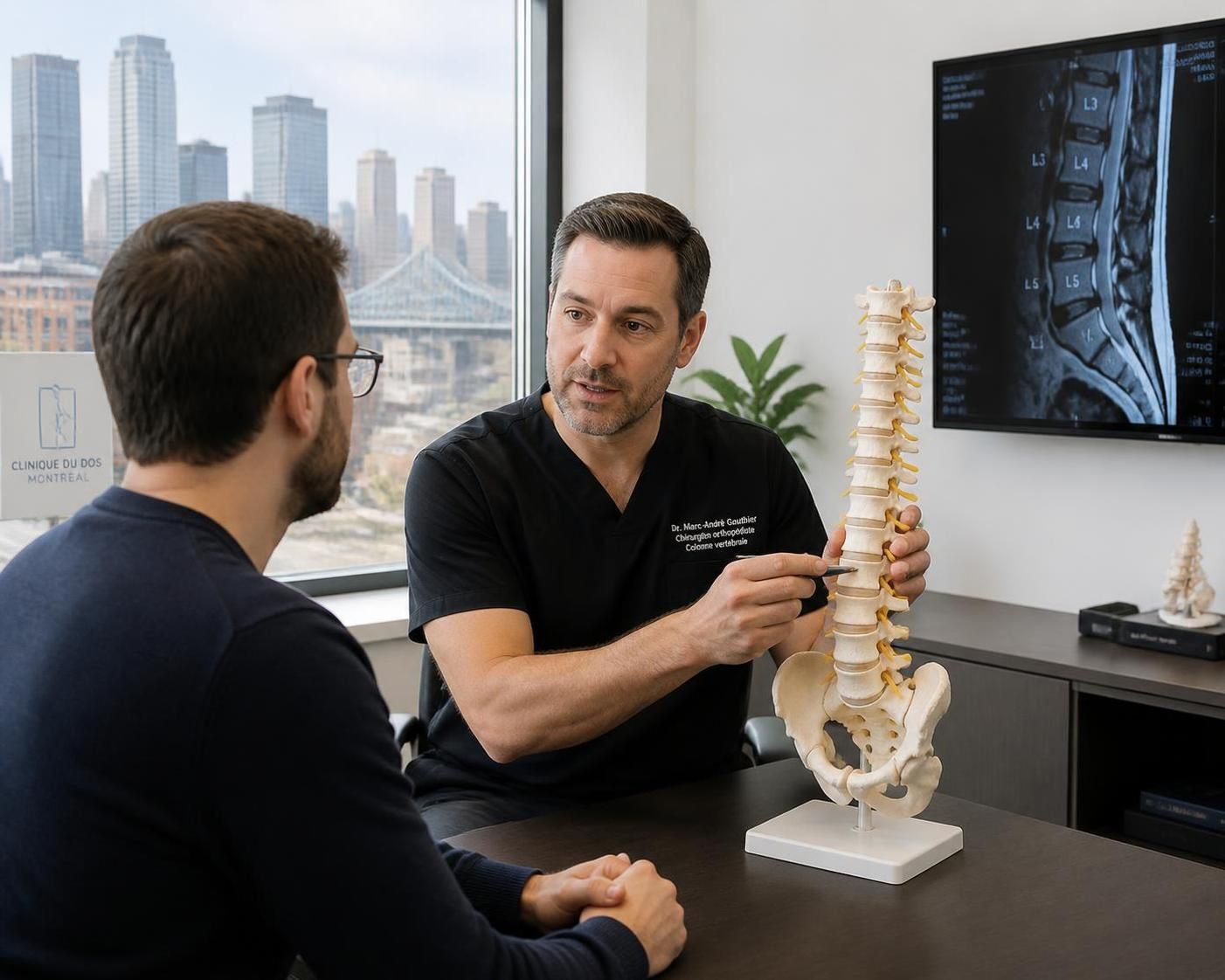
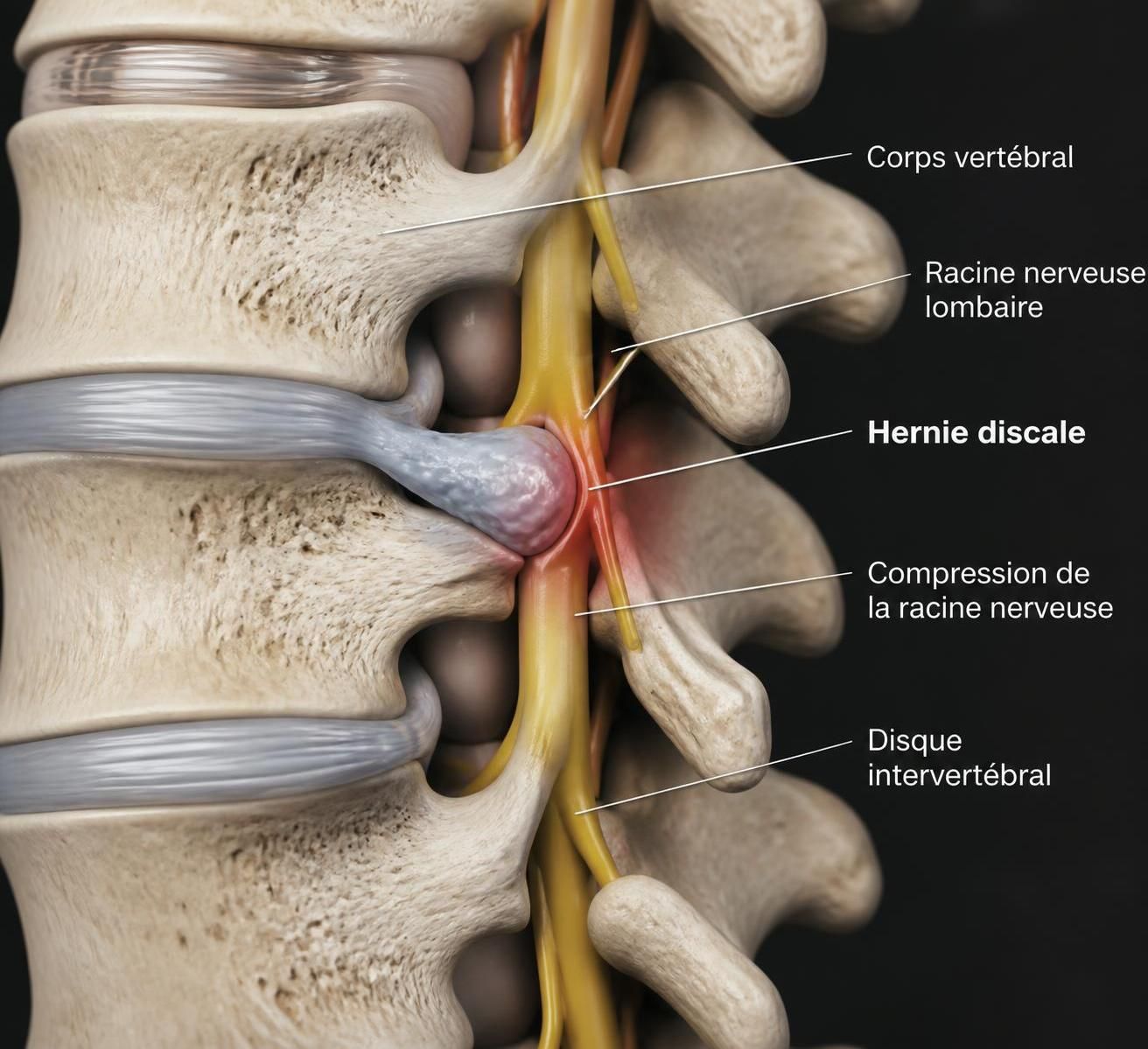
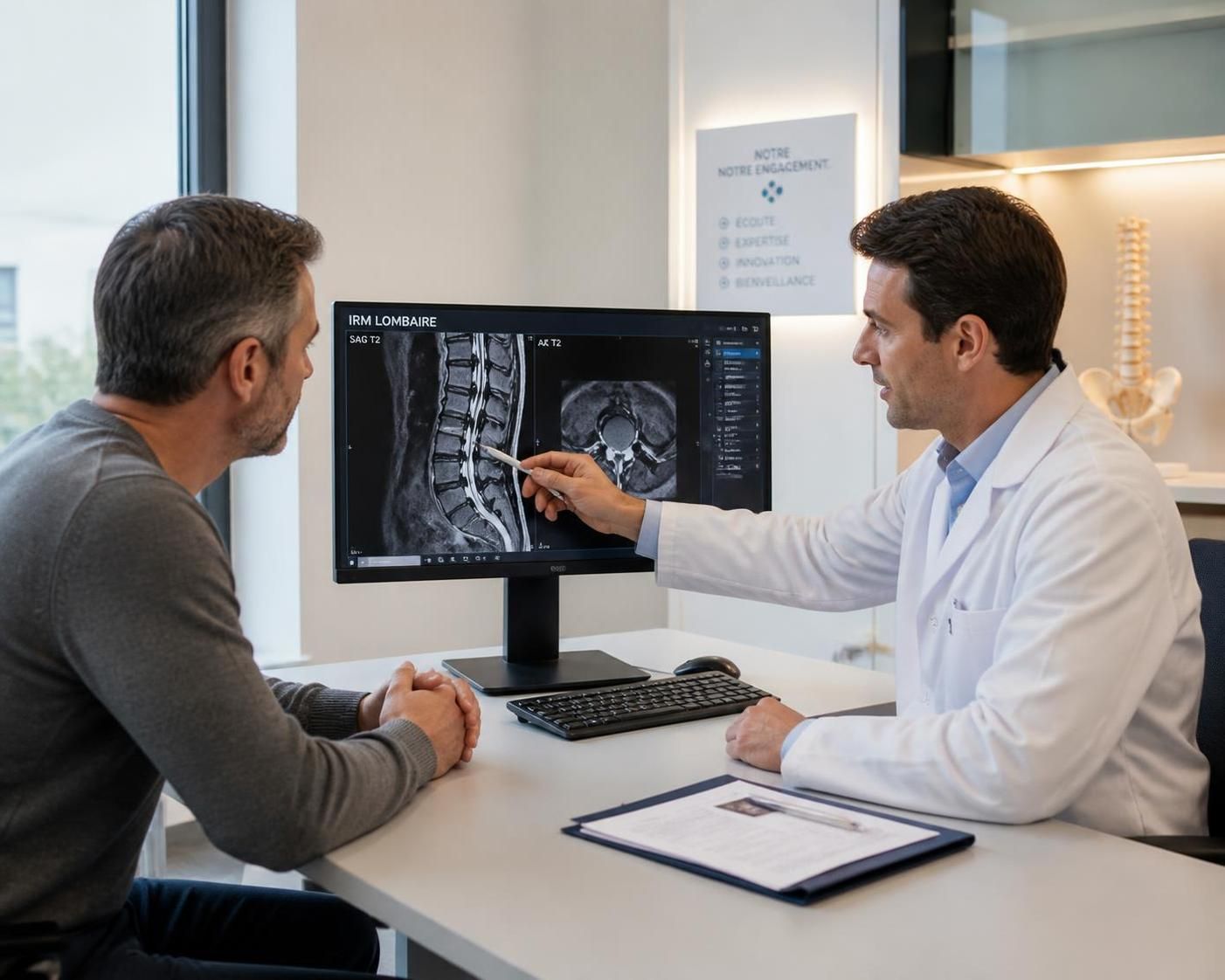
MRI is a sophisticated diagnostic tool that provides three-dimensional images of spinal structures. It can detect abnormalities such as disc protrusion or herniation, which may place pressure on the nerve roots of the sciatic nerve. These compressions are often the source of pain radiating into the leg, sometimes accompanied by numbness, tingling, or muscle weakness.
For example, a disc herniation at the L4, L5, or S1 root level can be precisely localized by MRI. This test therefore helps confirm a clinical suspicion when symptoms suggest compression-related radiculopathy.
Beyond the discs, MRI can reveal other lesions, such as foraminal stenosis, inflammation, or a tumour, situations that require appropriate and often specialized care. It can also assess the condition of the paraspinal muscles and identify associated pain syndromes, which adds to the overall clinical picture.
However, it remains important to keep in mind that abnormalities detected on MRI can also be present in people without symptoms, especially older adults. Consequently, clinical judgment remains essential when interpreting the imaging report. The relationship between symptoms, physical examination findings, and MRI results must therefore be carefully established to avoid inappropriate or premature treatment (correlate symptoms with MRI findings).
When MRI becomes an essential tool for follow-up and care in Mercier–Hochelaga-Maisonneuve
In most cases of acute sciatica, an MRI is not immediately necessary. Care guidelines recommend an initial clinical approach that favours monitoring and conservative treatments such as adapted exercises, manual care, or physiotherapy.
However, several situations require more timely MRI assessment:
- Persistent or worsening symptoms despite appropriate care, particularly if the pain progresses or neurological signs such as muscle weakness, numbness, or walking difficulties develop.
- Warning signs such as loss of bladder or bowel control, numbness in the perineal region (saddle anaesthesia), which could indicate severe compression requiring urgent intervention.
- Suspected serious condition such as an infection, tumour, or spinal trauma, where MRI provides crucial information to guide treatment.
- Preparation for a potential surgical procedure, where MRI helps clarify the location and nature of nerve compression.
Another reason for performing an MRI in Mercier–Hochelaga-Maisonneuve may be follow-up for patients who have already undergone a procedure or received specific care, in order to assess the progression of lesions and detect potential complications.
It should be noted that although MRI does not require the use of X-rays, certain precautions are necessary for patients with medical devices that are compatible only with certain imaging machines.
To better understand when an MRI is necessary for low back pain, it is essential to communicate clearly with the health-care professional and ask all questions related to the relevance and next steps of this test.
Differences between MRI and other tests: advantages and limitations for diagnosing sciatica
It can sometimes be helpful to compare MRI with other imaging technologies, such as CT scans or plain X-rays, to understand its specific advantages and limitations.
| Test | Advantages | Limitations | Common indications |
|---|---|---|---|
| Lumbar MRI | Precise visualization of soft tissues (discs, nerves), no ionizing radiation, 3D images | High cost, limited availability, longer examination time, not always compatible with certain implants | Suspected disc herniation, nerve compression, infection, tumour |
| CT scan | Quick examination, good visualization of bone, compatible with certain metal implants | Exposure to X-rays, less effective for soft tissues | Trauma, fracture, when MRI is contraindicated |
| X-ray | Simple, accessible, and quick for assessing bony alignment | Does not visualize soft tissues, provides little information about nerves | Bone abnormalities, deformities, osteoarthritis |
This table illustrates why MRI is commonly preferred in diagnosing sciatic pain in Mercier–Hochelaga-Maisonneuve when soft tissues are suspected to be involved. However, the choice between these tests always depends on the overall clinical situation.
Local factors and clinical practices influencing access to and use of MRI in Mercier–Hochelaga-Maisonneuve
In the specific context of Mercier–Hochelaga-Maisonneuve, several factors may influence access to MRI and its place in the care pathway:
- Proximity to health-care and imaging centres : The availability of MRI in Montréal health-care facilities or nearby private clinics may facilitate or delay care.
- Clinical profile and symptom severity : Local clinicians tailor their use of MRI based on persistent pain, neurological function, and patients’ specific treatment needs.
- Access to specialists : Referral to orthopedic surgeons, neurologists, or other specialists may determine the need for a sophisticated imaging test.
- Technological advances and regional protocols : Practices evolve with new medical evidence, guiding imaging decisions.
In addition, TAGMED Clinic, located in Mount Royal near Outremont and Côte-des-Neiges, offers adapted assessment and treatment services based on a detailed understanding of MRI findings and reported symptoms. Its approach integrates options such as motorized neurovertebral decompression for certain patient profiles, highlighting the importance of a rigorous correlation between imaging tests and treatment decisions.


The clinical examination remains paramount in guiding diagnosis and avoiding unnecessary tests.
Careful interpretation of MRI images is essential to identify the responsible lesions.
{“@context”:”https://schema.org”,”@type”:”FAQPage”,”mainEntity”:[{“@type”:”Question”,”name”:”Faut-il systu00e9matiquement passer une IRM pour une sciatique ?”,”acceptedAnswer”:{“@type”:”Answer”,”text”:”Non, une IRM nu2019est pas nu00e9cessaire pour chaque u00e9pisode de sciatique. Elle est ru00e9servu00e9e aux cas ou00f9 elle peut influencer la prise en charge ou en pru00e9sence de signes neurologiques inquiu00e9tants.”}},{“@type”:”Question”,”name”:”Une IRM peut-elle du00e9tecter toutes les causes de douleur lombaire ?”,”acceptedAnswer”:{“@type”:”Answer”,”text”:”Lu2019IRM est tru00e8s efficace pour visualiser les tissus mous et la compression nerveuse, mais elle ne ru00e9vu00e8le pas toujours lu2019origine pru00e9cise de la douleur, qui peut u00eatre multifactorielle.”}},{“@type”:”Question”,”name”:”Quels sont les signes cliniques qui requiu00e8rent une IRM urgente ?”,”acceptedAnswer”:{“@type”:”Answer”,”text”:”Perte de contru00f4le urinaire, anesthu00e9sie de la selle, faiblesse progressive su00e9vu00e8re et suspicion de pathologie grave comme une infection ou tumeur nu00e9cessitent une IRM en urgence.”}},{“@type”:”Question”,”name”:”Quels sont les risques liu00e9s u00e0 lu2019IRM ?”,”acceptedAnswer”:{“@type”:”Answer”,”text”:”Lu2019IRM utilise un champ magnu00e9tique puissant et ne comporte pas de radiation ionisante. Cependant, elle est contre-indiquu00e9e chez certains porteurs du2019implants incompatibles et peut provoquer une gu00eane chez les personnes claustrophobes.”}},{“@type”:”Question”,”name”:”Quelle est la diffu00e9rence entre lu2019IRM et le scanner pour la sciatique ?”,”acceptedAnswer”:{“@type”:”Answer”,”text”:”Lu2019IRM visualise principalement les tissus mous et les nerfs sans exposition aux rayons X, tandis que le scanner est plus adaptu00e9 aux structures osseuses et u00e0 certains cas spu00e9cifiques.”}}]}Is an MRI always necessary for sciatica?
No, an MRI is not necessary for every episode of sciatica. It is reserved for cases where it may influence care or when concerning neurological signs are present.
Can an MRI detect every cause of low back pain?
MRI is highly effective for visualizing soft tissues and nerve compression, but it does not always reveal the precise source of pain, which can be multifactorial.
What clinical signs require an urgent MRI?
Loss of bladder control, saddle anaesthesia, severe progressive weakness, and suspected serious conditions such as an infection or tumour require urgent MRI.
What are the risks associated with MRI?
MRI uses a powerful magnetic field and does not involve ionizing radiation. However, it is contraindicated for some people with incompatible implants and may cause discomfort for people with claustrophobia.
What is the difference between MRI and a CT scan for sciatica?
MRI primarily visualizes soft tissues and nerves without exposure to X-rays, whereas a CT scan is better suited to bony structures and certain specific cases.
If you experience persistent or complex pain suggestive of sciatica, a specialized assessment may help clarify the likely cause and identify appropriate care options. A consultation with experienced professionals near Mercier–Hochelaga-Maisonneuve can help you better understand your symptoms and the tests that may be needed.
Book an appointment for a sciatica assessment in Montréal
Dr. Sylvain Desforges, B.Sc., D.O., N.D., Osteopath
This content is educational and does not replace a personalized consultation.
