


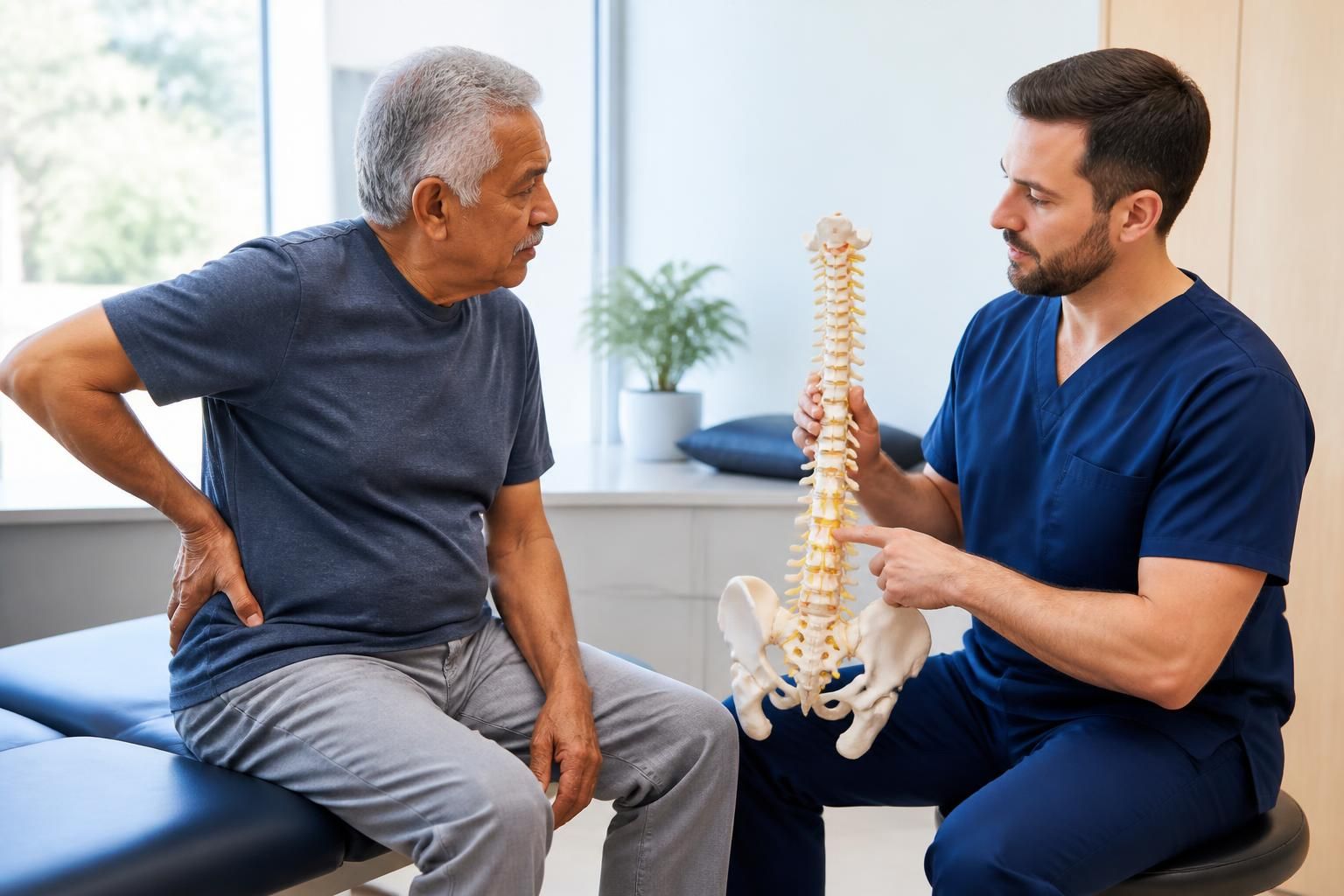
Sciatica in older adults in Dollard-des-Ormeaux does not manifest solely as persistent lower back pain. It often includes pain radiating along the sciatic nerve, affecting mobility and daily comfort. This pain may vary in intensity and is sometimes accompanied by numbness, tingling, or even muscle weakness in the legs. Understanding the specific mechanisms of sciatica at this age and the adaptations to adopt is essential for living better with this condition.
Addressing sciatica in seniors requires careful management, as it may reveal various causes, including spinal stenosis, which is particularly common in this age group. Practical tips for managing and easing symptoms take into account both the Montréal lifestyle and the physical limitations associated with this stage of life, with an emphasis on prevention, rehabilitation, and maintaining good joint health.


In brief: key points for managing sciatica in seniors
- Recognize characteristic signs: pain radiating along the sciatic nerve that may worsen with walking, numbness, or muscle weakness.
- Differentiate common causes in seniors, particularly lumbar spinal stenosis versus a herniated disc.
- Adopt appropriate postures in daily life to reduce pressure on the sciatic nerve, particularly when sitting and during sleep.
- Use conservative treatments such as lumbar flexion exercises, therapeutic heat, and rehabilitation under professional supervision.
- Recognize signs that should prompt a prompt consultation, for example, progressive weakness or substantial sensory loss.
Understanding the specific features of sciatica in seniors in Dollard-des-Ormeaux
In older adults, sciatica is frequently linked to a progressive narrowing of the spinal canal, a phenomenon called lumbar spinal stenosis. This narrowing is caused by the natural wear of the vertebrae, ligaments, and facet joints, resulting in mechanical compression of the sciatic nerves themselves. This compression often presents as pain that occurs after walking several hundred metres and disappears when sitting or leaning forward, a typical sign called neurogenic claudication.
Unlike a herniated disc, which is more common in younger adults and characterized by intense, continuous pain, sciatica related to spinal stenosis may involve intermittent pain depending on posture and activity. It is therefore essential, particularly in Dollard-des-Ormeaux, where access to medical services varies, to obtain an accurate assessment to distinguish between these diagnoses through a combination of clinical examination and imaging, often a lumbar MRI.
Other possible causes include lumbar osteoarthritis with bony deformity, vertebral slippage (spondylolisthesis), or a history of treated disc conditions. Age, with its specific structural changes, plays a determining role in modulating pain and the functional limitations observed in seniors.
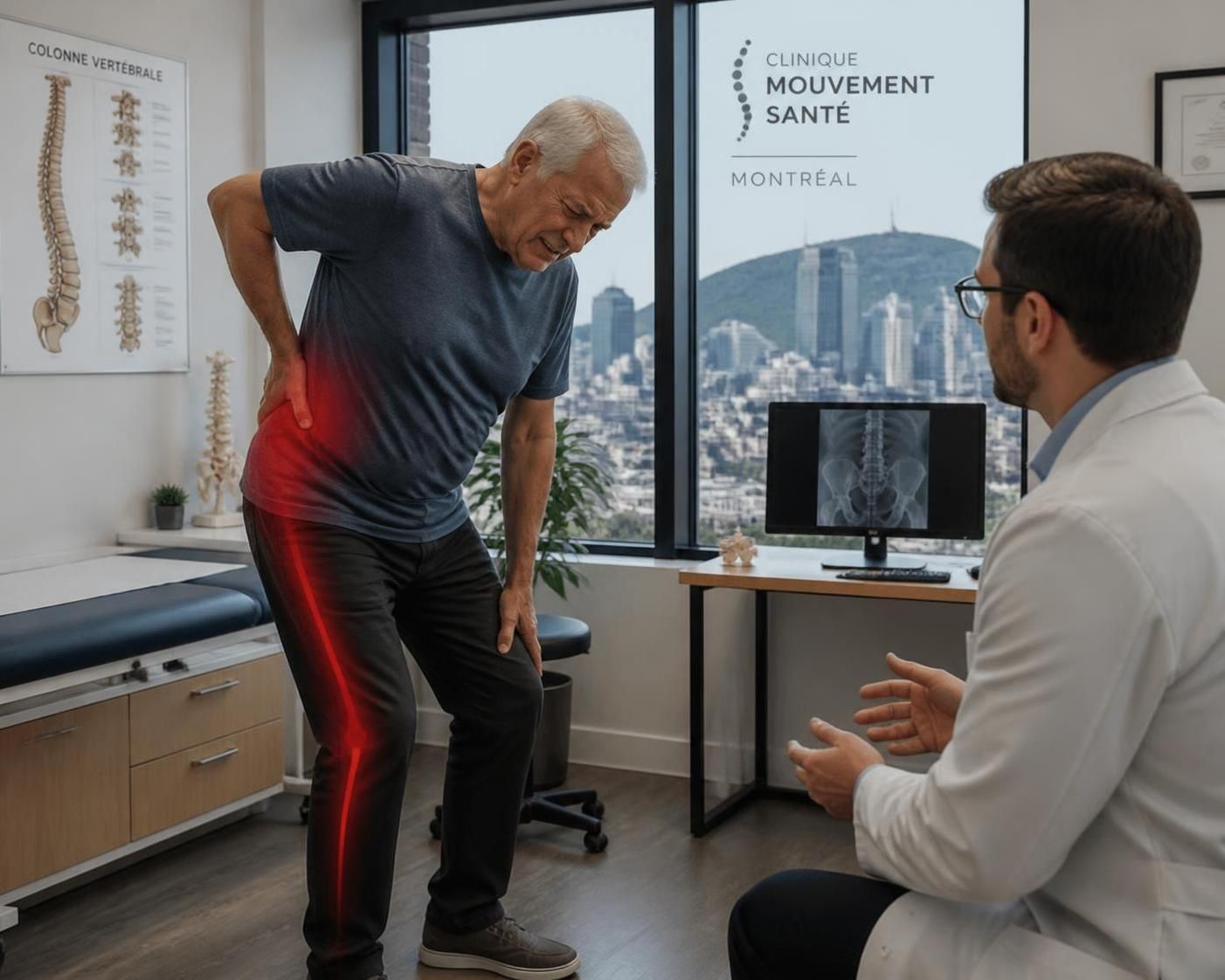
Daily postures to favour and avoid to ease sciatic pain
Daily life for seniors with sciatica in Dollard-des-Ormeaux can be greatly improved by avoiding certain aggravating positions and adopting appropriate protective postures. In particular, prolonged sitting, especially in seats that are too soft or uncomfortable, increases pressure on the lower back and may worsen pain.
Positions to avoid include:
- Sitting for more than 30 minutes without taking a break to stand or walk;
- Crossing the legs, which unbalances the pelvis and increases spinal twisting;
- Adopting the cross-legged position, which places similar strain on pelvic alignment;
- Sitting without adequate lumbar support or with a slouched back, which increases compression of the spinal discs.
Conversely, it is preferable to use an ergonomic chair with lumbar support, adopt an upright posture, and keep the feet flat on the floor, while taking care to change positions regularly. Frequent breaks to walk or stretch also help reduce inflammation and preserve mobility.
For sleep, lying on the back with a pillow under the knees is recommended to maintain a natural lumbar curve, thereby minimizing pressure on the spine. Sleeping on the stomach is discouraged because it increases the lumbar curve and promotes nerve compression. Sleeping on the non-painful side with a pillow between the knees may also provide good relief.
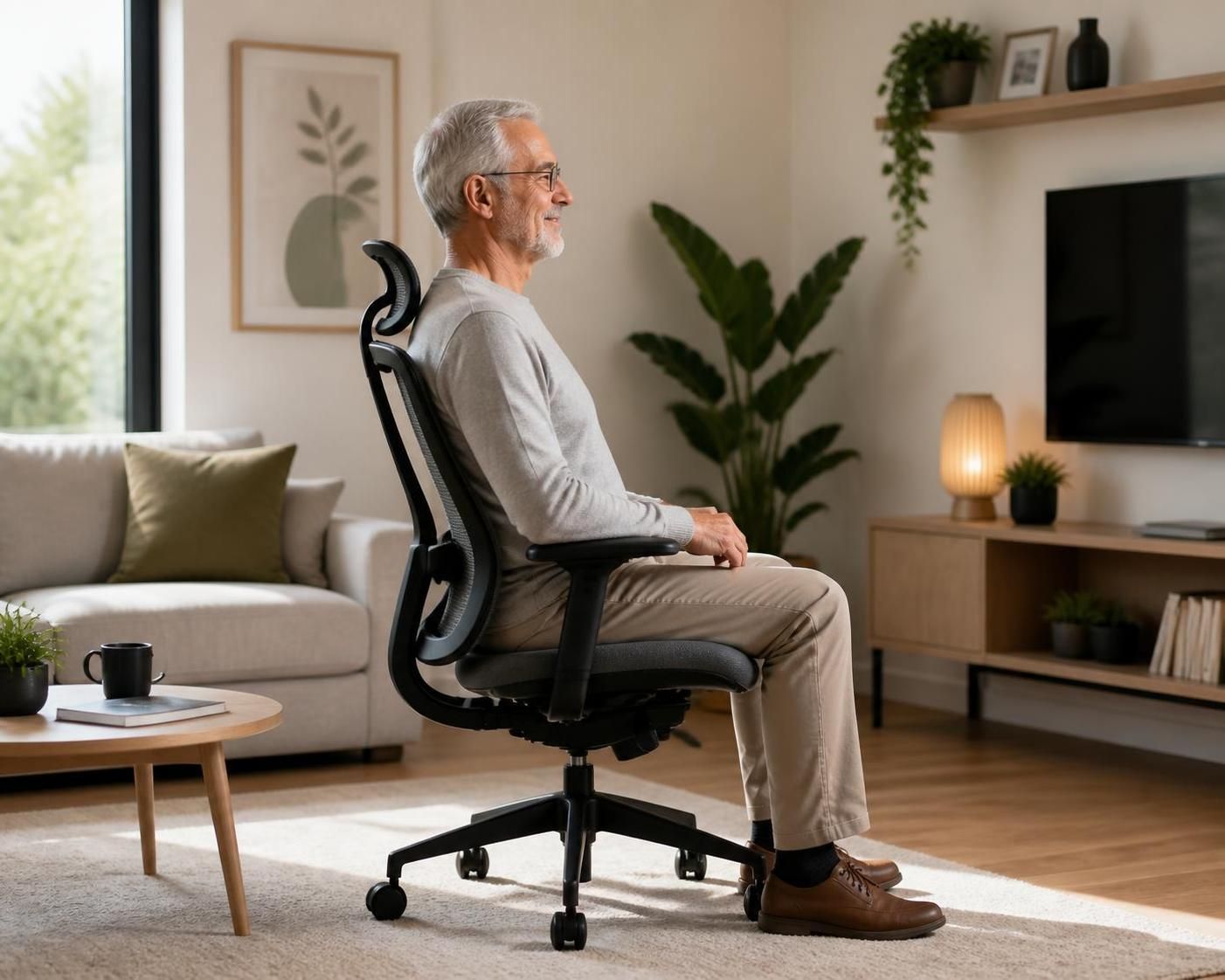
To learn more about these posture and movement tips, see practical tips for positions that relieve sciatica. These recommendations take into account recent data on protecting the sciatic nerve during everyday activities.
Factors influencing pain and mobility: activities and environment in Dollard-des-Ormeaux
The living environment in Dollard-des-Ormeaux, which combines residential spaces and access to various services, includes activities that may affect the course of sciatic pain. Regular walking is a good way to stay fit, but it can become difficult in the presence of radiating pain. Neurogenic claudication associated with spinal stenosis can limit the distance walked before pain begins, requiring frequent breaks, often on a bench in a local park.
It is therefore advisable to adopt appropriate physical activity, such as cycling or swimming, which maintains slight lumbar flexion that can help reduce pressure on the nerves without causing excessive pain. Moderate trunk flexion does in fact open the spinal canal, temporarily relieving compressed nerve roots. Conversely, prolonged activities while standing or sustained back extension may worsen symptoms.
When working remotely or engaging in sedentary activities, it is preferable to arrange the workspace according to specific ergonomic principles to limit biomechanical strain. A screen positioned at eye level, an adjustable chair with lumbar support, and taking breaks every 30 minutes to move help reduce the irritative load on the sciatic nerve.
The natural environment of Dollard-des-Ormeaux offers opportunities to perform gentle outdoor exercises, contributing to both physical health and psychological well-being, an important dimension for patients living with chronic pain.

Management and recommended treatments for sciatica in seniors
Several conservative options are recommended for sciatica in seniors, particularly in the Dollard-des-Ormeaux context, where access to care is facilitated but requires good coordination.
Rehabilitation programs favour lumbar flexion exercises (the Williams method), which decompress the spinal canal, in contrast to the McKenzie method, which is more suited to herniated discs. Strengthening the abdominal and lumbar muscles is essential for stabilizing the spine and limiting recurrences.
In addition, therapeutic heat helps relax the paravertebral muscles, which often become hypertrophied in response to pain. The use of devices combining heat and red light, including medical LEDs, shows potential benefits in reducing inflammation and pain.
Motorized spinal decompression may also be considered for certain patients whose clinical assessment shows moderate stenosis, a protrusion, or disc narrowing that may respond to this treatment. This technique involves progressive, controlled spinal traction intended to temporarily reduce mechanical strain on the discs and nerve roots. While decompression may help improve mobility and exercise tolerance, it should be emphasized that results vary among individuals and that careful patient selection is necessary.
This therapeutic approach is sometimes supplemented with epidural injections to temporarily relieve severe nerve inflammation, always under medical supervision. In cases of significant nerve compression or progressive neurological deficits, a surgical opinion may be necessary, although surgery remains a last resort for seniors because of the risks and prolonged rehabilitation needs.
For more details on the treatment options available in Dollard-des-Ormeaux, you can consult specialized resources that outline appropriate alternatives based on the patient’s profile.
Distinguishing spinal stenosis, herniated disc, and other causes: comparison table for seniors
| Criterion | Spinal stenosis | Herniated disc | Arteritis |
|---|---|---|---|
| Typical age | Over age 60 | Ages 35 to 55 | Over age 50 |
| Pain at rest | Absent or mild | Often present | Absent |
| Pain when walking | Gradual onset | Variable | Gradual onset |
| Relieved by | Sitting or trunk flexion | Lying down | Standing rest |
| Affected sides | Often both legs | One leg | One or both legs |
| Diagnostic tools | Lumbar MRI | Lumbar MRI | Doppler ultrasound |
This table highlights the key clinical distinctions for guiding seniors toward the most appropriate diagnosis and management, taking into account their individual characteristics and lifestyle habits.
Warning signs and advice on when to seek urgent care
Sciatic pain in seniors may occur with various symptoms, but certain signs should always be taken seriously and require prompt assessment. You should seek care promptly if you notice:
- Progressive or significant weakness in the leg muscles, limiting walking;
- Significant loss of sensation, numbness, or an anaesthetic sensation in the genital region (saddle anaesthesia);
- Recent loss of bladder or bowel control;
- Persistent severe pain disrupting sleep despite treatment;
- Fever, or signs of deteriorated general health that may suggest an infection;
- Pain following significant trauma, even if old or recently worsening.
In these situations, seeking immediate care from a health professional is imperative, particularly to avoid serious complications and preserve motor and sensory function. Outside of these emergencies, persistent or recurring sciatic pain also warrants a consultation for appropriate management.
Emergency warning signs warrant prompt medical assessment. It is crucial not to wait for motor or sensory function to deteriorate. If you live in Dollard-des-Ormeaux or the Montréal area and experience these symptoms, consider seeking care without delay.
Frequently asked questions about sciatica in seniors in Dollard-des-Ormeaux
{“@context”:”https://schema.org”,”@type”:”FAQPage”,”mainEntity”:[{“@type”:”Question”,”name”:”La stu00e9nose canalaire peut-elle su2019amu00e9liorer sans chirurgie ?”,”acceptedAnswer”:{“@type”:”Answer”,”text”:”Bien que le ru00e9tru00e9cissement du canal rachidien ne soit pas ru00e9versible naturellement, les symptu00f4mes peuvent u00eatre contru00f4lu00e9s efficacement par des traitements conservateurs, permettant souvent de maintenir une bonne qualitu00e9 de vie sans intervention chirurgicale immu00e9diate.”}},{“@type”:”Question”,”name”:”Quels exercices favorisent la ru00e9cupu00e9ration chez un senior souffrant de sciatique ?”,”acceptedAnswer”:{“@type”:”Answer”,”text”:”Les exercices de flexion lombaire, tels que la mu00e9thode Williams, sont particuliu00e8rement recommandu00e9s. Ils visent u00e0 ru00e9duire la pression sur les nerfs en ouvrant temporairement le canal rachidien. Leur pratique doit u00eatre encadru00e9e pour u00e9viter toute aggravation.”}},{“@type”:”Question”,”name”:”Est-il possible de continuer u00e0 pratiquer du vu00e9lo malgru00e9 une sciatique ?”,”acceptedAnswer”:{“@type”:”Answer”,”text”:”Oui, le vu00e9lo est souvent conseillu00e9 pour les seniors car la position flu00e9chie sur le guidon ouvre le canal rachidien et peut permettre une meilleure tolu00e9rance u00e0 lu2019effort sans douleur majeure.”}},{“@type”:”Question”,”name”:”Quand faut-il envisager une consultation mu00e9dicale du2019urgence ?”,”acceptedAnswer”:{“@type”:”Answer”,”text”:”En pru00e9sence du2019une faiblesse moteur rapidement progressive, du2019un du00e9ficit sensoriel important, du2019une incontinence urinaire ou fu00e9cale, ou de douleurs intenses associu00e9es u00e0 un u00e9tat gu00e9nu00e9ral altu00e9ru00e9, une u00e9valuation mu00e9dicale urgente est nu00e9cessaire.”}},{“@type”:”Question”,”name”:”Comment adapter son poste de travail pour limiter la sciatique ?”,”acceptedAnswer”:{“@type”:”Answer”,”text”:”Il est important de ru00e9gler la hauteur de son u00e9cran pour garder la tu00eate dans lu2019alignement, du2019utiliser une chaise ergonomique avec un bon soutien lombaire et de faire des pauses fru00e9quentes pour changer de position et relu00e2cher les tensions.”}}]}Can spinal stenosis improve without surgery?
Although narrowing of the spinal canal is not naturally reversible, symptoms can be managed effectively with conservative treatments, often allowing a good quality of life to be maintained without immediate surgery.
What exercises support recovery for a senior with sciatica?
Lumbar flexion exercises, such as the Williams method, are particularly recommended. They aim to reduce pressure on the nerves by temporarily opening the spinal canal. They should be performed under supervision to avoid any worsening.
Is it possible to continue cycling despite sciatica?
Yes, cycling is often recommended for seniors because the flexed position over the handlebars opens the spinal canal and may allow better exercise tolerance without major pain.
When should an urgent medical consultation be considered?
In the presence of rapidly progressive motor weakness, a significant sensory deficit, urinary or fecal incontinence, or severe pain associated with deteriorated general health, urgent medical assessment is necessary.
How can you adapt your workstation to limit sciatica?
It is important to adjust the height of the screen to keep the head aligned, use an ergonomic chair with good lumbar support, and take frequent breaks to change position and release tension.
Living with sciatica in Dollard-des-Ormeaux can complicate daily life and limit your mobility. A personalized assessment can help you determine the likely cause, recognize signs to monitor, and assess whether a conservative approach suited to your situation is appropriate. To receive specialized support, you can explore sciatica treatment options in Dollard-des-Ormeaux.
Dr. Sylvain Desforges, B.Sc., D.O., N.D., osteopath
This content is educational and does not replace a personalized assessment by a health professional.
