

Slippage of one vertebra relative to an adjacent vertebra; significance depends on its degree, stability and associated symptoms.
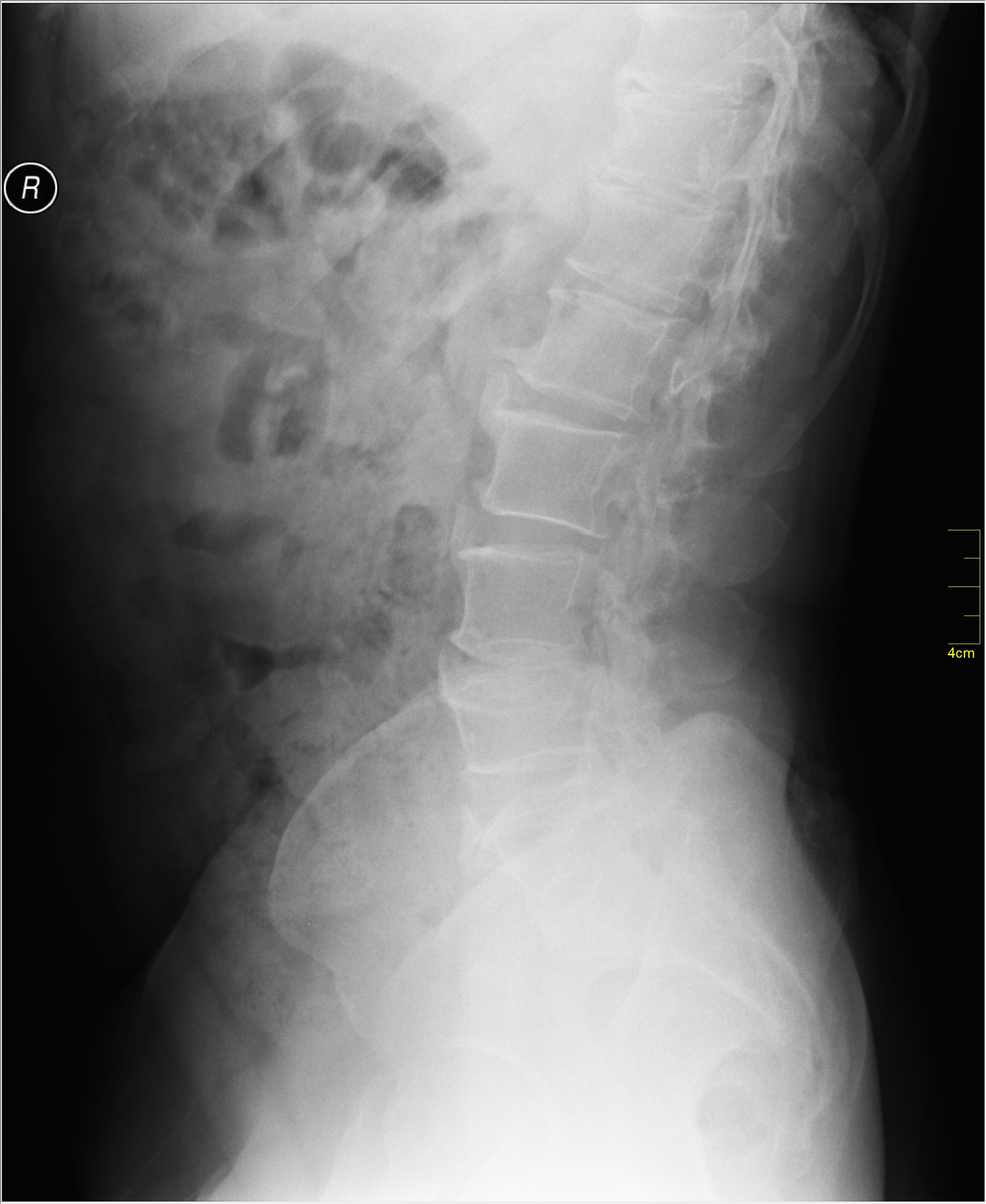
© Nevit Dilmen — CC BY-SA 3.0. Image source.

Understanding the mechanism
Spondylolisthesis is translation of one vertebra relative to the next, usually forwards. It can be degenerative or associated with a defect in the pars interarticularis, among other causes. The percentage of slip describes anatomy but does not, by itself, measure instability or disability. Some slips remain stable and minimally symptomatic for a long time.
Symptoms and warning signs
Possible symptoms include low-back pain, leg pain, numbness or neurogenic claudication when neural space is narrowed. Extension-related pain may occur but is not specific. Progressive weakness requires urgent assessment. New urinary retention, loss of bladder or bowel control, or saddle numbness requires immediate emergency assessment without waiting for a clinic appointment. Persistent back pain in a young athlete deserves evaluation before continuing repetitive high-load or extension activities that may aggravate a stress injury.
Diagnosis and investigations
Standing radiographs assess the slip, and selected patients may need movement views to investigate mobility between vertebrae. MRI examines neural structures and soft tissues. Clinicians distinguish a visible slip from clinically relevant instability and from other pain sources. Age, symptom pattern and change over time determine whether further specialist assessment or surveillance is needed.
Treatment and outlook
Conservative care may involve modifying loads, progressive strengthening and rebuilding activity tolerance. The approach must suit the underlying lesion. Stabilization or decompression surgery is considered according to neurological findings, disability, instability and response to appropriate treatment. Returning to sport or work is gradual. Neither the imaging grade nor pain intensity alone provides a complete surgical decision.
The role of TAGMED care
At TAGMED, traction should not be offered automatically because a slip is visible. Suspected instability, an acute lesion or neurological loss changes the precautions and may require referral first. Manual care must not promise to permanently put the vertebra back into place. Treatment should focus on safety and useful function, with goals and restrictions adjusted as the condition evolves.
Practical follow-up
Follow-up should clarify permitted activities and circumstances requiring earlier review. In a growing young person, sporting goals and planned surveillance should be shared between professionals to avoid incompatible instructions. Improvement in pain does not automatically remove every loading restriction.
Frequently asked questions
Does every slip require surgery?
No. Many stable presentations are managed without an operation.
Is the radiological grade sufficient?
No. Symptoms, stability, nerve involvement and personal goals must be considered together.
Is spondylolysis the same condition?
No. It is a pars defect that may or may not be accompanied by a slip.
Can strengthening be useful?
Often, when the programme fits the diagnosis, tolerance and any restrictions.
Are repeated scans always needed?
Follow-up imaging depends on age, growth, symptoms and the risk of progression.
Conceptual diagram: the steps depend on clinical findings and do not provide an individual diagnosis.
Medical references
- American Academy of Orthopaedic Surgeons. Adult Spondylolisthesis of the Low Back.
- American Academy of Orthopaedic Surgeons. Spondylolysis and Spondylolisthesis.
- American Academy of Orthopaedic Surgeons. Lumbar Spinal Stenosis.
References document the topic; their inclusion does not imply endorsement of TAGMED services by those organizations.
Educational information from The Spine Page. This entry does not replace an individual assessment. Documentary version: October 12, 2026. Sylvain Desforges, B.Sc., D.O., N.D., osteopath and naturopath.
TAGMED clinic contact details
For non-urgent consultations and information about available services.
Clinique TAGMED — Terrebonne
1150, rue Lévis, Suite 200
Terrebonne (Québec) J6W 5S6
450‑704‑4447
Clinique TAGMED — Montréal
1140, avenue Beaumont
Mont-Royal (Québec) H3P 3E5
1‑877‑672‑9060